Table of Contents >> Show >> Hide
- Step 1: Figure Out What You’re Fighting (Because “Weed” Isn’t a Species)
- Step 2: The Easiest Weed Control Is a Thick Lawn (Yes, This Counts as “Weeding”)
- Mow higher (your lawn will look better and you’ll weed less)
- Water deep and infrequently (stop “sipping,” start “drinking”)
- Feed the lawndon’t accidentally feed the weeds
- Overseed bare spots like your future weekends depend on it (because they do)
- Fix compaction (because weeds love a struggling lawn)
- Step 3: Hand-Weeding That Actually Works (Without Destroying Your Back)
- Step 4: Herbicides Without the Headache (Targeted, Responsible, and Effective)
- Step 5: A Simple Seasonal Weed-Control Plan (That Doesn’t Require a Wall Calendar and a Therapist)
- Troubleshooting: Why Your Weeds Keep Coming Back
- Weed Control That’s Kinder to Pollinators (and Still Gets Results)
- Conclusion: The “Easy and Effective” Formula
- Experiences from the “Real Lawn World” (What Actually Happens in Backyards)
- SEO Tags
Weeds are the uninvited houseguests of the yard world: they show up unannounced, eat your snacks (sunlight, water, nutrients), and somehow act like you should be grateful they’re there. The good news? You don’t need a PhD in Botany or a garage full of mystery chemicals to weed your lawn. You just need a smart plan: identify what’s growing, fix the conditions that invited it, and use the right tool (or treatment) at the right time.
This guide is built around the easiest path to long-term lawn weed control: make your grass so healthy and thick that weeds can’t find a place to land. Then, for the stubborn freeloaders that still sneak in, you’ll learn fast, targeted ways to remove themby hand, with simple lawn tools, or with selective herbicides used responsibly.
Step 1: Figure Out What You’re Fighting (Because “Weed” Isn’t a Species)
The biggest mistake homeowners make is treating every weed the same. That’s like trying to fix every car problem with windshield wiper fluid. Different weeds require different strategies, and the “easy” route starts with a quick ID.
Broadleaf weeds (the obvious show-offs)
These have wider leaves and often flower. Classic examples: dandelion, clover, plantain, chickweed, ground ivy. Broadleaf weeds are usually easiest to spot and often easiest to controlespecially if you time it right.
Grassy weeds (the sneaky imposters)
These look like grass… until they don’t. Crabgrass is the headline act here, along with goosegrass and annual bluegrass in some regions. Grassy weeds are often best prevented before they germinate.
Sedges (the “looks like grass but isn’t” troublemakers)
Nutsedge is the most common villain. It grows faster than your lawn, pops up in wetter spots, and laughs at your mower. Sedges typically need a special approach (and yes, sometimes a specific product).
Quick lawn “why is this happening” checklist
- Thin grass / bare spots: weeds move in where grass is weak.
- Mowing too short: scalping opens sunlight to soilbasically a “Vacancy” sign for weed seeds.
- Frequent light watering: trains shallow roots and favors many weeds.
- Compacted soil: grass struggles; weeds that tolerate stress thrive.
- Over/under fertilizing: both can shift the advantage away from turf.
Step 2: The Easiest Weed Control Is a Thick Lawn (Yes, This Counts as “Weeding”)
Here’s the not-so-secret secret: the easiest way to weed your lawn is to make the lawn itself do the work. Dense turf shades the soil surface, reducing weed seed germination and choking out new seedlings before they can get established.
Mow higher (your lawn will look better and you’ll weed less)
Most common turf grasses perform best when you mow on the taller sideoften around 3 inches (sometimes up to 3.5 inches depending on grass type, region, and season). Taller mowing increases leaf area for photosynthesis, builds deeper roots, and shades the soil so weed seedlings struggle.
Use the “one-third rule”: never remove more than 1/3 of the grass blade in a single mow. It reduces stress and keeps your turf from thinning. Also: sharpen your mower blade. A dull blade tears grass, which stresses the lawn and invites diseasetwo things weeds love to exploit.
Water deep and infrequently (stop “sipping,” start “drinking”)
Daily sprinkles create shallow roots and a cozy top layer of moisture where many weeds thrive. Instead, water deeply, then wait until the lawn shows early signs of needing water (slight bluish-gray tint, footprints that linger, blades folding) before watering again.
Aim for early morning watering to reduce evaporation and disease risk. If your yard has a soggy spot that always grows “mystery grass” (hello, nutsedge), improving drainage and irrigation uniformity can be a game changer.
Feed the lawndon’t accidentally feed the weeds
Fertilizer isn’t evil, but random fertilizer is chaos. The sweet spot is “enough to keep turf vigorous, not so much that everything green goes wild.” If you can, do a soil test so you’re not guessing at nutrients or pH. Balanced fertility helps grass fill in faster, leaving fewer openings for weeds.
Overseed bare spots like your future weekends depend on it (because they do)
Bare soil is weed real estate. If you have thin areas, overseeding (and keeping seed moist during establishment) is one of the most effective “weed control” moves you can makebecause grass plants are better neighbors than crabgrass.
For many cool-season lawns, late summer into early fall is prime overseeding season. For warm-season lawns, late spring into summer is often better. Either way, the principle is the same: fill the gaps with turf, not hope.
Fix compaction (because weeds love a struggling lawn)
If your soil is compactedcommon in high-traffic yardsgrass roots have a hard time expanding. Core aeration (pulling plugs, not spike shoes that “poke and pray”) helps air and water move into the soil. A healthier root zone helps turf outcompete weeds over time.
Step 3: Hand-Weeding That Actually Works (Without Destroying Your Back)
Hand-pulling gets mocked… mostly by people who tried it the hard way. Done correctly, it’s one of the most effective and environmentally gentle methods for small-to-medium infestationsespecially if you’re dealing with isolated broadleaf weeds.
Pull when the soil is moist
The best time to pull weeds is after a rain or thorough watering. Moist soil releases roots more easily, which means you remove more of the plant and leave less behind to regrow. Dry soil turns weeding into a rage workout.
Use the right tool (tiny investment, huge payoff)
- Dandelion fork / weeder: slides down beside the taproot so you can lever it out.
- Hand weeder / narrow trowel: great for plantain, thistle, and deep-rooted weeds.
- Stand-up weed puller: helpful if you have lots of dandelions and prefer not to audition for a yoga class.
How to pull a dandelion (so it doesn’t immediately come back)
- Water or wait for rain.
- Insert the weeder next to the crown, following the root downward.
- Lever gently; aim to lift the whole taproot.
- Fill the hole with soil, press the surrounding grass back into place, and water lightly.
- If you created a bare spot, sprinkle a pinch of seed (and keep it moist).
Bonus tip: if weeds are flowering and producing seeds, remove them before they drop seeds. One plant can become a whole neighborhood if you let it go to seed.
Step 4: Herbicides Without the Headache (Targeted, Responsible, and Effective)
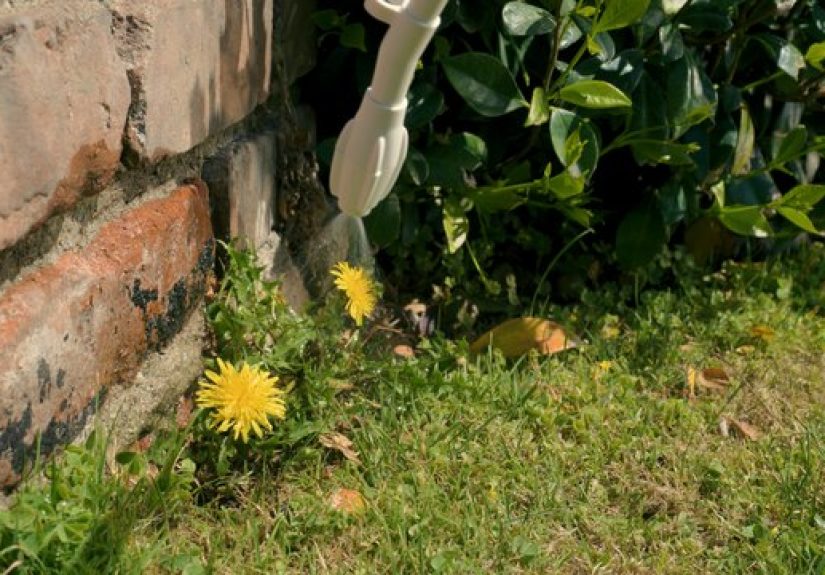
Herbicides can be useful, but the goal is “right product, right timing, right place”not “spray the whole yard and hope for the best.” Spot treatments and well-timed prevention are usually far more effective than blanket applications.
Pre-emergent herbicides: the easiest way to prevent crabgrass
If crabgrass is your annual nightmare, pre-emergent is your best friend. It works by preventing seeds from successfully establishing. The key is timing: pre-emergent must be in place before crabgrass germinates.
Many turf experts time applications based on soil temperature trendsoften when the top couple inches of soil consistently hit roughly the low-to-mid 50s (°F). Some regions also use seasonal indicators (like forsythia bloom stages) as a practical cue, but soil temperature is the more direct signal.
Practical tips:
- Follow label instructions exactly (rates, timing, watering-in requirements, and reseeding restrictions).
- Consider a split application if your region has a long germination window, so protection lasts longer.
- Don’t disturb the soil barrier more than necessary after application (aggressive raking can reduce effectiveness).
Post-emergent herbicides for broadleaf weeds: timing is everything
Broadleaf herbicides can be extremely effective when weeds are actively growing. For perennial weeds like dandelion, many extension programs recommend early-to-mid fall as the most effective window because the plant is naturally moving energy down into the rootsmaking it easier for systemic herbicides to reach the root system.
Spring spraying can work, too, but results often vary based on growth stage and conditions. If you spray in spring, target young, actively growing weeds and follow label directions on temperature ranges and mowing intervals.
Nutsedge: why pulling doesn’t help (and what does)
Nutsedge thrives in wet, poorly drained, or overwatered areas. Pulling can be frustrating because it often leaves behind parts of the plant that regenerate, and the plant’s growth habit doesn’t play fair.
Effective nutsedge control usually combines:
- Moisture management: fix overwatering, improve drainage, and water only as needed.
- Dense turf: healthier grass competes better.
- Selective sedge herbicides: products labeled specifically for sedges, often requiring repeat applications.
Application best practices (your lawn, your neighbors, your sanity)
- Read the label. The label is the law and includes safety gear, weather restrictions, and where the product can be used.
- Spot treat whenever possible. If only 5% of the lawn has weeds, don’t treat 100% out of habit.
- Avoid windy days. Drift can injure plants you actually like.
- Keep kids and pets off treated areas until the label says it’s safe to re-enter.
- Don’t spray before heavy rain. Runoff wastes product and can move chemicals where you don’t want them.
Step 5: A Simple Seasonal Weed-Control Plan (That Doesn’t Require a Wall Calendar and a Therapist)
Early spring
- Start mowing at the right height as soon as growth begins.
- Fix bare spots (seed where appropriate for your grass type and season).
- If crabgrass is a yearly problem, prep for a properly timed pre-emergent application based on soil temps in your region.
Late spring into summer
- Keep mowing high and consistent. Avoid scalping during heat stress.
- Water deeply and infrequently; adjust irrigation if you see soggy areas.
- Hand-pull or spot-treat weeds early before they spread.
- If nutsedge appears, address water issues and consider labeled sedge control methods.
Late summer into fall
- For many lawns, this is the power season: aerate (if needed) and overseed thin areas.
- Target perennial broadleaf weeds in early-to-mid fall for best long-term control.
- Feed the lawn appropriately so it thickens going into the next season.
Winter (a.k.a. the lawn’s nap)
- Plan improvements: sharpen mower blades, tune irrigation, decide where compaction needs help.
- Make a short “problem weeds” list so you can time prevention next season instead of reacting late.
Troubleshooting: Why Your Weeds Keep Coming Back
“I pull dandelions, and they return.”
Dandelions regenerate from root fragments. Pull after rain, use a tool that gets the taproot, and patch the hole so you’re not leaving a bare invitation. For persistent patches, targeted fall control is often the most effective.
“Crabgrass takes over every summer.”
Crabgrass is easiest to prevent, not cure. If you missed pre-emergent timing, focus on mowing correctly, watering properly, and keeping turf dense. Remove seedheads when possible and plan pre-emergent prevention next spring.
“Clover is everywhere.”
Clover often thrives when turf is underfed or thin. Improving fertility (based on soil needs), mowing properly, and overseeding thin areas usually reduces clover pressure over time. Spot-treat if needed, but fix the lawn conditions too.
“Plantain and other tough broadleaf weeds love my yard.”
These often indicate compaction and heavy traffic. Core aeration, improved mowing, and overseeding can shift the advantage back to turf.
Weed Control That’s Kinder to Pollinators (and Still Gets Results)
Not every “weed” is a villain 24/7. Some (like dandelions) provide early-season resources for pollinatorswhether you want them in the lawn is your call. If you prefer an eco-friendlier approach:
- Prioritize turf health first. Dense grass reduces weeds without extra inputs.
- Hand-pull or dig in small areas, especially after rain.
- Spot-treat only the weeds you truly want gone, rather than blanket spraying.
- Mow before weeds flower if you’re trying to reduce seed production.
Conclusion: The “Easy and Effective” Formula
If you remember nothing else, remember this: weeds thrive where grass struggles. So the easiest weed control is great lawn caremow a bit higher, water smarter, feed appropriately, and fill bare spots with grass instead of leaving open ground. Then, handle the remaining weeds with targeted action: pull when the soil is moist, and use selective herbicides only when timing and conditions are on your side.
Do that consistently for one season, and you’ll spend the next season enjoying your lawn instead of negotiating with it.
Experiences from the “Real Lawn World” (What Actually Happens in Backyards)
Homeowners usually start lawn weeding with the same energy people bring to organizing a garage: motivated, optimistic, and slightly delusional about how long it will take. Then reality shows upoften in the form of 47 dandelions that were not there yesterday (you swear).
One of the most common “aha” moments is discovering that mowing higher feels almost like cheating. People who’ve been mowing short for years often worry a taller cut will look messy, but the opposite is usually true: the lawn looks fuller, color improves, and weeds seem less bold. It’s not magic; it’s shade and stronger turf. The first couple of weeks can be weird if you’re used to a golf-course look, but once the grass thickens, many folks say they spend less time chasing random weedsbecause fewer weeds can get started in the first place.
Another recurring experience: switching from “daily sprinkle mode” to “deep watering mode” feels risky at first. People worry their lawn will crisp up. What usually happens is a short adjustment period where you learn your lawn’s true thirst signals (color shift, footprints lingering), then you realize the grass actually performs betterespecially in heatbecause roots have a reason to grow deeper. Weeds that love shallow moisture often lose momentum. The bonus is you stop paying the water bill equivalent of a small car payment.
Hand-weeding stories tend to fall into two categories: the “I pulled for 10 minutes and quit forever” camp and the “I pulled smart and it worked” camp. The difference is timing and tools. People who weed after rain with a proper dandelion fork often report a weird satisfactionthe root pops, you fill the hole, and it feels like you actually removed the problem. People who weed in dry soil without a tool usually report rage, broken stems, and a sudden interest in moving to an apartment.
Crabgrass experiences are where timing lessons hit hardest. Many homeowners don’t realize crabgrass is best prevented, not battled. The “I’ll handle it when I see it” strategy is like noticing your roof leaks during a storm and deciding that’s the best time to learn roofing. The homeowners who get the best results tend to be the ones who connect prevention to soil temperature cues, apply correctly, and then keep turf thick so any gaps don’t become crabgrass condos. People who miss timing can still improve things, but they often say the biggest win is planning ahead for next season instead of trying to fix everything mid-summer.
Nutsedge, meanwhile, earns its reputation. A common experience is mowing it, watching it grow back faster than the lawn, and thinking, “Is my yard being trolled?” People who finally get traction usually do two things: they fix the water problem (because nutsedge loves wet feet), and they stop treating it like a normal grass weed. Once irrigation is corrected and the right labeled approach is usedoften requiring repeat applicationshomeowners frequently report a slow but steady improvement rather than an overnight miracle.
The most encouraging real-world pattern is that lawn weed control gets easier over time. The first year can feel like you’re doing everything. By the second season, the lawn is thicker, bare spots are fewer, and “weeding” becomes occasional spot work instead of a weekly battle. People who stick with the fundamentalsmow high, water right, feed appropriately, overseed thin areasoften say they spend more time enjoying their lawn and less time arguing with it. And that’s the whole point: a yard that doesn’t demand constant negotiation.