Table of Contents >> Show >> Hide
- Why Sexing Guppies Matters (Besides Avoiding “Oops Babies”)
- Before You Start: Two Things That Can Trick You
- The 7 Key Differences Between Male and Female Guppies
- 1) Anal Fin Shape: The Gonopodium (The #1 Most Reliable Clue)
- 2) Body Size: Females Are Usually Larger
- 3) Body Shape: Females Are Rounder; Males Are Sleeker
- 4) Color & Pattern: Males Usually Win the Fashion Contest
- 5) Tail & Dorsal Fins: Males Have Bigger, Flashier “Accessories”
- 6) Gravid Spot: A Pregnancy Patch (Only Females Have It)
- 7) Behavior: Males Court; Females “Manage the Situation”
- Quick Comparison Table: Male vs. Female Guppies
- The 30-Second Sex Check (A Simple Checklist)
- Common Mistakes (And How to Avoid Them)
- If You End Up With Mixed Sexes: What to Expect
- Real-World Keeper Experiences: What People Notice (And What Actually Helps)
- Conclusion: The Fastest Way to Get It Right
Guppies are the glitter cannons of the freshwater worldtiny, energetic, and somehow always up to something. But if you’ve ever bought “a few guppies” and thensurpriseyour tank turns into a daycare, you’ve learned the most important guppy lesson: knowing who’s male and who’s female matters.
The good news: sexing guppies isn’t a mystical art passed down by aquarium monks. With a little practice, you can spot the differences fastoften in under a minute. This guide breaks down 7 reliable ways to identify male vs. female guppies, plus common mistakes, quick comparison tips, and real-world keeper observations so you can feel confident the next time you’re staring into your tank like it’s a fish-themed mystery novel.
Why Sexing Guppies Matters (Besides Avoiding “Oops Babies”)
- Population control: Mixed-sex guppy tanks can multiply quickly.
- Less stress for females: Males can be persistent courters. A better ratio reduces harassment.
- Planned breeding: If you’re building a color line or fin type, accurate sexing is step one.
- Health and tank management: Knowing what you have helps you spot pregnancy vs. bloating, and manage nutrition and hiding spaces.
Before You Start: Two Things That Can Trick You
1) Age: Juveniles can look “female” at first
Young guppies often start out looking similar, and the most obvious male feature develops over time. If your fish are still small fry or juveniles, you may need patience and repeated checks as they mature.
2) Fancy strains: Color isn’t always a slam dunk
Selective breeding can produce females with more color than “typical” wild-type guppies. That’s why this article focuses on multiple traitsbecause relying on only one clue is how people end up raising 47 babies “by accident.”
The 7 Key Differences Between Male and Female Guppies
1) Anal Fin Shape: The Gonopodium (The #1 Most Reliable Clue)
If you only remember one thing, make it this: male guppies have a gonopodium. It’s a modified anal fin (the fin on the underside near the tail) shaped like a narrow rod or pointed “stick.” Females have a fan-shaped or triangular anal fin.
How to check: Look at the underside near the back half of the fish. Males have a fin that looks streamlined and pointed backward. Females have a broader fin that looks like a tiny handheld fan.
Pro tip: If fins are clamped (held tight to the body due to stress), give the fish time and observe again later when it’s relaxed and swimming normally.
2) Body Size: Females Are Usually Larger
In most guppy types, females grow larger and have deeper bodies. Males tend to be smaller and more slender. If you’re comparing two guppies that look similar in age, the bigger, rounder-bodied fish is often female.
Important caveat: Size comparisons work best when the fish are the same age and raised under similar conditions. A younger female can still be smaller than an older male, so don’t use size alone as your final verdict.
3) Body Shape: Females Are Rounder; Males Are Sleeker
Even when not pregnant, females typically have a more rounded abdomen and a thicker midsection. Males often have a sleek, torpedo-like profile.
Think of it this way: males look designed for speed and showing off; females look built for carrying fry (because… they are).
4) Color & Pattern: Males Usually Win the Fashion Contest
Male guppies are famous for bright colors, bold patterns, and that “tiny tropical flag” look. Females are often more mutedsilver, gray, tan, or lightly patternedwith color sometimes concentrated in the tail.
But don’t get fooled: Some fancy strains produce females with noticeable color, so use color as a strong hint, not your only evidence. If the fish is colorful and has a gonopodium, you can be very confident it’s male.
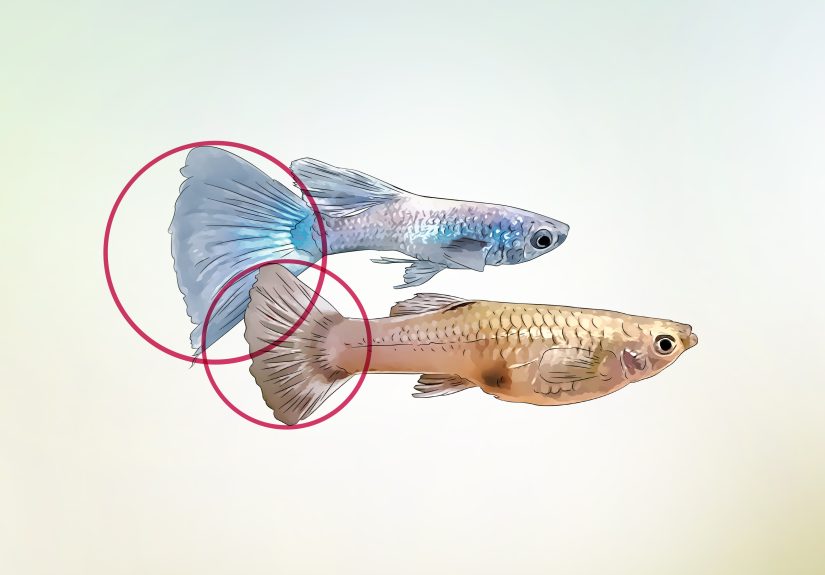
5) Tail & Dorsal Fins: Males Have Bigger, Flashier “Accessories”
Generally, male guppies have larger, more ornate tails (caudal fins) and more noticeable dorsal fins. Females usually have shorter, more modest fins.
This is especially obvious in many fancy varietiesmales can have flowing, dramatic tails, while females keep things more practical. If one fish looks like it’s wearing a ballroom gown and the other looks like it’s in comfy sneakers, odds are the “gown” is the male.
6) Gravid Spot: A Pregnancy Patch (Only Females Have It)
Many female guppies show a gravid spot: a darker area near the rear of the abdomen, close to the anal fin. This spot often becomes more obvious as pregnancy progresses.
Two key notes:
- The gravid spot can be subtle in some strains or lighting conditions, so don’t panic if you can’t see it clearly.
- A visible gravid spot is a strong “female” clue, but absence doesn’t automatically mean “male.” Confirm with anal fin shape.
7) Behavior: Males Court; Females “Manage the Situation”
Behavior isn’t as foolproof as anatomy, but it’s a helpful supporting clue. Male guppies often:
- Chase females or hover near them
- Perform quick “display” movements (a kind of show-off swim)
- Compete with other males for attention
Females tend to be less display-focused and may avoid persistent malesespecially if there aren’t enough hiding places or the male-to-female ratio is unbalanced.
Quick Comparison Table: Male vs. Female Guppies
| Feature | Male Guppy | Female Guppy |
|---|---|---|
| Anal fin | Pointed rod-like gonopodium | Fan/triangle-shaped anal fin |
| Size | Usually smaller | Usually larger |
| Body shape | Slimmer | Rounder, deeper-bodied |
| Color | Brighter, more patterned | More muted (often), color may concentrate in tail |
| Tail & dorsal fins | Larger, more ornate | Shorter, less dramatic |
| Gravid spot | No | Often yes (especially when mature/pregnant) |
| Typical behavior | Courts, chases, displays | More reserved; may avoid persistent males |
The 30-Second Sex Check (A Simple Checklist)
- Look for the anal fin shape: pointed rod = male; fan = female.
- Check body profile: slender = likely male; rounder/deeper = likely female.
- Scan for a gravid spot: dark patch near rear belly = female clue.
- Compare fins: larger, showier tail/dorsal often points to male.
- Use behavior as a bonus clue: persistent chasing/display suggests male.
Common Mistakes (And How to Avoid Them)
Mistake #1: “It’s colorful, so it must be male.”
Usually true, but fancy guppy breeding can blur the lines. Always confirm with the anal fin.
Mistake #2: Misreading fins because the fish is stressed
Stress can cause “clamped fins,” making shapes harder to see. Observe in calm conditions and good lighting.
Mistake #3: Confusing pregnancy with overeating or bloat
A pregnant female often develops a larger belly and may look more “boxy” near the end. But bloating, constipation, or illness can also cause swelling. If the fish is lethargic, pineconing (raised scales), or refusing food, treat it as a health concernnot a baby countdown.
Mistake #4: Trying to sex very young fry too early
Very young guppies can be tricky. You’ll get better accuracy as fish mature and the anal fin differences become clear. If you’re sorting juveniles, revisit your IDs weekly instead of making one permanent decision on day one.
If You End Up With Mixed Sexes: What to Expect
If you keep males and females together, breeding is extremely likely. Even if you separate them later, females can sometimes produce multiple batches after prior contact with males. That’s why “I separated her weeks ago” doesn’t always mean “no fry incoming.”
If you want fewer stressed females, many keepers aim for more females than males (for example, 1 male to 2–3 females), plus dense plants or decorations so fish can rest and hide when needed.
Real-World Keeper Experiences: What People Notice (And What Actually Helps)
Ask a room full of guppy keepers how they learned to sex guppies and you’ll get the same vibe as asking people how they learned to cook: some read instructions, many learned by doing, and nearly everyone has at least one “oops” story they tell with the confidence of a veteran. The most common experience is this: someone buys “a few guppies,” notices one fish looks bigger (cute!), and thentwo to six weeks latertiny fry appear like confetti. At that point, sexing guppies becomes less of a hobby skill and more of a survival skill.
One of the first practical lessons keepers share is that the gonopodium beats every other clue. People often start with color (“the pretty one is male”), but then they meet fancy strains where females can show tail color or shimmer too. That’s when the advice shifts from “look at the colors” to “look under the fish.” Many hobbyists use a simple trick: they watch the guppy swim against the front glass and wait for a moment where the fish angles slightly upward. That brief angle makes the anal fin easier to see. It’s not glamorousbut neither is counting surprise babies at midnight.
Keepers also frequently mention that lighting changes everything. Under warm room light, a gravid spot can look faint. Under bright aquarium LEDs, it can appear much more obvious. Some people do a quick “double-check” routine: observe in the tank first, then (only if necessary) gently guide the fish into a clear container filled with tank water for a closer lookno chasing with nets like it’s an Olympic sport. A calm fish shows its features better, and you’re less likely to stress it.
Another widely shared experience: juveniles love to humble you. A group of young guppies can look like “all females” until, week by week, a few suddenly develop that unmistakable pointed anal fin and start coloring up. Many keepers say their accuracy improved when they stopped trying to make one final call early and instead treated sexing as a processcheck at 4–6 weeks, again at 6–8 weeks, and once more if you’re sorting for breeding projects. This approach also helps with the classic mistake: labeling a fish “female” simply because it’s not colorful yet, only to watch it turn into a bright male later.
Behavior is another “experience-based” clue people rely onbut mostly as backup. Many keepers describe males as the tank’s tiny hype-men: constantly displaying, darting, and attempting to impress anything that moves (including, occasionally, the filter intakeguppies are nothing if not optimistic). Females, on the other hand, often look like they’re going about their day while politely ignoring the chaos. Experienced keepers rarely use behavior alone to sex guppies, but they do use it as a confidence booster when anatomy is hard to see.
Finally, a very common real-world takeaway is that sexing guppies is easier when your tank setup supports it. Dense plants, floating cover, and low-stress conditions lead to better viewing and healthier fish. People also mention that keeping more females than males reduces nonstop chasingsomething you can literally see in the fish’s body language. In other words: learning the differences is important, but giving your guppies a comfortable environment makes the whole identification process smoother. Your fish look better, act calmer, andbonusyour “guppy detective work” becomes way less dramatic.
Conclusion: The Fastest Way to Get It Right
If you want the quickest accurate answer, check the anal fin. A pointed, rod-like gonopodium = male. A fan-shaped anal fin (often paired with a gravid spot and a rounder body) = female. Color, size, and behavior are valuable clues, but anatomy is your best proof. Combine two or three signs and you’ll be confidently sexing guppies like it’s just another part of aquarium lifebecause it is.