Table of Contents >> Show >> Hide
- What Is Blossom End Rot and How Do You Recognize It?
- Why Blossom End Rot Happens
- How to Prevent Blossom End Rot on Tomatoes: Step-by-Step
- 1) Start with a soil test before planting
- 2) Set soil pH in the tomato-friendly range
- 3) Build a consistent watering routine (the BER game-changer)
- 4) Mulch early and mulch well
- 5) Fertilize for balance, not bragging rights
- 6) Protect roots like your harvest depends on it (because it does)
- 7) Choose varieties strategically
- 8) Don’t plant into cold, stressed conditions
- 9) Manage containers differently from in-ground beds
- 10) Watch the first fruit set closely
- What to Do If BER Already Appears
- Common Myths About Blossom End Rot
- Quick Troubleshooting Checklist
- Seasonal Prevention Plan (Simple Calendar)
- Experience Notes from Real Gardens (Added 500+ Words)
- Conclusion
You wait all spring for your tomato plants to finally do their thing, and thenbamyour beautiful fruit develops a dark, sunken patch on the bottom like it lost a bar fight with gravity. That frustrating condition is blossom end rot (BER), and if you grow tomatoes long enough, you’ll probably meet it. The good news? BER is usually preventable. Better news? It’s not a contagious disease invading your garden like a villain in a superhero movie.
Blossom end rot happens when developing fruit doesn’t get enough calcium at the right time. But that doesn’t automatically mean your soil has no calcium. Most of the time, the bigger issue is calcium delivery: inconsistent moisture, stressed roots, fertilizer imbalance, or environmental swings that disrupt uptake. Think of calcium as a package and water as the delivery truck. If the truck route is chaotic, the package arrives late (or not at all), and the tomato’s blossom end pays the price.
In this in-depth guide, you’ll learn how to prevent blossom end rot on tomatoes with practical, field-tested strategies: watering rhythms that actually work, soil prep that sets plants up for success, fertilizer choices that avoid nutrient traffic jams, and recovery tactics if BER already appears. Whether you’re growing heirlooms in raised beds, paste tomatoes in containers, or cherries in the backyard, this playbook helps you protect your harvest and keep those fruits firm, full, and black-spot free.
What Is Blossom End Rot and How Do You Recognize It?
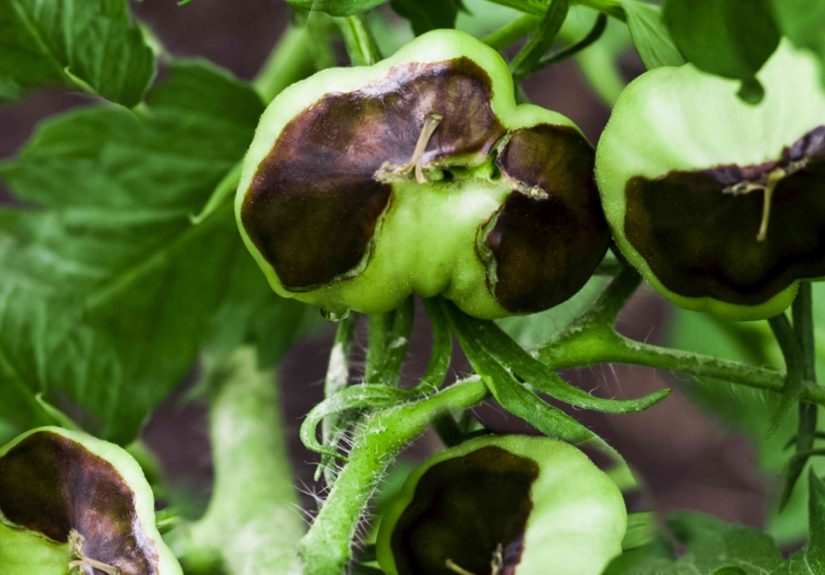
Blossom end rot usually starts as a pale, water-soaked spot on the blossom end (the bottom of the fruit opposite the stem). That spot enlarges, darkens, and becomes sunken, leathery, and black-brown. In severe cases, it can affect a large portion of the fruit. Sometimes secondary fungi or bacteria move in later, but BER itself is a physiological disordernot an infectious tomato disease.
Classic signs gardeners notice first
- Dark, flattened, sunken lesion on the blossom end
- Most common on early fruit set and fast-growing fruit
- More frequent on large-fruited, plum, or paste types than on cherry tomatoes
- Can show up on green fruit before ripening
If your leaves look mostly fine but fruit bottoms are collapsing, BER is a likely culprit. If lesions are all over fruit surfaces, stems, and leaves, you may be dealing with a disease instead. Correct diagnosis saves time, money, and many unnecessary sprays.
Why Blossom End Rot Happens
To prevent blossom end rot on tomatoes, you need one core idea: BER is about localized calcium deficiency in the fruit, often caused by poor movement of calcium rather than total absence of calcium in the soil. Calcium moves with water flow, and fruits are weaker competitors for calcium than leaves. So anything that disrupts steady root uptake can trigger BER.
Top BER triggers
- Inconsistent watering: Drought followed by heavy watering is a common pattern.
- Root stress or damage: Aggressive hoeing, root crowding, nematodes, or compaction can reduce uptake.
- Overfertilization (especially high nitrogen): Excessive vegetative growth can outpace calcium movement to fruits.
- Nutrient antagonism: High ammonium, potassium, magnesium, or salinity can interfere with calcium availability and uptake.
- Low pH and low calcium soils: In some gardens, true calcium shortage does exist and must be corrected.
- Environmental stress: Heat spikes, rapid growth, and moisture extremes increase risk.
In plain English: tomato plants are thirsty, dynamic systems. If you keep moisture and nutrition steady, BER usually falls dramatically after early fruits.
How to Prevent Blossom End Rot on Tomatoes: Step-by-Step
1) Start with a soil test before planting
This is your best first move. A basic test reveals pH, calcium status, and fertilizer needs. Don’t guess with random amendments from social media hacks. If your test shows low calcium or low pH, fix that before plants go in. Prevention is easier than correction once fruit is forming.
2) Set soil pH in the tomato-friendly range
Tomatoes generally perform best when pH is around the mid-6s. If soil is too acidic, calcium becomes less available. Lime can raise pH and add calcium over time; gypsum can add calcium with less pH impact. Use recommended rates from your soil test report rather than “a handful here and there.”
3) Build a consistent watering routine (the BER game-changer)
If there is one habit that most reduces blossom end rot, it is steady moisture. Aim for deep, even watering instead of feast-or-famine cycles. Many home gardens do well with about 1 to 1.5 inches of water per week total (rain + irrigation), adjusted for heat, soil type, and container size.
- Water deeply, not just surface sprinkles
- Check moisture 4–6 inches down before watering again
- Increase frequency during hot, windy spells
- Use drip irrigation or soaker hoses when possible
4) Mulch early and mulch well
A 2–3 inch mulch layer is like climate control for your root zone. It reduces evaporation, smooths soil temperature swings, and helps keep moisture stableexactly what BER hates. Straw, shredded leaves, composted bark, or clean grass clippings all work when applied thoughtfully.
5) Fertilize for balance, not bragging rights
Tomatoes are heavy feeders, yes. But overfeeding early, especially with high nitrogen or ammonium-heavy fertilizers, can boost leafy growth at the expense of fruit calcium balance. Use a balanced plan:
- Moderate pre-plant fertility
- Side-dress only as needed based on plant appearance and soil status
- Avoid repeated “just in case” nitrogen doses
- Prefer nitrate forms over ammonium-heavy options when BER risk is high
6) Protect roots like your harvest depends on it (because it does)
Once tomatoes establish, minimize cultivation near the base. Chopping up feeder roots means less water and calcium transport. Also avoid root zone compaction from frequent foot traffic and keep weeds in check so roots don’t compete for moisture.
7) Choose varieties strategically
No variety is totally immune, but susceptibility differs. Large-fruited, elongated, and paste tomatoes often show BER more readily than cherry types. If BER has wrecked your last two seasons, add more cherries or less-sensitive slicers while improving management.
8) Don’t plant into cold, stressed conditions
Cold soil slows root function. Weak early roots plus rapid top growth later is a classic setup for BER. Wait until soil is warm enough, harden seedlings properly, and avoid transplant shock. A calm start often means cleaner first fruit clusters.
9) Manage containers differently from in-ground beds
Container tomatoes dry out faster and can swing from wet to dry in one hot afternoon. That fluctuation drives BER risk up.
- Use larger containers (at least 10–15 gallons for indeterminate types)
- Choose high-quality potting mix with good water-holding and drainage
- Water consistently, sometimes daily in hot weather
- Use mulch even in containers
- Avoid salt buildup from frequent fertilizer applications
10) Watch the first fruit set closely
BER often strikes early fruit first. Catching it quickly lets you correct watering and nutrition before the next wave of fruit develops. Don’t panic if a few early tomatoes show symptoms; plants often produce normal fruit once conditions stabilize.
What to Do If BER Already Appears
Let’s say you’re reading this after spotting black-bottom tomatoes. You’re not doomed. Take these corrective steps immediately:
- Normalize watering: shift to deep, consistent irrigation.
- Mulch now: lock in moisture and reduce daily swings.
- Remove severely affected fruit: this helps the plant redirect energy to new fruit set.
- Pause excess nitrogen: avoid pushing lush foliage growth.
- Check pH and calcium status: confirm whether true calcium deficiency exists.
- Protect roots: stop deep cultivation around plants.
Important reality check: a damaged fruit won’t “heal.” Prevention targets future fruit, not cosmetic repair of existing lesions.
Common Myths About Blossom End Rot
Myth 1: “BER means my soil has zero calcium.”
Not always. Many BER cases happen even when soil calcium is adequate because transport to fruit is disrupted by moisture stress or nutrient imbalance.
Myth 2: “Crushed eggshells in the planting hole fix BER instantly.”
Eggshells break down slowly. They are not a fast rescue strategy during active fruiting.
Myth 3: “Any calcium spray will cure all affected fruit.”
Foliar products can’t compensate for poor moisture management. If water delivery and root health remain unstable, BER will continue.
Myth 4: “It spreads from one tomato to another.”
BER is physiological, not contagious. You don’t need fungicide as a primary BER solution.
Quick Troubleshooting Checklist
- Soil test done this season?
- pH roughly in the mid-6 range?
- Watering deep and even each week?
- Mulch applied 2–3 inches?
- Nitrogen applied moderately, not heavily?
- No recent root disturbance?
- Container size adequate and not drying out daily?
- Plant variety known to be BER-prone?
If you answered “no” to two or more items, you likely found your BER pressure points.
Seasonal Prevention Plan (Simple Calendar)
Before planting
- Run soil test
- Correct pH and calcium if needed
- Choose less BER-prone varieties for part of your crop
- Install drip or soaker irrigation
At transplant
- Plant in warmed soil
- Water deeply at planting
- Mulch after soil warms
- Avoid overloading with nitrogen
Early fruiting
- Maintain consistent moisture
- Scout first fruit clusters twice weekly
- Remove BER fruit promptly
- Adjust watering during heat spells
Peak summer
- Prevent drought stress
- Maintain mulch thickness
- Avoid aggressive pruning that shocks plants
- Re-check fertility only if plants show true deficiency signs
Experience Notes from Real Gardens (Added 500+ Words)
Over several growing seasons, I kept a tomato notebook that started as “fun hobby data” and ended up becoming my BER prevention playbook. Year one was chaos: I had six varieties, random watering, and the confidence of someone who had read half an article and believed they were now an agronomist. By mid-season, my paste tomatoes looked like tiny black-bottomed bowling balls. I blamed everything from seed quality to lunar cycles. The actual problem? I was watering deeply on weekends, lightly during weekdays, and letting containers swing from dry to soaked.
In year two, I made one major change: consistency. I added drip lines in raised beds and set a simple schedule, then adjusted only for rainfall and heat. I also mulched earlier and stopped scratching around plants with a hoe every time I saw one weed. BER didn’t disappear overnight, but it changed dramatically. The first flush still had a few damaged fruits, especially on Roma types, but later sets came in clean. That season taught me a key lesson: when moisture is stable, the plant behaves like it trusts you again.
Year three was the container experiment. I grew the same variety in three setups: a 5-gallon bucket, a 10-gallon fabric pot, and a 15-gallon container with thicker mulch. Same feed program, same patio, same sunlight. Guess which one threw the biggest BER tantrum? The 5-gallon bucket. It dried quickly, heated up fast, and demanded near-daily watering in hot weeks. The larger containers buffered moisture and temperature better, and BER incidence dropped hard. That test changed how I advise anyone growing tomatoes on balconies: if you can upgrade container volume, do it before buying fancy additives.
I also learned that fertilizing less aggressively can produce better fruit outcomes. Early on, I chased dark green leaves because they looked “healthy,” but I was essentially pushing lush growth while fruit calcium balance lagged behind. Once I dialed nitrogen back to moderate levels and focused on timing rather than quantity, BER pressure eased. The plants were still vigorous, just less overexcited.
Another practical lesson came from weather extremes. One summer brought a hot, windy stretch that dried beds faster than expected. BER popped up right after that week, even though I thought I was watering enough. Since then, I don’t treat watering like a fixed rule; I treat it like a weekly decision based on temperature, wind, rainfall, and plant stage. A moisture probe helped, but even a finger test at root depth gave better decisions than sticking to an unchanging calendar.
The most reassuring part for beginners is this: BER early in the season does not mean the whole harvest is ruined. I’ve had plants with ugly first clusters go on to produce baskets of beautiful tomatoes once water management stabilized. The trick is to respond quickly, not emotionally. Remove affected fruit, smooth out watering, protect roots, and avoid panic-fertilizing. Tomatoes are surprisingly forgiving if you give them steady conditions.
If I had to summarize all those seasons in one sentence, it would be this: blossom end rot is rarely beaten by a miracle product, but it is often beaten by better rhythm. Soil prep, watering consistency, moderate feeding, and root care may sound boring compared with internet hacksbut boring wins harvests.
Conclusion
Preventing blossom end rot on tomatoes is less about quick fixes and more about systems: stable soil moisture, balanced fertility, healthy roots, and smart variety choices. BER can look dramatic, but it’s usually manageable when you control the factors that govern calcium movement to developing fruit. Use a soil test, water deeply and consistently, mulch generously, avoid fertilizer excess, and protect the root zone. Do that, and your tomatoes are far more likely to ripen the way nature intended: plump, delicious, and gloriously free of black-bottom heartbreak.