Table of Contents >> Show >> Hide
- Why Roast Red Peppers?
- Pick the Right Peppers (Yes, It Matters)
- The Core Technique (Works for Every Method)
- Method 1: Oven Roasted Red Peppers (Hands-Off and Batch-Friendly)
- Method 2: Broiled Red Peppers (Maximum Char, Minimal Time)
- Method 3: Fire Roasted Red Peppers on a Gas Burner (Smoky and Dramatic)
- Method 4: Grill Roasted Red Peppers (Party-Size and Summery)
- Method 5: Air Fryer Roasted Red Peppers (Small Batch, Surprisingly Great)
- How to Store Roasted Red Peppers (Without Making Your Fridge a Science Experiment)
- What to Do With Roasted Red Peppers (Besides Eating Them Out of the Container)
- Troubleshooting: When Peppers Fight Back
- Conclusion
Roasting red peppers is one of those kitchen glow-ups that feels like cheating. A raw red bell pepper is crisp, watery, and mildly sweet. Roast it and suddenly it’s soft, smoky, sweet like candy, and fancy enough to make your Tuesday pasta feel like it has a publicist.
This guide shows you multiple reliable ways to roast red peppersoven, broiler, open flame, grill, and even air fryer plus how to peel them without losing your mind (or all the tasty juices). We’ll also cover storage, food-safety common sense, and what to do with that pile of silky roasted red pepper goodness once you’ve made it.
Why Roast Red Peppers?
Roasting does three great things:
- Sweetness gets louder: High heat concentrates flavor and caramelizes natural sugars.
- Smoky depth shows up: Charring the skin adds that “I own a restaurant” vibe.
- The skins come off easily: Once blistered and steamed, the peel practically slips away.
Pick the Right Peppers (Yes, It Matters)
For the best roasted red peppers, grab peppers that are:
- Heavy for their size: More flesh, less sadness.
- Glossy and firm: Wrinkles are for faces and linen, not bell peppers.
- Evenly red: Fully ripe peppers roast sweeter than ones that are half red, half “still figuring it out.”
What You’ll Need
- Red bell peppers (as many as you wantroasting scales beautifully)
- Sheet pan and foil (or parchment if not broiling)
- Tongs
- A bowl and a lid/plate, or foil/plastic wrap for steaming (“sweating”)
- A small knife for seeds and membranes
- Optional: a little olive oil, paper towels, gloves (for heat and char)
The Core Technique (Works for Every Method)
No matter how you roast, the winning formula is the same: Char → Steam → Peel → Trim → Store/Use.
1) Char the Skin
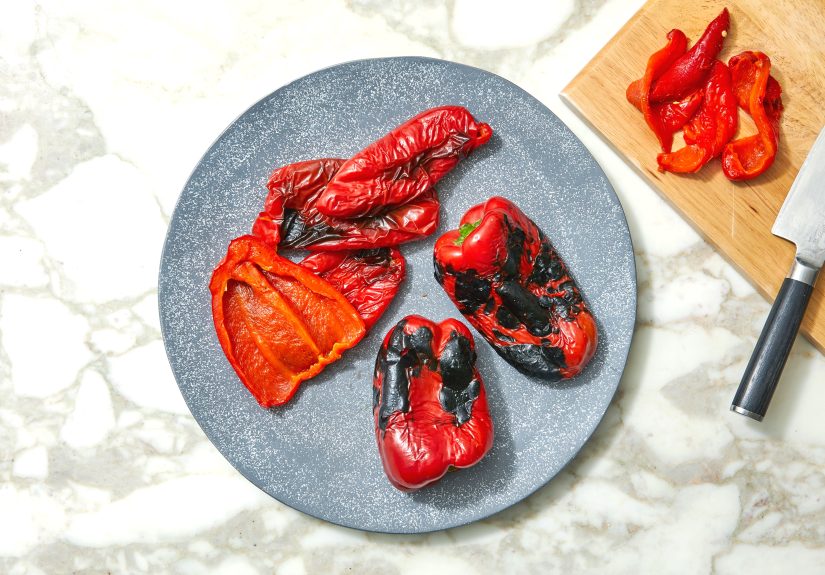
You’re aiming for blistered, blackened patches on the peel. This is not the moment for “lightly toasted.” If the skin isn’t properly charred, peeling becomes a sticky scavenger hunt.
2) Steam (a.k.a. Sweat)
As soon as the peppers come off the heat, trap them in a covered bowl, a lidded container, or under foil for 10–20 minutes. The steam loosens the skin and makes peeling dramatically easier.
3) Peel Without Washing Away Flavor
Once cool enough to handle, peel off the charred skin with your fingers or the back of a knife. Try not to rinse under running water unless you mustwater can wash off flavorful oils and juices. If you really want a cleaner peel, peel them in a bowl of water (less flavor loss than blasting them under the tap).
4) Trim, Slice, and Save the Juices
Remove stem, seeds, and white membranes. Slice into strips, dice into chunks, or keep them in flat pieces. Don’t throw out the juices that collect in the bowlthey’re basically pepper-flavored gold. Stir them into sauces, vinaigrettes, or marinades.
Method 1: Oven Roasted Red Peppers (Hands-Off and Batch-Friendly)
If you’re roasting a lot of peppers, the oven is your best friend. It’s easy, repeatable, and doesn’t require you to stand there turning peppers like you’re on a rotisserie duty assignment.
Option A: Roast Halved Peppers (Fast Peel, Less Mess)
- Heat oven to 450°F.
- Slice peppers in half lengthwise. Remove stems, seeds, and membranes.
- Place on a foil-lined sheet pan cut-side down (skin up).
- Roast 20–30 minutes, until skins are well blistered and dark.
- Steam in a covered bowl for 10–20 minutes, then peel.
Why this works: halving flattens the pepper so the skin gets direct heat, and you can remove seeds before roasting (aka: no hot pepper seed confetti later).
Option B: Roast Whole Peppers (Classic, Slightly Juicier)
- Heat oven to 450°F.
- Place whole peppers on a foil-lined sheet pan.
- Roast 30–40 minutes, turning once or twice if your oven has hot spots.
- Steam covered 10–20 minutes, peel, then remove seeds and membranes.
Whole peppers can hold onto more juices, which is great for flavor, but they take longer and need turning.
Method 2: Broiled Red Peppers (Maximum Char, Minimal Time)
The broiler is the “fast lane” method. It’s especially good when you want that deep blistered skin quickly. Just stay nearbybroilers go from “perfect” to “blackened regret” faster than you can say “I’ll just check one email.”
- Set broiler to high. Position rack about 4–6 inches from the heat source.
- Use halved peppers (cut-side down) or whole peppers on a foil-lined sheet pan.
- Broil until skins are blistered and blackened in spots, typically 10–15 minutes.
- If using whole peppers, turn with tongs as needed for even charring.
- Steam covered 10–20 minutes, then peel.
Broiler tip: If your pepper pieces curl and won’t char evenly, press them flatter with tongs (carefully), or roast halves instead of quarters. Flat peppers brown better.
Method 3: Fire Roasted Red Peppers on a Gas Burner (Smoky and Dramatic)
This is the classic “look at me, I’m cooking” methodand it really does deliver great smoky flavor. It’s also the method most likely to make your smoke alarm feel included, so turn on the hood fan.
- Turn a gas burner to medium-high.
- Place a whole pepper directly over the flame (or on a metal grate).
- Use tongs to rotate every 20–60 seconds until the skin is charred on all sides.
- Steam covered 10–20 minutes, then peel.
If you don’t have a gas stove, you can get similar results on a grill or with the broiler.
Method 4: Grill Roasted Red Peppers (Party-Size and Summery)
The grill is perfect when you’re already cooking outside. Roast peppers while the burgers rest and suddenly you’re serving “handcrafted roasted pepper topping” instead of “we ran out of ketchup.”
- Preheat grill to medium-high.
- Place whole peppers directly on the grates.
- Turn every few minutes until charred all over, about 10–15 minutes.
- Steam covered 10–20 minutes, then peel.
Method 5: Air Fryer Roasted Red Peppers (Small Batch, Surprisingly Great)
If you want roasted red peppers without heating up the whole kitchen, the air fryer is a solid option. You won’t get quite the same open-flame smokiness, but you’ll still get blistered skin and sweet, softened flesh.
- Preheat air fryer to 390–400°F if your model preheats.
- Place whole peppers or large halves in the basket in a single layer.
- Air fry 10–18 minutes, turning once, until blistered and softened.
- Steam covered 10 minutes, then peel.
How to Store Roasted Red Peppers (Without Making Your Fridge a Science Experiment)
Short-Term Storage
- Refrigerator: Store in an airtight container for 5–7 days.
- With olive oil: You can add a thin layer of oil to reduce drying. Keep refrigerated.
Long-Term Storage
- Freezer: Freeze in a zip-top bag (press out air). They keep well for several months.
- Pro move: Freeze in strips on a sheet pan first, then bag them. That way you can grab a handful at a time.
Important Safety Note About Peppers in Oil
Storing roasted peppers (especially with garlic/herbs) in oil at room temperature is not a good idea. Moist, low-acid foods submerged in oil can create conditions where harmful bacteria can grow. If you want shelf-stable peppers, use a tested canning or pickling method from reliable sources. Otherwise, keep them refrigerated and don’t push storage times.
What to Do With Roasted Red Peppers (Besides Eating Them Out of the Container)
Once you’ve made homemade roasted red peppers, you’ll start looking for reasons to “accidentally” roast more. Here are easy, specific ways to use them:
- Blended sauce: Blend with olive oil, garlic, lemon, salt, and a little smoked paprika for a quick pepper sauce.
- Sandwich upgrade: Layer into grilled cheese, turkey sandwiches, or veggie wraps for sweetness and moisture.
- Pasta instant makeover: Toss with hot pasta, parmesan, basil, and a splash of pepper juices.
- Pizza topping: Add after baking to keep them silky and bright.
- Breakfast flex: Fold into scrambled eggs or pile onto avocado toast.
- Salads: Slice thin and pair with feta/goat cheese, olives, cucumbers, and a simple vinaigrette.
Troubleshooting: When Peppers Fight Back
“The skin won’t peel!”
- You probably didn’t char enough. Roast longer until the skin is truly blistered and dark.
- Steam longer. Give it another 10 minutes covered.
- Start peeling at a corner near the stem endskins often lift there first.
“My peppers taste bitter.”
- Heavy black char can taste bitter if mixed into the flesh. Peel thoroughly.
- Try wiping with a damp paper towel instead of rinsing hard, so you remove char but keep flavor.
“They’re watery.”
- That’s normalpeppers release liquid as they cool. Drain (but save the liquid for cooking).
- If you want them drier for a sandwich, pat gently with paper towels.
“Can I roast peppers ahead of time?”
Absolutely. Roasted red peppers are meal-prep gold. Make a batch, store chilled, and you’ll have an instant flavor booster ready for sandwiches, pasta, salads, and snack attacks.
Conclusion
If you can char a pepper and cover a bowl, you can make roasted red peppers. The oven is best for big batches, the broiler is fastest, and open flame is the smokiest. Whichever method you choose, remember the golden rule: char well, steam briefly, peel gently, and save the juices.
Experience Notes from the Pepper Trenches (Extra )
The first time I roasted red peppers, I treated the peeling step like it was a polite suggestion. I roasted them until they were “sort of brown,” then tried to peel. Friends, it was like trying to remove a sticker that’s been through the dishwasher: tiny flakes, messy frustration, and a growing suspicion that the pepper was winning on purpose. The fix was simple (and mildly humbling): roast longer. The skin needs to blister like it has a strong opinion. Once I committed to real char, the peel slid off in satisfying sheets and I felt like I’d unlocked a secret level of adulthood.
Another lesson: steaming is not optional if you value your time. I once skipped it because I was impatient and also because the peppers looked “done.” Ten minutes later, I was picking at the peel with the focus of someone defusing a tiny food bomb. Now I do the covered-bowl steam every time. I’ll even set a timer because otherwise I’ll wander off and start reorganizing the spice drawer like that’s suddenly urgent. When I come back, the peppers are easy to peel, and the bowl has collected those sweet pepper juices that instantly make sauces better. (I’ve started calling that liquid “pepper broth” to sound fancy, but really it’s just delicious.)
I’ve also learned that different roasting methods match different moods. Oven roasting is my weekday workhorse: I can roast six peppers at once, peel them, then stash them for lunches. Broiling is for when I forgot I promised roasted red pepper hummus and guests are already texting “on our way.” Open flame is for when I want maximum smoky flavor and I’m emotionally prepared to turn peppers with tongs while the kitchen fan does its best impression of a jet engine.
The biggest “I will never do that again” moment was storing peppers in oil like I was running a rustic Italian market stall, then letting them hang out too long. Now I keep it simple: peppers go into the fridge, labeled, and used within the week. If I want a longer runway, they go straight into the freezer in a bag, flattened so they thaw quickly. Future-me always appreciates thatespecially on nights when cooking energy is low and the idea of “instant smoky sweetness” feels like a gift.
Finally, the most fun part: the accidental ways roasted peppers sneak into everything. A strip here becomes a sandwich MVP. A handful there gets blended into pasta sauce for instant richness. A few slices on eggs make breakfast taste like a brunch menu item. The moral is that roasting red peppers is less a recipe and more a lifestyle choice. A tasty one.