Table of Contents >> Show >> Hide
- What Actually Happened at the Premiere?
- Why the Internet Reacted Like It Had Just Seen a Meteor
- The Context Many People Conveniently Ignored
- Scarlett Johansson, Marriage, and the Public’s Endless Curiosity
- Jonathan Bailey’s Role in Why the Story Took Off
- Why This Was Perfect Tabloid Material
- The Movie Behind the Buzz: Jurassic World Rebirth
- What This Moment Really Says About Celebrity Culture
- The Bigger Takeaway
- Related Experiences: Why Moments Like This Feel So Big Online
- Conclusion
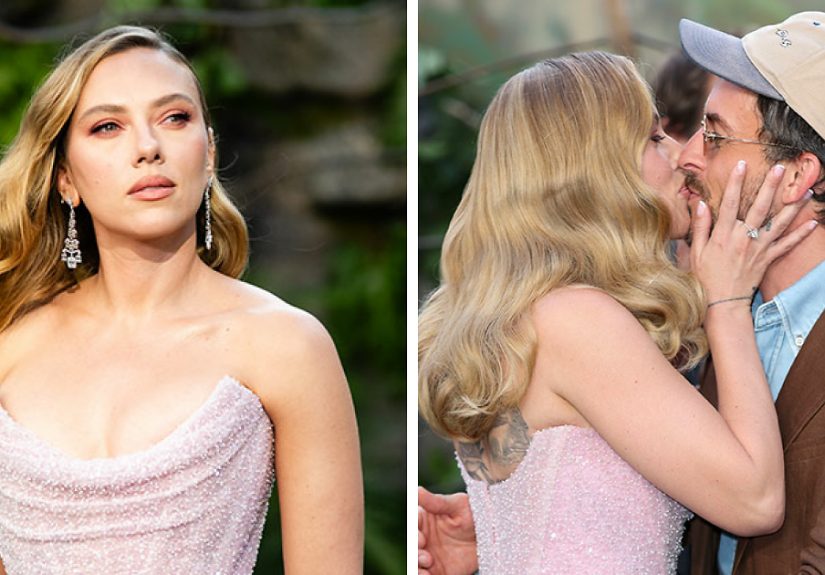
Hollywood red carpets are powered by three things: couture, camera flashes, and at least one moment dramatic enough to send the internet into a full-body spiral. In June 2025, that moment arrived courtesy of Scarlett Johansson and her Jurassic World Rebirth costar Jonathan Bailey, who shared a quick kiss on the lips at the film’s premiere and promptly launched a thousand pearl-clutching comments. The loudest reaction was also the most predictable: “Isn’t she married?”
Yes, she is. And that, oddly enough, is exactly why the story became clickbait rocket fuel. A married A-list actress. A handsome costar. A public kiss. A red carpet. A waiting internet. Mix well, serve hot, and watch social media act like it just discovered scandal for the first time. But once the confetti of outrage settles, the real story is less “Hollywood affair” and more “the internet still struggles with context.”
This viral celebrity moment was never just about a kiss. It was about how quickly audiences turn a snapshot into a storyline, how celebrity marriages become public property in fan culture, and how affection between friends still confuses people more than a dinosaur loose in a major city. The result was a frenzy that said as much about online spectatorship as it did about Johansson, Bailey, and the film they were promoting.
What Actually Happened at the Premiere?
The now-viral moment happened during the Jurassic World Rebirth promotional tour, first in London and then again in New York. Johansson and Bailey, both dressed like they understood exactly how a blockbuster red carpet is supposed to work, greeted each other with a brief kiss that photographers captured from every possible angle. On the surface, it looked intimate. In context, it read more like playful, affectionate costar energy between two people clearly comfortable with one another.
And because the internet never believes in doing anything halfway, the images spread instantly. Entertainment outlets ran with the visual. Social media users zoomed in like they were working a forensic lab. Comment sections lit up with reactions ranging from amused to scandalized to deeply overinvested. Some fans called it sweet. Others acted like they had been personally appointed guardians of celebrity marriage law.
What made the second kiss at the New York premiere even juicier for gossip accounts was that Johansson’s husband, Colin Jost, was also present. If you wanted a headline engineered for maximum engagement, this was basically catnip. Suddenly the story was not just “Scarlett Johansson kisses costar,” but “Scarlett Johansson kisses costar in front of husband,” which is the kind of wording tabloid editors probably frame and hang on walls.
Why the Internet Reacted Like It Had Just Seen a Meteor
Celebrity culture loves a contradiction, and the public still tends to treat marriage as a kind of visual contract. Once someone is publicly known as a spouse, every interaction gets filtered through a suspicious little lens. A hug becomes a clue. A hand on a shoulder becomes “chemistry.” A red carpet kiss becomes an emergency summit in the comments section.
That reaction was intensified because Scarlett Johansson is not a fringe celebrity. She is one of the most recognizable actresses in the world, with a long career that spans indie films, prestige projects, romantic dramas, and global franchises. She carries star power in the old-school sense: when she appears somewhere, people notice. Add a viral image to that level of fame, and the internet does what it does bestturn a split second into a morality play.
There is also the simple fact that audiences are conditioned to read romance into publicity. Press tours are built on chemistry. Studios want casts that feel charming, connected, and memeable. Fans are trained to consume tiny momentsglances, jokes, gestures, interviewsas if they are bonus scenes from the movie. So when Johansson and Bailey appeared playful and affectionate, some people instantly treated it like a hidden subplot instead of what it appeared to be: two costars having fun during a heavily photographed campaign.
The Context Many People Conveniently Ignored
Context is not as flashy as outrage, but it tends to be more useful. Bailey has spoken openly about being gay, and both stars later framed the red carpet kisses as friendly affection rather than anything romantic. Johansson brushed off the attention with the vibe of someone mildly amused by the whole circus, while Bailey effectively argued that the world could use a little more warmth and a lot less panic.
That matters, because the conversation online often erased the actual people involved in favor of a more sensational plot. Instead of listening to what Johansson and Bailey said, some viewers decided the still photo told the “real” story. It is one of the strangest habits of internet culture: people insist they support authenticity right up until reality gets in the way of a more dramatic headline.
Then there was Colin Jost, who responded with exactly the kind of humor that made the speculation look even more overblown. Rather than acting threatened, he joked about it. That response did more than calm the narrative. It exposed how flimsy the scandal angle really was. When the husband at the center of the supposed controversy is making dinosaur-themed jokes about the whole thing, maybe it is time for the internet to put down the magnifying glass.
Scarlett Johansson, Marriage, and the Public’s Endless Curiosity
Johansson’s marriage to Jost has always drawn curiosity because it combines two very different celebrity energies. She is a major movie star with a global image; he is a comedian and writer whose public persona runs on understatement, wit, and the ability to make absurdity sound casual. Together, they present less as a tabloid super-couple and more as two adults who seem refreshingly unbothered by the performance art of celebrity marriage.
That may be why the premiere kiss caught so much attention. It clashed with the internet’s favorite simplistic categories. People like celebrity relationships when they are easy to label: stable, doomed, glamorous, messy, aspirational, suspicious. Johansson and Jost do not perform their marriage in a way that constantly feeds those labels, so when a visually provocative moment appears, audiences rush in to fill the silence with assumptions.
There is also a gendered layer to the reaction. Female celebrities are often judged more harshly for behavior that would be dismissed as playful if done by men. A male star can seem flirtatious and charismatic; a married woman doing something similarly cheeky suddenly gets treated like a case study in inappropriate conduct. The rules are inconsistent, emotional, and usually written by strangers with Wi-Fi.
Jonathan Bailey’s Role in Why the Story Took Off
Jonathan Bailey is not exactly invisible himself. Between prestige work, mainstream popularity, and a fan base that is both enthusiastic and chronically online, he brings his own gravitational pull to any headline. He also has a warm, openly affectionate public energy that makes him catnip for the internet. Put Bailey and Johansson together on a major franchise press tour, and the chemistry practically markets itself.
That does not mean the kiss was fake or staged in some grand conspiracy to sell movie tickets. It means both stars understand how red carpets work. They know cameras are watching. They know fans enjoy spontaneity. They know a little personality goes a long way in a promotional cycle often filled with repetitive questions and identical poses. A playful greeting can be both genuine and media-friendly at the same time. Hollywood did not invent that trick yesterday.
Bailey’s own comments after the fact also helped deflate the false scandal. He framed the kiss as affectionate friendship, not forbidden romance. That is important because it pushes against the strangely rigid way many people still define physical affection. In some corners of public opinion, if two attractive celebrities touch each other in any way beyond a handshake, the wedding bells and divorce lawyers are apparently both on standby.
Why This Was Perfect Tabloid Material
If you were designing a celebrity story in a lab for maximum traffic, you would not do much better than this. Start with a world-famous actress. Add a beloved costar. Insert a blockbuster premiere. Sprinkle in marriage discourse. Then release a photograph with just enough ambiguity to let everyone project whatever fantasy or fear they want onto it. Congratulations, your content has now achieved escape velocity.
It also helped that the moment was so visually neat. A still image can be far more explosive than a full video because it strips away movement, tone, and timing. A quick, friendly greeting becomes a frozen frame that looks more loaded than it felt in real life. That is one of the oldest tricks in celebrity coverage: a photograph suggests mystery, while context tends to ruin the fun.
Media outlets understand this dynamic perfectly. Even when the reporting is straightforward, headlines are often engineered to sound breathless because breathlessness pays the bills. A title that asks whether Johansson’s marriage is somehow in danger will always outperform one that says, “Two costars who are friends continue being friends in public.” Sadly, accuracy is not always the life of the party.
The Movie Behind the Buzz: Jurassic World Rebirth
Another reason the kiss dominated entertainment coverage is that it happened during the rollout for a huge studio release. Jurassic World Rebirth was not some tiny film screening where only industry insiders were paying attention. It was a major franchise event backed by a publicity machine built to generate conversation. Johansson, Bailey, and the rest of the cast were already under a microscope because the film represented another evolution of a globally recognized series.
In that environment, every premiere moment becomes part of the campaign ecosystem whether anyone intends it or not. Fashion details become content. Smiles become content. A weirdly adorable dinosaur prop becomes content. A two-second kiss between costars? That becomes enough content to feed the internet for days.
Still, it would be lazy to reduce the entire episode to promotion. The better reading is that the film tour created the stage, but the audience wrote the drama. Johansson and Bailey supplied a human moment. The culture around celebrity supplied the overreaction. Those are not the same thing, and the distinction matters.
What This Moment Really Says About Celebrity Culture
The fascination with this story reveals something larger than ordinary gossip. It shows how audiences now consume celebrity through a blend of fandom, surveillance, and instant judgment. People do not just look at famous faces anymore. They interpret them. They narrate them. They put them on trial based on facial expressions, body language, and one carefully timed camera angle.
That is why this kiss felt bigger than it was. It touched several obsession points at once: marriage, fame, sexuality, chemistry, publicity, and “forbidden” optics. But once you remove the dramatic packaging, what remains is a surprisingly ordinary human reality. Friends can be affectionate. Spouses can be secure. A public moment can be playful without becoming proof of some secret emotional crisis.
And maybe that is the funniest part. In a culture overflowing with actual scandal, the internet managed to turn one friendly red carpet smooch into a philosophical debate about commitment. Meanwhile, the people involved seemed to understand the joke before everyone else did.
The Bigger Takeaway
So, was Scarlett Johansson’s premiere kiss headline-worthy? Obviously. That is how celebrity media works. Was it evidence of trouble in paradise, some coded romance, or a crisis hidden behind couture and camera flashes? Not really. The most grounded interpretation is also the least dramatic: two costars with easy rapport shared a playful moment, fans reacted loudly, and the internet did what it always does when context arrives five minutes late.
The episode became memorable not because it exposed a shocking truth, but because it exposed a familiar habit. We still love the idea that every celebrity image contains a secret. We still assume marriage must look the same in every public setting. And we still forget that stars can be charming, affectionate, and unserious without detonating their personal lives.
In other words, the kiss was real, the panic was optional, and the dinosaurs were somehow still not the wildest part of the premiere.
Related Experiences: Why Moments Like This Feel So Big Online
Anyone who has watched a celebrity premiere unfold online knows the rhythm by heart. First comes the photo. Then comes the gasp. Then comes the caption written as if civilization has reached a turning point. Finallyusually much latercomes the context, trailing behind the outrage like a friend who got stuck in traffic. The Scarlett Johansson and Jonathan Bailey kiss fit that cycle almost perfectly, which is part of why it felt so enormous.
One of the most common audience experiences in moments like this is the illusion of participation. Fans are not standing on the carpet, not hearing the tone of the exchange, not seeing the two seconds before or after the photo. But a still image creates a feeling of access. People start talking as if they were eyewitnesses instead of spectators with a screenshot and strong opinions. That psychological shift is powerful. It turns entertainment news into something that feels personal, almost interactive.
There is also the speed factor. Modern celebrity culture does not leave much room for patience. A single image can hit social media, get repackaged by gossip accounts, bounce into short-form video, and land in comment sections across multiple platforms before traditional reporting even catches up. By the time the fuller explanation arrives, many viewers are already emotionally committed to a more dramatic version of events. They do not want clarity. They want the first story that made them feel something.
Another familiar experience is how people project their own expectations onto famous couples. Viewers often want celebrity relationships to behave like polished symbols. If a married actress kisses a friend hello, some people immediately treat it like a breach because they are judging it through their own rules, not the people involved. But public couples are still just couples. Their comfort levels, humor, boundaries, and habits may not match what strangers expect. The Johansson-Jost-Bailey moment highlighted that disconnect in a very public way.
There is a media experience here too. Readers are trained to click on tension. A headline framed around scandal feels urgent, while a headline framed around friendship feels optional. That means audiences often meet a story through suspicion first. Even if the article itself is balanced, the emotional tone has already been set. By the time readers get to the nuance, they have already been nudged toward judgment. It is not always malicious, but it is undeniably effective.
And then there is the oddly human side of it all: people are fascinated by affection. Not just romanceaffection. We are still not entirely comfortable with warmth that does not fit neat boxes. A kiss between friends, especially glamorous famous friends, can scramble expectations. Some viewers find it sweet. Others find it suspicious. The divide says less about the celebrities and more about the culture watching them.
That is why the Johansson-Bailey premiere moment lingered. It was not simply a kiss. It was a test case for how audiences process celebrity intimacy, marriage, friendship, and image-making in real time. And like many viral moments, it revealed that the public is often less interested in what happened than in what they can make it mean. That is the real experience around modern fame: the event lasts seconds, but the interpretation machine can run for days.
Conclusion
Scarlett Johansson did not break the internet because she confirmed a secret romance or detonated her marriage on a red carpet. She broke the internet because one playful kiss hit every pressure point of modern celebrity coverage at once. The photos were glamorous, the timing was perfect, the fan reactions were loud, and the context arrived just late enough for speculation to go sprinting through the streets like it had somewhere urgent to be.
But once the noise fades, the bigger picture is refreshingly simple. Johansson, Jonathan Bailey, and Colin Jost all responded like adults who understood the moment for what it was: affectionate, funny, public, and wildly overanalyzed. In a media environment that thrives on inflating every gesture into a crisis, that may be the most surprising twist of all. Sometimes a kiss at a premiere is just a kiss at a premiereand sometimes the real spectacle is the audience reaction.