Table of Contents >> Show >> Hide
- A Smartphone That Wanted to Be a Camera First
- The Kodak Ektra Name Comes With History
- Design: Retro Camera Vibes in a Smartphone Body
- Camera Hardware Built for Photography Enthusiasts
- Manual Controls: The Feature Photographers Actually Care About
- Software: Editing and Sharing Without Leaving the Phone
- Phone Specifications: More Than Just a Camera Shell
- Who Was the Kodak Ektra Smartphone For?
- Why the Kodak Ektra Stood Out
- The Big Question: Was It a Great Camera Phone?
- What Kodak Got Right
- Where the Concept Faced Challenges
- Why the Kodak Ektra Still Matters
- Photography Experience: Living With a Camera-First Smartphone
- Conclusion: Kodak’s Bold Camera Phone Experiment
Note: This article is based on real public information about the Kodak Ektra smartphone, originally unveiled by Kodak and Bullitt Group as a photography-first Android phone inspired by Kodak’s classic camera heritage.
A Smartphone That Wanted to Be a Camera First
When Kodak unveiled a new smartphone designed specifically for photographers, it was not trying to build just another shiny rectangle for scrolling, texting, and pretending to answer emails. The device, called the Kodak Ektra smartphone, arrived with a much louder ambition: to put camera culture back into the phone conversation.
At a time when major brands were racing to make phones thinner, sleeker, and more invisible in the hand, Kodak did something wonderfully stubborn. It made a phone that looked like it wanted to hang out with vintage rangefinders, leather camera straps, and people who say things like, “The light is beautiful right now,” while everyone else is just trying to eat lunch.
The Kodak Ektra was not only a phone with a camera. It was designed as a camera-first smartphone, built for people who cared about composition, color, manual controls, and the satisfying feeling of pressing an actual shutter button. In other words, Kodak was speaking directly to photographers, hobbyists, Instagram explorers, travel bloggers, and anyone who secretly believes the best seat at dinner is the one near the window.
The Kodak Ektra Name Comes With History
The name “Ektra” was not chosen randomly from a bowl of tech-sounding words. Kodak originally introduced the Ektra camera in 1941, and that camera became part of the company’s long imaging legacy. By reviving the name for a smartphone, Kodak was clearly reaching into its own photo album and pulling out a frame with sentimental value.
This mattered because Kodak was not just another brand licensing its name for a gadget. Kodak is deeply tied to the history of consumer photography. For generations, the company helped make photography feel approachable. Families used Kodak cameras on vacations, at weddings, during birthdays, and in those awkward school portraits where no one knew what to do with their hands.
With the Ektra smartphone, Kodak attempted to connect that emotional history with modern mobile photography. The idea was simple: if people are already taking most of their pictures on phones, why not give them a phone that feels more like a real camera?
Design: Retro Camera Vibes in a Smartphone Body
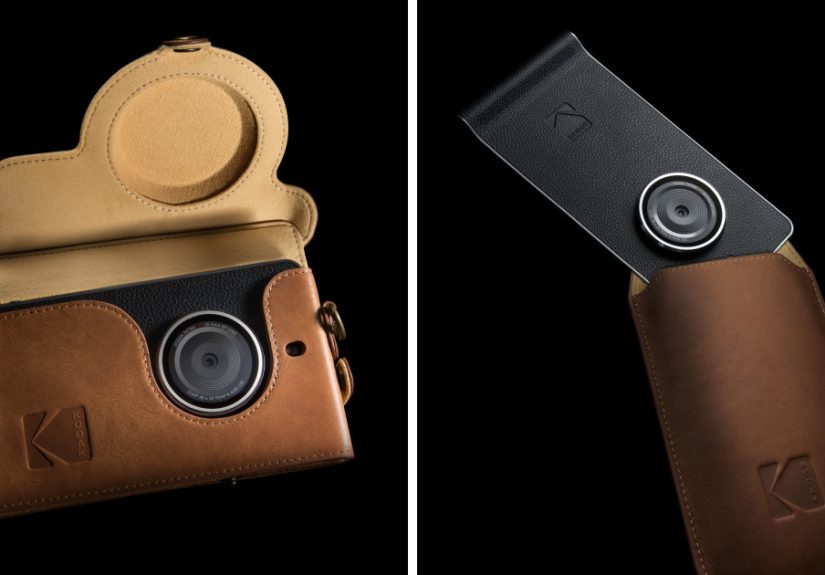
The first thing people noticed about the Kodak Ektra was its design. It did not look like a typical minimalist smartphone. Instead, it had a faux-leather back, a pronounced camera module, and a curved grip that made it easier to hold horizontally. The phone looked like it had wandered out of a camera shop, discovered Android, and decided to start a new life.
That design choice was more than decoration. Photographers often care about grip, balance, and handling. A thin glass phone may look elegant on a product page, but it can feel like trying to photograph a sunset with a wet bar of soap. The Ektra’s thicker body and camera-style grip made it more comfortable for shooting, especially in landscape orientation.
Kodak also included a dedicated dual-press shutter button. A half-press could help focus, while a full press captured the image, similar to the behavior of many traditional cameras. For photographers, this was not just nostalgia. It was muscle memory. It made the device feel more intentional than tapping a screen and hoping your thumb did not photobomb the moment.
Camera Hardware Built for Photography Enthusiasts
At the heart of the Kodak Ektra smartphone was a 21-megapixel rear camera with an f/2.0 aperture. It included phase detection autofocus, optical image stabilization, dual LED flash, and support for 4K video recording. On the front, Kodak added a 13-megapixel camera, giving selfie shooters more detail than many phones of its era offered.
The rear camera used a wide-angle lens with a 26.5mm equivalent focal length, making it useful for landscapes, street photography, travel shots, food photos, and everyday scenes. Wide lenses are popular on smartphones because they capture more of the scene, although some photographers may prefer a more natural 35mm or 50mm field of view for portraits and documentary-style work.
Still, the Ektra’s camera specifications were clearly designed to attract serious mobile photographers. The combination of a high-resolution sensor, bright aperture, optical stabilization, and fast autofocus gave Kodak a strong story to tell. On paper, the phone had the ingredients of a capable pocket camera.
Manual Controls: The Feature Photographers Actually Care About
One of the biggest selling points of the Kodak Ektra was its camera interface. Instead of hiding photography settings behind tiny menus, Kodak created a DSLR-inspired control system with a virtual mode dial. Users could switch between automatic shooting, manual mode, HDR, portrait, landscape, macro, sport, night, and other creative options.
The manual mode allowed users to adjust key settings such as ISO, shutter speed, white balance, exposure, and focus. For casual users, this may sound like a small control panel for launching a spaceship. For photographers, it was the fun part.
Manual controls give photographers the ability to make creative decisions. Want to slow the shutter for light trails? Adjust it. Need to reduce ISO for cleaner daylight shots? Go ahead. Want warmer white balance because the restaurant lighting makes everyone look like a sad potato? Fix it. The Ektra was built around the idea that mobile photography should not always be fully automatic.
Software: Editing and Sharing Without Leaving the Phone
Kodak understood that modern photography does not end when the shutter clicks. For many users, the real workflow is capture, edit, share, print, and then check whether anyone liked it within the next 14 seconds. The Ektra leaned into that behavior by including photo-editing and creative apps.
The phone came with Snapseed, Google’s powerful photo-editing app, giving users tools for tuning exposure, contrast, sharpness, color, cropping, selective adjustments, and filters. This was a smart move because photographers often want more control than a basic gallery editor provides.
Kodak also included a Super 8 app, designed to evoke the look of vintage Kodak film. This fit perfectly with the brand’s nostalgia-driven appeal. The phone was not just trying to produce technically sharp images; it was also selling a mood. In a world of sterile tech specs, “mood” is not a bad strategy.
Phone Specifications: More Than Just a Camera Shell
Although photography was the headline, the Kodak Ektra was still an Android smartphone. It launched with Android 6.0 Marshmallow, a 5-inch Full HD display, a MediaTek Helio X20 deca-core processor, 3GB of RAM, and 32GB of internal storage. It also supported microSD expansion, which was important for people shooting lots of photos and video.
The phone included a 3,000mAh battery, USB-C, 4G LTE, Wi-Fi, Bluetooth, GPS, and a 3.5mm headphone jack. The headphone jack deserves a polite round of applause from anyone who remembers when phones did not require a dongle to perform basic audio duties.
These specifications placed the Ektra in a competitive but not necessarily flagship-dominating position. Kodak’s pitch was not that the Ektra would outperform every premium phone in raw speed. The pitch was that it offered a more photographer-friendly experience than a normal smartphone.
Who Was the Kodak Ektra Smartphone For?
The Kodak Ektra was aimed at photography enthusiasts rather than the general mass market. That distinction is important. This was not a phone for someone who only wanted the thinnest device, the fastest processor, or the most fashionable logo. It was for people who enjoyed taking pictures and wanted a phone that encouraged them to think like photographers.
Travel photographers could appreciate the combination of camera grip, manual controls, and microSD storage. Bloggers and social media creators could benefit from built-in editing tools. Street photographers might enjoy the quick access to shooting modes and the physical shutter button. Parents could use it to capture family moments without carrying a separate compact camera.
But the Ektra was also a niche device. Some users loved the concept, while others questioned whether a camera-focused phone could compete with the best iPhones, Samsung Galaxy models, Google Pixel devices, or dedicated compact cameras. That was the challenge Kodak faced: photographers are passionate, but they are also very hard to impress. They can spot weak dynamic range from across a parking lot.
Why the Kodak Ektra Stood Out
The Kodak Ektra stood out because it treated mobile photography as a serious creative process. Instead of relying only on computational magic, it emphasized handling, physical controls, and a camera-inspired shooting experience. That made it different from many phones that treated the camera as one feature among many.
The design also gave the phone personality. Many smartphones look so similar that they could attend a family reunion and confuse their own relatives. The Ektra, however, was unmistakable. Its retro style, textured back, and large lens housing made it feel like a conversation piece.
For Kodak, this was also a branding move. The company’s name still carried enormous recognition in photography. By releasing a smartphone for photographers, Kodak showed that it wanted to remain part of the imaging conversation, even in a world where film rolls had been replaced by cloud storage and camera bags by jacket pockets.
The Big Question: Was It a Great Camera Phone?
The Kodak Ektra had impressive photography-focused features, but camera quality depends on more than megapixels. Sensor size, lens quality, image processing, dynamic range, autofocus behavior, low-light performance, stabilization, and software tuning all matter. A 21-megapixel sensor sounds exciting, but megapixels alone do not guarantee magical photos. If they did, every blurry concert picture would be hanging in a museum.
Reviews of the Kodak Ektra were mixed. Many praised the bold design, camera grip, manual controls, and photography-first concept. However, some reviewers felt the image processing and overall phone experience did not always match the promise of the hardware. This is a common problem with camera phones. Building good camera hardware is difficult; building excellent image-processing software is even harder.
In bright conditions, the Ektra could produce detailed images with appealing color. The manual controls gave users room to experiment. But in more challenging scenes, such as low light or high-contrast environments, expectations were higher because of the Kodak name. When a product carries a famous photography badge, people expect it to perform like it has been training in a darkroom since childhood.
What Kodak Got Right
1. A Real Camera Feel
The physical grip and shutter button made the Kodak Ektra feel more natural for photography than a typical flat smartphone. That matters because comfort can influence creativity. When a device is easier to hold, users are more likely to frame carefully, shoot steadily, and experiment.
2. Manual Shooting Options
The manual camera mode gave enthusiasts control over exposure and focus. This helped the Ektra appeal to users who wanted to learn photography principles instead of letting automatic mode make every decision.
3. Strong Brand Story
Kodak’s photography heritage gave the Ektra emotional weight. The phone was not just a product; it was a nostalgic idea wrapped in Android software. For people who grew up around Kodak cameras or film, the name meant something.
4. Built-In Editing Workflow
Including Snapseed and Kodak’s creative apps showed that the company understood the full mobile photography workflow. Capturing the image was only step one. Editing and sharing were part of the same creative journey.
Where the Concept Faced Challenges
The Ektra’s biggest challenge was timing. By the mid-2010s, major smartphone brands were investing heavily in camera technology. Apple, Samsung, Google, Huawei, LG, and others were improving sensors, lenses, stabilization, and computational photography at a rapid pace. Competing against those companies required more than a famous name and a stylish grip.
Another challenge was size. The Kodak Ektra was thicker than many mainstream phones because of its camera-inspired design. Photographers may appreciate that, but everyday users often want slim devices that slide easily into pockets. The Ektra had to convince buyers that the extra bulk was worth it.
Software updates and long-term support were also concerns. Serious smartphone buyers care about security patches, Android updates, app compatibility, and overall reliability. A photography-first phone still has to be a good phone, because nobody wants a beautiful camera that struggles when asked to do regular smartphone chores.
Why the Kodak Ektra Still Matters
Even though the Kodak Ektra did not become a mainstream blockbuster, it remains an interesting chapter in smartphone history. It showed that there was room for experimentation. It asked a valuable question: should every phone look and feel the same, or can a smartphone be designed around a specific creative passion?
Today, camera phones are more advanced than ever. Modern devices use multiple lenses, night modes, computational HDR, portrait effects, RAW capture, AI enhancement, and advanced video stabilization. In many ways, the market moved toward Kodak’s belief that photography is central to the smartphone experience.
The difference is that major brands solved many problems through software and multi-camera systems rather than camera-like body design. Still, the Ektra’s physical approach remains appealing. There is something charming about a phone that says, “Yes, I am here to take pictures,” instead of pretending its giant camera bump is not the main event.
Photography Experience: Living With a Camera-First Smartphone
Using a camera-first smartphone like the Kodak Ektra changes how you approach everyday photography. With a normal phone, many people take pictures quickly and move on. With a device designed around photography, the process becomes more deliberate. You hold the phone differently. You frame more carefully. You notice light, shadow, color, and background clutter. Suddenly, that random coffee cup on the table becomes either “foreground interest” or “please move that before I lose my mind.”
One of the best experiences related to the Kodak Ektra concept is the feeling of slowing down. The physical shutter button encourages a more traditional shooting rhythm. You raise the device, compose the frame, half-press to focus, and capture the image. That small ritual can make mobile photography feel less disposable.
For travel, a photographer-focused smartphone can be especially useful. Imagine walking through a city in the late afternoon. The light is bouncing off old buildings, food carts are steaming, and your friends are already twenty steps ahead because you stopped again to photograph a doorway. A phone like the Ektra lets you stay mobile while still having access to manual controls and quick editing tools.
The grip also makes a difference during longer shooting sessions. Anyone who has taken photos for an hour with a thin phone knows the hand cramp is real. A camera-style grip gives more confidence, especially when shooting horizontally. It also reduces the chance of accidental drops, which is excellent because no photographer wants their creative session to end with the sound of glass meeting pavement.
Another enjoyable part of the Ektra experience is experimenting with manual settings. Beginners can learn how ISO affects noise, how shutter speed controls motion, and how white balance changes the mood of a scene. Instead of reading a photography lesson in theory, users can test it immediately. Shoot the same street corner with different exposure settings, compare results, and learn by doing.
Food photography is another practical example. In automatic mode, a phone may make a restaurant scene too yellow, too dark, or too flat. With manual controls and editing apps, users can correct white balance, lift shadows, sharpen detail, and make the image look closer to what they actually saw. This is helpful for bloggers, reviewers, small business owners, and anyone who believes a good burger deserves proper lighting.
Portraits can also benefit from a more thoughtful workflow. While the Ektra did not rely on the advanced portrait computation seen in many modern phones, its manual exposure tools encouraged users to think about background, distance, and light direction. Good portraits are not only about camera specs. They are about attention. A camera-first phone reminds users to pay attention.
For creative users, the Super 8-style effects and Snapseed editing tools added personality. Not every photo needs to be clinically perfect. Sometimes a slightly cinematic, nostalgic, or film-inspired look makes an image more memorable. Kodak understood that photography is not only documentation; it is also emotion.
The Kodak Ektra experience also teaches an important lesson about gear: design influences behavior. A phone that looks like a camera invites you to act like a photographer. It encourages curiosity. It makes you notice reflections in windows, leading lines on sidewalks, dramatic clouds, neon signs, and tiny details that would normally disappear into the background of a busy day.
That may be the most lasting value of Kodak’s photographer-focused smartphone. It reminded users that the best camera is not only the one you have with you. It is the one that makes you want to look more carefully at the world.
Conclusion: Kodak’s Bold Camera Phone Experiment
The Kodak Ektra smartphone was a bold attempt to merge classic camera culture with modern mobile technology. It had a 21-megapixel rear camera, optical image stabilization, a dedicated shutter button, manual shooting controls, 4K video, built-in editing tools, and a design inspired by Kodak’s photographic past.
It was not a perfect phone, and it faced tough competition from mainstream smartphone giants. But perfection is not the only reason a product matters. The Ektra mattered because it tried something different. It treated photographers as a specific audience with specific needs, not just as smartphone users who occasionally take pictures of brunch.
In the end, Kodak’s photographer-first smartphone remains a fascinating reminder that technology is better when it has personality. The Ektra may not have changed the entire smartphone industry, but it gave mobile photography fans something worth talking about: a phone that wanted, very sincerely, to be a camera.