Table of Contents >> Show >> Hide
- What Was the Michigan Microchip Protection Act?
- Did Michigan Actually Pass a Mandatory Microchip Ban?
- Why Were People Talking About Employee Microchips?
- How RFID Workplace Microchips Work
- Why Consent Is Complicated at Work
- The Privacy Argument Behind the Microchip Protection Act
- Supporters: Protect Workers Before Problems Start
- Critics: Is This Solving a Problem That Barely Exists?
- How Michigan Fits Into the National Trend
- What Employers Should Learn From the Debate
- What Employees Should Understand
- Specific Example: The Break Room Payment Problem
- Specific Example: Secure Facility Access
- The Misinformation Problem Around Microchip Laws
- Analysis: Why the Michigan Proposal Still Matters
- Experiences and Real-World Lessons Related to the Microchip Protection Act
- Conclusion
- SEO Tags
Imagine walking into work on Monday morning and hearing, “Good news, team! We’re replacing badges with tiny devices under your skin.” Suddenly, the office coffee tastes like science fiction. That uneasy little scenario is exactly why Michigan’s proposed Microchip Protection Act caught public attention: it raised a surprisingly modern question about where workplace efficiency ends and bodily autonomy begins.
The phrase “Michigan prevents mandatory microchips” is often used to describe House Bill 5672, a 2020 proposal that passed the Michigan House with broad support. However, the bill did not become active Michigan law after moving to the Senate. That detail matters. The proposal still offers a useful case study in employee privacy, RFID technology, workplace surveillance, and the legal future of human microchip implants.
At its core, the Microchip Protection Act was not about forcing chips into people. Quite the opposite. It was designed to prohibit employers from requiring employees or job applicants to accept implanted, injected, ingested, inhaled, or otherwise body-incorporated devices as a condition of getting or keeping a job. In plain English: your boss should not be able to say, “No chip, no paycheck.”
What Was the Michigan Microchip Protection Act?
The Michigan Microchip Protection Act was introduced as House Bill 5672 in 2020. The bill proposed a new employment-related civil rights protection. It would have barred employers from making bodily implantation of a device a condition of employment, promotion, compensation, or workplace benefits.
The proposal used broad language. It did not only mention RFID chips. It referred to acoustic, optical, mechanical, electronic, medical, or molecular devices. That wording was intentional. Technology changes quickly, and lawmakers did not want a future employer to dodge the rule by saying, “Technically, this is not a microchip; it is a tiny biometric enthusiasm pebble.” Nice try, HR robot.
Under the bill, employees and prospective employees could refuse implantation without being punished. Employers could not reduce pay, deny benefits, or change working conditions because someone declined to have a device placed in or incorporated into the body. The proposal also included a civil action remedy, meaning workers could bring a lawsuit if an employer violated the rule.
Did Michigan Actually Pass a Mandatory Microchip Ban?
This is where the internet often gets messy. Michigan’s House of Representatives passed HB 5672 in June 2020, and the vote was overwhelmingly favorable. But passing one chamber is not the same thing as becoming law. After the House vote, the bill was referred to the Senate Committee on Economic and Small Business Development. It did not complete the full legislative process.
So, the most accurate wording is this: Michigan lawmakers advanced a Microchip Protection Act proposal to prevent mandatory workplace microchips, but the proposal was not enacted as final law. The public conversation around it, however, was very real and still relevant. It showed how fast a niche technology issue can become a mainstream privacy debate.
Why Were People Talking About Employee Microchips?
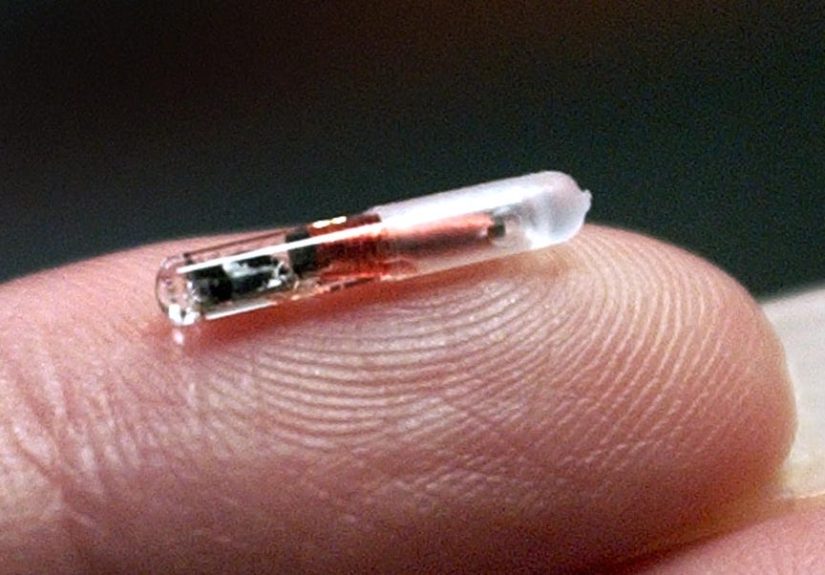
Employee microchipping sounds like something from a dystopian streaming series where the break room has mood lighting and everyone says “productivity alignment” too much. But the technology is not imaginary. Radio-frequency identification, or RFID, uses small chips that can communicate with nearby readers. In workplace settings, these chips can theoretically replace badges, key cards, passwords, computer logins, and payment cards.
The best-known American example came from Three Square Market, a Wisconsin technology company that offered voluntary microchip implants to employees in 2017. Workers who opted in could use the chips to enter the building, log into systems, and buy snacks. The company said the chips were not GPS trackers and could only be read at very short range. Still, for many people, “short range” did not make “implanted by my employer” sound much cozier.
How RFID Workplace Microchips Work
Most workplace implant discussions involve passive RFID or near-field communication technology. These chips usually do not have their own power source. Instead, they respond when placed near a compatible reader. Think of a contactless payment card or building access badge, except the card is under the skin between the thumb and index finger.
Supporters argue that the technology can be convenient. No lost badge. No forgotten password. No awkward pocket dance at the security door while carrying coffee, laptop, and existential dread. In some use cases, an implanted chip can function as a personal access token.
Critics focus on the risks: workplace pressure, data misuse, hacking concerns, unclear consent, possible medical complications, and the psychological discomfort of tying employment to body modification. Even if a chip cannot track someone across town, it may still create records of when a worker enters a room, uses a machine, opens a door, or purchases something at work.
Why Consent Is Complicated at Work
The biggest issue is not whether one person voluntarily wants a microchip. Adults can make unusual choices. Some people get tattoos, piercings, implants, cosmetic procedures, and even magnets in their fingertips. The legal question is different: can consent be truly voluntary when a paycheck is involved?
In a workplace, “optional” can become slippery. If a manager says a chip is voluntary, but chipped employees get faster access, better schedules, bonus opportunities, or informal approval from leadership, the pressure is obvious. Nobody wants to be the only person still using a plastic badge while the boss praises the “forward-thinking chip team.”
That is why the Michigan proposal addressed discrimination. It was not enough to say employers could not force implantation directly. The bill also aimed to prevent employers from punishing workers who said no. A right to refuse means little if refusing quietly moves your resume to the “not a culture fit” pile.
The Privacy Argument Behind the Microchip Protection Act
The privacy concern is not just about today’s RFID technology. It is about future workplace power. Employers already use badge logs, productivity software, GPS systems, biometric time clocks, keystroke tracking, camera systems, and AI-driven analytics. Add body-based identification to the mix, and the workplace can begin to feel less like a job and more like a low-budget airport security experiment.
The Microchip Protection Act represented a preemptive approach. Rather than waiting for an abuse scandal, the bill attempted to set a boundary before the technology became normal. That is an important policy strategy in privacy law. Once invasive practices become widespread, rolling them back is much harder. Nobody wants to negotiate privacy rights after the employee handbook already includes “Section 14: Subdermal Device Etiquette.”
Supporters: Protect Workers Before Problems Start
Supporters of mandatory microchip bans argue that the body should be off-limits as a workplace management tool. A company can issue a badge. A company can issue a laptop. A company can issue a parking sticker that refuses to peel off cleanly. But requiring a device inside a worker’s body crosses a line.
They also argue that preemptive laws reduce confusion. Employers considering futuristic identification systems know the boundary in advance. Employees know they can refuse. Courts get clearer standards. HR departments avoid accidentally creating the most uncomfortable onboarding session in corporate history.
Critics: Is This Solving a Problem That Barely Exists?
Some critics argue that mandatory employee microchipping is not a widespread problem in the United States. That criticism has weight. There are voluntary examples, but known cases of companies forcing workers to accept implants are rare to nonexistent. From this view, bills like Michigan’s HB 5672 may look more symbolic than urgent.
However, symbolic laws are not always useless. Seat belt rules, data breach laws, biometric privacy laws, and drone regulations often develop as technology becomes plausible, not only after harm becomes common. The question is whether lawmakers should wait for a real-world abuse case or set a clear rule early. Michigan’s proposal leaned toward early protection.
How Michigan Fits Into the National Trend
Michigan was not alone in considering workplace microchip protections. Several states have passed or debated laws limiting forced human microchip implantation. These measures often share common themes: no mandatory implants, no retaliation for refusal, no conditioning employment benefits on implantation, and some form of legal remedy.
Washington joined the trend in 2026 with a law restricting employers from requiring or coercing workers to receive subdermal microchips. Other states, including Wisconsin, California, North Dakota, Oklahoma, Missouri, Nevada, Indiana, Alabama, Mississippi, and others, have been discussed in the broader national conversation about implant protections. The common message is simple: technology may enter the workplace, but it should not enter the worker without free consent.
What Employers Should Learn From the Debate
For employers, the Microchip Protection Act debate is a reminder that innovation needs trust. A new access system may be clever, but if employees feel monitored, pressured, or physically invaded, the technology can damage morale faster than a mandatory “fun committee” meeting.
Companies interested in advanced identification tools should prioritize noninvasive alternatives. Smart cards, phone credentials, encrypted badges, wearables, and voluntary security tokens can deliver convenience without requiring body modification. Employers should also be transparent about what data is collected, who can access it, how long it is stored, and whether it can be used in discipline or performance reviews.
What Employees Should Understand
Employees should understand that not all workplace technology is equal. A badge that opens a door is different from software that monitors every click, and both are different from a device placed under the skin. Before accepting any workplace identification technology, workers should ask practical questions: What data does it collect? Can it track location? Who controls it? Can it be removed? What happens if I quit? Is refusal truly allowed?
Workers should also pay attention to company culture. If leadership treats privacy concerns as paranoia, that is a warning sign. Good employers can explain security measures without rolling their eyes or acting like the phrase “bodily autonomy” is a software bug.
Specific Example: The Break Room Payment Problem
One of the most common examples used to explain workplace microchips is break room payments. A chipped employee waves a hand near a vending machine or cafeteria scanner, and the system charges an account. That sounds convenient. It also raises questions.
Does the employer know every snack purchased? Could cafeteria data reveal health habits, religious dietary patterns, pregnancy-related cravings, or medical conditions? Could the data be subpoenaed, sold, analyzed, or combined with productivity metrics? The chip itself may be simple, but the data ecosystem around it can become complicated.
Specific Example: Secure Facility Access
Another example is high-security access. A factory, laboratory, data center, or hospital might want reliable identity verification. A microchip could reduce lost badges and unauthorized sharing. But even in serious security environments, alternatives exist. Multi-factor authentication, biometric scanners, rotating credentials, and physical badges can provide strong security without requiring implants.
The Michigan proposal recognized this balance. It did not say employers could never use technology. It said employers should not make body-integrated devices a condition of employment, compensation, or benefits. That distinction is the difference between innovation and coercion.
The Misinformation Problem Around Microchip Laws
Microchip legislation often attracts misinformation. Some online posts claimed Michigan’s bill would authorize employers to microchip workers. That interpretation missed the point. The proposal was written to prohibit employer mandates and protect workers who refused.
This confusion shows why plain-language legal communication matters. When a bill mentions voluntary implantation, some readers may assume lawmakers are endorsing the practice. In reality, laws often regulate activities without encouraging them. A seat belt law does not endorse car crashes. A cybersecurity law does not endorse hackers. A microchip protection law does not mean the state is preparing a chip party with cupcakes.
Analysis: Why the Michigan Proposal Still Matters
Even though HB 5672 did not become law, it remains important because it reflects a larger legal shift. Privacy debates are moving from screens and databases into bodies and biology. Wearables, biometric scanners, brain-computer interfaces, genetic testing, health trackers, and implantable devices all challenge older assumptions about workplace boundaries.
The Microchip Protection Act asked a simple but powerful question: should an employer’s interest in efficiency ever justify requiring a worker to alter or instrument their own body? For most people, the answer is no. Efficiency is useful, but it is not sacred. A faster vending machine is not worth turning human dignity into an accessory slot.
Experiences and Real-World Lessons Related to the Microchip Protection Act
The most relatable experience connected to the Microchip Protection Act is not actually about surgery or science fiction. It is about pressure. Many workers have felt the quiet force of “optional” workplace programs that do not feel optional at all. Maybe it was a wellness app that tracked steps. Maybe it was a productivity dashboard that ranked employees. Maybe it was a new login tool that everyone was “encouraged” to use, while managers praised early adopters in meetings. Nobody had to say the word mandatory. The message arrived wearing business casual.
That is why the Michigan microchip debate resonated. People understand the gap between official policy and workplace reality. A company can say, “This is voluntary,” while employees hear, “This is how ambitious people show commitment.” When technology touches the body, that pressure becomes more serious. A worker may wonder whether refusing a chip will make them look difficult, old-fashioned, paranoid, or less loyal. In a tight job market, even small hints can feel heavy.
Another lesson comes from ordinary convenience. Many people love technology because it removes friction. We unlock phones with faces, pay with watches, board planes with QR codes, and let cars remember where we parked. Convenience is seductive because it saves seconds and makes us feel futuristic. But convenience can quietly trade away control. The employee who accepts a chip to open doors faster may later discover that the system logs every entry, every cafeteria purchase, and every after-hours visit. The problem is not always the chip. The problem is the invisible database behind the chip.
There is also a trust lesson for employers. Workers are more likely to accept new tools when companies explain them honestly. A responsible employer would say: here is what the device does, here is what it does not do, here is the data policy, here is the alternative, here is how to remove participation, and here is written proof that refusal will not affect your job. A careless employer says: “Relax, it is no big deal.” That phrase has never relaxed anyone in the history of privacy conversations.
For employees, the experience-based takeaway is to ask questions early. Before agreeing to any implanted, wearable, biometric, or highly personal workplace technology, ask for policies in writing. Ask whether data is encrypted. Ask whether the employer, vendor, insurer, or third party can access it. Ask what happens after resignation. Ask whether there is a noninvasive option. The person who asks these questions is not being dramatic. They are being professionally awake.
For lawmakers, the Michigan proposal shows the value of acting before a technology becomes socially unavoidable. By the time a tool becomes standard, workers may have fewer practical choices. Preemptive laws can create a safety rail before the road gets crowded. They also send a cultural message: innovation is welcome, but human consent is not a decorative checkbox.
The Microchip Protection Act debate may sound unusual today, but it belongs to a familiar pattern. First, a technology appears. Then early adopters celebrate convenience. Then privacy advocates raise concerns. Then companies say nobody should worry. Then lawmakers try to catch up. Michigan’s HB 5672 was part of that catch-up process, even if it did not reach the finish line. Its strongest lesson is timeless: the future of work should be smart, secure, and efficient, but it should still leave workers in charge of their own bodies.
Conclusion
The story of the Microchip Protection Act is not really about one tiny device. It is about a much bigger boundary. Michigan’s HB 5672 attempted to draw that boundary by saying employers should not require workers to accept body-integrated devices as a condition of employment or benefits. Although the bill did not become final Michigan law, the debate remains highly relevant as workplace technology becomes more intimate, more data-driven, and more difficult to ignore.
Mandatory microchipping may not be common, but the questions behind it are already here. Who controls workplace data? What counts as voluntary consent? How much surveillance is too much? And should convenience ever come at the cost of bodily autonomy? Michigan’s proposed Microchip Protection Act answered with a clear principle: workers are people, not plug-in accessories.