Table of Contents >> Show >> Hide
- What Makes a Great Oatmeal-Raisin Cookie?
- Ingredient Deep Dive (Because Cookies Are Delicious Science)
- The Best Classic Chewy Oatmeal-Raisin Cookies (A Reliable Base Recipe)
- Technique Tips That Change Everything
- Flavor Variations (Keep the Cozy, Change the Vibe)
- Troubleshooting: Cookie Problems and Their Very Rude Solutions
- Storage, Freezing, and Make-Ahead Magic
- FAQ: Oatmeal-Raisin Cookies, Settling Important Matters
- My “Oatmeal-Raisin Cookie” Experience Notes (500-ish Words of Real-Life Cookie Energy)
- Conclusion
Oatmeal-raisin cookies are the underdogs of the cookie jar: quietly confident, slightly misunderstood,
and somehow always the first thing Grandma offers you with a “You look too skinny” that is not, technically,
a compliment. They’re not trying to be trendy. They’re trying to be goodbuttery, warmly spiced,
hearty from oats, and dotted with raisins that taste like tiny sun-dried caramel grapes (yes, I said what I said).
This guide gives you a reliable, classic chewy oatmeal-raisin cookie base plus the “why it works”
details that help you nail the texture you wantwhether you’re team soft-center, team crisp-edge,
or team “I only baked these because my partner said they’re their favorite.”
What Makes a Great Oatmeal-Raisin Cookie?
A great oatmeal-raisin cookie hits three notes at once:
chewy (from hydrated oats and brown sugar),
buttery (from properly creamed fat and sugar),
and spiced (cinnamon, a whisper of nutmeg, and enough salt to keep everything from tasting flat).
The raisins shouldn’t be dusty little time capsulesthey should be plump, juicy, and evenly distributed
so every bite has a sweet pop.
The Texture Triangle: Chewy, Soft, Crisp
- Chewy: more brown sugar, rested dough, slightly underbaked centers.
- Soft: a touch more moisture (extra egg yolk or a tablespoon of milk), shorter bake.
- Crisp edges: a bit more white sugar, thinner scoops, slightly longer bake.
Ingredient Deep Dive (Because Cookies Are Delicious Science)
Oats: Old-Fashioned vs Quick
If you want that classic, hearty chew, choose old-fashioned rolled oats. They keep their shape,
give the cookie structure, and deliver that “I’m a wholesome treat” vibe (even though you absolutely put
two kinds of sugar in hereno judgment).
Quick oats make a slightly softer, more uniform cookie because the flakes are smaller and hydrate faster.
If that’s what you have, you can use thembut expect less texture. Avoid steel-cut oats unless you enjoy
surprise crunch like you’re biting into edible gravel. (You’re not. You’re a cookie person. Respect yourself.)
Raisins: The “Plump or Bust” Rule
Raisins are the difference between “cozy bakery cookie” and “why does this taste like the bottom of a trail mix bag?”
The easiest upgrade: soak them briefly in warm water (or something flavorful like orange juice),
then drain and pat dry. This keeps them juicy during baking and helps them blend into the dough instead of stealing moisture.
Sugars: Brown Sugar Is the Main Character
Brown sugar brings moisture and a deeper caramel note. White sugar contributes crispness and spread.
A balanced mix gives you chewy centers with lightly crisp edges. If you love a richer, almost toffee-like flavor,
use more dark brown sugaror add a small spoonful of molasses for extra depth.
Butter (and the Case for Brown Butter)
Classic oatmeal-raisin cookies are fantastic with regular unsalted butter. But if you want a “bakery” flavor upgrade,
brown the butter. Browning develops nutty, caramel notes that pair ridiculously well with oats and cinnamon.
Bonus move: bloom your spices in the warm butter so the aromas pop.
One caution: browned butter loses water as it cooks off, which can make cookies spread differently. Let it cool until it’s
opaque and room-temp-ish before mixing so you don’t accidentally create “oatmeal-raisin lace crackers.” (Unless you want that.
In which case, live your truth.)
Flour, Eggs, and Leavening
- All-purpose flour provides structure. Too much = dry cookie. Measure carefully (spoon and level, don’t pack).
- Eggs bind and add moisture. An extra yolk makes cookies softer and chewier.
- Baking soda encourages spread and browning; baking powder (if used) gives lift and tenderness.
- Salt is non-negotiable. It turns “sweet” into “wow.”
The Best Classic Chewy Oatmeal-Raisin Cookies (A Reliable Base Recipe)
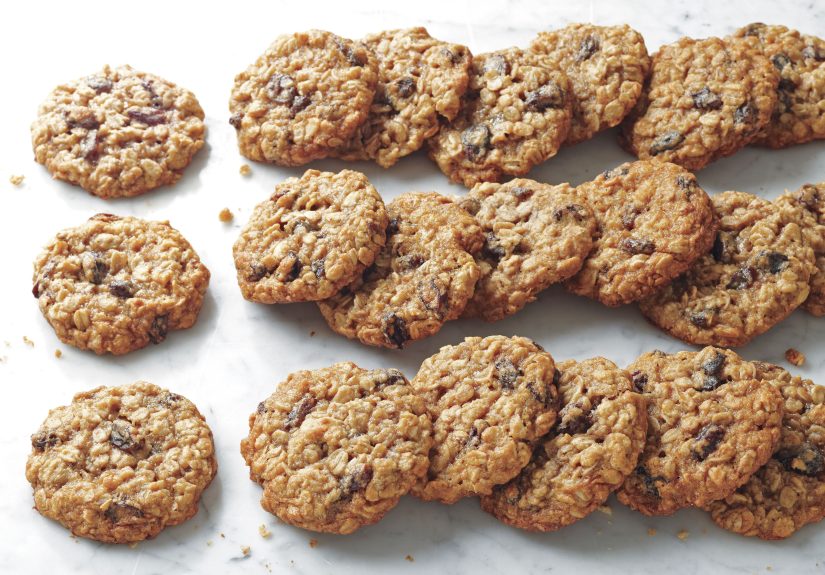
This recipe is designed for soft, chewy oatmeal-raisin cookies with a warm spice profile and plump raisins.
It’s forgiving, scalable, and friendly to small upgrades.
Ingredients (Makes about 24 medium cookies)
- 1 cup (2 sticks) unsalted butter, softened
- 1 cup packed brown sugar (dark for deeper flavor, light for milder)
- 1/2 cup granulated sugar
- 2 large eggs
- 2 teaspoons vanilla extract
- 1 1/2 cups all-purpose flour
- 1 teaspoon baking soda
- 1/2 teaspoon baking powder (optional, for a slightly thicker cookie)
- 1 teaspoon ground cinnamon
- 1/4 teaspoon ground nutmeg (optional but excellent)
- 3/4 teaspoon fine salt
- 3 cups old-fashioned rolled oats
- 1 1/4 cups raisins
- Optional: 3/4 cup chopped toasted walnuts or pecans
Optional “Raisin Upgrade”
Put raisins in a bowl, cover with hot water (or warm orange juice), soak 10 minutes, then drain and pat dry.
This takes five minutes of effort and pays off like you just got promoted to Cookie Executive Officer.
Instructions
- Prep: Heat oven to 350°F. Line baking sheets with parchment. If soaking raisins, do it now and dry them well.
- Mix dry: Whisk flour, baking soda, (optional baking powder), cinnamon, nutmeg, and salt in a bowl.
- Cream: Beat butter and both sugars until fluffy, 2–3 minutes. Add eggs one at a time, then vanilla.
- Combine: Mix in dry ingredients just until no flour streaks remain. Don’t overmix.
- Oats + raisins: Stir in oats, raisins, and nuts (if using). Dough will be thick.
-
Rest (recommended): Let dough sit 20–30 minutes at room temp (or chill 1–2 hours) so oats hydrate.
Better texture, better flavor, fewer regrets. - Scoop: Portion into 2-tablespoon mounds, spaced 2–3 inches apart. Slightly flatten the tops for even baking.
- Bake: 10–12 minutes, until edges are set and lightly golden but centers look a touch underdone.
- Cool smart: Let cookies cool on the sheet 5 minutes (they finish setting), then move to a rack.
Technique Tips That Change Everything
1) Hydrate the Oats (Resting or Chilling)
Oats are thirsty. If you bake immediately, they’ll keep absorbing moisture as the cookies cool, sometimes leading to
a drier texture by day two. A short rest helps oats hydrate before baking, which improves chew and thickness.
A longer chill also deepens flavor and reduces spread.
2) Measure Flour the “Not Sad” Way
Too much flour is the fastest route to “baked oatmeal puck.” Spoon flour into your measuring cup and level it off.
If you have a kitchen scale, even betterbut the spoon-and-level method gets you most of the way there.
3) Bake for the Cookie You Want
- Chewier: pull at 10–11 minutes, centers slightly pale. Let them finish on the pan.
- Crispier: bake 12–14 minutes, deeper golden edges.
- Thicker: chill dough and use taller scoops; don’t flatten much.
4) Uniform Scoops = Uniform Baking
A cookie scoop isn’t mandatory, but it makes batches consistent. Consistency means fewer “one tray is perfect,
the next tray is charcoal” situations.
Flavor Variations (Keep the Cozy, Change the Vibe)
Classic Upgrades
- Brown butter + spice bloom: deeper, nuttier cookie with louder cinnamon notes.
- Toasted oats: toast oats on a sheet pan at 325°F for 8–10 minutes for a warmer, nuttier flavor.
- Raisin remix: use a mix of golden raisins and dark raisins for sweet-and-tangy contrast.
“Raisin Diplomacy” Options
Feeding a crowd that includes both raisin lovers and raisin skeptics? Split the dough in half:
keep raisins in one, and use chocolate chips or dried cranberries in the other. Everyone wins.
No one has to start a group chat titled “Raisins Are a Crime.”
Nutty, Spicy, and Fancy
- Walnuts or pecans: toast them first for extra flavor.
- Warm spice blend: add a pinch of cardamom or ginger for a bakery-style aroma.
- Salt finish: a tiny sprinkle of flaky salt right after baking makes sweetness taste cleaner and richer.
Troubleshooting: Cookie Problems and Their Very Rude Solutions
Why did my cookies spread too much?
- Butter was too warm or melted → chill dough 1–2 hours.
- Not enough flour or too much sugar → re-check measuring and dough feel (it should be thick).
- Hot baking sheet → let sheets cool between batches.
Why are they dry?
- Overbaked → pull them when centers still look a bit underdone.
- Too much flour → spoon and level, don’t pack.
- Raisins were dry and stole moisture → soak raisins next time.
Why are they bland?
- Not enough salt/spice → add salt (seriously) and consider nutmeg.
- Skipped vanilla → it matters more than it seems.
- No chill/rest → resting improves flavor and texture complexity.
Storage, Freezing, and Make-Ahead Magic
Store cookies airtight at room temperature for several days. To keep them extra soft, tuck a slice of bread in the container
(the bread dries out; the cookies stay chewycookie physics is beautiful).
Want fresh-baked cookies on demand? Freeze dough portions on a tray, then store in a freezer bag.
Bake from frozen with a couple of extra minutes. This is the closest thing adults have to a superpower.
FAQ: Oatmeal-Raisin Cookies, Settling Important Matters
Do I have to chill the dough?
Not always. You can bake right away and still get a tasty cookie. But chilling (or at least resting the dough)
helps the oats hydrate, improves flavor, and usually gives you a thicker, chewier result.
Can I make them gluten-free?
Yesuse certified gluten-free oats and a 1:1 gluten-free baking flour blend. The texture can be slightly more delicate,
but the cozy flavor is still very much there.
What’s the best raisin?
Whatever you like. Dark raisins give a deeper caramel note; golden raisins bring brighter sweetness.
If your raisins are ancient and tough, soak themrevival is possible.
My “Oatmeal-Raisin Cookie” Experience Notes (500-ish Words of Real-Life Cookie Energy)
Oatmeal-raisin cookies have a funny way of showing up in the most human moments. They’re not the cookie you bake when you’re
trying to impress a panel of pastry judges. They’re the cookie you bake when you want the kitchen to smell like comfort
and you want the people in your house to wander in and ask, “Is that cinnamon?”
If you’ve ever made a batch for the first time, you probably learned the first big lesson immediately: oats are
drama queens about moisture. The dough looks normal, then you stir in the oats and suddenly it’s thick enough to hold
a spoon upright like a tiny flag of stubbornness. That’s not a mistakeit’s the cookie telling you, “I’m going to be chewy
and I’m proud.” The second lesson usually comes right after: raisins that feel like tiny leather pellets in the bag are
going to bake up… like tiny leather pellets in the cookie. Warm water (or juice) turns them into plump little gems that
taste like they belong there. It’s the difference between “nice cookie” and “why are these disappearing so fast?”
Then there’s the bake-time moment: the cookies look underdone and your instincts start whispering,
“Give them two more minutes so they’re safe.” That whisper is the enemy of chewiness.
Oatmeal-raisin cookies finish setting on the pan. Pull them when the edges look confident but the centers still look like
they’re having a soft day. Five minutes later, they’re perfectthick, tender, and just structured enough to hold a warm,
buttery bite without crumbling into oat confetti.
The best part is how forgiving the cookie is once you understand its personality. Want “after-school snack” vibes?
Keep it classic: cinnamon, vanilla, raisins. Want “coffee shop cookie” vibes? Brown the butter, bloom the spices,
and toss in toasted pecans. Want to avoid the Great Raisin Debate at your next gathering?
Split the dough and make half with raisins, half with chocolate chips. People will form opinions.
People always form opinions. But they’ll form them while chewing, which is the most peaceful way to disagree.
And honestly, oatmeal-raisin cookies are also a little lesson in confidence. They don’t need neon sprinkles
or a dramatic gooey center to be worth making. They’re warm, familiar, and quietly excellentlike the friend who shows up
with a spare phone charger and snacks and never asks for attention. You bake them once for nostalgia, then you keep baking them
because they work. They travel well, they freeze well, they make mornings better, and they proveagain and againthat “classic”
is not another word for “boring.” It’s another word for “you’re going to want a second one.”
Conclusion
The secret to oatmeal-raisin cookies isn’t one magic ingredientit’s a handful of smart choices:
pick the right oats, plump your raisins, balance brown sugar with spice and salt, and give the dough a little time to rest.
Do that, and you’ll get cookies that are chewy, warmly spiced, and genuinely hard to stop eating.
(Consider yourself warned.)