Table of Contents >> Show >> Hide
- What Counts as a Pasta Casserole?
- The 5-Part Pasta Casserole Formula (So You Can Improvise)
- 12 Pasta Casserole Recipes (Blueprints You Can Actually Use)
- 1) Classic Baked Ziti (The Comfort Food Benchmark)
- 2) Baked Spaghetti Casserole (Weeknight-Friendly, Potluck-Approved)
- 3) Ravioli “Lasagna” Casserole (Zero Noodle Wrestling)
- 4) Spicy Sausage Rigatoni Bake (Restaurant Vibes at Home)
- 5) Creamy Chicken Alfredo Pasta Bake (Family Favorite Mode)
- 6) Pesto Ricotta Pasta Casserole (Bright, Cheesy, Not Too Heavy)
- 7) Baked Mac and Cheese Casserole (With a Crunchy Top)
- 8) Tuna Noodle Casserole, Upgraded (Yes, Really)
- 9) Veggie-Packed Pasta Primavera Bake (Color = Flavor)
- 10) Buffalo Chicken Pasta Casserole (Game Day Energy)
- 11) Tex-Mex Enchilada Pasta Bake (Spicy, Cheesy, Crowd-Pleasing)
- 12) “One-Pan” No-Boil Baked Pasta (When You Hate Boiling Water)
- Make-Ahead, Freezer, and Crowd Cooking
- Fix-It Guide: Common Pasta Casserole Problems (And How To Rescue Them)
- Food Safety and Leftovers (Because Delicious Should Also Be Safe)
- Conclusion: Your Next Pasta Casserole Is Basically Inevitable
- Field Notes: of Pasta Casserole Experiences (From My Very Scientific “Oops” Studies)
Pasta casserole is the dinner equivalent of a warm hoodie: dependable, cozy, and somehow always the right choice.
It’s also the one-pan peace treaty between “I want comfort food” and “I refuse to do seven pots of dishes.”
This guide gives you a grab-and-go playbook: a master formula, a lineup of crowd-pleasing pasta casserole recipes,
make-ahead/freezer strategies, and a troubleshooting section for when your baked ziti decides to cosplay as the Sahara.
What Counts as a Pasta Casserole?
If it’s pasta + sauce + “something tasty” + cheese (optional but emotionally mandatory) baked in a dish until bubbly,
you’re in pasta casserole country. That includes classics like baked ziti and baked spaghetti, but also
sneaky weeknight heroes like ravioli “lasagna,” pesto ricotta bakes, and spicy sausage rigatoni that makes your kitchen
smell like an Italian restaurant that charges $14 for sparkling water.
The 5-Part Pasta Casserole Formula (So You Can Improvise)
The best pasta casserole recipes follow the same blueprint. Once you know it, you can build a different bake every week
without Googling “easy dinner please I’m tired” at 6:12 p.m.
1) Choose the right pasta shape
- Tube shapes (ziti, penne, rigatoni): sauce gets inside; forks stay happy.
- Curves (rotini, fusilli): clingy in the best way; great for veggie-heavy bakes.
- Sheets (lasagna noodles): best for layered casseroles, but don’t let them bully youravioli works too.
- Small shapes (macaroni): ideal for mac-and-cheese casseroles and creamy bakes.
Pro move: slightly undercook pasta if you boil it, because it’s going back into heat for round two. Alternatively,
use the “hydrate first” approach (soak/steep) for baked pastas to avoid overcooking and keep things saucy.
2) Pick a sauce with the right consistency
Pasta keeps absorbing liquid while it bakes. Translation: casseroles need a sauce that’s a little looser than what you’d
serve on the stove. Good options:
- Tomato-based: marinara, meat sauce, arrabbiata, vodka sauce (creamy + tomato = chaos you can trust).
- Creamy: Alfredo, béchamel, cheese sauce, creamy pesto.
- Brothy/veg-forward: roasted vegetable ragù, mushroom gravy-ish sauces, lighter tomato-veg sauces.
3) Add-ins: protein + vegetables + flavor boosters
- Proteins: Italian sausage, ground beef/turkey, shredded chicken, tuna, lentils, white beans.
- Vegetables: spinach (squeezed dry), mushrooms, zucchini, roasted peppers, broccoli, peas.
- Flavor boosters: garlic, red pepper flakes, pesto, olives, sun-dried tomatoes, fresh herbs.
Rule of thumb: cook watery vegetables (mushrooms, zucchini) first so they don’t “free-solo” your sauce into soup.
4) Cheese strategy: creamy + melty + crispy top
The holy trinity usually looks like this:
- Creamy: ricotta, cottage cheese, or a thick béchamel.
- Melty: mozzarella, provolone, Monterey Jack.
- Salty finish: Parmesan, Pecorino, or a sharp cheddar.
Want a top that browns without turning into a roof shingle? Save some cheese for the last 10–15 minutes, or broil briefly.
5) Bake, then rest (yes, resting matters)
Most pasta casseroles bake best when covered at first (to trap steam and prevent drying out), then uncovered at the end
to brown. After baking, let it rest 5–15 minutes so the sauce settles and slices aren’t a lava-slide.
12 Pasta Casserole Recipes (Blueprints You Can Actually Use)
These aren’t copy-pasted recipesthey’re practical “builds” you can customize. Each one includes a clear flavor target,
the best pasta shape, and simple swaps.
1) Classic Baked Ziti (The Comfort Food Benchmark)
Best with: ziti/penne + hearty marinara or meat sauce + ricotta mixture + mozzarella.
Layering a little sauce on the bottom keeps noodles from sticking, and a creamy ricotta layer makes it feel special
even if you’re wearing sweatpants (the official uniform of baked ziti).
Easy upgrade: stir a splash of cream into the ricotta mixture for extra lushness; add basil at the end.
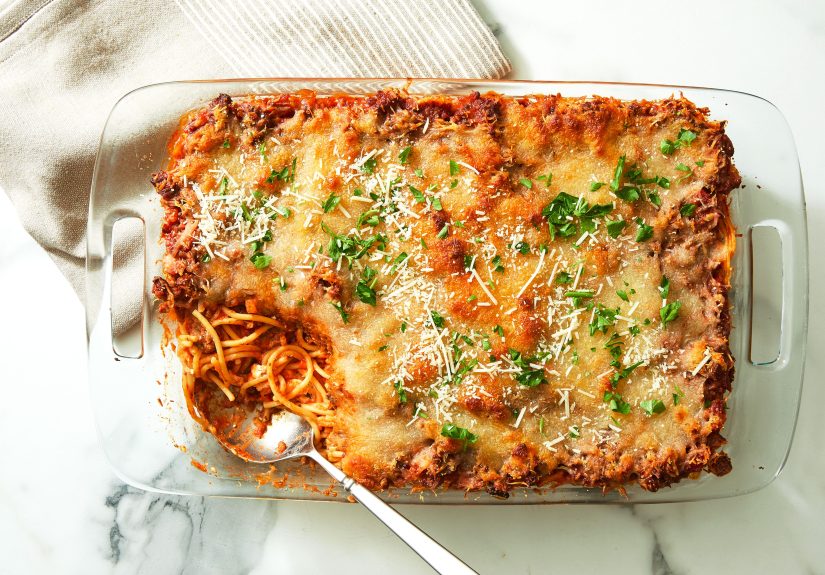
2) Baked Spaghetti Casserole (Weeknight-Friendly, Potluck-Approved)
Best with: spaghetti + meat sauce + a creamy cheese layer (ricotta/cottage cheese + egg + Parmesan),
finished with mozzarella. It’s like spaghetti night got a glow-up and started using a planner.
Make-ahead: assemble, chill overnight, and bake when you’re ready. Great for feeding a crowd.
3) Ravioli “Lasagna” Casserole (Zero Noodle Wrestling)
Best with: refrigerated cheese ravioli + marinara + spinach + mozzarella.
Layer ravioli like lasagna sheets. It’s fast, it’s forgiving, and it makes you look like you had a plan.
Swap it: use meat ravioli and add sautéed mushrooms for a deeper flavor.
4) Spicy Sausage Rigatoni Bake (Restaurant Vibes at Home)
Best with: rigatoni + spicy Italian sausage + crushed-tomato sauce + mozzarella + Parmesan.
Add roasted red peppers or a spoon of Calabrian chili paste if you want “wow” without extra labor.
5) Creamy Chicken Alfredo Pasta Bake (Family Favorite Mode)
Best with: penne/rotini + shredded chicken + Alfredo (or béchamel + Parmesan) + broccoli.
Keep the sauce a touch looser than usual because pasta will thicken it as it bakes.
Shortcut: rotisserie chicken + frozen broccoli (thawed and patted dry).
6) Pesto Ricotta Pasta Casserole (Bright, Cheesy, Not Too Heavy)
Best with: rigatoni + pesto + ricotta + mozzarella + cherry tomatoes.
Add lemon zest at the end for a “why is this so good?” moment.
7) Baked Mac and Cheese Casserole (With a Crunchy Top)
Best with: elbow macaroni + cheddar-forward sauce + a crisp topping (breadcrumbs or crushed crackers).
If you add bacon, congratulationsyou’ve invented applause.
Vegetable add-in: roasted cauliflower or broccoli florets.
8) Tuna Noodle Casserole, Upgraded (Yes, Really)
Best with: egg noodles + tuna + creamy mushroom sauce (homemade or “helped”) + peas + crunchy topping.
The key is seasoning: add Dijon, black pepper, and a squeeze of lemon to keep it lively.
9) Veggie-Packed Pasta Primavera Bake (Color = Flavor)
Best with: rotini + mixed roasted vegetables + light tomato sauce or a garlicky cream sauce + mozzarella.
Roast veggies first so the casserole doesn’t turn into a watery summer puddle.
10) Buffalo Chicken Pasta Casserole (Game Day Energy)
Best with: penne + shredded chicken + buffalo sauce + a little ranch/blue cheese + mozzarella.
Serve with celery on the side so you can pretend this is a balanced meal.
11) Tex-Mex Enchilada Pasta Bake (Spicy, Cheesy, Crowd-Pleasing)
Best with: rotini + seasoned ground beef/turkey + enchilada sauce + black beans + corn + cheddar.
Top with scallions and cilantro after baking for freshness.
12) “One-Pan” No-Boil Baked Pasta (When You Hate Boiling Water)
Best with: short pasta + a looser sauce + enough liquid to hydrate pasta while baking.
This style relies on the sauce providing moisture, so don’t skimp on liquid and keep it covered until it bubbles nicely.
Make-Ahead, Freezer, and Crowd Cooking
Make-ahead (refrigerator)
- Assemble the casserole, cover tightly, and refrigerate up to 1–2 days.
- Before baking, let the dish sit at room temp briefly if possible so it heats evenly.
- Plan a few extra minutes of bake time since it’s starting cold.
Freezer plan (future-you will write you a thank-you note)
- Assemble in a freezer-safe dish, wrap tightly (plastic wrap + foil is common), and freeze up to ~3 months for best quality.
- Thaw overnight in the fridge for the easiest, most even bake.
- If baking from frozen, keep it covered longer and expect significantly more time.
Feeding a crowd
Pasta casseroles are built for parties. Two tips make them shine:
- Rest the casserole before serving so it firms up and doesn’t puddle.
- Hold back a little sauce to spoon over servings if you’re serving buffet-style (heat lamps can dry things out).
Fix-It Guide: Common Pasta Casserole Problems (And How To Rescue Them)
Problem: “My casserole is dry.”
- Cover for most of the bake to trap steam; uncover only at the end to brown.
- Use a slightly looser sauce than stovetop pasta.
- Add a splash of liquid (broth, milk, pasta water, or more sauce) before baking if it looks tight.
Problem: “It’s watery.”
- Cook off watery veggies first (mushrooms/zucchini).
- Thaw and squeeze spinach until it’s practically a dry sponge.
- Let it rest after baking so the sauce re-absorbs.
Problem: “My pasta is mushy.”
- If boiling: undercook by 1–2 minutes.
- If no-boil: don’t overdo liquid, and keep bake time in a reasonable range.
- Choose sturdier shapes (rigatoni beats thin spaghetti for structure).
Problem: “The top browned but the middle is cold.”
- Cover longer, lower the rack position, and bake until bubbling at the edges.
- If it was refrigerated, allow extra time and consider a brief room-temp rest first.
Problem: “It tastes flat.”
- Salt your sauce properly and use a salty finishing cheese (Parmesan/Pecorino).
- Add brightness: lemon zest, fresh herbs, or a splash of vinegar at the end.
- Don’t forget heat: black pepper or red pepper flakes do a lot of work.
Food Safety and Leftovers (Because Delicious Should Also Be Safe)
- Cool and refrigerate leftovers promptlyideally within 2 hours of cooking.
- Use refrigerated leftovers within about 3–4 days, or freeze them if you won’t get to them in time.
- Reheat thoroughly until the center is steaming hot; using a thermometer is the most reliable method.
Practical tip: portion leftovers into shallow containers so they cool faster and reheat more evenly. Your future lunch will
taste better, toobecause it won’t be “hot on the outside, arctic in the middle.”
Conclusion: Your Next Pasta Casserole Is Basically Inevitable
The magic of pasta casserole recipes isn’t just that they’re cheesy and comforting (though, yes, absolutely).
It’s that they’re flexible: you can make them cleaner, richer, meatier, veggier, spicier, or “whatever’s in the fridge”-ier.
Follow the formula, keep the sauce a little loose, bake covered then uncover to brown, and let it rest before serving.
That’s it. You’ve got thisnow go preheat your oven and enjoy the sound of bubbling cheese applause.
Field Notes: of Pasta Casserole Experiences (From My Very Scientific “Oops” Studies)
The first time I brought a pasta casserole to a potluck, I was feeling unstoppable. I had layered everything like a
high-achieving architectural student: sauce, pasta, cheese, repeat. I slid it into the oven and started daydreaming about
compliments. You know the kind: “Who made this?” “Can I have the recipe?” “Are you accepting marriage proposals?”
Then I took it out… and realized I’d created a beautiful, golden-topped mirage. The edges were bubbling like a
cozy commercial. The middle? Dry. Not “a little tight.” Dry like it had just read the desert chapter of a survival manual.
That was the day I learned the most important baked-pasta truth: the oven is thirsty, and pasta is thirstier.
If your sauce isn’t loose enough, the noodles will happily drink it all and leave you with a casserole that needs chapstick.
Attempt two went the opposite direction. I got nervous about dryness and added “a bit more sauce,” whichby casserole
mathmeans I doubled it. The result was delicious, but structurally it was more like pasta soup wearing a cheese hat.
People still ate it (because cheese is powerful), but serving it required a ladle and emotional support.
That was when resting became my new best friend. Give a pasta bake 10 minutes on the counter, and it pulls itself together.
Sauce settles into the pasta, the cheese firms up, and suddenly you can cut squares instead of performing a rescue mission.
My favorite real-life win came from freezing casseroles for hectic weeks. I started making two at once: one for dinner,
one for the freezer. The freezer one felt like a gift from a past version of me who had her life together and probably did yoga.
On a chaotic night, I’d pull it out, bake it covered longer, and the house would smell like I’d been simmering sauce all day.
Was it technically an illusion? Sure. But it was a delicious illusion, and that’s what matters.
Over time I developed “casserole instincts.” If the mix looks tight before baking, it probably needs more sauce or a splash
of liquid. If I add spinach, I squeeze it until it’s practically auditioning to be paper. If I’m using a lot of cheese,
I wait to add the final layer near the end so it browns instead of turning into a protective helmet.
And if I’m transporting the casserole, I keep it covered to hold moisture, then uncover it at the destination for a quick
re-crisplike giving it a little confidence boost before it meets new people.
The best part? Pasta casseroles are ridiculously forgiving. Even the “mistakes” are usually still pretty great
they just teach you a lesson while you chew. And honestly, that’s the ideal classroom.