Table of Contents >> Show >> Hide
- What Is the AC07 CUT Cutting Board?
- The Designer Behind the Board: Philipp Mainzer
- Why the AC07 CUT Stands Out
- Available Shapes and Sizes
- How It Performs in the Kitchen
- Prep Board, Serving Board, or Design Object?
- Care Tips for the AC07 CUT
- Who Should Buy Philipp Mainzer's AC07 CUT?
- Styling Ideas for the AC07 CUT
- How the AC07 CUT Compares to Ordinary Cutting Boards
- Real-Life Experience: Living With a Board Like the AC07 CUT
- Conclusion: A Cutting Board With Architectural Soul
Some cutting boards are humble kitchen workhorses. Others lean against the backsplash looking like they have a passport, a design degree, and opinions about natural wine. Philipp Mainzer’s Cutting Board – AC07 CUT belongs to that second group, though it is still perfectly capable of handling onions, bread, cheese, herbs, and the occasional tomato that thinks it can roll away.
Designed by Philipp Mainzer for the German design brand e15, the AC07 CUT is not just a slab of wood with ambition. It is a deliberately minimal cutting board that turns a basic kitchen tool into a piece of functional design. With its generous proportions, solid material, clean geometry, and distinctive handling hole, it captures the quiet confidence that has made e15 known among lovers of architectural furniture, solid wood, and refined everyday objects.
In a world crowded with novelty kitchen gadgets that promise to spiralize, steam, chop, measure, sing, and possibly file your taxes, the AC07 CUT makes a calmer argument: good material, good proportion, and good design still matter. It does not need a touchscreen. It does not need a charging cable. It just needs a loaf of bread, a wedge of cheese, or a cook who appreciates the pleasure of using an object that feels as considered as it looks.
What Is the AC07 CUT Cutting Board?
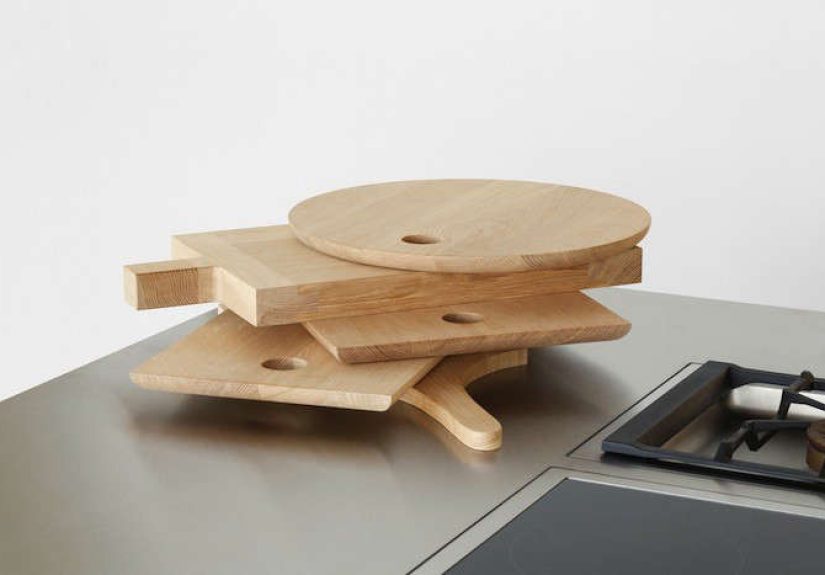
The AC07 CUT is a generously sized cutting board designed by Philipp Mainzer in 2013 for e15. It is available in round and rectangular versions and is best known for its simple shape, substantial presence, and functional circular hole. That hole is not decoration pretending to be useful. It makes the board easier to lift, carry, hang, and move from counter to table.
The board has been produced in solid European oak, with white Carrara marble versions also associated with the collection. The oak version highlights e15’s long-standing affection for honest materials, visible grain, and architectural simplicity. The marble version shifts the mood toward a serving-board luxury piece, ideal for cheese, fruit, pastry, and dramatic dinner-party entrances.
At first glance, the AC07 CUT may look almost too simple. That is exactly the point. Its beauty lies in restraint. There are no fussy handles, no decorative grooves, no novelty shapes, and no aggressive branding shouting from the surface. Instead, the board relies on proportion, material, and a small but memorable design gesture: the round opening that gives the piece both visual identity and practical ease.
The Designer Behind the Board: Philipp Mainzer
Philipp Mainzer is a German designer and architect who co-founded e15 in 1995. His work is often associated with architectural clarity, solid wood, strong silhouettes, and a preference for materials that are allowed to speak for themselves. Rather than hiding wood grain under excessive treatment, Mainzer’s design language tends to celebrate natural character: knots, lines, tonal shifts, and all the small imperfections that make real material more interesting than plastic perfection.
Mainzer studied product design and architecture in London, and that dual background shows in the AC07 CUT. The board is not over-designed, but it is definitely designed. It has the calm precision of an architectural object and the warmth of something meant to live in a kitchen, not behind glass in a museum. That balance is where the AC07 CUT becomes more than another chopping board.
Many of Mainzer’s best-known works for e15, including furniture pieces such as solid wood tables and stools, share a similar design philosophy: reduce the form, elevate the material, and let function guide the final expression. The AC07 CUT carries that thinking into the kitchen. It is smaller than a table, of course, but it has the same design DNA. It is sturdy, minimal, useful, and surprisingly charismatic for something that may spend half its life under toast crumbs.
Why the AC07 CUT Stands Out
1. The Functional Hole Is the Signature Detail
The most recognizable feature of the AC07 CUT is the circular hole near the edge. On a purely practical level, it improves handling. Large cutting boards can be awkward to pick up, especially when they are thick, heavy, or sitting flat on the counter. The hole gives your fingers a natural grip point, making the board easier to lift, tilt, and carry.
It also allows the board to be hung when not in use, which turns storage into display. This is especially useful for smaller kitchens where cabinet space is treated like prime Manhattan real estate. Instead of hiding the board in a dark drawer, you can hang it on a wall or peg rail and let it become part of the kitchen’s visual rhythm.
Design-wise, the hole breaks the rectangular or circular geometry just enough to make the board memorable. It is a small intervention, but it gives the AC07 CUT its identity. Without it, the board would still be beautiful. With it, the piece becomes unmistakably intentional.
2. Solid European Oak Gives It Warmth
The oak version of the AC07 CUT is made from solid European oak, a material prized for durability, visible grain, and a warm natural tone. Oak is strong enough for everyday food preparation while still feeling inviting in a domestic space. It does not look sterile. It looks like it belongs beside good knives, ceramic bowls, linen towels, and a pot of something simmering quietly on the stove.
Wooden cutting boards have a long history in kitchens because they are practical, repairable, and pleasant to use. They are generally kinder to knife edges than glass or stone, and they develop character over time. A good wooden board does not stay showroom-perfect forever, and frankly, that is part of the charm. Knife marks, subtle color changes, and the patina of use can make it feel personal rather than worn out.
The AC07 CUT leans into that philosophy. It is not trying to be disposable. It is made to age, to be cared for, and to remain useful through many meals. In an era when too many kitchen tools are bought, ignored, and replaced, that kind of longevity feels refreshingly grown-up.
3. The Marble Version Adds a Serving Moment
While the solid oak version is the obvious choice for active prep, the white Carrara marble version brings a more luxurious serving-board personality. Marble is hard, cool, and visually striking, making it well suited to cheese, charcuterie, fruit, desserts, and pastry presentation. It is the board you bring out when guests arrive and you want the snacks to look like they have their own publicist.
That said, marble is not the ideal surface for heavy knife work. Because stone is much harder than wood, it can dull blades faster. For that reason, a marble AC07 CUT is best understood as a presentation piece or light-prep surface rather than a daily chopping board for dense vegetables or meat. It looks elegant, keeps certain foods cool, and gives the table a crisp architectural accent.
Together, the oak and marble interpretations show how one simple form can shift personalities depending on material. Oak feels warm, tactile, and culinary. Marble feels cool, sculptural, and refined. Both versions share the same design clarity, but they speak with different accents.
Available Shapes and Sizes
The AC07 CUT has been offered in several shapes, including a round version and two rectangular versions. Common dimensions associated with the design include a round board around 450 millimeters in diameter, a rectangular board around 600 by 350 millimeters, and a larger rectangular format around 700 by 300 millimeters. The thickness is approximately 25 millimeters, giving the board enough substance to feel stable without becoming a countertop boulder.
The smaller rectangular board is versatile for daily use. It gives enough surface area for slicing bread, prepping vegetables, serving cheese, or arranging a casual snack board. The longer rectangular version has a more dramatic presence and works especially well for entertaining. It can hold a baguette, cheeses, fruit, olives, and spreads without looking crowded. The round version feels softer and more table-friendly, especially for sharing.
Choosing between shapes depends on how you cook and serve. If you want one board that can move easily between prep and presentation, the mid-sized rectangle is a smart pick. If you love hosting, the long rectangle makes a beautiful serving stage. If your kitchen style favors curves and visual softness, the round version brings a gentler profile.
How It Performs in the Kitchen
A cutting board should be attractive, yes, but it also has to work. Nobody wants a board that looks stunning until the first carrot arrives. The AC07 CUT’s broad surface gives cooks room to move, which matters more than many people realize. A cramped board makes prep messy, slows down knife work, and sends chopped herbs wandering across the counter like tiny green escape artists.
The oak version is well suited for bread, vegetables, herbs, fruit, and general prep. It can also be used for serving roasted vegetables, sandwiches, pastries, or cheese. Because it is untreated solid wood, it should be cleaned and cared for properly. Untreated wood has a natural feel, but it also asks for sensible maintenance. That means no soaking, no dishwasher, no leaving it wet overnight, and no treating it like a plastic cafeteria tray.
The board’s size and weight help it feel secure during use. Thin, lightweight boards can slide around annoyingly, especially on polished counters. A more substantial board gives a sense of control. If needed, placing a damp towel underneath can add grip, but the AC07 CUT already has the reassuring presence of a board that knows what it came to do.
Prep Board, Serving Board, or Design Object?
The best answer is: yes. The AC07 CUT is all three. It is useful enough for cooking, elegant enough for serving, and sculptural enough to leave visible when the kitchen is clean. That last point matters because modern kitchens often function as social spaces. The tools we keep on display become part of the room’s design language.
A plastic cutting board may be practical, but few people proudly display one next to their handmade ceramics. The AC07 CUT, by contrast, looks intentional leaning against a backsplash or hanging from a wall hook. It pairs naturally with minimalist kitchens, Scandinavian-inspired interiors, warm modern spaces, and even rustic rooms that benefit from a cleaner visual counterpoint.
It is also the kind of object that can make simple food feel more special. Bread and butter on a beautiful board becomes a small ritual. Cheese and apples look considered. A pile of chopped herbs suddenly seems less like meal prep and more like you have your life together. The board cannot actually organize your inbox, but emotionally, it gets close.
Care Tips for the AC07 CUT
Because the AC07 CUT is made with premium natural materials, care is part of ownership. This is not difficult, but it does require consistency. Wooden boards should be washed after use with warm water and mild dish soap, then dried promptly. Avoid soaking the board, because excessive moisture can lead to warping, cracking, or surface damage over time.
Do not put a solid wood AC07 CUT in the dishwasher. Dishwashers combine heat, water, detergent, and time in a way that is spectacularly rude to wood. The result can be splitting, swelling, warping, or a board that no longer sits flat. Hand-washing is faster than replacing a luxury cutting board, and it gives you a valid reason to feel responsible for at least three minutes after dinner.
For maintenance, a food-safe mineral oil or board conditioner can help prevent wood from drying out. Apply it with a clean cloth, let it absorb, and wipe away excess. Avoid olive oil, vegetable oil, and other cooking oils, because they can become sticky or rancid. If the board begins to look pale or thirsty, that is its polite way of asking for care.
For food safety, it is wise to use separate boards for raw meat and ready-to-eat foods such as bread, fruit, herbs, and cheese. Many cooks reserve their finest wooden boards for produce, bread, and serving, while using a separate board for raw poultry or fish. This approach keeps the board looking better and reduces cross-contamination risk.
Who Should Buy Philipp Mainzer’s AC07 CUT?
The AC07 CUT is ideal for someone who values design as much as function. It is not the cheapest cutting board on the market, and it is not trying to be. This is a premium design object for people who notice proportions, materials, and details. If you enjoy kitchen tools that feel beautiful in the hand and look good even when not in use, the AC07 CUT makes sense.
It is especially appealing for design-conscious home cooks, architects, interior designers, stylists, food photographers, and anyone building a kitchen around fewer but better objects. It also makes a strong gift for someone who already owns decent knives, good olive oil, and at least one cookbook with a dramatic cover photo.
However, if you want a low-maintenance board that can be tossed into the dishwasher, ignored, and replaced cheaply, this is not your board. The AC07 CUT asks for the kind of care that quality wood deserves. In return, it offers durability, beauty, and a sense of daily pleasure that mass-market boards rarely provide.
Styling Ideas for the AC07 CUT
One of the pleasures of the AC07 CUT is how easily it moves from kitchen tool to visual object. Lean the rectangular version vertically against a backsplash beside a ceramic utensil jar and a small bowl of lemons. Hang it from a sturdy wall peg where the circular hole becomes part of the display. Use the round version as a base for a casual breakfast spread with toast, jam, butter, and fruit.
For entertaining, the long rectangular board is excellent for grazing boards. Start with cheeses at different points across the surface, then add crackers, sliced bread, grapes, dried fruit, nuts, and a small ramekin of honey or mustard. Leave some negative space so the board’s material remains visible. The AC07 CUT looks best when it is not overloaded. Think curated abundance, not snack avalanche.
For everyday use, keep it accessible. A beautiful board hidden in a cabinet becomes theoretical design. A board used regularly becomes part of your routine. Slice citrus on it, chop herbs, serve sandwiches, or place it in the center of the table with warm bread. The more naturally it becomes part of your kitchen life, the better it fulfills its purpose.
How the AC07 CUT Compares to Ordinary Cutting Boards
An ordinary cutting board is often judged by price, size, and whether it survives the dishwasher. The AC07 CUT belongs to a different category. It should be compared not only as a kitchen tool but also as a designed accessory. Its value lies in the combination of utility, craftsmanship, visual restraint, and material quality.
Compared with thin plastic boards, the AC07 CUT feels more permanent and more pleasant for presentation. Compared with bulky butcher blocks, it is more refined and easier to move. Compared with decorative serving boards that are too delicate for actual prep, the oak AC07 CUT remains practical. It sits in a sweet spot between serious kitchen object and display-worthy design piece.
That balance is what makes it appealing. It does not scream for attention, but it rewards attention. The more you look at it, use it, and handle it, the more the design makes sense. Good design often works that way. It does not need to perform tricks. It simply solves small problems gracefully.
Real-Life Experience: Living With a Board Like the AC07 CUT
Using a board like the AC07 CUT changes the rhythm of a kitchen in subtle ways. The first thing you notice is the size. A generous cutting surface gives you room to work, and room changes behavior. You stop piling chopped onions on top of uncut carrots. You stop balancing a knife halfway off the board. You stop conducting meal prep like a tiny circus act.
The second thing you notice is the handling. That circular hole seems almost too simple to matter until you use it. Large boards can be awkward when your hands are wet or when one side is covered with crumbs. A built-in grip point makes lifting and carrying feel natural. It also makes the board easier to hang, which is useful if you like open storage or want your best kitchen objects within reach.
There is also an emotional difference. A beautiful cutting board encourages slower, more deliberate cooking. That does not mean every meal becomes a cinematic Italian countryside montage. Some nights, dinner is still toast, eggs, and whatever greens are bravely surviving in the refrigerator. But even then, using a well-designed board makes the task feel a little less rushed and a little more enjoyable.
For serving, the AC07 CUT style of board earns its keep quickly. Put a loaf of sourdough on it, add softened butter and flaky salt, and suddenly the table feels intentional. Arrange sliced pears, sharp cheddar, walnuts, and honey, and you have a dessert course with almost no cooking. Use it for sandwiches at lunch, and even a simple meal looks cleaner and more inviting.
The board also teaches care. A plastic board can be treated roughly and replaced without much thought. A solid oak board asks you to pay attention. You dry it properly. You oil it when needed. You avoid soaking it. These small habits become part of the pleasure of ownership. They remind you that natural materials are living companions in the kitchen, not disposable surfaces.
Of course, a premium board is not magic. It will not chop faster for you, and it will not prevent you from crying over onions. It may develop knife marks. It may darken slightly with use. It may require periodic conditioning. But those changes are not necessarily flaws. They are signs that the board is being used, and a cutting board that never sees a knife is just a very expensive rectangle with stage fright.
In a busy household, the best approach is to give the board a clear role. Use it for bread, vegetables, fruit, herbs, and serving. Keep a separate board for raw meat and seafood. This protects the board, simplifies cleaning, and keeps food preparation safer. It also means the AC07 CUT can remain visible and beautiful without being subjected to every messy kitchen job.
Over time, the board can become one of those objects people remember. Guests may ask about it. Family members may reach for it automatically. It may become the board used for holiday bread, birthday cheese plates, Saturday pancakes, or late-night apple slicing. That is where design becomes more than appearance. It becomes part of repeated experience.
The AC07 CUT is not about making the kitchen precious. It is about making everyday tasks feel considered. It proves that a cutting board can be practical without being boring, minimal without being cold, and elegant without being too fragile for real life. That is a difficult balance, and Philipp Mainzer’s design handles it with quiet confidence.
Conclusion: A Cutting Board With Architectural Soul
Philipp Mainzer’s Cutting Board – AC07 CUT is a reminder that good design can live in the most ordinary parts of the day. It does not need to be locked away for special occasions. It belongs under bread, beside fruit, beneath a pile of chopped herbs, or in the center of a table surrounded by hungry people pretending they are “just having a small bite.”
Its appeal comes from a thoughtful combination of form and function: solid European oak or refined Carrara marble, generous proportions, a practical handling hole, and the quiet discipline of Philipp Mainzer’s design language. It is both a kitchen tool and a design object, both useful and beautiful, both simple and memorable.
If you want a cutting board that disappears into a drawer and asks nothing of you, there are cheaper options. But if you want a board that improves your prep space, elevates your serving style, and brings architectural warmth into the kitchen, the AC07 CUT deserves serious attention. It is proof that even a chopping board can have presence, personality, and just enough drama to make cheese look important.
Note: This article is based on real product information, designer background, material details, and established cutting board care guidance. Source links are intentionally omitted to keep the publishing HTML clean.