Table of Contents >> Show >> Hide
- What Happened In The Viral Cinnabon Video?
- Why The Cinnabon Incident Went Viral So Quickly
- GoFundMe, GiveSendGo, And The Confusing Crowdfunding Debate
- What Cinnabon’s Response Says About Brand Accountability
- The Bigger Issue: Racism In Everyday Public Spaces
- Why People Donate To Controversial Figures
- Cancel Culture Or Consequences?
- What Employers Can Learn From The Cinnabon Viral Video
- What Customers Can Learn From The Incident
- The Internet’s Role: Accountability Machine Or Outrage Factory?
- Experiences And Reflections Related To The Viral Cinnabon Incident
- Final Thoughts
- SEO Tags
A viral video from a Wisconsin Cinnabon did what viral videos often do: it took one ugly public moment, dropped it into the internet’s industrial blender, and turned it into a national argument about racism, accountability, crowdfunding, customer service, and what happens when bad behavior gets treated like a team sport.
The incident reportedly happened at a Cinnabon stand inside Bay Park Square Mall in Ashwaubenon, Wisconsin. A Somali Muslim couple said they were taking a break from shopping when a simple request over a cinnamon roll escalated into a racist confrontation. According to public reports, the customer asked for more caramel on a caramel pecan roll because it did not look like it had enough. What should have been a forgettable food-court moment became a video seen across TikTok, X, Facebook, Instagram, and national news.
The footage showed a white female employee insulting the couple, mocking the woman’s hijab, using racial slurs, making obscene gestures, and openly identifying herself as racist. Cinnabon later confirmed that the worker had been immediately terminated by the franchise owner, calling the video disturbing and saying the behavior did not reflect the company’s values or the welcoming experience every guest deserves.
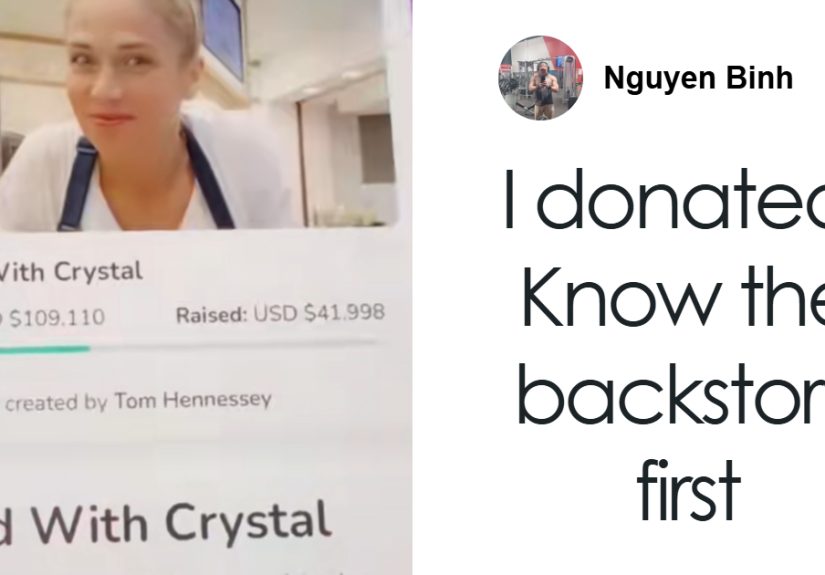
Then came the second wave of outrage: online fundraisers. A GoFundMe was created to support the Somali couple with legal costs and other needs after the incident. Separately, a fundraiser backing the fired worker appeared on GiveSendGo and reportedly raised a large amount of money, prompting fresh debate over whether crowdfunding has become a way to reward public cruelty when it matches a certain audience’s politics.
What Happened In The Viral Cinnabon Video?
Based on public reporting, the confrontation began after the Somali couple entered the Cinnabon location and ordered food. The woman later said she started recording after the worker snapped at her and made a derogatory remark about her hijab. From there, the interaction became heated and deeply offensive.
The former employee was recorded using racist language toward the customers, taunting them from behind the counter, and making offensive hand gestures. In one widely reported moment, she openly described herself as racist. The couple responded angrily, and one person in the video warned the worker that she was ruining her life and would likely lose her job.
That warning turned out to be accurate. Cinnabon said the employee was immediately terminated. The company’s response was swift, but by then, the video had already escaped the mall food court and entered the giant digital courtroom known as social media, where everyone is a prosecutor, defense attorney, judge, jury, and snack critic all at once.
Why The Cinnabon Incident Went Viral So Quickly
Viral stories do not spread only because something happened. They spread because a moment connects with a larger social nerve. This Cinnabon video touched several nerves at once: racism in public spaces, anti-Muslim harassment, anti-Somali sentiment, workplace conduct, and the growing habit of turning controversial people into online causes.
1. The video was simple to understand
Some online controversies require a detective board, red yarn, and a podcast series to explain. This one did not. A customer service worker was filmed directing racist abuse at customers. The company fired her. Supporters then raised money for her. The moral shock was immediate and easy for viewers to process.
2. The victims were visibly targeted
The couple were identified in fundraising materials as a Black Somali Muslim husband and wife. Reports said the woman’s hijab was mocked during the confrontation. That detail mattered because it suggested the harassment was not only about race but also about religion and cultural identity.
3. The fundraiser changed the story
If the story had ended with the firing, it might have remained a disturbing but familiar example of workplace racism. Instead, the fundraiser supporting the fired worker turned the incident into a broader conversation about online grievance economies. In plain English: some people saw the firing as accountability; others treated the fired worker as a victim of “cancel culture.”
GoFundMe, GiveSendGo, And The Confusing Crowdfunding Debate
Many headlines and social posts used “GoFundMe” as a catch-all term for crowdfunding. But the details matter. Public reports identified a GoFundMe created by a relative of the Somali couple to help with legal fees. The fundraiser named one of the victims as Farhia Ahmed and described the goal as seeking justice after the racial incident.
The fundraiser backing the fired worker, however, was widely reported as being hosted on GiveSendGo, a separate crowdfunding platform. That distinction is important for accuracy. Still, the public reaction was less about the platform name and more about the principle: should someone who lost a job after a racist outburst receive major financial support?
Supporters of the fired worker argued that the video did not show the full context, that she may have been provoked, or that losing her job was punishment enough. Critics responded that no customer dispute justifies racist abuse, religious mockery, or dehumanizing language. In other words, even if a cinnamon roll dispute gets messy, there is still no “extra frosting” clause that permits bigotry.
What Cinnabon’s Response Says About Brand Accountability
Cinnabon’s response followed the modern crisis playbook: acknowledge the video, condemn the behavior, distance the brand from the employee’s actions, and confirm termination. For a food brand built around comfort, sweetness, and the smell of mall nostalgia, a viral racism scandal is not exactly on the marketing calendar.
The company’s message focused on the values of a welcoming environment. That matters because customer service is not just about handing over a pastry. It is about creating a basic level of safety and respect. A customer should be able to ask for extra caramel without becoming the target of racial and religious abuse.
For franchise-based brands, these situations are especially tricky. A local employee may work for a franchise owner, but the public sees the national logo. When something goes wrong, the brand name trends first. That is why companies must train employees clearly, set expectations early, and act quickly when behavior crosses a hard line.
The Bigger Issue: Racism In Everyday Public Spaces
One reason this Cinnabon video hit so hard is that it happened in an ordinary place. Not at a political rally. Not on a debate stage. Not in a dark corner of the internet. It happened in a mall, at a bakery counter, during a routine food order.
That is what makes everyday racism so exhausting for the people who experience it. It can appear while shopping, commuting, eating, working, or simply existing in public. For Somali Americans, Muslim Americans, Black immigrants, and other visibly targeted communities, these moments are not abstract culture-war headlines. They are personal safety concerns.
When a person’s hijab, accent, skin color, or ethnicity becomes an excuse for public humiliation, the harm does not disappear when the video ends. The couple’s GoFundMe described trauma and fear after the encounter. That detail should not be brushed aside. Viral fame may last a week; the emotional impact can last far longer.
Why People Donate To Controversial Figures
The fundraiser for the fired worker raised an uncomfortable question: why do some people financially support someone accused of obvious wrongdoing?
There are several possible reasons. Some donors may believe the worker was unfairly judged by a short video. Others may see her as a symbol in a broader fight over cancel culture. Some may be reacting against what they perceive as public shaming. And, yes, some may simply agree with or excuse the racist behavior.
Online fundraising can turn a person into a political symbol overnight. The actual facts of the incident may become secondary to the story people want to tell themselves. To one group, the fired worker represents consequences for racism. To another, she becomes proof that “ordinary people” are being punished for saying the wrong thing. The problem is that “saying the wrong thing” is doing a lot of heavy lifting when the “wrong thing” involves racist abuse directed at customers.
Cancel Culture Or Consequences?
The phrase “cancel culture” appears almost automatically whenever someone faces public consequences. But not every consequence is cancellation. Sometimes it is simply accountability.
A workplace has the right to require employees not to insult customers with racist language. A company has the right to protect its reputation. Customers have the right to share what happened to them. Viewers have the right to criticize what they see. None of that means every online reaction is fair, measured, or helpful. Social media can absolutely become cruel and excessive. But the basic idea that a worker can be fired for racially abusing customers is not some mysterious new internet invention. It is Workplace Conduct 101, right next to “do not steal from the register” and “do not throw the pretzel warmer.”
What Employers Can Learn From The Cinnabon Viral Video
This incident offers several lessons for businesses, especially restaurants, mall kiosks, retail stores, and other public-facing brands.
Train for conflict before conflict happens
Employees need to know how to handle rude customers, confusing orders, complaints, and tense interactions. Training should include de-escalation, when to call a manager, and what language is never acceptable under any circumstances.
Make anti-discrimination policies clear
A policy buried in an employee handbook is not enough. Workers should understand that racism, religious harassment, and abusive conduct can lead to immediate discipline or termination.
Respond quickly and specifically
Cinnabon’s public statement worked because it did not dance around the issue. The company condemned the behavior and confirmed action. In viral scandals, vague statements often make things worse. People can smell corporate fog machines from three platforms away.
Support affected customers
Public apologies matter, but so does direct outreach. When customers are harmed, brands should consider how to repair trust, not just how to protect image.
What Customers Can Learn From The Incident
Customers also face difficult choices in moments like this. Recording may provide evidence, but it can also escalate emotions. Speaking up can be powerful, but personal safety comes first. If someone is targeted in a public business, practical steps may include asking for a manager, documenting the incident, saving receipts, contacting corporate customer support, and reporting threats or harassment to appropriate authorities when necessary.
Bystanders matter too. A calm witness can help document what happened, support the targeted person, or alert mall security or management. Not everyone needs to become a superhero. Sometimes the most useful action is simply refusing to let the targeted person stand alone.
The Internet’s Role: Accountability Machine Or Outrage Factory?
The internet can expose behavior that institutions might otherwise ignore. Without the video, the couple’s experience could have been dismissed as a “he said, she said” dispute over a pastry. The recording created public evidence and forced a response.
But the internet also has a habit of flattening people into characters. The victims become symbols. The worker becomes either a villain or a martyr, depending on the audience. The comments section becomes a bonfire. The fundraiser becomes a scoreboard. And somewhere in the middle, the original human harm can get buried under memes, hot takes, and people arguing like they are trying to win a prize for loudest keyboard.
That is why responsible coverage matters. It is possible to condemn racist behavior without turning the story into entertainment. It is possible to discuss crowdfunding without harassing donors or victims. It is possible to analyze the cultural meaning without repeating the slurs that caused the harm in the first place.
Experiences And Reflections Related To The Viral Cinnabon Incident
Many people who watched the Cinnabon video recognized something painfully familiar: the way a normal day can suddenly become hostile because of someone else’s prejudice. A person can be shopping, ordering food, riding public transit, or walking into a classroom, and suddenly their identity becomes the center of an unwanted confrontation. That experience is not just embarrassing. It can feel isolating, unsafe, and deeply tiring.
For immigrants and children of immigrants, the experience can be even more complicated. A Somali Muslim couple being mocked in a mall is not only a personal insult; it can feel like a message aimed at an entire community. The person being targeted may wonder who is watching, who agrees, who will help, and whether the next ordinary errand could turn into another public humiliation.
There is also the experience of watching the aftermath online. For some viewers, the firing felt like a rare moment of clear accountability. For others, the fundraiser for the worker felt like a slap in the face, as if the cruelty itself had become profitable. That is one of the strangest features of modern internet culture: public shame can sometimes turn into public income. A person can behave badly, become infamous, and then receive donations from people who view them as a symbol. It is a strange economy, and frankly, it makes the mall cinnamon roll look like the least sticky thing in the story.
Business owners and employees may see another lesson here: every customer interaction can become public. That does not mean workers should live in fear of being filmed, but it does mean professionalism matters. A bad day, a stressful shift, or an annoying customer does not excuse bigotry. Most service workers deal with frustration without attacking someone’s race, religion, or identity. That basic standard is not too much to ask.
For readers who have experienced discrimination, the story may feel exhausting rather than surprising. That reaction deserves respect. People should not have to prove racism exists by producing viral evidence. They should not have to become content for the world to believe them. At the same time, the public response shows that documentation can create pressure for institutions to act. The challenge is making sure that attention leads to better policies, safer spaces, and real support for those harmed, not just another week of online shouting.
Final Thoughts
The viral Cinnabon incident is not only a story about one employee, one couple, or one mall bakery in Wisconsin. It is a story about what happens when racism enters an everyday space, gets recorded, and then becomes part of America’s larger argument about accountability.
Cinnabon acted quickly by confirming the employee’s termination. The Somali couple received support through a fundraiser created on their behalf. The fired worker’s supporters also raised money, turning the story into a heated debate about consequences, crowdfunding, and public sympathy. But beneath all the noise, the simplest point remains the strongest: customers should be able to buy a cinnamon roll without being racially abused.
That should not be controversial. That should be the bare minimum. And if society cannot agree on that, then the problem is bigger than one viral video and much bigger than a pastry counter.