Table of Contents >> Show >> Hide
- Why the Cartier LOVE Bracelet Gets Faked So Often
- A 60-Second “Gut Check” Before You Deep-Dive
- Real vs Fake Cartier LOVE Bracelet: The Differences That Matter
- 1) Precious Metal Only (No “Mystery Metal” Allowed)
- 2) The Feel: Real Ones Don’t Feel Lightweight or Hollow
- 3) Shape and Proportions: LOVE Is Oval for a Reason
- 4) Screws and Locking System: This Is Where Fakes Panic
- 5) Engravings: Cartier’s Script Should Look Clean, Not “Crunchy”
- 6) Hallmarks and Stamps: “750” and “950” Are the Big Ones
- 7) Serial Numbers: Placement, Pattern, and Logic
- 8) Diamond Versions: Settings and Symmetry Give It Away
- 9) Finish and Polish: Real Luxury Doesn’t Look “Chalky”
- 10) Packaging, Paperwork, and Accessories: Nice Boxes Can Still Lie
- How to Authenticate Safely Before You Buy
- What to Do If You Suspect a Fake
- Conclusion & Real-World Experiences (The Stuff People Learn the Hard Way)
- Experience #1: “The Photos Looked Perfect… Until I Asked for Macro Shots”
- Experience #2: “It Came With a Box, So I Thought I Was Safe”
- Experience #3: “The Screwdriver Didn’t Fit Right, and That Was the Whole Story”
- Experience #4: “The Price Was Amazing… and So Was My Denial”
- Experience #5: “Paying for Authentication Felt Annoying… Until It Saved Me Thousands”
If you’re reading this, chances are you’ve seen a Cartier LOVE bracelet in the wildmaybe stacked on a wrist like a tiny, shiny armadilloor you’re shopping secondhand and wondering if you’re about to buy a genuine icon… or a very expensive-looking paperweight.
The problem is simple: the LOVE bracelet is famous, recognizable, and (let’s be real) wildly copied. And while some fakes are laughably bad, others are “close enough” until you look at the details. This guide breaks down the most reliable differences between a real vs fake Cartier LOVE bracelet, with practical checks you can do at homeand smarter steps you can take before you hand over your money.
Important note: This article is for buyer protection and education. If you want absolute certainty, professional authentication is the move. (Your eyes are great. A jeweler’s tools are better.)
Why the Cartier LOVE Bracelet Gets Faked So Often
The LOVE bracelet is an instantly recognizable design created in New York in 1969, with an oval shape and signature screw motifs. The classic model is made in precious metals (like 18K gold), closes with functional screws, and comes with a screwdriverdetails that make it iconic and also make counterfeiters very, very motivated.
Here’s the real-world consequence: a fake doesn’t just cost you money. It can be made with questionable metals, weak mechanisms, poor stone settings, and misleading paperwork. Plus, counterfeit goods can create legal and marketplace headaches if you try to return or resell later.
A 60-Second “Gut Check” Before You Deep-Dive
When you’re scanning a listing (or holding a bracelet in your hand), this quick checklist can save you from falling into the counterfeit trap.
- Material claim: If it’s “silver,” “stainless steel,” “gold plated,” or “designer inspired,” it’s not authentic.
- Screws: The LOVE bracelet’s design is built around screwsif the screws look sloppy, don’t sit cleanly, or the mechanism feels cheap, that’s a major red flag.
- Engraving quality: Cartier engravings should look crisp, consistent, and professionally finishednever fuzzy or uneven.
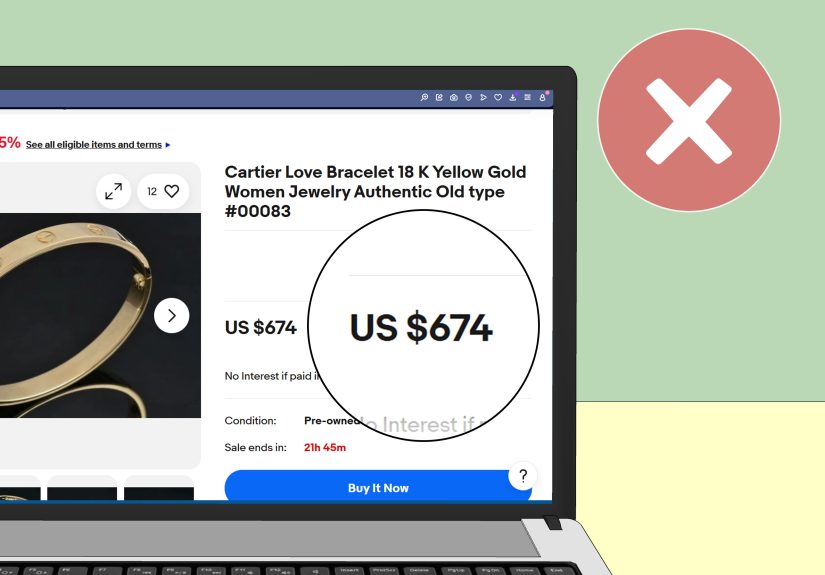
- Price: If it’s drastically below typical resale pricing with no believable explanation, pause. Luxury bargains exist, but “too good to be true” is a full-time job in counterfeit land.
If anything fails the gut check, treat the listing like a sketchy sandwich: you can eat it, but you probably shouldn’t.
Real vs Fake Cartier LOVE Bracelet: The Differences That Matter
1) Precious Metal Only (No “Mystery Metal” Allowed)
Cartier LOVE bracelets are made in precious metalscommonly 18K gold (marked “750”) and, for some models, platinum (marked “950”). A real bracelet should not be sterling silver, steel, or anything described as “alloy” without a precious metal stamp.
Spot-the-fake example: If a seller says “solid silver LOVE bracelet,” that’s your cue to politely back away like you just heard your name in a group chat you were never added to.
Smart check: If you can inspect it in person, a simple magnet test can be informative. Gold and platinum are not magnetic. (It won’t confirm authenticity on its ownbut magnetic jewelry claiming to be gold is a big yikes.)
2) The Feel: Real Ones Don’t Feel Lightweight or Hollow
Authentic fine jewelry has a certain “substantial” feelespecially a solid bangle. Many counterfeits feel suspiciously light, like they’re trying to float away from accountability.
What to look for:
- A solid, weighty feel appropriate for gold or platinum
- No rattling or hollow sound when lightly tapped
- No flaking, bubbling, or color shifting that suggests plating
Buyer tip: If you’re purchasing secondhand, ask the seller for the exact weight in grams. Serious sellers can provide it (or can weigh it). Vague answers like “feels heavy enough” are not the vibe.
3) Shape and Proportions: LOVE Is Oval for a Reason
The LOVE bracelet is designed with an oval shape that sits closely on the wrist. Counterfeits often get the geometry wrongtoo round, too flat, oddly wide, or uncomfortable in ways a luxury bangle shouldn’t be.
What to check:
- Oval silhouette: The bracelet should look like it’s intentionally shaped, not like a circle trying to pass as an oval.
- Balanced profile: The classic model has a clean, consistent width and a refined edge profile. Many fakes look bulky or oddly rounded.
- Comfort: Real pieces are engineered to be worn. If it pinches, snags, or feels rough at the edges, that’s suspicious.
4) Screws and Locking System: This Is Where Fakes Panic
The LOVE bracelet is famous for its screw closure system. In the classic model, the fastening system uses functional screws and a screwdriver. That means the mechanism should feel preciselike it was designed by adults who use rulers.
Signs it’s real:
- Flathead screws that look evenly aligned and clean
- Screws that sit properly and don’t wobble or protrude awkwardly
- A closure that feels smooth and securenot gritty or loose
Signs it’s fake:
- Screws that look uneven, dented, or poorly machined
- Wrong screw type (for example, Phillips or star-shaped screws)
- A closure that “clicks” like costume jewelry or feels unstable
Real-world detail: Some later versions use an updated screw system designed so the bracelet stays attached when unscrewedcounterfeiters sometimes copy the look but not the engineering. If the mechanism feels like a toy, trust your senses.
5) Engravings: Cartier’s Script Should Look Clean, Not “Crunchy”
Engravings are one of the most telling differences between a real vs fake Cartier LOVE bracelet. Authentic engravings should be crisp, consistent, and evenly spacedlike a luxury brand cares about its own name (shocking, I know).
Check these engraving traits:
- Sharp edges: Letters shouldn’t look fuzzy or “melted.”
- Even depth: Too shallow can look cheap; too deep can look carved.
- Consistent spacing: Uneven spacing is a common fake giveaway.
- No spelling errors: It sounds obvious, but counterfeiters do commit crimes… and typos.
Photo strategy: If you’re buying online, request close-up macro photos of the inside engravings and the screw motifs. If the seller refuses, consider that your answer.
6) Hallmarks and Stamps: “750” and “950” Are the Big Ones
Inside an authentic LOVE bracelet, you should see hallmarks and stamps that match the metal. Common authentic markings include:
- “750” for 18K gold (75% pure gold)
- “950” for platinum (95% purity)
- The Cartier signature in the brand’s cursive style
- A size marking (Cartier sizes are typically listed in centimeters, such as 15–21 for many classic models)
Common fake behavior: Missing hallmarks, incorrect metal purity marks, or hallmarks placed in strange locations. Some fakes add extra stamps on the exterior or repeat the logo multiple timestrying to look “more authentic” by doing the most.
7) Serial Numbers: Placement, Pattern, and Logic
Serial numbers matter because they’re difficult to fake well. On modern LOVE bracelets, the serial number is engraved on the inside. Authentication experts often evaluate whether the serial format and engraving quality align with genuine production norms.
A helpful historical note: Early LOVE bracelets did not always include serial numbers; serials became part of the effort to combat counterfeiting in the 1970s. On many pieces from 1974 onward, serial numbers are expected, and authentic examples are typically unique alphanumeric sequences.
What you should do:
- Confirm the serial number exists (for modern pieces).
- Check that the engraving looks crisp and consistentnot etched like it was added later.
- Be skeptical of repeated “common” serials across listings (a known counterfeit pattern).
Reality check: A serial number alone doesn’t guarantee authenticity. It’s one clue in a bigger puzzle.
8) Diamond Versions: Settings and Symmetry Give It Away
Many LOVE bracelets come in versions embellished with diamonds. If yours has stones, focus on craftsmanship:
- Even setting: Stones should look centered and consistent.
- Clean finishing: No glue residue, no rough edges around settings.
- Consistency: Diamonds should have a uniform look (cloudy, dull stones can signal poor quality or imitation).
Smart upgrade: When in doubt, ask for a jeweler’s inspection or buy through a marketplace that uses expert verification for high-value jewelry.
9) Finish and Polish: Real Luxury Doesn’t Look “Chalky”
Cartier’s finishing is polished and intentionalmetal surfaces should look refined, not grainy, “flat,” or cheaply reflective. Counterfeits often miss this because high-end finishing takes time (and skill) that counterfeit operations don’t love paying for.
Look for:
- Uniform shine and consistent color tone
- No weird discoloration at edges or around screws
- Clean transitions between polished areas and engraved motifs
10) Packaging, Paperwork, and Accessories: Nice Boxes Can Still Lie
Some sellers include boxes, certificates, and even screwdrivers. That’s helpfulbut not definitive. Packaging is easier to fake than jewelry engineering.
Use packaging as a supporting clue:
- Does the screwdriver look well-made and fit properly?
- Do papers match the piece’s details (metal type, model, size)?
- Does the overall presentation look consistent with luxury retail quality?
Reputable resellers often evaluate not only the bracelet but also boxes and documentation, and some even use material testing to verify metal composition.
How to Authenticate Safely Before You Buy
If you want to shop smarter (and sleep better), use a layered approach:
Buy From the Lowest-Risk Sources
- Best: Buy directly from Cartier or established authorized luxury retailers.
- Safer secondhand: Use well-known resellers with robust authentication processes and buyer protections.
- Highest risk: Random social media sellers, unverified marketplaces, or listings with poor photos and “final sale” terms.
Ask for Proof That’s Hard to Fake
- High-resolution photos of the inside engravings and screws
- Weight in grams
- Receipt history (when available) and clear return terms
- Optional: meet at a reputable jeweler for inspection
Consider Professional Verification
Professional authentication can include magnification, measurement checks, and metal testing (like XRF). If you’re spending thousands, paying a bit for verification is often money well spent.
What to Do If You Suspect a Fake
- Pause the transaction: If you haven’t purchased, don’t “hope for the best.”
- Use buyer protection: If you bought online, document everything and use the platform’s dispute process quickly.
- Don’t resell as authentic: If it’s counterfeit, attempting to pass it off as real can create serious legal and ethical problems.
- Report suspicious sellers: Marketplaces and enforcement agencies track patterns of counterfeit sales.
Conclusion & Real-World Experiences (The Stuff People Learn the Hard Way)
When it comes to spotting a real vs fake Cartier LOVE bracelet, the secret isn’t a single “magic” giveawayit’s consistency. Authentic LOVE bracelets are consistent in material, craftsmanship, engraving quality, screw engineering, and overall finishing. Fakes can copy the general look, but they often fail in the details: sloppy screws, fuzzy engravings, incorrect hallmarks, lightweight feel, and sketchy seller behavior.
Now for the part people don’t always talk about: the human side of authentication. In secondhand luxury, buyer stories repeat themselves because counterfeiters rely on the same emotions every timeexcitement, urgency, and the thrill of a “deal.” Here are a few experience-based lessons collectors and buyers commonly share:
Experience #1: “The Photos Looked Perfect… Until I Asked for Macro Shots”
A common pattern: a listing uses flattering angles and soft lighting, and everything looks great. Then the buyer asks for close-ups of the inside engravings. Suddenly, the seller gets weirddelays, excuses, or blurry photos that look like they were taken through a fish tank. Clean macro shots are hard to avoid if the bracelet is real. If a seller can’t provide them, treat it like a no.
Experience #2: “It Came With a Box, So I Thought I Was Safe”
Buyers often assume packaging equals authenticity. Unfortunately, counterfeit packaging exists, and real boxes can also be paired with fake jewelry. The better mindset is: packaging is a supporting actor, not the main character. The bracelet itselfits metal, screws, engravings, and finishmust make sense first. If the bracelet fails but the box is pretty, you’re still buying a fake… just with nicer storage.
Experience #3: “The Screwdriver Didn’t Fit Right, and That Was the Whole Story”
Many people notice the mechanism before anything else. On a genuine LOVE bracelet, the closure is part of the identity of the piece. If the screw action feels rough, the tool doesn’t seat properly, or the closure seems wobbly, that’s not “normal wear.” That’s often a counterfeit using cheaper machining. A luxury bracelet should not feel like it’s one awkward twist away from becoming two bracelets.
Experience #4: “The Price Was Amazing… and So Was My Denial”
This is the most relatable one. Buyers want the deal to be real. They start explaining away red flags: “Maybe Cartier changed the font,” “Maybe it’s a rare model,” “Maybe the hallmark is different in Europe,” “Maybe the seller is just busy.” Sometimes those may be true. But if you’re stacking maybes like pancakes, you’re not doing authenticationyou’re doing wishful thinking with a credit card.
Experience #5: “Paying for Authentication Felt Annoying… Until It Saved Me Thousands”
Many experienced buyers say the same thing: the first time you pay for professional verification, it feels like an extra cost. The second time it prevents a bad purchase, it feels like the smartest money you’ve spent. If you’re buying high-value jewelry secondhand, paying for inspection can be the difference between owning a lifelong piece and owning an expensive lesson.
Bottom line: slow down, collect evidence, and trust the details. Authentic LOVE bracelets are precision objects. Counterfeits are impressions of precision. And once you know what to look for, the difference becomes much easier to spot.