Table of Contents >> Show >> Hide
- What Exactly Is the Regent 1010 1890’s Style Mushroom Union Faucet?
- Why This Faucet Stands Out
- Design Details That Make It Feel Premium
- How It Performs in a Real Kitchen
- Where This Faucet Works Best
- Before You Buy: Practical Considerations
- Is the Regent 1010 Worth It?
- Experience Section: What Living with a Regent 1010 Feels Like
- Final Thoughts
Some faucets are just there to dispense water and mind their business. The Regent 1010 1890’s Style Mushroom Union Faucet is not that kind of faucet. This one arrives with swagger. It has the unapologetic charm of a late-19th-century workshop fixture, the grace of a swan-neck spout, and the kind of old-world detailing that makes modern builder-grade hardware look like it showed up in sweatpants. If you love kitchens that feel collected, architectural, and a little bit dramatic, this is the kind of fixture that can anchor the whole room.
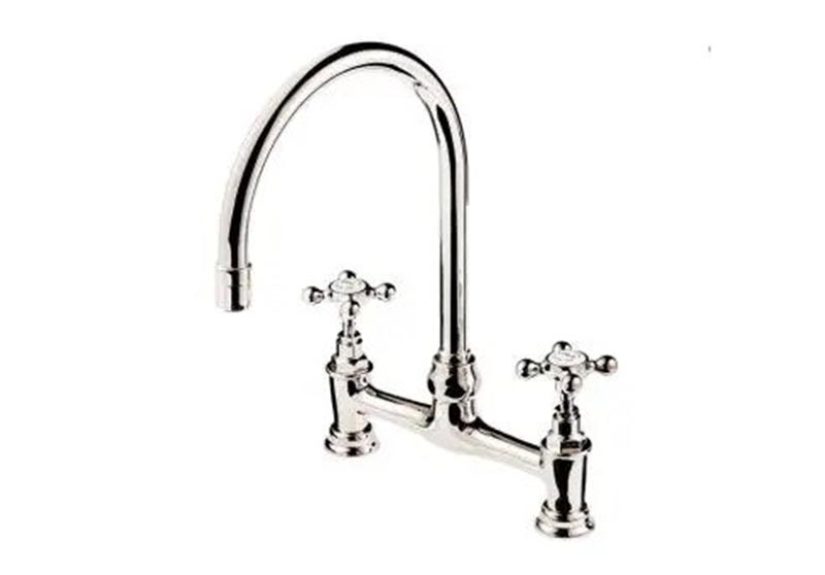
At its core, the Regent 1010 is a deck-mounted bridge faucet with a distinctly period-inspired personality. The “1890’s style” designation matters because it leans into the earlier industrial look with more visible fixings and more mechanical honesty than the cleaner, more shielded 1900s variation. The “mushroom union” detail is part of that charm. Instead of hiding every joint and connection, the faucet celebrates them. In other words, this is not a faucet trying to blend into the backsplash. It is absolutely applying for the lead role.
What Exactly Is the Regent 1010 1890’s Style Mushroom Union Faucet?
The Regent 1010 is best understood as a luxury bridge kitchen faucet built for people who want real architectural character, not just a place to rinse spinach. In a bridge faucet, the hot and cold controls are connected by a visible horizontal bridge before the water reaches the spout. That exposed connection is one of the reasons bridge faucets feel so classic and substantial. On the Regent 1010, that traditional setup is paired with fixed mushroom deck unions, a swan-neck swivel spout, and a silhouette that looks equally at home in a Victorian-inspired scullery, an English-style country kitchen, or a carefully layered American traditional remodel.
The model is especially appealing because it does not stop at “pretty.” It offers useful practical options too. Depending on the configuration, buyers can choose a 6-inch or 8-inch spout reach, and the line also offers a standard or increased-height spout option. That flexibility matters more than many people realize. A faucet can be gorgeous, but if the reach is wrong for the sink or the clearance is awkward for daily washing, beauty turns into an expensive life lesson. The Regent 1010 avoids that trap by offering customization without losing its historic soul.
Why This Faucet Stands Out
A true bridge faucet, not a vintage costume
Plenty of faucets borrow a little “heritage” styling, toss on some cross handles, and call it a day. The Regent 1010 feels more convincing because the whole composition works together. The exposed bridge, the mushroom unions, and the swan-neck spout all speak the same visual language. It does not look like a modern faucet wearing a fake mustache. It looks intentional, proportioned, and rooted in older plumbing traditions.
The 1890s look has more grit and texture
The 1890s version is the one for people who like a little machinery in their romance. Where the 1900s-style option is cleaner and more shielded, the 1890s version embraces exposed fixings and a slightly earlier industrial attitude. That makes it especially effective in kitchens with unlacquered brass hardware, fireclay sinks, beadboard, soapstone, honed marble, or painted cabinetry with a bit of age and softness. It feels refined, yes, but never fussy. Think “well-traveled kitchen designer,” not “museum rope barrier.”
The swan-neck spout is functional as well as elegant
The curved spout is not just there to look dignified in profile. A swan-neck or gooseneck spout gives you better clearance for filling stockpots, maneuvering sheet pans, and washing bulky cookware. In a real kitchen, that extra room matters. The Regent 1010 is proof that a faucet can have posture and still pull its weight.
Design Details That Make It Feel Premium
One of the biggest reasons this faucet gets attention is finish variety. The Regent 1010 is offered in a long list of finishes, from polished brass and brushed brass to nickel, chrome, bronze, gold, and Inca-toned options. That range gives designers and homeowners a lot of room to tune the mood. Want a bright, formal statement? Polished metal finishes can do that. Want a softer, moodier, “this house has stories” effect? Brushed and living finishes are the move.
Finish choice changes the personality of this faucet more than you might expect. In polished brass, it reads glamorous and unapologetically traditional. In brushed brass, it looks a touch more relaxed and designerly. In nickel or chrome, it becomes cooler, sharper, and slightly more tailored. In weathered bronze or darker living finishes, it picks up a brooding, old-house confidence that says, “Yes, I own a wooden cutting board the size of a canoe, and yes, I know how to use it.”
Another detail worth noting is the way the line supports a more bespoke approach. The broader Regent family includes different union styles and handle variations, including lever-oriented versions, and the official product information also points to choices around indices and other details. That is a big deal for high-end projects. It means the faucet is not just a fixed object; it is a design tool. You can push it slightly more formal, slightly more rustic, or slightly more practical depending on the rest of the kitchen.
How It Performs in a Real Kitchen
Performance is where many beautiful faucets suddenly become exhausting. The Regent 1010, however, has several traits that suggest it is built for actual use rather than photo shoots alone. The swivel spout adds flexibility across the sink bowl, while ceramic disc technology in the listed configuration points to the kind of modern valve performance buyers expect in a premium fixture. That matters because nobody wants a faucet that looks like the 1890s and behaves like the 1890s too.
The two-handle format also appeals to cooks and homeowners who prefer more precise control over temperature. Single-handle faucets are undeniably convenient, but double-handle and bridge styles have a tactile quality that many people still love. They slow the interaction just enough to feel deliberate rather than flimsy. Turn the hot side, turn the cold side, dial it in, and get on with your dishwashing destiny.
There is one honest trade-off here: the Regent 1010 is not trying to be a do-everything pull-down workstation faucet. If your kitchen life revolves around high-pressure spray modes, quick rinsing, and one-handed multitasking while holding a colander in the other hand, a contemporary pull-down might suit you better. But if your priority is timeless style, robust materials, a graceful profile, and a traditional bridge faucet experience, the Regent 1010 makes a compelling case.
Where This Faucet Works Best
This faucet shines in kitchens that already have some visual depth. Think inset cabinets, apron-front sinks, natural stone, unlacquered hardware, painted wood, old-house bones, or at least a convincing imitation of old-house bones. It is also excellent in new builds that are trying to avoid the showroom sameness that happens when every surface is flat, every finish is matte black, and every fixture looks like it was designed by a committee of rectangles.
The Regent 1010 also works beautifully in transitional spaces where the goal is to bridge old and new. Pair it with simple shaker cabinetry, warm white walls, a quiet backsplash, and understated lighting, and the faucet becomes a focal point without the rest of the room having to wear a full Victorian costume. That balance is part of its appeal. It feels historically informed, but it does not demand that the entire kitchen turn into a time capsule.
Before You Buy: Practical Considerations
Check the sink and hole layout
A bridge faucet is not the place for wishful thinking. Verify your sink or countertop hole configuration before you fall in love. Bridge faucets often work with two-hole or three-hole setups, depending on the sink and whether you are adding an accessory. If you are replacing a single-hole contemporary faucet, do not assume this will be a drop-in swap. Read the specification sheet, check the spacing, and confirm compatibility before the project enters its expensive “surprise” phase.
Think hard about finish behavior
Brass finishes are especially emotional purchases because people often love the idea of patina right up until the first fingerprint arrives. If you choose an unlacquered or living-style finish, expect change. That is the point. The metal may darken, soften, and develop variation over time. If that sounds romantic, wonderful. If that sounds like something that will keep you awake at night, choose a finish with more stability. The good news is that the Regent 1010 offers enough finish choices to suit both camps.
Remember code and performance details
Even when a faucet is chosen for looks, practical standards still matter. In the U.S., kitchen faucets are subject to federal flow-rate limits, and local rules or retailer compliance requirements may add another layer. So if you are specifying this faucet for a renovation, confirm the current seller specifications on flow rate, certification, and installation requirements. A great faucet should charm your eye and satisfy your plumber. One without the other is just an expensive conversation starter.
Is the Regent 1010 Worth It?
For the right buyer, absolutely. The Regent 1010 1890’s Style Mushroom Union Faucet is not a budget purchase, and it is not pretending to be one. It lives in the premium end of the market, where people care about silhouette, metal finish, historical references, and the difference between “nice faucet” and “where on earth did you find that faucet?” If your kitchen vision includes warmth, depth, and a fixture that feels collected rather than generic, this model has real appeal.
It is especially worth considering if you are tired of contemporary faucets that prioritize gadgetry over grace. The Regent 1010 does not try to win you over with a detachable wand, a hidden button, or the promise of futuristic minimalism. It wins with shape, proportion, finish, and presence. It looks like it belongs to a kitchen with opinions, and frankly, that is refreshing.
Experience Section: What Living with a Regent 1010 Feels Like
Living with a faucet like the Regent 1010 is less about “using a plumbing fixture” and more about noticing a small ritual that suddenly became more enjoyable. In a kitchen full of practical tasks, this faucet adds a strange little moment of ceremony. You reach for the handles, feel the weight and separation of hot and cold, turn the water on, and the whole interaction feels more intentional than it does with a generic single-lever model. That sounds dramatic for a kitchen faucet, but that is the honest appeal of good traditional hardware: it can make routine actions feel a little more grounded.
The swan-neck spout also changes the daily experience in subtle ways. There is room beneath it. You feel that when you rinse a Dutch oven, fill a vase, wash a baking sheet, or try to maneuver a large stockpot without performing a countertop ballet. The faucet’s height and curve help the sink feel more usable, not just more beautiful. In the morning, when the light catches a brass or nickel finish, it gives the sink area an almost staged quality. In the evening, it tends to read softer and moodier. It becomes one of those details that changes with the room instead of sitting there like a static appliance.
Owners who gravitate toward historic-style kitchens often talk about wanting a room that improves with age rather than one that merely stays new. That is where the finish conversation becomes part of the experience. A polished finish looks crisp and tailored. A living finish develops depth. Water spots, fingerprints, soft darkening, and subtle tonal shifts are not necessarily flaws; for many people, they are the whole romance. The faucet starts to look less “fresh from the catalog” and more “always belonged here.” Of course, this only feels magical if you actually like patina. If you do, the Regent 1010 becomes more interesting over time. If you do not, you may find yourself polishing it with the intensity of someone preparing silverware for a royal visit.
There is also the social factor, which is real and mildly entertaining. Guests notice this kind of faucet. They do not always know what it is called, but they notice it. It gets comments. It gets second looks. It quietly elevates the sink wall, especially when paired with a farmhouse sink, traditional millwork, or warm-toned hardware. In open-plan kitchens, that matters, because the faucet is often visible from the dining area or living room. The Regent 1010 has enough character to contribute to the room even when nobody is washing dishes.
The less glamorous part of the experience is maintenance, and it is only fair to mention it. A faucet with exposed details and decorative unions has more visual texture, which means it also has more little places to wipe. Nothing tragic, but this is not the minimalist’s dream of a seamless one-piece cylinder. It rewards people who like beautifully made things and do not mind giving them a quick cloth-down now and then. In return, it brings a sense of permanence that many trend-driven faucets simply do not. Living with the Regent 1010 feels a bit like living with a great cast-iron pan or a solid wood table: it asks for some care, but it gives back atmosphere, usefulness, and a lot of long-term charm.
Final Thoughts
The Regent 1010 1890’s Style Mushroom Union Faucet is a strong choice for anyone who wants a bridge kitchen faucet with genuine period flavor, luxury-level presence, and practical everyday usability. It delivers the visible bridge structure, mushroom union detailing, swan-neck elegance, and finish flexibility that make heritage-style fixtures so enduring. More importantly, it does so without feeling theatrical or flimsy.
In the right kitchen, this faucet does more than match the room. It helps define it. If your design taste leans warm, traditional, layered, and a little soulful, the Regent 1010 is the sort of fixture that can make your sink area feel less like a utility zone and more like the heart of the home. And honestly, if a faucet can make dish duty feel even 7% more glamorous, that deserves some respect.