Table of Contents >> Show >> Hide
- What Does Exhaustion in a Child Really Mean?
- Common Signs of Exhaustion in My Child
- 1. They Wake Up Tired Even After Sleeping
- 2. They Become Irritable, Tearful, or Easily Frustrated
- 3. They Seem Hyperactive Instead of Sleepy
- 4. They Have Trouble Paying Attention
- 5. They Complain About Headaches, Stomachaches, or Body Aches
- 6. They Lose Interest in Favorite Activities
- 7. They Fall Asleep at Odd Times
- 8. Their Appetite Changes
- 9. They Move More Slowly or Seem Physically Weak
- How Much Sleep Does a Child Need?
- Common Causes of Exhaustion in Children
- When Should I Worry About My Child’s Exhaustion?
- What Parents Can Track Before Calling the Doctor
- How to Help an Exhausted Child at Home
- Parent Experiences: What Exhaustion Can Look Like at Home
- Conclusion
Every parent knows the classic “I’m not tired!” speech, usually delivered by a child who is blinking like a sleepy owl and leaning sideways on the couch. But true exhaustion in children is more than a dramatic bedtime protest. It can affect mood, school performance, appetite, coordination, immunity, and the ability to enjoy everyday life.
Children do not always say, “I feel exhausted.” Younger kids may melt down over the wrong color cup. School-age children may complain of stomachaches or headaches. Teens may sleep late, snap at everyone, forget assignments, or seem glued to their bed like it has developed a gravitational field. The challenge for parents is knowing the difference between normal tiredness and a pattern that deserves attention.
This guide explains the common signs of exhaustion in a child, possible causes, what parents can observe at home, and when to call a pediatrician. It is educational and not a substitute for medical care, but it can help you organize what you are seeing before you decide the next step.
What Does Exhaustion in a Child Really Mean?
Exhaustion is a deeper level of tiredness that does not improve easily with a short rest. A child may feel physically drained, mentally foggy, emotionally overwhelmed, or all three. Some children become slow and quiet. Others become loud, silly, hyperactive, or irritable because their tired brain is trying to stay awake by throwing confetti at the nervous system.
Normal tiredness usually has an obvious reason: a late night, a busy sports day, travel, illness, or an unusually exciting event. Exhaustion becomes more concerning when it is frequent, intense, unexplained, worsening, or interfering with school, play, friendships, eating, or daily routines.
Common Signs of Exhaustion in My Child
1. They Wake Up Tired Even After Sleeping
A child who regularly wakes up groggy, grumpy, or “not rested” may not be getting enough sleep or may not be getting quality sleep. Snoring, restless sleep, frequent waking, nightmares, late-night screen use, anxiety, allergies, asthma, or sleep apnea can all interfere with restorative rest.
Pay attention to patterns. If your child is in bed for a reasonable number of hours but still seems wiped out every morning, the issue may not be bedtime alone. Sleep quality matters just as much as sleep quantity.
2. They Become Irritable, Tearful, or Easily Frustrated
Exhausted children often have a much shorter emotional fuse. A small disappointment can turn into a big reaction. They may cry more easily, argue more, cling to you, or seem unusually sensitive. In younger children, exhaustion may look like tantrums. In older kids and teens, it may look like sarcasm, withdrawal, or sudden mood swings.
This does not mean your child is “being difficult.” It may mean their brain is running on low battery mode. When children are exhausted, emotional regulation becomes harder, just like it is harder for adults to stay patient after a terrible night’s sleep.
3. They Seem Hyperactive Instead of Sleepy
One confusing sign of exhaustion in children is extra energy. Some tired kids do not slow down; they speed up. They may run around, talk nonstop, act impulsively, or become unusually silly. This can trick parents into thinking, “There is no way this child is tired.” Actually, there is a way. Children can look like tiny party balloons right before they completely deflate.
If hyperactivity appears mostly in the evening or after a skipped nap, overtiredness may be part of the picture.
4. They Have Trouble Paying Attention
Exhaustion can affect concentration, memory, learning, and decision-making. A tired child may forget instructions, lose school papers, stare at homework without starting, or need repeated reminders for simple tasks. Teachers may report that your child seems distracted, restless, or slower than usual.
This is especially important because exhaustion can mimic or worsen attention problems. Before assuming a child is lazy or careless, look at sleep, schedule, stress, illness, nutrition, and screen habits.
5. They Complain About Headaches, Stomachaches, or Body Aches
Children often express fatigue through the body. A child may not say, “I am mentally exhausted,” but they may say, “My stomach hurts,” “My legs feel weird,” or “I have a headache.” These symptoms can come from many causes, including dehydration, hunger, viral illness, stress, poor sleep, too much activity, or medical conditions.
If physical complaints repeat often, appear with extreme tiredness, or interfere with normal activities, write them down and discuss them with your child’s pediatrician.
6. They Lose Interest in Favorite Activities
A child who is exhausted may stop wanting to do things they usually love. The soccer lover suddenly wants to skip practice. The bookworm no longer reads at night. The child who usually begs for playdates says, “I just want to stay home.”
Everyone needs downtime, so one quiet weekend is not automatically a problem. But a noticeable loss of interest, especially when combined with sadness, irritability, sleep changes, appetite changes, or social withdrawal, deserves a closer look.
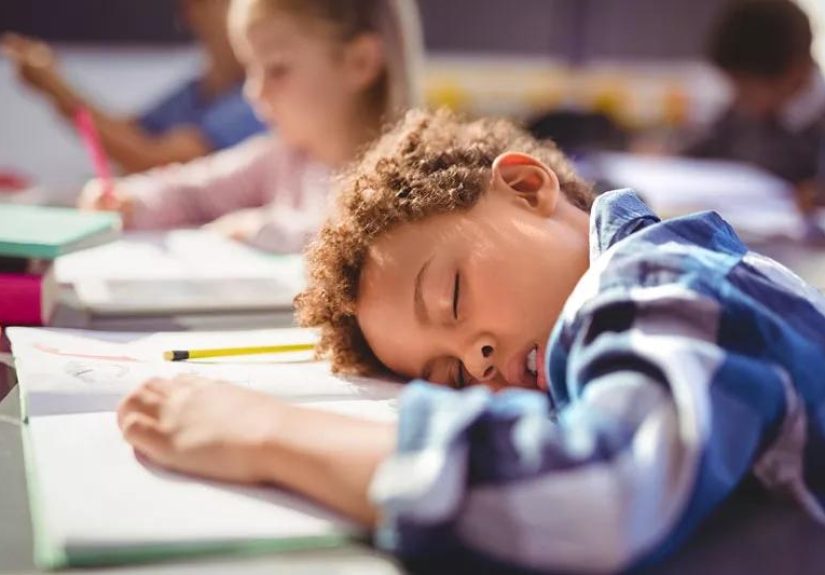
7. They Fall Asleep at Odd Times
Falling asleep in the car after a long day is common. Falling asleep repeatedly during school, meals, conversations, or short rides may signal that your child is not getting enough rest or is dealing with another issue. Teens are famous for sleeping late, but frequent daytime sleepiness should not be dismissed as “just being a teenager.”
8. Their Appetite Changes
Exhaustion can affect appetite in both directions. Some children eat less because they feel unwell or too tired. Others crave quick-energy foods, especially sweets or refined carbohydrates, because their body is searching for fuel. A tired child may also skip breakfast, snack constantly, or become pickier than usual.
Food alone will not fix exhaustion, but balanced meals and regular hydration support energy and recovery.
9. They Move More Slowly or Seem Physically Weak
There is a difference between fatigue and weakness. Fatigue means your child feels tired or drained. Weakness means their body cannot do what it normally can. If your child suddenly has trouble walking, standing, using one side of the body, staying awake, or responding normally, seek urgent medical care.
New or worsening weakness is not something to watch casually for days. It is a reason to contact a healthcare professional promptly.
How Much Sleep Does a Child Need?
Sleep needs vary by age, but many children need more sleep than families realize. In general, toddlers often need 11 to 14 hours in 24 hours, preschoolers need about 10 to 13 hours, school-age children need 9 to 12 hours, and teens need 8 to 10 hours. These ranges include naps for younger children.
If your child is consistently getting less than the recommended amount, exhaustion may not be mysterious at all. It may be math wearing pajamas.
Common Causes of Exhaustion in Children
Poor Sleep Habits
Irregular bedtimes, late-night screens, caffeine, noisy rooms, stressful evenings, and overscheduled days can all interfere with sleep. Screens are especially sneaky because games, videos, messages, and bright light can keep the brain alert when it should be winding down.
Illness or Recovery
Viral infections, flu, stomach bugs, COVID-related recovery, mono, allergies, asthma, and other illnesses can cause fatigue. It is normal for children to sleep more when sick, but when awake, they should still be reasonably alert and responsive.
Stress, Anxiety, or Emotional Overload
School pressure, friendship problems, family changes, bullying, grief, or anxiety can drain a child’s energy. Mental fatigue is real. A child may look tired because their brain is carrying more than they know how to explain.
Too Much Activity and Not Enough Recovery
Sports, clubs, tutoring, homework, chores, social plans, and family events can turn a child’s week into a miniature corporate calendar. Even fun activities require recovery. Children need unstructured time, quiet play, and boring moments. Boredom is not the enemy; sometimes it is the nervous system taking a deep breath.
Nutrition and Hydration Gaps
Skipping meals, not drinking enough water, relying heavily on sugary snacks, or having low intake of iron-rich foods may affect energy. Persistent fatigue can also be linked to medical issues such as anemia, thyroid problems, diabetes, sleep disorders, or other conditions that require evaluation.
When Should I Worry About My Child’s Exhaustion?
Call your child’s pediatrician if exhaustion lasts more than a couple of weeks without a clear reason, gets worse, affects school or normal activities, comes with ongoing fever, weight loss, persistent pain, frequent headaches, unusual sleepiness, mood changes, or signs of dehydration.
Seek urgent care right away if your child is hard to wake, confused, struggling to breathe, unable to walk normally, has new weakness, has blue lips, has a stiff neck with fever, has severe headache, has repeated vomiting, shows signs of heat illness, or simply looks seriously ill to you. Parental instinct is not a medical device, but it is often a useful alarm bell.
What Parents Can Track Before Calling the Doctor
A simple one-week energy log can be surprisingly helpful. Track bedtime, wake time, naps, screen use before bed, meals, fluids, physical activity, mood, school complaints, pain, fever, and when tiredness seems worst. You do not need a fancy spreadsheet unless spreadsheets bring you joy. A notebook or phone note works fine.
Also ask specific questions. Instead of “Are you tired?” try “Does your body feel heavy?” “Is school harder to focus on?” “Do you wake up feeling rested?” “Does anything hurt?” “Do you feel worried at night?” Children often answer better when the question is concrete.
How to Help an Exhausted Child at Home
Create a Predictable Sleep Routine
A consistent bedtime and wake time can help regulate your child’s internal clock. Build a routine that is boring in the best possible way: bath, pajamas, teeth, story, quiet music, lights out. The goal is not to make bedtime magical every night. The goal is to make it predictable enough that your child’s brain knows what comes next.
Move Screens Out of the Bedroom
Phones, tablets, TVs, and gaming devices can delay sleep and lower sleep quality. Try charging devices outside the bedroom and turning off screens at least an hour before bed. This may be unpopular at first. Stay calm. Your child may act like you have removed oxygen from the house, but the adjustment often gets easier with consistency.
Protect Downtime
Children need breaks that are not performance-based. A quiet afternoon, a walk, drawing, reading, building blocks, or lying on the floor with the family dog can all count as recovery. Not every minute needs to be productive.
Support Balanced Energy
Offer regular meals, protein-rich snacks, fruits, vegetables, whole grains, and water. Encourage outdoor play or light physical activity when appropriate, because movement can improve sleep and mood. However, if your child is truly exhausted or sick, rest comes first.
Talk About Stress Without Turning It Into an Interrogation
Try low-pressure conversations during car rides, walks, or bedtime. You might say, “I’ve noticed you seem worn out lately. I’m not mad. I just want to understand what your days feel like.” Children are more likely to open up when they do not feel cross-examined like a tiny witness in a courtroom drama.
Parent Experiences: What Exhaustion Can Look Like at Home
Many parents first notice exhaustion not through one dramatic symptom, but through a cluster of small changes. One parent might realize their cheerful second grader has started crying over homework that used to be easy. Another might notice their preschooler suddenly needs to be carried from the car every afternoon. A teen may insist they are “fine,” while their grades slip, laundry piles up, and every conversation sounds like it was translated through a thundercloud.
A common experience is the after-school crash. A child holds it together all day, follows rules, answers questions, manages friendships, and then falls apart the moment they get home. This does not always mean something terrible happened at school. Sometimes home is simply the safe place where the mask comes off. Parents may see whining, anger, silence, or a sudden need for snacks and space. In that moment, a lecture rarely helps. Food, water, quiet, and a little patience often do more than a speech about attitude.
Another familiar pattern is weekend “catch-up” sleep. A child who wakes early all week may sleep much later on Saturday. Occasional catch-up rest can happen, but if every weekend looks like a recovery mission, the weekday schedule may be too demanding. Parents often discover that the real problem is not one late night, but a routine that trims 30 to 60 minutes of sleep every day until the sleep debt becomes impossible to ignore.
Sports families may see exhaustion during busy seasons. A child may love the team but still struggle with late practices, travel games, homework, and early school mornings. The sign is not always refusal. Sometimes the child keeps going because they do not want to disappoint anyone. They may become more injury-prone, more emotional after games, or less enthusiastic about something they genuinely enjoy. In these cases, rest is not quitting. Rest is maintenance.
Parents of teens often describe a different challenge: separating normal independence from exhaustion. Teens may stay up late, use phones at night, drink caffeine, sleep through alarms, and then seem shocked that morning arrives every single day. A calm family reset can help: devices out of bedrooms, realistic homework planning, consistent wake times, and honest conversations about stress. The goal is not to control every minute. The goal is to help teens connect choices with how their bodies feel.
The most important experience many parents share is learning to trust patterns. One tired day is usually just a tired day. A repeated change in energy, mood, sleep, appetite, school performance, or physical comfort is worth noticing. You do not have to panic, and you do not have to diagnose your child at the kitchen table. You simply have to observe, support healthy routines, and call the pediatrician when the pattern feels bigger than normal childhood tiredness.
Conclusion
Recognizing the signs of exhaustion in your child can help you respond with support instead of frustration. Tired children may not always look sleepy. They may look angry, hyper, forgetful, tearful, withdrawn, or physically uncomfortable. The key is to look for patterns: how often it happens, how long it lasts, what makes it better, and whether it interferes with daily life.
Most childhood exhaustion improves with better sleep routines, reduced screen time before bed, balanced meals, hydration, calmer schedules, and emotional support. But persistent or severe fatigue should be discussed with a pediatrician, especially when it comes with fever, weakness, pain, breathing trouble, confusion, dehydration, or major changes in mood or behavior.
Your child does not need a perfect routine. No family has one. But small, steady changes can protect rest, restore energy, and make your home feel less like a nightly negotiation with a tiny sleep lawyer.