Table of Contents >> Show >> Hide
- What Is a Succulent Fairy Garden?
- Why Succulents Are Perfect for Fairy Gardens
- How to Make a Succulent Fairy Garden
- Best Plants for a Succulent Fairy Garden
- Indoor vs. Outdoor Succulent Fairy Garden
- How to Water a Succulent Fairy Garden
- Common Mistakes to Avoid
- Succulent Fairy Garden Design Ideas
- The Experience of Creating a Succulent Fairy Garden
- Final Thoughts
A succulent fairy garden is what happens when houseplant logic and storybook chaos decide to become roommates. It is part container garden, part miniature landscape, and part excuse to buy tiny furniture you absolutely did not need five minutes ago. Best of all, it can be surprisingly beginner-friendly. Succulents already bring texture, color, and sculptural drama to a pot. Add a small path, a pebble patio, a tiny bench, or a whimsical doorway, and suddenly your planter looks like it belongs to a very stylish woodland landlord.
But a truly good succulent fairy garden is not just cute. It is functional. The plants still need the right soil, the right light, and a watering routine that does not accidentally turn the whole kingdom into soup. That is where many fairy gardens go wrong: they look magical for one weekend and tragic by next Thursday. The trick is to build one that is both charming and sensible. Think less “fantasy movie set built overnight” and more “tiny drought-tolerant neighborhood with excellent drainage.”
This guide breaks down how to create a succulent fairy garden that looks enchanting, stays healthy, and does not require you to hover over it like a nervous plant parent with a spray bottle. From choosing the right container to picking the best miniature-looking succulents, here is how to build a living little world that actually lasts.
What Is a Succulent Fairy Garden?
A succulent fairy garden is a miniature garden design built around small succulents and tiny decorative elements such as miniature houses, stepping stones, arches, fences, lanterns, bridges, mushrooms, or fairy figurines. It can live indoors or outdoors, depending on the plants you choose and the amount of light available. The overall look is playful, but the structure is still rooted in smart container gardening.
The reason this concept works so well is simple: many succulents naturally look architectural and small-scale. Rosette-forming varieties resemble oversized flowers. Trailing sedums spill over the edge like living vines. Upright varieties create the effect of little shrubs or trees. In other words, succulents already look like they were designed by somebody who understood set decoration.
Why Succulents Are Perfect for Fairy Gardens
Succulents are especially well suited for fairy garden design because they offer high visual payoff without demanding daily attention. Their leaves store water, which means they generally tolerate dry conditions better than thirstier plants. Many also stay compact, making them ideal for small containers, shallow bowls, teacup gardens, broken-pot displays, and other miniature scenes.
They also come in a wide range of colors and forms. You can combine silvery blue rosettes, lime-green trailing varieties, dusky purple edges, spiky silhouettes, and bead-like leaves in one arrangement without making it look messy. A well-designed succulent fairy garden can feel whimsical without being sugary. It can be soft and magical, modern and sculptural, or delightfully weird. Tiny stone path? Sure. Mini dragon? Also acceptable.
How to Make a Succulent Fairy Garden
1. Start with the Right Container
The best succulent fairy garden container has one non-negotiable feature: a drainage hole. This matters more than the color, shape, or how adorable the pot looks on your patio table. Succulents dislike sitting in soggy soil, so a container that drains well gives you a much bigger margin for error.
Shallow containers often work beautifully because many succulents have relatively shallow root systems. Terra-cotta pots are popular for good reason: they look natural and help the soil dry more efficiently than many nonporous containers. Broken clay pots can also be transformed into tiered fairy gardens with steps, levels, and little scenes tucked into the cracks, which is a charming way to turn one gardening mishap into a design feature.
If you love the look of glass, stick with an open dish or open terrarium rather than a sealed one. Closed terrariums hold humidity, and most succulents are not interested in spa conditions.
2. Use Fast-Draining Soil
Your succulent fairy garden should not be filled with ordinary garden soil scooped from the yard. That is the fastest route to compaction, excess moisture, and plant misery. Instead, use a cactus or succulent potting mix, or amend a container mix with coarse sand, perlite, pumice, or another material that improves drainage.
This is not the glamorous part of the project, but it is the part that keeps your fairy real estate from becoming a swamp. Good soil allows water to move through quickly, roots to breathe, and the plants to dry out between waterings. In a fairy garden, healthy roots are more useful than a dramatic backstory.
3. Pick Small Succulents with Similar Needs
One common design mistake is combining plants that want wildly different growing conditions. A successful succulent fairy garden groups plants with similar light and watering needs. That way, the entire container can be cared for as one little ecosystem rather than as a complicated hostage negotiation between species.
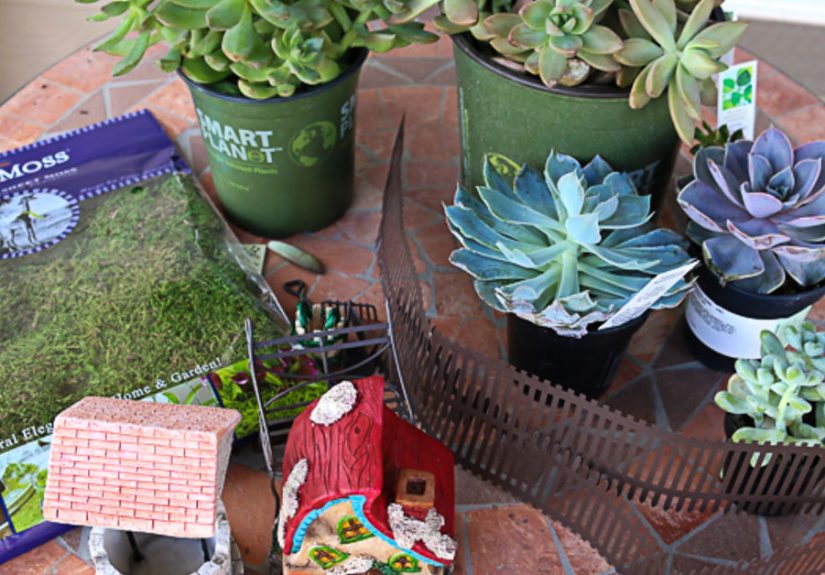
Great choices include echeveria for flower-like rosettes, sedum for spilling edges and groundcover effects, haworthia for compact indoor-friendly texture, crassula for upright structure, ghost plant for soft pastel tones, and hens-and-chicks for outdoor containers with good sun. Choose varieties that stay relatively small, grow slowly, and do not immediately overpower the miniature accessories.
4. Build the Scene Before You Plant Everything
Before you start digging, set your miniature accessories into the empty or partially filled container to test the layout. Place the tallest succulent toward the back or center, depending on the viewing angle. Use low growers around pathways and gathering areas. Let trailing plants soften the edge of the pot. Hardscape pieces such as pebbles, bark paths, driftwood, or tiny stair steps should guide the eye through the scene.
This is where restraint helps. A succulent fairy garden is cuter when it suggests a story instead of shouting all twelve plot points at once. One house, one path, one focal ornament, and a few accents are often enough. The goal is charm, not clutter.
5. Plant, Top-Dress, and Finish
After arranging the main pieces, plant the succulents with enough room for future growth. Press the soil gently around each root ball and avoid burying the leaves. Then add a top dressing such as fine gravel, pea pebbles, or decorative stone. This helps the display look polished and keeps leaves from resting directly on damp soil.
Finally, place your accessories. Tiny benches, lanterns, doors, or bridges look best when they feel integrated into the planting rather than dropped on top like a last-minute prop department emergency.
Best Plants for a Succulent Fairy Garden
Echeveria
Echeveria is one of the most popular succulent fairy garden plants because its rosettes resemble miniature roses. It creates an instant focal point and comes in shades of green, blue, gray, lavender, and pink. Give it plenty of light, and it rewards you by looking like it belongs on a tiny throne.
Sedum
Sedum is excellent for filling gaps, softening edges, and creating the effect of a living groundcover. Trailing types can look like vines tumbling over a tiny cliffside cottage. It is especially useful when your design needs movement and softness.
Haworthia
Haworthia is a smart pick for indoor succulent fairy gardens because many varieties tolerate bright indirect light better than full blazing sun. Its striped, spiky leaves add contrast without taking over the whole composition.
Crassula
Crassula varieties, including jade-type plants and string-of-buttons forms, add upright interest. They can function like miniature shrubs or architectural accents in the garden layout.
Sempervivum
Sempervivum, often called hens-and-chicks, is a classic choice for outdoor containers. It multiplies over time and creates lovely clusters, which can make a fairy garden feel established rather than newly staged.
Ghost Plant
Ghost plant adds powdery pastel color and a slightly dreamy texture. It is ideal when you want the arrangement to feel soft and airy instead of sharp and spiky.
Indoor vs. Outdoor Succulent Fairy Garden
An indoor succulent fairy garden works best near a bright window with several hours of strong light. South- or west-facing exposure is often helpful, though some indoor growers do well with bright indirect light and plant-specific adjustments. If your room is dim enough to make noon feel like late afternoon, the succulents will notice. They may stretch, lean, and lose their compact shape.
An outdoor succulent fairy garden usually performs well in bright light and warm weather, but you should still match the plants to your climate. In very hot locations, harsh afternoon sun can scorch some varieties. In rainy climates, containers with excellent drainage become even more important. And in cold-winter regions, tender succulents may need to come indoors before frost arrives.
The main lesson is this: your fairy garden is not a separate magical category of plant life. It is still a container garden. The décor may be whimsical, but the horticulture is not optional.
How to Water a Succulent Fairy Garden
The safest watering rule is also the least dramatic: water thoroughly, then wait until the soil dries out before watering again. Not “give it a little sip every day.” Not “mist it because that feels gentle.” And definitely not “panic-water it because the pebbles looked dusty.” Succulents do best when watered deeply and then allowed to dry between cycles.
Too much water is the most common reason succulent fairy gardens fail. Signs of overwatering include yellowing leaves, mushy stems, dropped foliage, and a generally sad, collapsing vibe. Underwatering is usually easier to fix than chronic sogginess, so when in doubt, slow down.
If your fairy garden is planted in an open dish without traditional drainage, be especially cautious. These displays can work, but they require a lighter hand and more experience. For most gardeners, a pot with a drainage hole is simply easier and more forgiving.
Common Mistakes to Avoid
Using a pot without drainage: This is the biggest mistake, and no layer of gravel at the bottom truly replaces a drainage hole.
Choosing a closed terrarium: Most succulents prefer lower humidity and better airflow than sealed glass containers provide.
Overcrowding: Tiny plants still grow. Leave space so the arrangement does not become a leaf traffic jam.
Mixing incompatible plants: Pairing moisture-loving mosses or tropical plants with drought-tolerant succulents usually ends in disappointment.
Ignoring light: Cute accessories cannot compensate for poor growing conditions. A fairy door is not photosynthesis.
Succulent Fairy Garden Design Ideas
If you want your succulent fairy garden to feel cohesive, start with a theme. A desert village can feature sand-toned gravel, a tiny adobe-style house, and warm-colored succulents. A woodland-inspired scene can use weathered wood, a tiny stone bridge, and muted green rosettes. A coastal version might include pale pebbles, driftwood, and blue-gray echeverias that look like sea roses.
You can also build seasonal versions. Add miniature pumpkins in fall, a tiny lantern in summer, or a subtle holiday accent in winter without replacing the plants themselves. The best designs treat accessories like seasoning. Enough to add personality, not so much that the dish looks like a craft store exploded in it.
The Experience of Creating a Succulent Fairy Garden
There is something oddly satisfying about making a succulent fairy garden that has very little to do with perfection and a lot to do with perspective. The process slows you down. You stop thinking in terms of whole patios and giant planting beds and start thinking in inches. A curved twig becomes a rustic archway. A few pebbles become a walkway. One small echeveria suddenly feels like an ancient tree presiding over a village square the size of a salad bowl.
That shift in scale is part of the fun. A succulent fairy garden invites you to play, but in a grown-up, surprisingly therapeutic way. It scratches the same itch as arranging books, styling shelves, or decorating a room, except now you are doing it with living things. You are creating atmosphere, but you are also creating conditions. It is design with consequences, which somehow makes it more rewarding.
Many people find that the first version starts simple and then becomes a gateway hobby. You begin with one pot, one tiny house, and a couple of succulents. Then you start noticing every shallow bowl in your kitchen as a potential project. You begin keeping pretty stones in your pocket after walks. You catch yourself saying things like, “This little broken teacup could really use a haworthia.” That is how it starts.
The emotional appeal is real, too. A succulent fairy garden feels cheerful in a way that does not require much space. It can live on a windowsill, a porch table, or a corner of the patio and still feel like a whole tiny world. For kids, it sparks imagination. For adults, it often brings a little calm. There is something reassuring about tending a miniature landscape that only asks for light, occasional water, and the self-control not to fuss over it too much.
It also teaches patience. Succulents do not usually race toward instant change. They settle in slowly. They color up with better light. They send out offsets when happy. They lean, stretch, or soften when conditions are off. Over time, you start reading the garden in a quieter way. You notice which plant gets the best morning light, which area dries first, which accessory suddenly looks oversized because the rosette beside it doubled in width. The container becomes a living lesson in observation.
And then there is the humor of it. A succulent fairy garden is charming partly because it takes itself just seriously enough. You are still paying attention to drainage, root health, and plant spacing, but you are also placing a tiny bench beside a stone path like you are a landscape architect for creatures who pay rent in moonbeams. The whole thing sits at a delightful intersection of gardening and storytelling.
That combination is why so many people keep returning to the idea. The garden does not need to be elaborate to feel magical. It just needs to be thoughtful. A small rosette, a well-placed pebble path, and a little open space for the imagination can do a lot. When the arrangement works, it feels less like a novelty and more like a pocket-sized reminder that beauty does not have to be enormous to be convincing. Sometimes it only needs a sunny spot, a gritty soil mix, and room for one tiny improbable bench.
Final Thoughts
A succulent fairy garden is one of the rare DIY garden projects that can be both whimsical and practical. It offers the creativity of a miniature landscape and the structure of smart container planting. When you choose a container with drainage, use fast-draining soil, group compatible succulents, and resist the urge to overwater, the result can be surprisingly durable as well as beautiful.
In other words, you do not need a giant yard, a greenhouse, or mystical gardening powers to pull this off. You just need a good container, a few well-chosen plants, and the willingness to think very small. Your succulents handle the sculptural drama. You handle the world-building. Together, you create a garden that feels like a story and grows like a real one.