Table of Contents >> Show >> Hide
- What Makes Orange So Special?
- The 13 Best Anime Like Orange, Ranked
- 1. ERASED
- 2. Blue Spring Ride (Ao Haru Ride)
- 3. Your Name (Kimi no Na wa)
- 4. Your Lie in April
- 5. Anohana: The Flower We Saw That Day
- 6. ReLIFE
- 7. Iroduku: The World in Colors
- 8. The Girl Who Leapt Through Time
- 9. Steins;Gate
- 10. When Marnie Was There
- 11. In Search of the Lost Future
- 12. Mirai
- 13. March Comes in Like a Lion
- How to Choose Your Next Anime After Orange
- Experiences Watching Anime Like Orange: Why These Stories Stick With Us
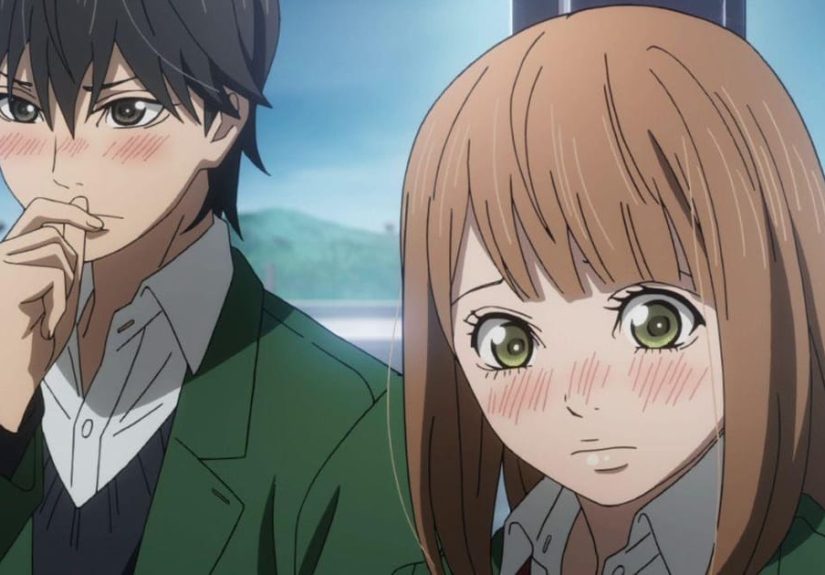
If you finished Orange with puffy eyes, an empty tissue box, and a sudden urge to text every friend you’ve ever had, welcome to the club.
This series about letters from the future, second chances, and preventing a tragic suicide hits that sweet spot between time-travel sci-fi and
heart-wrecking romance. Naturally, the next question is: what anime can possibly fill the Orange-shaped hole in your heart?
The good news: there are plenty of anime like Orange that mix emotional drama, regret, healing, and sometimes a bit of timeline chaos.
The list below pulls from fan rankings and critic discussions to highlight the 13 best anime like Orange, ranked for maximum tears,
catharsis, and “I’m fine, it’s just allergies” moments.
What Makes Orange So Special?
Before we jump into the rankings, it’s worth recapping what makes Orange stand out. It’s not just the time travel.
At its core, the series is about:
- Regret and second chances: Future friends send letters back in time to fix the one choice that cost them someone they loved.
- Mental health and suicide prevention: Kakeru’s depression is treated with surprising nuance for a high school romance anime.
- Found family and friendship: The entire friend group is actively involved in saving one person, not just the main couple.
- Soft romance and slice of life: There are sports festivals, small moments, and awkward crushes alongside the heavy themes.
So, anime “like Orange” usually share at least one of these: time travel or letters to the past, emotional healing,
grief and trauma, or bittersweet romance. With that in mind, let’s dive into the 13 best picks.
The 13 Best Anime Like Orange, Ranked
1. ERASED
If you want the time-travel element of Orange but with a darker thriller twist, ERASED is the obvious first stop.
Satoru, a struggling 29-year-old manga artist, has a strange ability called “Revival” that sends him back a few minutes before a tragedy occurs.
When someone close to him is murdered, he’s hurled all the way back to his childhood, right before a classmate’s abduction and murder.
Like Orange, this anime uses time travel as a metaphor for regret: if you could go back and fix the moment everything went wrong, would you?
Satoru tries to rewrite events and protect his classmates… while also learning what it means to truly be there for someone who’s hurting.
The romance is subtle, but the emotional stakes are huge. If Orange made you think, “What if we could really redo high school and save someone,”
ERASED takes that idea and pushes it into thriller territory.
2. Blue Spring Ride (Ao Haru Ride)
No time travel herejust pure emotional damage and healing. Blue Spring Ride follows Futaba and Kou,
once sweet middle school almost-lovers whose connection was cut short by Kou’s family tragedy. When they meet again in high school,
Kou has changed his last name, his personality, and his emotional availability (down to about 3%). Futaba has changed, too,
masking her true self to fit in with her classmates.
The overlap with Orange is strong: grief, guilt, “what if things had gone differently,” and friends trying to pull someone out of their emotional spiral.
Kou’s unresolved pain over his mother’s death echoes Kakeru’s struggle, and watching Futaba stubbornly stand by him will feel very familiar
if you loved Naho’s determination.
3. Your Name (Kimi no Na wa)
Your Name is what happens when time travel, romance, and cosmic tragedy all get together and say,
“Let’s emotionally obliterate the audience.” Taki and Mitsuha start randomly swapping bodies and living each other’s lives.
It’s fun and quirkyuntil Taki discovers a disaster in Mitsuha’s timeline and realizes he may be too late to save her.
Like Orange, the story centers on trying to change fate and save someone whose life seems doomed.
Both use time-bending mechanics as emotional tools: not to show off sci-fi tech, but to explore the idea that love and empathy
can literally bridge time. If you want more “I would cross timelines just to make sure you’re okay” energy, this is it.
4. Your Lie in April
You don’t need time travel to rip someone’s heart out; you just need a piano, a violin, and childhood trauma.
Your Lie in April follows Kousei, a piano prodigy who stops playing after his abusive mother dies.
Enter Kaori, a free-spirited violinist determined to drag him back onto the stage and into the world of the living.
Where Orange explores the guilt of “We should have done more,” Your Lie in April digs into the guilt of “I loved someone who hurt me.”
Both series tackle grief, self-blame, and the healing power of connection. The romance is tender, the music is devastating,
and the emotional tone is similar: beautiful, heavy, and haunting long after the final episode.
5. Anohana: The Flower We Saw That Day
If you thought Orange handled friend group dynamics well, Anohana basically said, “Hold my tears.”
A childhood group of friends drifts apart after the accidental death of their friend Menma. Years later, her ghost appears to Jinta,
asking him to help her fulfill her final wish so her spirit can finally rest.
Both Orange and Anohana are about a group trying to make peace with a tragedy tied to their youth.
Instead of letters from the future, Anohana uses a supernatural presence. But the emotional beats are similar:
survivors’ guilt, “we should have done more,” and the way friendships can both fracture and heal after trauma.
6. ReLIFE
ReLIFE takes the “second chance” theme of Orange and literalizes it. Arata is a 27-year-old burnout
offered a mysterious pill that turns him back into his 17-year-old self and sends him back to high school for one year.
The goal: rebuild his life, figure out what went wrong, and maybe heal some old wounds in the process.
While the tone is often lighter than Orange, the overlap is clear: social anxiety, regret over past choices,
and the life-changing impact of genuine friends. If you liked watching Naho’s group rally around Kakeru,
you’ll appreciate how Arata’s new (and old) classmates quietly rescue him right back.
7. Iroduku: The World in Colors
Iroduku: The World in Colors feels like Orange if it leaned harder into soft fantasy.
Hitomi is a colorblind teenager from a future where magic exists, but she’s emotionally numb and disconnected from her life.
Her grandmother sends her back in time to her own youth, hoping that a change of environmentand a new circle of friendswill help Hitomi heal.
Much like Orange, this show is about emotional recovery rather than epic battles. The time travel is personal,
not cosmic; it’s about finding joy, color (literally, in Hitomi’s case), and reasons to keep living. If the slower,
contemplative side of Orange was your favorite part, this one will feel like a beautiful, melancholy hug.
8. The Girl Who Leapt Through Time
The Girl Who Leapt Through Time is basically the iconic time-travel morality lesson of anime.
Makoto discovers that she can literally leap through time, so she does what any teenager would: she uses it to redo embarrassing moments,
skip problems, and dodge responsibility. Naturally, the timeline fights back.
Both this film and Orange ask the same question: are you really fixing things when you change the past,
or are you just creating new regrets? While Orange focuses on saving one person’s life,
Makoto’s journey is more about understanding consequences and learning to face the future without constant do-overs.
9. Steins;Gate
If you love the “sending messages to the past to change the present” aspect of Orange but wish it came with more conspiracy,
science jargon, and energy drinks, Steins;Gate is your upgrade. Okabe and his friends accidentally discover
that their hacked microwave can send text messages to the past, which sounds hilarious until they realize each message can derail
someone’s lifeor end it.
Emotionally, Steins;Gate shares Orange’s core: someone desperately trying to prevent a tragedy involving someone they care about.
The main character’s repeated attempts to “get the timeline right” echo the sense of desperation that runs through Orange’s future letters.
It’s heavier on sci-fi and lighter on explicit romance, but the stakes and feels are very familiar.
10. When Marnie Was There
Studio Ghibli’s When Marnie Was There takes the idea of a lonely, self-blaming teen and gives her a mysterious friend
who might not be exactly what she seems. Anna, an introverted girl struggling with asthma, isolation, and identity,
is sent to the countryside, where she meets Marniean enigmatic girl who appears tied to a nearby mansion and Anna’s own family history.
Like Orange, this film explores self-worth, shame, and learning to recognize that being loved isn’t something you have to “earn”
by being perfect. Instead of letters from the future, Anna gets visions and encounters that help her reframe her past and her place in her family.
It’s quieter than most titles on this list, but emotionally it hits right in that “healing through connection” zone.
11. In Search of the Lost Future
In Search of the Lost Future is probably the least mainstream title on this list, but if you’re here specifically for
“friends send something from the future to save a girl’s life,” it’s almost eerily similar to Orange.
After a tragic accident, strange phenomenaincluding time distortions and a mysterious girlstart affecting a high school astronomy club.
The series blends romance, sci-fi, and school life with a strong emphasis on “we messed up once, we can’t let it happen again.”
It’s a bit more overtly tropey than Orange, but the core ideaaltering events to avoid a heartbreaking outcomewill feel very familiar.
12. Mirai
From the director of The Girl Who Leapt Through Time, Mirai looks at regret and family from a younger child’s perspective.
Kun, a little boy frustrated by the arrival of his baby sister, meets a future version of her who takes him on time-travel journeys
through their family’s past and future.
While it’s lighter and more whimsical than Orange, it shares a similar emotional engine: time travel as a way to understand people better
and break out of selfishness and self-pity. Instead of “we have to save our friend from suicide,” it’s more “we have to understand where we come from
so we can move forward as a family.” Still, if you like your feels with a side of magical realism, this is a great pick.
13. March Comes in Like a Lion
March Comes in Like a Lion doesn’t use time travel at all, but it might be the most Orange-like series here in terms of
emotional honesty about depression. Rei, a teen shogi prodigy, lives alone and drifts through life in a fog of grief and anxiety.
Slowly, through his bond with three sisters and the people around him, he learns that he’s allowed to accept help and that living
is more than just surviving.
Where Orange is about preventing one specific tragedy, March Comes in Like a Lion is about living with long-term emotional pain
and still moving forward. If you appreciated how Orange dared to sit with uncomfortable feelings instead of “fixing” them instantly,
you’ll find that same emotional maturity herejust with more shogi metaphors and cats.
How to Choose Your Next Anime After Orange
Not all of these shows hit in the exact same way, so here’s a quick guide:
- Want time travel + thriller? Start with ERASED or Steins;Gate.
- Want bittersweet romance and grief? Go for Your Lie in April or Blue Spring Ride.
- Want friend-group power and emotional closure? Try Anohana or In Search of the Lost Future.
- Want reflective, healing slice of life? Iroduku or March Comes in Like a Lion will treat you gently (and then emotionally wreck you anyway).
- Want movie-length emotional damage? Your Name, The Girl Who Leapt Through Time, When Marnie Was There, or Mirai are perfect weekend picks.
Experiences Watching Anime Like Orange: Why These Stories Stick With Us
Part of what makes Orange and similar anime so powerful is that they don’t just entertain you for 12 episodes and disappear from your brain.
They linger. You’ll be minding your own business, doing something extremely normal like folding laundry, and suddenly remember one scene where a character
finally opens up about their painand boom, there go your emotional defenses again.
Watching these shows is often less like bingeing content and more like going through a gentle, animated therapy session.
In Orange, it’s that moment when everyone runs to Kakeru, choosing to be awkward, scared, and present rather than staying “polite” and distant.
In ERASED, it’s Satoru standing in the snow, realizing that understanding someone’s loneliness means actively stepping into it with them.
In March Comes in Like a Lion, it’s Rei sitting at the Kawamoto family’s kitchen table, slowly realizing he’s allowed to want warmth and companionship.
Emotionally, many viewers end up seeing pieces of themselves in these characters. Maybe you’ve never sent a letter to your past self,
but you’ve definitely replayed a conversation in your head and thought, “If only I had said something different.” Shows like Orange,
ReLIFE, and Iroduku take that very human feeling of regret and ask: what if you actually could go back? Would you be brave enough to act?
Another shared experience is the way these series normalize vulnerability. Anime has plenty of stoic heroes and overpowered protagonists,
but in this corner of the medium, the bravest thing a character can do is admit they’re not okay. Kakeru letting his friends see his darkest thoughts,
Kousei confessing what his mother did to him, Rei acknowledging how much he hates himselfnone of those are “cool” in the traditional anime sense,
but they’re deeply human. That’s exactly why fans who connect with Orange often go searching for more titles that take feelings seriously.
There’s also the very practical shared ritual: many viewers quickly develop the “sad anime survival kit.” It usually includes:
- A drink (hydration is crucial; tears are surprisingly dehydrating).
- A snack (comfort food pairs suspiciously well with emotional devastation).
- A soft objectblanket, pillow, petfor emotional support during critical episodes.
- A “recovery anime,” something light like a comedy or slice-of-life to watch right after the finale.
If you’re marathoning through this list, you’ll probably notice a pattern: these shows hurt, but they almost always leave a thread of hope.
Orange says, “The future can change if we act differently now.” Your Name whispers, “Even if we forget, something in us remembers.”
Anohana reminds us that grief doesn’t vanish, but it can soften when shared. And March Comes in Like a Lion quietly insists that
even the smallest kindnessa home-cooked meal, a cat curling up next to you, a friend asking how you’re doingcan tilt a life back toward the light.
That’s ultimately why anime like Orange are so addictive for fans of emotional storytelling. They don’t pretend that pain, depression, or regret can be solved
by one big speech or a single magical time jump. Instead, they show us that change comes from many small, stubborn acts of care: reading the letter,
making the phone call, showing up to the shogi match, or asking someone to walk home together. You may hit “play” looking for a romance anime with time travel,
but you finish feeling like you’ve spent time with people who understand how messy and precious it is just to keep going.
So after Orange, pick any show from this ranked list that speaks to youthriller, romance, slice of life, or film.
Just don’t forget your tissues, your emotional support snack, and maybe, if you’re feeling brave, a text message to a friend you haven’t checked on in a while.
If these series teach us anything, it’s that reaching outacross time or just across a messaging appcan make all the difference.