Table of Contents >> Show >> Hide
- Before You Spray Anything: A 60-Second Mold Reality Check
- How This List Was Chosen
- 1) Clorox Plus Tilex Mold & Mildew Remover Spray (With Bleach)
- 2) RMR-86 Instant Mold & Mildew Stain Remover (Scrub-Free Style)
- 3) Mold Armor Mold Blocker
- 4) CLR Mold & Mildew Clear (Bleach-Free Foam Spray)
- 5) Skylarlife Mold & Mildew Remover Gel
- How to Use Mold Removers Without Making Things Worse
- Which One Should You Buy?
- Real-World Experiences: What People Learn After the First Mold Battle (About )
- Wrap-Up
Mold is the uninvited roommate who never pays rent, leaves weird spots on your ceiling, and somehow thrives on
the exact humidity level your bathroom naturally wants to be. The good news: you can buy excellent mold removers
online and win most small household battles without turning your home into a hazmat scene.
The not-so-fun truth: “mold remover” can mean two different jobskilling/removing the organism
and removing the stain. Some products do both. Some mostly tackle the ugly discoloration. And
none of them can fix the real villain: moisture. If you don’t address leaks, condensation, and airflow, you’re
basically mopping the floor while the bathtub is overflowing.
Before You Spray Anything: A 60-Second Mold Reality Check
1) Small spot vs. “call a pro”
If the affected area is small and localized, many homeowners can handle it with the right cleaner, protective
gear, and a plan. If the growth is widespread, keeps coming back fast, or you suspect it’s inside walls/ceilings,
that’s a different story. (More on when to escalate in the safety section.)[1]
2) “Mildew” is basically mold’s less dramatic cousin
In everyday cleaning talk, people say mildew when they mean surface mold in damp areas (shower corners, window
frames, grout lines). Many products marketed for mildew are also designed to handle common household molds.
3) The golden rule: dry beats disinfect
Cleaning matters, but drying matters more. Your long-term “mold remover” is fixing the bathroom
fan, sealing a leak, and keeping indoor humidity under control.[2]
How This List Was Chosen
These five picks cover the most common real-life scenariosbathroom tile and grout, fast stain removal, ongoing
prevention, bleach-free options for sensitive households, and targeted gel formulas for caulk and tight seams.
I prioritized products that are widely available online, have clear use cases, and are frequently recommended by
established home-and-cleaning outlets plus manufacturer guidance.[3][4]
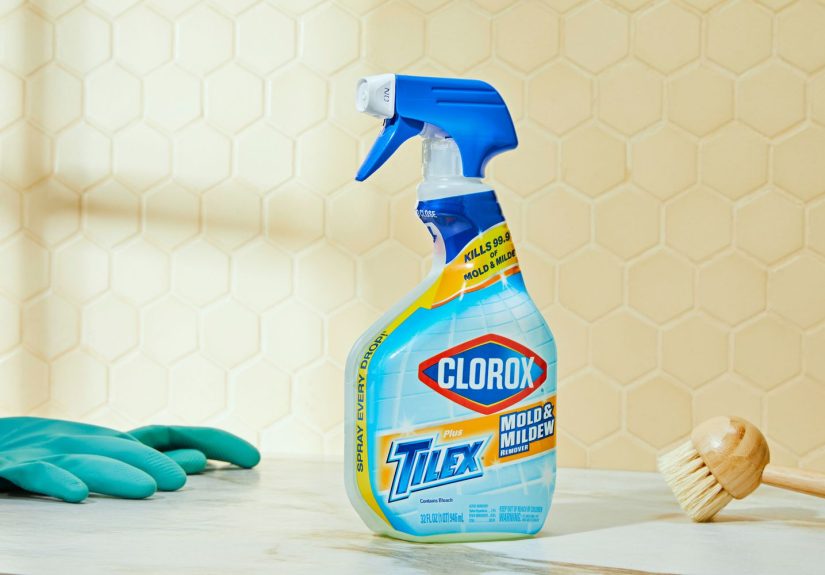
1) Clorox Plus Tilex Mold & Mildew Remover Spray (With Bleach)
Best for: Bathroomstile, tubs, sinks, shower doors, and other mostly non-porous surfaces.
Why it’s great: This is the classic “serious bathroom cleaner” that goes after mold/mildew and
the stains they leave behind. It’s a go-to recommendation in multiple testing/review roundups for a reason:
it’s effective, straightforward, and easy to find online.[3][5]
Where it shines
- Shower tile and grout haze where discoloration makes everything look permanently damp
- Black specks around caulk edges (light-to-moderate surface growth)
- Fast refresh before guests arrive and you suddenly notice your bathroom has “mood lighting” in the grout
Watch-outs (read this, future you will thank you)
- Ventilation matters. Bleach-based sprays can be intense in small bathrooms.
- Never mix with other cleaners (especially ammonia or acids). Dangerous gases are not a home fragrance.[5][6]
- Spot-test if you’re dealing with older finishes or questionable “landlord special” paint jobs.
Pro tip
Spray, let it dwell (per label instructions), then rinse/wipe thoroughly. If the area stays wet afterward,
you’re inviting mold back for an encore performance.
2) RMR-86 Instant Mold & Mildew Stain Remover (Scrub-Free Style)
Best for: “I need this stain gone yesterday” momentsfast visible stain removal.
Why it’s great: RMR-86 is famous online for quick results on stubborn discoloration. Reviewers
often mention seeing changes in seconds on hard surfaces and even on some semi-porous materials (always test
first). If your main problem is the stain that mold left behind, this one can feel like a magic trick
with a strong chemical smell as the “ta-da.”[3][7][8]
Where it shines
- Stained grout lines that still look dirty after “regular” bathroom cleaning
- Ceiling corner speckles caused by repeated condensation (after you fix ventilation)
- Outdoor-adjacent surfaces like certain siding/deck situations (follow label guidance)
Watch-outs
- Strong odor. Treat this like a “windows open, fan on” cleaner.
- Wear gloves and eye protection; consider respiratory protection for sensitive users or tight spaces.[9][10]
- Not every surface is a good candidate. Spot-test, especially on painted/finished materials.
Pro tip
Use this after you’ve physically cleaned off surface gunk. Mold removers work best when they’re contacting the
problem, not battling through soap scum and mystery residue from 2019.
3) Mold Armor Mold Blocker
Best for: Preventionkeeping mold from coming right back in high-risk areas.
Why it’s great: Many households don’t need the strongest possible “nuke it” product every week.
They need a maintenance strategy. Mold Armor Mold Blocker is widely sold online and is marketed
as creating an invisible barrier that helps prevent mold growth for a period of timeespecially useful in damp
zones like bathrooms, laundry areas, and other “why is it always humid here?” corners.[3][11]
Where it shines
- Bathroom surfaces after a deep clean
- Window frames (where condensation shows up like it’s on payroll)
- Basement corners after you’ve addressed humidity and airflow
Watch-outs
- It’s not a substitute for fixing moisture. Think of it as a raincoat, not climate control.
- For best results, you typically need to pre-clean heavily soiled areas first.[11]
- Some users notice a strong scentventilation still matters.
Pro tip
Put prevention on a schedule. If your home grows mold like it’s cultivating a hobby, consistency beats heroics.
4) CLR Mold & Mildew Clear (Bleach-Free Foam Spray)
Best for: Bleach-free cleaning with controlled application (foam helps reduce splash and drift).
Why it’s great: If you want to avoid bleach and you prefer something that applies more precisely,
CLR Mold & Mildew Clear is a popular option. The foam sprayer is a practical detailless splash, more “stay where
I put you,” especially on vertical surfaces.[12]
Where it shines
- Bathroom surfaces where you want a bleach-free approach
- Baseboards, sealed surfaces, and spot cleaning where overspray is a headache
- Regular maintenance to prevent minor mold/mildew from escalating
Watch-outs
- Bleach-free doesn’t mean “no safety needed.” Still ventilate and avoid skin/eye contact.
- For heavy staining, you may need repeat applications or a stronger stain-focused product.
Pro tip
Use a soft brush on grout after the product has had time to work. If you scrub too early, you do all the
labor while the chemistry watches from the sidelines.
5) Skylarlife Mold & Mildew Remover Gel
Best for: Precision worksilicone caulk, tight seams, and vertical surfaces that laugh at watery sprays.
Why it’s great: Gel formulas are the cheat code for places where spray runs off before it can do
its job. Skylarlife’s gel is designed to cling and sit for hoursexactly what you want on caulk lines, grout seams,
and narrow corners where mold loves to set up its tiny dark empire.[3][13][14]
Where it shines
- Silicone sealant around tubs and sinks
- Grout lines on vertical tile walls
- Window corners and edges where mold returns like a sequel you didn’t ask for
Watch-outs
- It requires patienceoften several hours of dwell time.
- If caulk is deeply penetrated, removal and replacement may be the real fix (cleaners can only do so much).
Pro tip
Apply carefully, let it sit as directed, then rinse thoroughly and dry the area. The “dry” part is not optional
if you want the result to last.
How to Use Mold Removers Without Making Things Worse
Step 1: Gear up (especially in small bathrooms)
At minimum: gloves and eye protection. In tighter spaces or if you’re sensitive to fumes/particles, consider a
properly fitted N95 respirator. If you’re doing anything beyond a quick wipelike removing moldy materials or
disturbing a lot of dusty growthupgrade protection accordingly.[9][10]
Step 2: Ventilate like you mean it
Open windows, run the bathroom fan, and use a portable fan if needed. More airflow = fewer fumes and a faster dry-out.
Also: keep kids and pets out of the area during application and drying.[5][6]
Step 3: Don’t mix cleaners
It’s tempting to “boost” a product with something else. Don’t. Bleach + ammonia (or bleach + acids like vinegar)
can create hazardous gases. If you want to switch products, rinse thoroughly and let the area air out first.[5][6][15]
Step 4: Give it dwell time
Mold removers need contact time. Spraying and immediately wiping is like putting a teabag next to a mug and calling
it tea. Follow the label, and let the product work.
Step 5: Rinse/wipe, then dry
Removing residue mattersespecially on surfaces that will be touched, or that could be damaged by prolonged contact.
Dry the area thoroughly to prevent regrowth. Fix the moisture source, improve airflow, and consider a dehumidifier
if humidity is a chronic issue.[2][16]
Which One Should You Buy?
- You want the classic bathroom powerhouse: Clorox Tilex (bleach-based).
- You want fast stain disappearance: RMR-86.
- You want prevention as a strategy: Mold Armor Mold Blocker.
- You want bleach-free foam control: CLR Mold & Mildew Clear.
- You’re targeting caulk/grout seams precisely: Skylarlife Gel.
Real-World Experiences: What People Learn After the First Mold Battle (About )
Here’s what tends to happen in real homes: you notice a few black dots in the shower, you ignore them because life
is busy, and then one day you look up and realize your grout is auditioning for a “before” photo on a cleaning show.
Most people start with whatever’s under the sinkusually a general bathroom spraythen wonder why the stains still
look like a shadow of regret. That’s often the moment you discover the difference between cleaning soap scum
and treating mold staining.
In bathrooms, the most common “aha” moment is ventilation. People can spray the best mold remover on Earth, but if
the fan is weak, the window never opens, and towels stay damp for hours, mold will be back like it left something
important behind. Many homeowners report that once they started running the fan for longer (and actually letting
surfaces dry), the same cleaning routine suddenly “worked better,” even with the exact same product. It wasn’t magic
it was moisture control.
Another classic experience: the caulk line that refuses to cooperate. Sprays run down the wall, you wipe, you spray
again, you begin to question realitythen you try a gel product and realize clinging contact time is the whole game
for seams. Gels are slower, but that’s the point: they sit there doing chemistry while you go do literally anything
else, like drink coffee and stare into the distance thinking about how bathrooms became your personality.
Then there’s the “strong stuff” lesson. Fast-acting stain removers can feel unbelievably satisfyingspray, wait,
stains fade, dopamine hit. But people also learn quickly that strong products demand respect: airflow, gloves, eye
protection, and a plan to keep pets out of the room. The most common regret isn’t “I bought the wrong mold remover,”
it’s “I used it in a tiny bathroom with no ventilation and now my eyes are watering like I just watched a sad movie
about grout.”
Prevention products create a different kind of experience: less drama, more consistency. People who struggle with
recurring mold (especially in humid climates or older homes) often find that a “deep clean + preventative barrier”
routine is more sustainable than repeated scorched-earth cleaning. It’s like flossing: the boring stuff works, and
you only realize it when you stop doing it.
Finally, the biggest real-world takeaway is knowing when DIY stops being smart. If mold keeps returning rapidly,
appears after a leak, spreads beyond a small patch, or seems to be in porous materials like drywall or insulation,
the “right” product may not be a product at allit may be professional remediation, repairs, and replacing damaged
material. Nobody loves that answer, but it’s cheaper than pretending a spray bottle can fix a hidden moisture problem.
Wrap-Up
The best mold remover is the one that matches your surface, your tolerance for fumes, and your actual problem
(active growth vs. staining vs. prevention). Pick one of the five above based on your scenario, follow safety steps,
andmost importantlymake your home less mold-friendly by controlling moisture.