Table of Contents >> Show >> Hide
- What the Great Resignation Actually Meant (and Why It Wasn’t Universal)
- The Industries Where It Was “Great” (or at Least Great-ish)
- The Industries Where It Was Not Great (Even If Quitting Was High)
- Why the Great Resignation Only Felt Great in Certain Places
- What Changed After the Peak: From “Great Resignation” to “Great Selectiveness”
- So… Was the Great Resignation Good or Bad?
- Experiences on the Ground (What the “Great” Part Really Felt Like)
- Conclusion: The Great Resignation Was a Spotlight, Not a Magic Wand
The “Great Resignation” sounds like a single, sweeping story: Americans collectively stood up, pushed in their chairs, and walked out with the confidence of someone who definitely updated their LinkedIn headline. But the reality is messierand a lot more uneven.
In some industries, quitting really did work like a cheat code. Workers job-hopped into higher pay, better schedules, and perks that used to be reserved for “the C-suite” and people who say things like “circle back.” In other industries, the Great Resignation looked less like a victory lap and more like a game of musical chairs… except the music was burnout, and the chairs were understaffed shifts.
So yes: the Great Resignation was real. But it was only “great” in a few placesmostly where skills transferred easily, employers had budget flexibility, and demand was on fire. Everywhere else? It was a churn storm.
What the Great Resignation Actually Meant (and Why It Wasn’t Universal)
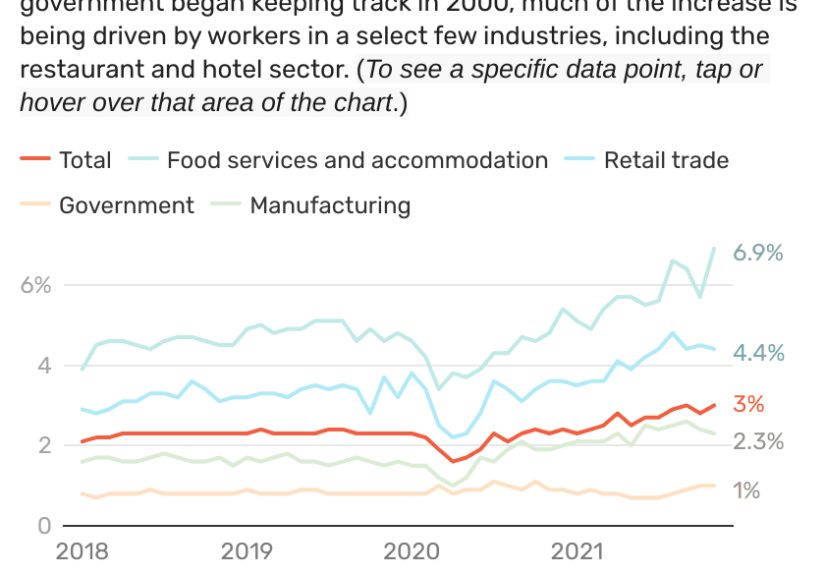
The Great Resignation is often measured by quit rateshow many people voluntarily leave jobs. By 2021, quits and job openings reached record highs, signaling an unusually tight labor market and a rare moment when workers had leverage (or at least the feeling of leverage).
But quit rates aren’t evenly distributed. Some industries routinely see higher turnover because of scheduling volatility, seasonal work, physically demanding roles, or a long history of low pay. When the broader labor market got hot, those industries didn’t just warm upthey boiled.
The Industries Where It Was “Great” (or at Least Great-ish)
The Great Resignation was most “great” where three things lined up:
- Skills were portable (you could take your capabilities elsewhere quickly).
- Employers had pricing power (they could raise wages without instantly breaking the business model).
- Work could be reshaped (remote/hybrid options, new shifts, better tools, or clearer career ladders).
1) Professional Services and White-Collar Roles: Mobility Made It Pay
In professional and business services, people had optionsoften multiple. If you could write code, manage projects, analyze data, design marketing campaigns, or sell complex products, you weren’t locked into one employer or even one industry. Your “job” wasn’t a specific building; it was a skill set.
This is where job switching often translated into meaningful raises and upgraded benefits. Workers could negotiate more aggressively because replacing them was slow, expensive, and risky. Employers weren’t just competing on salarythey were competing on flexibility, growth, and sanity.
A common pattern emerged: a worker left a fully in-office role for a hybrid one, traded a vague “we’re a family” culture for clearer expectations, and gained a manager who didn’t confuse late-night emails with leadership.
2) Logistics and Warehousing: Demand Turned the Dial Up
E-commerce, delivery expectations, and supply chain pressure made logistics and warehousing a battleground. When consumers expect packages to arrive faster than pizza, companies need workerslots of them.
In this environment, quitting could lead to a real bump. Competing employers offered higher hourly pay, referral bonuses, more predictable shifts, and sometimes training for equipment operation or supervisory tracks. Not every job became dreamy, but the bargaining power was real.
The catch: this “greatness” came with a price. The work is physically demanding, productivity metrics can be intense, and injuries are not theoretical. Some workers upgraded pay while still feeling like their knees were negotiating separately.
3) Parts of Healthcare: Leverage Rose, Stress Rose Faster
Healthcare saw intense strain. Demand didn’t just increase; it surged, shifted, and stayed high. Certain rolesespecially nursingbecame highly mobile. Some clinicians moved from hospital floors into outpatient settings, telehealth-adjacent roles, or travel assignments that paid more.
For some, quitting was a path to better compensation and control. For others, it was the only way to survive professionally: leaving unsafe staffing ratios, constant overtime, or emotionally exhausting environments.
In other words, healthcare can look “great” on paperhigher pay opportunities, signing bonuses, a flood of recruiters. But lived experience often depended on the facility, the specialty, the region, and whether leadership treated staff as humans rather than “resources.”
The Industries Where It Was Not Great (Even If Quitting Was High)
Here’s the twist: some of the highest quit-rate industries weren’t “winning.” They were bleeding. High resignation can mean opportunityor it can mean people escaping.
1) Leisure and Hospitality: The Highest Quits, the Hardest Math
Leisure and hospitality has long had high turnover, but the Great Resignation era turned it into a headline factory. When workers can leave a stressful shift and find another job quickly, they do.
The problem: many hospitality businesses operate on thin margins and unpredictable demand. That limits how far wages can rise, even when employers desperately want to retain staff. A restaurant can’t always “just pay more” when food costs, rent, and staffing are already squeezing every dollar.
So for many workers, quitting didn’t unlock a better version of the same jobit unlocked a different industry entirely. They moved into customer support, entry-level office roles, logistics, healthcare administration, or anything with steadier hours and fewer “sorry you’re short-staffed again” weekends.
2) Retail: The Great Resignation Looked Like the Great Shrug
Retail turnover spiked because frontline work got harder: inconsistent schedules, short staffing, angry customers, and rising expectations without rising support. Many workers didn’t quit because they wanted to “find their passion.” They quit because they wanted to sit down, drink water, and stop being yelled at about coupons.
Retail also has a structural challenge: advancement can be limited, and pay bands can be tight. If a worker’s only path to more money is becoming a shift lead (for an extra dollar an hour and a free side of stress), quitting becomes the rational strategy.
3) Education and Public Sector Roles: Lots of Pressure, Less Flex
Many public sector and education roles are constrained by budgets, contracts, credential requirements, and slow-moving compensation structures. Even when labor demand rises, pay may not adjust quickly. That doesn’t mean people didn’t resignmany didbut the “great” part (rapid wage gains, flexible options) wasn’t evenly available.
Teachers and staff often faced workload increases, behavioral challenges, and limited resources. Some left for education-adjacent rolestraining, curriculum companies, corporate learning, tutoring platformswhere skills transferred but the job structure changed.
Why the Great Resignation Only Felt Great in Certain Places
Portable Skills vs. Pinned-Down Work
If your work is portablemeaning you can take your skills to another employer with minimal retrainingyou have leverage. If your work is pinned to a location, a license, a specific employer, or a narrow local job market, leverage shrinks fast.
A software developer can apply nationally. A restaurant server might be choosing among local employers with similar pay structures. A teacher may face credential rules that make switching statesor even districtsslow and costly.
Business Models That Can Raise Pay vs. Business Models That Break
Some industries can absorb higher wages through pricing power, productivity gains, or higher margins. Others can’t. That’s not a moral statement; it’s arithmetic.
A consulting firm can raise rates. A SaaS company can spread labor costs across subscriptions. A small diner can’t raise menu prices forever without losing customersespecially when customers are already staring at the bill like it personally betrayed them.
Remote-Capable Work Created a New “Perk Class”
Remote and hybrid options didn’t just change where people workedthey changed how workers compared jobs. Flexibility became a form of compensation. For some roles, it made leaving easier; for others (on-site work), it made staying feel less appealing.
That created an uneven playing field: remote-capable industries could offer flexibility as a retention tool. On-site industries had to compete mostly with wages, schedules, and working conditionsoften without the same room to maneuver.
People Didn’t Just Quit PayThey Quit the Feeling of Being Trapped
Surveys consistently show quitting is tied to pay, growth, and respect. People don’t need a corporate philosophy lecture; they need a paycheck that covers rent, a future that isn’t a dead end, and a workplace that doesn’t treat them like a replaceable cog.
Culture matters too. When workers feel disrespected, unsupported, or stuck in toxic environments, quitting becomes less about ambition and more about self-preservation.
What Changed After the Peak: From “Great Resignation” to “Great Selectiveness”
The peak Great Resignation years (roughly 2021–2022) created a sense of permanent job-hopping power. But labor markets cool, hiring slows, and the advantage of switching can shrink.
Recent wage data has shown that job changers don’t always get the massive raises they once did, and in some periods the gap between “stayers” and “switchers” narrows. In plain English: quitting is still an option, but it’s not always a golden ticket.
That doesn’t mean workers lost all leverage. It means workers became more selectiveand employers, in many industries, got better at retention efforts that actually matter (career paths, better management, realistic workloads).
So… Was the Great Resignation Good or Bad?
Bothand it depended heavily on where you stood.
- Good for workers in industries with portable skills, flexible work, and competitive hiring.
- Mixed for workers in high-demand but high-stress sectors, where pay rose but burnout rose faster.
- Not great for industries with thin margins, limited advancement, rigid pay structures, and relentless frontline pressure.
The Great Resignation wasn’t a single movement with a single outcome. It was a reshuffling powered by a tight labor market, changing expectations, and workers finally having enough options to say, “Actually… no.”
Experiences on the Ground (What the “Great” Part Really Felt Like)
If you want to understand why the Great Resignation was only “great” in a few industries, stop staring at national headlines and start listening to the very un-glamorous details people talked about in group chats, break rooms, and late-night kitchen tables.
The hospitality worker who left for predictability: One common story was the bartender or server who loved people (most days) but couldn’t build a life around last-minute scheduling. They didn’t quit because they hated workthey quit because they hated never knowing if they could attend a family event without swapping shifts like a fantasy-football trade. When they moved into an entry-level customer support role, the pay wasn’t always dramatically higher, but the weekends became theirs again. The “great” part wasn’t moneyit was calendar control.
The retail associate who realized the ladder was missing rungs: Retail workers often described a strange kind of burnout: being asked to do more (stock, cashier, customer service, returns, online pickup) without a matching increase in staffing or authority. They’d watch new hires come and go, and eventually they’d do the math: the fastest raise was a new employer. Quitting felt less like rebellion and more like changing cell phone carriersannoying, but necessary.
The nurse who didn’t want “more money,” just “less impossible”: In healthcare, many people didn’t resign because they stopped caring. They resigned because caring became unsustainable. Some moved from hospital roles into outpatient clinics to regain normal hours. Others chased higher-paying contracts and used the money to buy timetime to rest, time to recover, time to feel like a person again. For them, the Great Resignation wasn’t a trend; it was a boundary.
The tech worker who job-hopped for flexibilitythen got whiplash: In remote-capable industries, workers often swapped jobs to keep flexibility and boost pay. But there was also a second chapter: return-to-office policies, reorganizations, and sudden “we’re pivoting” announcements. Some people who hopped for a better culture realized culture is hard to judge in interviews, especially when every company claims to value “work-life balance” while scheduling meetings at 6 p.m. The lesson wasn’t “don’t switch.” It was “switch with your eyes open.”
The educator who left the classroom but stayed in education: Many teachers who exited didn’t abandon the missionthey changed the setting. They took roles in tutoring, curriculum writing, corporate training, or education tech support. They kept the same core skill (explaining hard things clearly) but stepped into work structures with different pressure points. Their story shows why the Great Resignation was uneven: quitting was “great” when skills could transfer, and less great when they couldn’t.
Across all these experiences, one theme repeats: resignation wasn’t always about chasing a dream job. Often, it was about escaping a job that had become unlivableand finding the closest available improvement.
Conclusion: The Great Resignation Was a Spotlight, Not a Magic Wand
The Great Resignation revealed something important: when workers have options, they use them. But it also revealed something less headline-friendly: options are not evenly distributed.
In a handful of industriesespecially those with portable skills, strong demand, and flexible work structuresresigning could genuinely improve pay, autonomy, and long-term career growth. In many other industries, resignations were high because conditions were harsh, advancement was limited, and the math didn’t work in workers’ favor.
The takeaway isn’t “quitting is good” or “quitting is bad.” It’s this: the Great Resignation was only “great” where the labor market, business model, and job design made it possible. Everywhere else, it was a warning flarebright, loud, and impossible to ignore.