Table of Contents >> Show >> Hide
- What the Switch OLED actually is (and isn’t)
- The screen is the star, and it knows it
- Tabletop mode finally stops being a punchline
- The dock upgrade is quietly one of the best changes
- Audio, texture, and the small stuff you notice daily
- What didn’t change (and why that matters)
- Who should buy the Nintendo Switch OLED?
- How to get the most out of your Switch OLED
- So… is the Switch OLED “worth it”?
- Experiences With the Switch OLED (Real-Life Moments That Sell the Upgrade)
The Nintendo Switch OLED is the kind of “new” that won’t flip your gaming life upside down… but might quietly make you wonder why you didn’t do this sooner.
It’s not faster. It’s not louder in the “next-gen” way. And it still won’t magically turn your living room into a 4K shrine.
What it does do is upgrade the parts of the Switch you actually touch, stare at, and prop up on a coffee table while pretending you’re “just going to play one match.”
Think of it as the Switch going to the salon: same person, better lighting, better posture, and a little more confidence. If you play handheld even occasionally,
the Switch OLED has just enough to loveespecially if your current Switch screen looks a bit like it’s wearing sunglasses indoors.
What the Switch OLED actually is (and isn’t)
The Nintendo Switch OLED Model keeps the original Switch’s core idea: one system, three play styles (handheld, tabletop, TV).
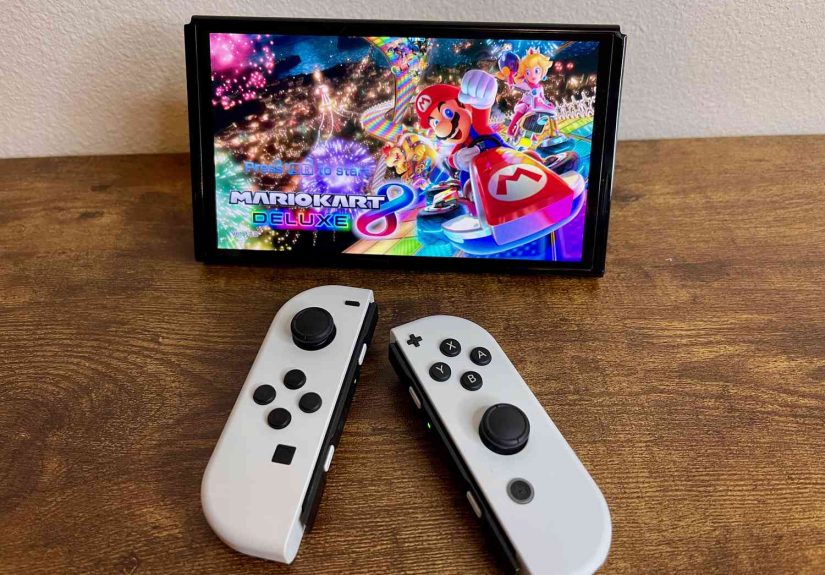
The “OLED” name is honest marketing for oncethis model’s headline feature is a larger 7-inch OLED display.
You also get 64GB of internal storage, enhanced onboard audio, a wider adjustable kickstand,
and a dock that includes a wired LAN (Ethernet) port.
Here’s the key reality check: the Switch OLED does not deliver a performance upgrade. Games run the same way they do on other Switch models.
That means the OLED is best understood as a quality-of-life refreshNintendo sanding down the rough edges while leaving the engine alone.
The screen is the star, and it knows it
OLED: why it looks “richer” even at the same resolution
On paper, the OLED model doesn’t raise handheld resolution beyond 720p. In practice, OLED changes how your games “feel.”
Blacks look deeper, contrast pops more, and colors can look more vividespecially in titles with dramatic lighting, neon highlights, or lots of dark scenes.
That’s why games like moody sci-fi adventures, dungeon crawlers, and late-night racing sessions often look more “premium” on the OLED, even without extra pixels.
If you’ve ever played in handheld mode and thought, “Wow, this game is pretty,” the OLED screen tends to make that thought show up earlier and more often.
It’s not a brand-new art style; it’s your existing library getting better presentation.
Bigger screen, similar footprint
The 7-inch screen is larger than the original 6.2-inch display, but the system doesn’t balloon into a brick. The OLED model is only slightly wider and heavier,
which matters because handheld comfort is a game of millimeters. The result is a bigger view that still feels like a Switch, not a small tablet you’re babysitting.
One “but”: outdoor brightness and harsh lighting
OLED is excellent for contrast, but bright sunlight is still the Switch’s natural predator. If you’re trying to play outdoors at noon,
you may still find yourself doing that “tilt the screen like a confused sunflower” move.
It’s better, it’s prettier, but it’s not a miracle.
Tabletop mode finally stops being a punchline
The original Switch kickstand worked the way a flimsy picture frame works: technically standing, emotionally unstable.
The Switch OLED’s wide, adjustable stand is a legit upgrade for tabletop play. It feels sturdier, supports more viewing angles,
and makes the Switch much more viable for casual multiplayerwhether that’s co-op on the couch, a lunch break match, or “I swear this is a work trip” hotel gaming.
This is one of those changes that sounds boring until you actually use it. Then you realize you’ve been living with a bad kickstand for years like it was a personality trait.
The dock upgrade is quietly one of the best changes
If your Switch spends a lot of time docked, you might assume the OLED model doesn’t matter much. But the updated dock has two practical wins:
it includes a wired LAN port for more reliable online play, and it’s redesigned in a way that can make cable management less annoying.
Wired internet won’t make every online game perfect, but it often improves stability and reduces the “why am I lagging when my router is five feet away?” rage spiral.
For families sharing Wi-Fi, crowded apartments, or anyone who plays competitive matches, a wired option is a real quality-of-life perk.
Audio, texture, and the small stuff you notice daily
The Switch OLED also improves onboard audio in handheld and tabletop modes. No, it’s not going to replace headphones,
but the upgraded speakers can make voices clearer and action less “tiny,” which is exactly what you want from handheld sound.
There are other little refinements reviewers have called out over timelike the feel of the back panel and the overall “finished” vibe.
None of this sells a console by itself, but together it makes the OLED feel like the most polished version of the classic Switch design.
What didn’t change (and why that matters)
No performance boost
Let’s say it plainly: the Switch OLED does not improve frame rates, shorten loading times, or make demanding games suddenly run like a new generation.
If you were hoping for a “Switch Pro” experience, the OLED model is not that.
It’s the same game library, same overall performance profilejust presented more beautifully in handheld mode.
Same core output targets
Docked play still targets up to 1080p output. Handheld remains 720p. That’s fine for what the Switch is (a hybrid that prioritizes fun and flexibility),
but it explains why some players see the OLED as optionalespecially if they mostly play on a TV and already like how their current Switch looks.
Joy-Con reality
The Joy-Cons remain fundamentally the same concept: clever, versatile, occasionally frustrating.
If you’ve dealt with drift before, you’re not alone in hoping every “new” Switch comes with “new” controllers.
The OLED model doesn’t reinvent that part of the experience.
Battery life is solid, but not magical
Battery life on the OLED model is in the same general neighborhood as later Switch revisionsgood enough for real life,
variable depending on what you play. Big open-world adventures can drain it faster; lighter indie games can stretch it longer.
The practical advice stays the same: if you travel a lot, pack a charger (or a battery bank) and you’ll be happier.
Who should buy the Nintendo Switch OLED?
Best fit: first-time Switch buyers
If you’re buying your first Switch, the OLED model is often the “treat yourself” pick that actually makes sense.
You get the most refined hardware version of the classic Switch design, plus a screen you’ll appreciate every single time you play handheld.
Handheld-heavy players: yes, this is your upgrade
If you play handheld oftencommutes, couch gaming while a show is on, bedtime sessions, travel, or just “I like my games close to my face”the OLED screen alone
can justify the price difference. Add the kickstand and audio improvements and it becomes an upgrade you feel daily.
Docked-only players: maybe save the money
If your Switch lives in the dock and you rarely use handheld mode, the OLED’s biggest advantage (the screen) won’t matter most days.
In that scenario, you’re mainly paying for the LAN port dock, extra storage, and quality-of-life improvementsnice, but not essential.
Switch Lite owners: depends on your play style
If you love the Lite for portability, the OLED is bigger and heavier, but the screen is also significantly more luxurious.
If you’ve ever wished for TV mode or detachable controllersor if you want a more “premium handheld Switch” experiencethe OLED can be a strong step up.
How to get the most out of your Switch OLED
Protect the screen like you protect your favorite save file
The OLED’s display is the main event, so a good screen protector is one of the smartest early purchases. You’ll play more confidently,
and you’ll stop flinching every time someone with a backpack walks too close.
Plan for storage: 64GB is better, not infinite
64GB is a meaningful improvement over 32GB, but modern digital games can still chew through space fast.
If you download a lot of titles, a microSD card remains the easiest way to keep your library comfortable without constant juggling.
Use the LAN port if you play online
If you play games where connection stability matters, wired internet is one of those “boring upgrades” that makes gaming feel smoother.
It won’t fix every online system quirk, but it often reduces dropouts and inconsistency.
Pick games that show off contrast and color
The OLED model shines with games that have strong art direction: vibrant platformers, neon racers, dark atmospheric adventures, and anything with rich HUD colors.
Even cozy games can look betterbecause cozy worlds tend to live on color.
So… is the Switch OLED “worth it”?
The Switch OLED is a refresh that nails the parts of the Switch experience that happen right in your hands. It doesn’t pretend to be a new generation.
Instead, it’s the “best version of the classic recipe”especially for handheld play.
If you want a Switch that looks better, props up better, sounds better, and feels like Nintendo bothered to read the comment section about kickstands,
the OLED model has just enough to loveand a little extra to make your older Switch feel like it skipped leg day.
Experiences With the Switch OLED (Real-Life Moments That Sell the Upgrade)
The Switch OLED tends to win people over in ordinary moments, not dramatic ones. It’s not a console you buy for a single “wow” benchmark
it’s a console that makes you smile more often during the week you already have.
A typical experience starts with handheld play: you launch a game you already know well, and the first thing you notice is that dark scenes look cleaner.
Blacks don’t wash into gray as easily, and bright UI elements feel crisp without being harsh. Even when a game’s resolution is unchanged,
the OLED contrast can make it feel more “expensive.”
Then there’s the quiet joy of the kickstand. If you’ve ever tried tabletop mode on the older Switch and watched it wobble like it was auditioning for a disaster movie,
the OLED stand feels like a tiny act of kindness. People often end up using tabletop mode more simply because it no longer feels like a compromise.
You can set it on a kitchen counter while cooking, on a desk between tasks, or on a plane tray table without constantly guarding it like a delicate tower of cards.
Multiplayer moments get better in a low-key way, too. Picture two friends sharing Joy-Cons for a quick match, or a family passing the system around the couch.
The wider kickstand makes the viewing angle easier to adjust so nobody’s stuck staring at a glare reflection.
The improved onboard speakers also help in casual sessionsdialogue reads a bit clearer, and you don’t always feel forced to grab headphones just to hear what’s going on.
Online players often describe the dock’s wired LAN port as the “adult” upgrade: not exciting, but deeply satisfying.
When you plug in Ethernet and your connection feels steadier, it’s the difference between “that match was fun” and “that match was a support ticket.”
It won’t transform every online game’s netcode, but it can reduce the random spikes that turn competitive play into a coin flip.
Travel is where the OLED model really earns its keep. Hotel lighting, late-night handheld sessions, and long waits are exactly the environments where OLED contrast looks best.
You’re not chasing ultra-high brightness; you’re enjoying deep color and clean separation between highlights and shadows.
The experience is less about “next-gen power” and more about comfortyour games feel inviting, readable, and sharp in the moments you actually use a portable system.
Finally, there’s a very specific Switch OLED phenomenon: you start revisiting games you already own. Not because they run better,
but because they present better. It’s like rewatching a favorite movie on a nicer TVsame story, better vibes.
That’s what “just enough to love” looks like in practice: a console that doesn’t demand new habits, only rewards the ones you already have.