Table of Contents >> Show >> Hide
- Before You Book: Choose Flights Like a Strategic Parent
- Lap Infant or Separate Seat?
- Documents You May Need When Flying With a Baby
- What to Pack in the Diaper Bag
- TSA Rules for Formula, Breast Milk, and Baby Food
- Should You Bring a Stroller, Baby Carrier, or Car Seat?
- Airport Timing: Arrive Earlier Than Your Old Self Would
- Boarding Strategy: Early or Last?
- Takeoff and Landing: Protect Tiny Ears
- Keeping a Baby Comfortable During the Flight
- Diaper Changes at 30,000 Feet
- Feeding on the Plane
- Health, Hygiene, and Germ Management
- Managing Crying Without Losing Your Mind
- Real Parent Experiences: What Flying With a Baby Actually Feels Like
- Final Thoughts: Make the Plan, Then Expect the Plot Twist
Flying with a baby can feel like preparing for a moon landing, except the astronaut is wearing tiny socks, may cry at any moment, and believes your boarding pass is a snack. The good news? Air travel with an infant does not have to become a family legend told in a whisper at Thanksgiving. With the right planning, the right gear, and realistic expectations, flying with a baby can be surprisingly manageable.
The key is to stop thinking of the flight as one big scary event and break it into smaller parts: booking, packing, airport security, boarding, takeoff, the flight itself, landing, and recovery afterward. Each stage has its own little traps and easy wins. Forget one extra outfit and you may learn why veteran parents pack clothes for themselves too. Bring the right snacks, wipes, and timing strategy, and suddenly you look like the calm parent everyone assumes has done this 47 times.
This guide covers practical, parent-friendly tips for flying with a baby, including what to pack, how to handle TSA screening, whether to bring a car seat, how to manage ear pressure, and what to expect once you are sealed inside a metal tube with a very small travel companion.
Before You Book: Choose Flights Like a Strategic Parent
When traveling with a baby, the cheapest flight is not always the best flight. A $60 savings can disappear quickly if it comes with a 5:15 a.m. departure, two connections, and a sprint through an airport while carrying a diaper bag, stroller, car seat, and a baby who has chosen chaos.
Nonstop Flights Are Usually Worth It
If your budget allows, choose a nonstop flight. Every connection adds another round of boarding, deplaning, stroller folding, diaper changing, and potential delays. A layover can be useful on very long trips, especially if your baby needs a break, but short connections are risky. Babies do not care that your next gate is in another terminal.
Think About Nap Timing
Some babies sleep beautifully on planes. Others treat the cabin like a brightly lit social event. Still, it helps to choose a flight that overlaps with a regular nap or bedtime. A baby who is slightly tired may sleep after takeoff. A baby who is wildly overtired may become a tiny airport goblin. The difference is timing.
Book Seats Early
Whenever possible, reserve seats at booking. Families should try to sit together, especially if one adult will manage the baby while another handles bags, bottles, snacks, or older siblings. If you are bringing an approved child restraint system, many airlines require it to be placed in a window seat so it does not block another passenger’s exit path. Always check your airline’s rules before departure.
Lap Infant or Separate Seat?
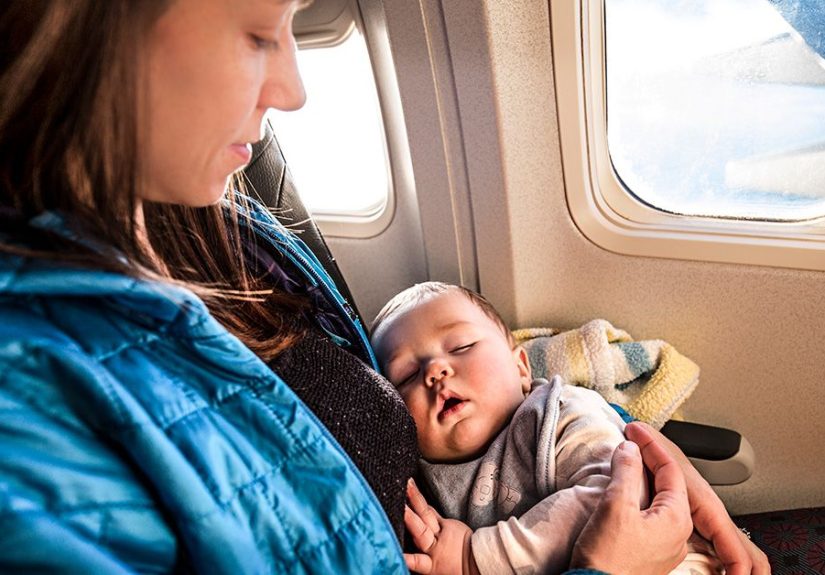
In the United States, children under age two are often allowed to fly as lap infants on domestic flights. That can save money, but it is not the safest option. Aviation safety authorities recommend that babies travel in their own seat using an approved child restraint system, such as a properly labeled car seat. Turbulence is unpredictable, and an adult’s arms are not a safety device, no matter how impressive your parenting reflexes are.
If you buy a seat for your baby, make sure your car seat is approved for aircraft use. Look for the label that says it is certified for use in motor vehicles and aircraft. Practice installing it with a lap belt before the trip, because the airplane aisle is not the ideal place to discover that straps have a personal vendetta against you.
If you choose lap infant travel, add the baby to your reservation in advance. Airlines still need the infant listed on the booking, and international flights may charge taxes or a reduced infant fare. For newborns, airline rules vary. Some airlines require medical clearance for very young infants, especially those under one week old, so check before you buy tickets.
Documents You May Need When Flying With a Baby
For domestic U.S. flights, babies usually do not need government-issued ID, but airlines may ask for proof of age for a lap infant. A birth certificate or immunization record can help. For international travel, your baby needs a passport, even if the baby is still young enough to think peekaboo is advanced theater.
If only one parent is traveling internationally with the baby, carry a notarized consent letter from the other parent when applicable. Border officials may ask questions to prevent child abduction. It is not glamorous paperwork, but it can save a stressful delay.
What to Pack in the Diaper Bag
Your diaper bag is your emergency headquarters. Pack it as if delays are possible, because they are. A good rule is to bring more than you think you need, but not so much that you need a sherpa to reach gate B18.
Baby Flight Packing List
- Diapers for the travel day, plus extras for delays
- Wipes, changing pad, and diaper cream
- Two or three baby outfits
- At least one clean shirt for the parent
- Plastic or wet bags for dirty clothes
- Formula, breast milk, bottles, or nursing supplies
- Baby food, pouches, or age-appropriate snacks
- Pacifiers, teething toys, or comfort items
- A lightweight blanket or sleep sack
- Small toys that do not make enemy-level noise
- Baby-safe hand wipes and sanitizer for adults
- Any medication your baby may need
Do not pack all baby supplies in checked luggage. Checked bags sometimes arrive late, and babies do not accept baggage claim excuses. Keep feeding supplies, medication, diapers, and a change of clothes in your carry-on.
TSA Rules for Formula, Breast Milk, and Baby Food
Parents often worry about airport security, especially the liquid rules. Fortunately, formula, breast milk, toddler drinks, and baby food are treated differently from ordinary liquids. They are allowed in reasonable quantities greater than 3.4 ounces in carry-on bags. Ice packs, freezer packs, and cooling accessories used to keep baby liquids cold are generally allowed too.
At the checkpoint, remove these items from your bag and tell the TSA officer you are traveling with baby feeding supplies. They may be screened separately. You do not need to taste the milk, and your baby does not need to be present for breast milk to be allowed. That last detail is helpful for pumping parents traveling without the baby.
To make security smoother, pack milk, formula, pouches, and bottles together in an easy-to-remove pouch or cooler. The less digging you do at security, the fewer people behind you will sigh dramatically into their neck pillows.
Should You Bring a Stroller, Baby Carrier, or Car Seat?
Most families benefit from bringing a stroller, especially in large airports. Many airlines allow strollers and car seats to be checked free of charge or gate-checked, but policies vary. A compact travel stroller can be a lifesaver when your gate changes from “nearby” to “basically another county.”
A baby carrier is also useful in the airport because it keeps your hands free for passports, coffee, and the emotional support pretzel you bought near the gate. However, baby carriers are not usually approved for use during taxi, takeoff, and landing. Follow crew instructions once onboard.
If you bring a car seat onboard, confirm that it fits within your airline’s seat dimensions and that it has the aircraft approval label. Install it according to the manufacturer’s instructions. Rear-facing seats are often recommended for younger babies, but the correct direction depends on the car seat, the baby’s size, and airline rules.
Airport Timing: Arrive Earlier Than Your Old Self Would
Before becoming a parent, you may have arrived at the airport with 52 minutes to spare and called it “efficient.” With a baby, build in more time. You may need to feed the baby, change a diaper, collapse a stroller, answer questions at security, or walk slowly because someone suddenly needs to inspect the ceiling lights.
Arriving early does not mean arriving wildly early. Too much airport time can backfire if your baby becomes overtired before boarding. Aim for enough cushion to move calmly without turning the terminal into a cardio workout.
Boarding Strategy: Early or Last?
Many airlines offer family boarding or allow parents with young children to board early. Early boarding gives you time to install a car seat, organize bottles, wipe down surfaces, and claim overhead bin space. The downside is that your baby spends extra time on the plane before it moves.
If you are traveling with another adult, consider the split strategy. One adult boards early with the bags and car seat while the other stays in the gate area with the baby until later. This lets the baby wiggle, crawl, snack, or stare suspiciously at gate announcements for a few extra minutes.
Takeoff and Landing: Protect Tiny Ears
Air pressure changes during takeoff and landing can cause ear discomfort, especially for babies who cannot intentionally swallow or yawn on command. Feeding during takeoff and descent can help because sucking and swallowing may equalize pressure. Nursing, bottle-feeding, or offering a pacifier are all common strategies.
Timing matters. Do not start the bottle too early while the plane is still waiting in line to take off. If the baby finishes before the real climb begins, you may be left holding an empty bottle and a deeply offended infant. Watch for the plane to actually accelerate, then offer feeding or a pacifier.
If your baby has had a recent ear infection, ear surgery, fever, or significant congestion, ask your pediatrician whether flying is appropriate. Avoid giving sedating medicines or cold remedies just to make a baby sleep unless a doctor specifically recommends it. A peaceful flight is lovely, but safety comes first.
Keeping a Baby Comfortable During the Flight
Cabin air can be dry, temperatures can shift, and space is limited. Dress your baby in soft layers that are easy to remove. Footed pajamas are excellent for early flights, while a sweater or sleep sack can help if the cabin becomes chilly.
Keep toys simple. Babies are often more fascinated by a plastic cup, a crinkly wrapper, or your watch than by the expensive toy you packed with hope in your heart. Choose quiet, lightweight items: soft books, teethers, suction toys, stacking cups, and a favorite comfort object.
For older babies, snacks can buy peace in small installments. Puffs, soft fruit, teething crackers, or other age-appropriate snacks work well. Avoid messy foods unless you enjoy cleaning banana from an armrest while a stranger pretends not to notice.
Diaper Changes at 30,000 Feet
Airplane bathrooms are small. Changing a baby in one can feel like solving a puzzle inside a closet during light turbulence. Many aircraft bathrooms have fold-down changing tables, but not all. Ask a flight attendant which lavatory is best equipped.
Prepare a mini diaper kit before boarding: one diaper, a small pack of wipes, a disposable changing pad, and a plastic bag. Taking the entire diaper bag into the lavatory is like trying to parallel park a couch.
Change the baby shortly before boarding if possible. Even if the diaper is only slightly wet, start the flight fresh. It is one of the easiest ways to reduce mid-flight drama.
Feeding on the Plane
Whether you breastfeed, bottle-feed, pump, or use formula, plan for more than the scheduled flight time. Delays, diversions, and long taxi times happen. Bring extra milk, formula powder, clean bottles, and snacks if your baby eats solids.
For formula, pre-measured powder containers can simplify mixing. Bring safe water or purchase bottled water after security if needed. For breast milk, use a cooler with approved ice packs. If you need warm water, ask a flight attendant politely, but never assume it will be available immediately.
If breastfeeding, choose clothing that makes nursing easier in a tight seat. A window seat can offer slightly more privacy. A lightweight cover is optional; comfort matters more than performing some imaginary perfect version of travel parenting.
Health, Hygiene, and Germ Management
Airports and airplanes involve many shared surfaces. Bring disinfecting wipes for tray tables, armrests, seatbelt buckles, and anything your baby may touch before putting fingers in their mouth, which will be everything. Use hand sanitizer for adults, and wash hands when possible.
Try not to stress over every germ. Babies explore the world like tiny scientists with no lab safety protocol. Focus on the biggest wins: clean hands before feeding, wipe high-touch surfaces, avoid obviously sick nearby passengers when you can, and keep pacifiers from rolling freely across the floor of destiny.
Managing Crying Without Losing Your Mind
Babies cry on planes because babies cry everywhere. They cry in kitchens, cars, grocery stores, and occasionally because a sock looked at them wrong. A crying baby on a plane feels louder because you cannot leave, but most passengers understand more than parents fear.
Run through the basics: hunger, diaper, temperature, tiredness, ear pressure, boredom, overstimulation. Sometimes walking the aisle helps when the seatbelt sign is off. Sometimes dimming stimulation helps. Sometimes the baby simply needs to complain to management, and management is you.
Stay calm if you can. Babies often borrow emotional weather from their caregivers. If you breathe slowly, soften your voice, and move with confidence, your baby may settle faster. And if not, you are still doing your best in a difficult moment.
Real Parent Experiences: What Flying With a Baby Actually Feels Like
The first big lesson many parents learn is that the flight you fear most is not always the flight that goes badly. A baby may scream in the car on the way to the airport, then sleep through boarding, takeoff, snack service, and the dramatic landing applause from one enthusiastic passenger in row 23. Another baby may nap perfectly at home but treat a two-hour flight like a networking event.
One common experience is the “too many bags” mistake. Parents often pack for every possible disaster, then realize they cannot physically move like normal humans. The better strategy is organized abundance. Bring extras, yes, but divide them into small pouches: feeding, diapering, clothing, toys, and documents. When the baby spits up during boarding, you do not want to excavate your bag like an archaeologist searching for pajamas.
Another real-world trick is to accept help selectively. Some fellow passengers genuinely want to help lift a bag or retrieve a dropped toy. Flight attendants may offer water, napkins, or reassurance. You do not have to become best friends with row 12, but letting someone help with a small task can make the trip easier. On the other hand, you are allowed to ignore unsolicited advice. Every flight seems to contain one person who believes babies can be controlled by a mysterious method from 1978. Smile, nod, return to your plan.
Parents also discover that the airport is part of the trip, not just the hallway before the trip. A calm gate routine can save the flight. Feed the baby before boarding if they are hungry, but save some sucking for takeoff. Change the diaper even if it seems unnecessary. Let older babies crawl or wiggle in a clean corner before boarding. A baby who burns off energy before the flight may be more willing to sit once onboard.
The best experience-based advice is to lower the bar. A successful flight with a baby does not mean nobody cries, nothing spills, and everyone exits looking like a lifestyle magazine family. A successful flight means you arrive safely, your baby is cared for, and you did not leave the diaper bag in a different state. That is victory. Maybe not elegant victory, but victory wearing applesauce.
Finally, remember that confidence grows quickly. The first flight teaches you what your baby needs, what you overpacked, what you forgot, and whether your stroller is airport-friendly or secretly a folding metal octopus. By the second or third trip, you will have your rhythm. You will know where to place the wipes, when to board, which toys work, and how to handle the look your baby gives you right before a diaper emergency. Flying with a baby may never be effortless, but it becomes far less mysterious.
Final Thoughts: Make the Plan, Then Expect the Plot Twist
Flying with a baby is part preparation, part flexibility, and part comedy. You can choose smart flights, pack carefully, understand TSA rules, bring an approved car seat, and time feedings for takeoff and landing. Those steps make a real difference. Still, babies are babies. They may nap, laugh, cry, snack, wiggle, or decide that the safety card is the finest literature ever printed.
The goal is not perfection. The goal is a safer, smoother, less stressful travel day. Give yourself more time, keep essentials within reach, protect feeding and sleep routines where possible, and remember that most people on the plane were babies once too, even the man sighing loudly over his laptop.
Note: This article is based on current U.S. air travel, airport security, pediatric health, and major airline guidance. Families should always confirm airline-specific rules before departure, especially for car seats, lap infants, bassinets, baggage, medical clearance, and international documentation.