Table of Contents >> Show >> Hide
- What Was the Titan II Doing in Arkansas?
- The Night Everything Went Wrong
- Why the Nuclear Warhead Did Not Detonate
- The Human Cost of the Damascus Explosion
- Why the Damascus Explosion Still Matters 40 Years Later
- Arkansas, Memory, and the Long Shadow of the Cold War
- What the Site Represents Today
- Experiences Related to the Titan II Missile Explosion in Arkansas
- Conclusion
Forty years after the Titan II missile explosion near Damascus, Arkansas, the story still lands with the force of a shock wave. It has everything a Cold War disaster should never have had: a nuclear-armed missile, highly volatile fuel, a simple maintenance mistake, confused command decisions, terrified local families, and one very large question hanging over rural Arkansas before dawn: How close did we just come?
The answer is uncomfortable. In September 1980, a Titan II missile at Launch Complex 374-7 suffered a fuel leak after a heavy socket fell inside the silo and punctured the missile’s first-stage fuel tank. Hours later, the complex exploded. The blast destroyed the silo, killed Senior Airman David Livingston, injured 21 others, hurled the giant silo door aside, and threw the missile’s nuclear warhead clear of the site. The warhead did not detonate, and no radioactive material was released. That part, to put it mildly, was the lucky part.
This 40-year anniversary is more than a history lesson about one bad night in Arkansas. It is a reminder that the nuclear age was not only about strategy, deterrence, and grim speeches from Washington. It was also about valves, pressure gauges, training procedures, communication breakdowns, and the terrifying fact that a civilization-ending system still depended on ordinary human beings not making ordinary human mistakes. The Damascus accident exposed that truth in the most dramatic way possible.
What Was the Titan II Doing in Arkansas?
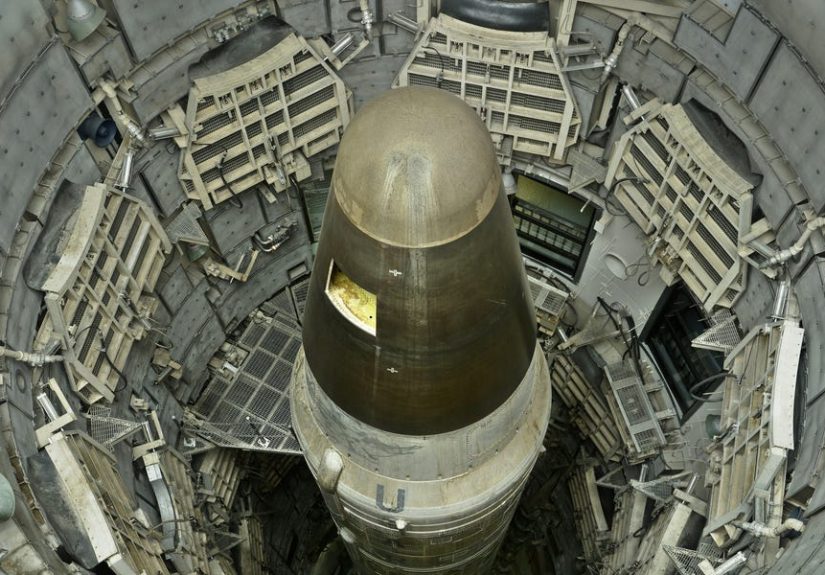
To understand why the Damascus explosion mattered so much, you have to rewind to the heart of the Cold War. The Titan II was one of America’s most powerful land-based intercontinental ballistic missiles. It stood more than 100 feet tall, lived in hardened underground silos, and carried a W53 nuclear warhead with a yield measured in megatons, not kilotons. In plain English, this was not a backyard bottle rocket. This was a doomsday machine with plumbing.
Arkansas was one of three states that hosted Titan II missile fields. Little Rock Air Force Base oversaw 18 Titan II sites spread across central Arkansas. The missiles were designed to sit fueled, armed, and ready for launch on short notice. That readiness came with a dangerous tradeoff: the Titan II used storable liquid propellants, including Aerozine 50 fuel and nitrogen tetroxide oxidizer. Those chemicals were practical for rapid response, but they were also toxic, corrosive, and unforgiving. When people talk about Cold War deterrence sounding abstract, the Titan II program is a good reminder that deterrence was also deeply chemical.
By the late 1970s, Arkansas residents were already familiar with the risks of the Titan system. The state had seen earlier accidents and leaks associated with Titan II sites, including the deadly 1965 silo fire near Searcy that killed 53 workers. So when the Damascus accident happened in 1980, it did not come out of a clear blue sky. It arrived in a state that had already learned, the hard way, that missile systems were not just symbols of national defense. They were industrial hazards sitting under local farmland.
The Night Everything Went Wrong
A routine task that stopped being routine
On the evening of September 18, 1980, maintenance personnel were working inside the Damascus Titan II silo during a routine procedure. During that work, a heavy socket reportedly slipped from a wrench, fell roughly 80 feet, ricocheted, and punctured the missile’s first-stage fuel tank. Once the tank was breached, Aerozine 50 began leaking into the silo.
That single moment turned a maintenance job into an unfolding emergency. And the awful genius of the disaster is that nothing about it sounds cinematic at first. No enemy attack. No sabotage. No dramatic countdown clock. Just a tool falling where it absolutely should not have fallen. Gravity, as it turns out, never signed any arms-control agreement.
Once the leak began, the danger escalated fast. Titan II propellants were hypergolic, meaning the fuel and oxidizer could ignite spontaneously on contact. As officials assessed the leak, Air Force personnel evacuated the immediate site, nearby residents were moved out as a precaution, and command teams wrestled with a problem that was both technical and terrifying. If the missile collapsed or the propellants mixed in the wrong way, the silo could erupt.
Hours of tension before the blast
The Damascus crisis was not one instant of destruction. It was hours of tension, uncertainty, and bad options. Teams tried to assess fuel concentrations and the condition of the missile. Airmen entered dangerous areas in protective gear, attempting to gather readings and make sense of the growing hazard. Reports from later investigations and retellings make clear that the response was hampered by uncertainty, communication issues, and the brutal reality that this was not the kind of event anyone wanted to rehearse too vividly.
Then, in the early hours of September 19, the complex exploded.
The blast was catastrophic. The 740-ton silo closure door was thrown from the site. Debris scattered across the surrounding area. The missile itself was destroyed. The W53 warhead was blown out of the complex and landed away from the silo. The explosion was violent enough to stun responders and residents alike, yet the one outcome everyone feared most, a nuclear detonation or radiological release, did not happen.
Why the Nuclear Warhead Did Not Detonate
This is the part that often gets flattened into a movie-style slogan: “the warhead did not go off.” True, but that sentence deserves more respect than a shrug.
The Titan II at Damascus carried a W53 warhead, one of the most powerful warheads ever fielded by the United States. If that phrase makes your shoulders rise toward your ears, that is the correct physical response. But nuclear weapons are not designed to detonate simply because they are tossed, damaged, or burned near conventional explosions. They contain multiple safety and arming systems intended to prevent accidental nuclear yield. Those systems worked at Damascus.
That does not mean the event was harmless. It means the worst-case scenario was avoided. There is a huge difference. The explosion still destroyed a missile complex, spread debris over a wide area, caused injuries, and forced emergency response under the shadow of a live nuclear weapon. Damascus was not “no big deal because nothing went nuclear.” It was “a profound national warning because something almost unimaginably dangerous still stayed just inside the guardrails.”
In other words, the safety mechanisms held. The surrounding system did not.
The Human Cost of the Damascus Explosion
When people revisit Cold War nuclear incidents, they sometimes drift too quickly into policy talk and engineering diagrams. Damascus should be remembered first as a human tragedy.
Senior Airman David Livingston suffered critical injuries in the explosion and later died. Twenty-one others were injured in the blast or rescue operations. Responders risked their lives trying to assess the leak, enter hazardous spaces, and prevent a larger catastrophe. Several of the men involved were later recognized for heroism.
There was also the civilian experience. Families living near Damascus and Southside were suddenly forced into the role nobody asks for: unwilling extras in a nuclear-age emergency. People were awakened, evacuated, warned, and left to wonder what exactly was sitting underground in their part of Arkansas and what would happen if official reassurance proved too optimistic. That kind of fear does not disappear just because the sunrise shows no radiation plume.
The Damascus accident also highlighted a familiar tension in American military history: the people asked to carry out the most dangerous tasks are often dealing with incomplete information, procedural complexity, and the pressure of getting it right when “right” is no longer fully available.
Why the Damascus Explosion Still Matters 40 Years Later
The 40-year anniversary matters because Damascus was not merely an accident. It was a case study in systemic risk.
First, it showed how a seemingly small human error could interact with a high-risk weapons system in disastrous ways. One dropped socket should not be able to send a state into panic and turn a missile complex into rubble. Yet in a liquid-fueled nuclear missile environment, that is exactly what happened.
Second, the incident exposed weaknesses in emergency coordination and communication. Reviews conducted after the explosion pointed to problems in notification, information flow, and real-time consequence assessment. Even support systems designed to model potential dispersal scenarios had trouble getting the right data quickly enough to be useful on scene. That matters because nuclear safety is not just about the weapon. It is about the web of institutions that must function when things go sideways at 3 a.m.
Third, Damascus damaged public confidence in the Titan II program. The missile already had a reputation for being powerful but demanding. The explosion near Damascus helped reinforce a hard truth: liquid-fueled ICBMs were technologically impressive, but they also carried maintenance and safety burdens that were impossible to ignore forever. The last Titan II was deactivated in 1987, seven years after the accident.
Finally, the Damascus story still matters because it punctures the myth that nuclear danger only comes from hostile nations or intentional launch decisions. Sometimes the threat comes from complexity itself. Complex systems fail in weird, deeply human ways. Damascus is one of the clearest American examples of that rule.
Arkansas, Memory, and the Long Shadow of the Cold War
For Arkansas, the Damascus explosion became part of a larger regional memory about Titan II missile sites and the uneasy coexistence of rural life with strategic nuclear infrastructure. These silos were built into farmland and small communities, places better known for churches, cattle, and long two-lane roads than thermonuclear deterrence. Yet for decades, the Cold War ran straight beneath that landscape.
That contrast is part of what makes the Damascus story so haunting. The setting was not a classified desert test range or some distant battlefield. It was central Arkansas. The danger was parked under ordinary ground. The people living above it still had to buy groceries, raise families, and trust that the giant weapon nearby would remain forever theoretical.
Forty years later, the memory persists because it combines the intimacy of local history with the scale of global risk. Damascus was both a hometown emergency and a national nuclear warning.
What the Site Represents Today
The destroyed Launch Complex 374-7 was never rebuilt. After cleanup, the site was effectively sealed and buried. It later gained recognition as a historic site and was listed on the National Register of Historic Places. That status is fitting. The place is not famous because it represents victory or technological triumph. It matters because it preserves the geography of a near miss.
Today, the site stands as a reminder that Cold War history is not only found in presidential libraries and summit photographs. It is also found in damaged infrastructure, local memory, and places where catastrophe was narrowly contained. The Damascus Titan II explosion deserves continued attention because it captures the central paradox of the nuclear era: the same systems built to prevent war can create extraordinary danger even in peacetime.
Experiences Related to the Titan II Missile Explosion in Arkansas
Any 40-year anniversary worth reading should leave room for experience, not just chronology. And the Damascus story is full of experiences that help explain why the incident still lingers in Arkansas memory.
For the airmen involved, the experience was a collision between training and chaos. Missile work was technical, procedural, and built on confidence in checklists. But Damascus became the kind of emergency that checklists can only partly tame. Men were working in protective gear, trying to make sense of toxic vapors, sealed doors, uncertain readings, and an enormous missile that had become unstable in ways nobody wanted to describe out loud. The experience, by most accounts, was not cinematic heroism in the glossy sense. It was exhausting, confusing, physical, and frightening.
For local residents, the experience was stranger still. Imagine being in rural Arkansas in the middle of the night and suddenly hearing that something has gone wrong at the missile site up the road. You are told to leave. You know there is a missile involved. You may or may not know whether there is a nuclear warhead attached. The official message is that the situation is under control, which is exactly the kind of sentence that sounds reassuring until you notice people are still evacuating in the dark. That combination, partial information, enormous stakes, and a very rural landscape, gave the Damascus accident a uniquely surreal quality.
For first responders and reporters, the experience was also deeply disorienting. A normal industrial accident is one thing. A missile-silo explosion involving a nuclear warhead is something else entirely. Witnesses described a blast so intense that it transformed the quiet Arkansas night into an otherworldly scene of noise, debris, and shock. The countryside itself became part of the memory: black sky, isolated roads, emergency lights, confusion over what had happened underground, and the creeping awareness that a disaster can be both local and globally symbolic at the same time.
Then there is the long-term emotional experience, the one anniversaries bring back. For survivors, families, and communities, Damascus was not merely an event that ended when the fire went out. It raised lasting questions about trust, risk, and what it meant to live beside a system built for nuclear war. The story still resonates because it combines grief with relief. One man died. Many others were injured. Yet the disaster could have been worse in ways that are almost impossible to describe without sounding dramatic, because the facts are already dramatic enough.
That is why the 40-year anniversary matters on a human level. It is not only about what happened to a missile. It is about what happened to the people around it, and how memory works when a community survives something it cannot quite believe was real.
Conclusion
The Titan II missile explosion in Arkansas remains one of the most sobering nuclear weapons accidents in American history. It exposed the fragility hiding inside the machinery of deterrence and showed how a highly advanced system could still be brought to disaster by an ordinary error and a cascade of imperfect decisions. Forty years later, the Damascus accident deserves to be remembered not as a bizarre Cold War footnote, but as a serious warning about complexity, accountability, and the human cost of living next to weapons built for apocalypse.
Damascus also endures because it contains two truths at once. The system failed badly. The worst outcome did not happen. History often gives us one or the other. Arkansas got both in the same night. That is exactly why the story still matters.