Table of Contents >> Show >> Hide
- What Happened at Moscow International Film Week
- Why Ukraine’s Reaction Was So Intense
- Woody Allen’s Defense and the “Artistic Conversation” Argument
- The Bigger Debate: Can Art Stay Neutral During War?
- How Hollywood and Festival Culture Have Shifted Since 2022
- What This Means for Filmmakers, Festivals, and Audiences
- Extended Section: Real-World Experiences Around This Debate (Approx. 500+ Words)
- Conclusion
In normal times, a film festival appearance is just another stop on the global circuit: a few charming stories, a little nostalgia, maybe a standing ovation if the Wi-Fi holds. In wartime, it can become geopolitical dynamite. That’s exactly what happened when Woody Allen appeared virtually at Moscow International Film Week and Ukraine’s Foreign Ministry answered with a blistering rebukeand yes, a social-media dunk that felt less like PR and more like wartime messaging with teeth.
The controversy quickly spilled beyond cinema Twitter and into the bigger global argument about culture, propaganda, moral responsibility, and whether “art above politics” still works when bombs are falling. This analysis synthesizes reporting and commentary from major U.S. outlets and institutionsincluding AP, CBS News, Vanity Fair, Variety, Rolling Stone, The Washington Post, Fox News, Council on Foreign Relations, Brookings, Smithsonian Magazine, PEN America, Deadline, and The Hollywood Reporterto unpack what happened, why it matters, and what it signals for artists, festivals, and audiences in 2026.
What Happened at Moscow International Film Week
The appearance that ignited the backlash
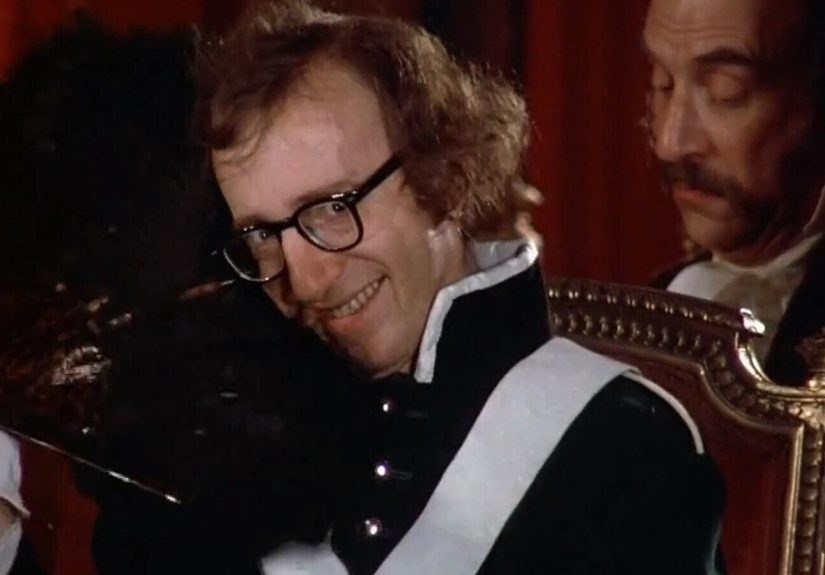
Woody Allen appeared by video at Moscow International Film Week, a relatively new event that launched in 2024. Russian coverage framed him as a headline guest, and footage showed him on a large screen addressing a packed theater. The session was moderated by pro-Kremlin filmmaker Fyodor Bondarchuk, which immediately raised political stakes well beyond “film talk.”
During the conversation, Allen reportedly praised Russian cinema, referenced Sergei Bondarchuk’s War and Peace, and discussed how he might think about a film offer involving Russia. In peacetime, this might have read as old-school cinephile chatter. In wartime, it landed like a reputational hand grenade.
Ukraine’s response: sharp, public, and strategic
Ukraine’s Foreign Ministry condemned Allen’s participation as “a disgrace and an insult,” saying his appearance helped legitimize a cultural event tied to figures aligned with Vladimir Putin’s system. Kyiv’s framing was not subtle: culture, in this view, cannot be treated as neutral theater while Russia continues its full-scale invasion.
The diplomatic messaging was paired with online symbolism. Ukrainian communication around the controversy emphasized that culture must not “whitewash crimes” and portrayed Allen’s participation as a classic case of soft-image laundering: an internationally known artist lending prestige to a state-linked event during an active war.
Why Ukraine’s Reaction Was So Intense
Because this was never “just a film event”
For Ukraine, the stakes are existential, not abstract. Since 2022, the war has not only destroyed infrastructure and displaced millions; it has also damaged cultural institutions and targeted the social fabric that sustains national identity. In that environment, culture becomes strategic terrain. A festival appearance by a major American director is read not as harmless nostalgia, but as a symbolic win for the host country’s narrative machine.
This is why Ukrainian officials and cultural voices often reject the “keep politics out of art” frame. Their argument is straightforward: when a state uses culture for legitimacy during wartime, high-profile participation has political meaning whether guests intend it or not.
Because trolling can be diplomacy now
The phrase “Ukraine trolls Woody Allen” captures something modern and important: digital diplomacy has meme logic now. Governments still issue formal statements, but they also deploy imagery, sarcasm, and shareable messaging that travels faster than policy briefs. That doesn’t make it unserious. It makes it effective.
In this case, Ukraine’s tone did three things at once:
- Named moral stakes (war victims and wounded cultural workers),
- Reframed the event (from cinema panel to propaganda-adjacent platform),
- Signaled red lines to other international figures considering similar appearances.
Woody Allen’s Defense and the “Artistic Conversation” Argument
Allen responded that Putin is “totally in the wrong” and called the war “appalling,” while also arguing that cutting off artistic conversations is not constructive. That position has a long lineage: artists, writers, and filmmakers have often argued that cultural exchange can outlast governments and soften political hostility.
The defense sounds principled on paper. But in this specific case, critics point to context: a state-linked festival, wartime optics, and participation alongside personalities seen as close to the Kremlin. In other words, the counterargument is not “talking to Russians is always wrong”; it’s “this specific stage, in this specific moment, carries political payload whether you like it or not.”
There’s also the reputation layer. Allen has worked increasingly in Europe after his break with major U.S. studio backing, and his public profile in the U.S. has long been contentious for reasons unrelated to this controversy. That context made any politically charged appearance more combustible from the start.
The Bigger Debate: Can Art Stay Neutral During War?
View A: Keep channels open
Supporters of engagement say cultural isolation can become intellectual isolation. They argue that films, books, and music can open human contact when governments fail. This side worries that blanket exclusions can harden divisions and punish audiences or artists who are not decision-makers.
View B: Don’t lend legitimacy to propaganda ecosystems
Opponents respond that in highly managed media environments, prestige appearances are not neutral exchanges; they are narrative assets. A globally recognized director appearing at a state-backed event can be repackaged domestically as proof of normalcy, respectability, or international validation.
Both perspectives have internal logic. The practical difference is venue and timing. A private dialogue with dissident artists? One thing. A high-visibility appearance in a government-supported festival during active invasion? Very different thing.
How Hollywood and Festival Culture Have Shifted Since 2022
The Allen controversy did not happen in a vacuum. Since Russia’s full-scale invasion, major Western film and arts ecosystems have repeatedly recalibrated:
- High-profile industry events and celebrities publicly aligned with Ukraine.
- Major platforms amplified Ukrainian voices and fundraising efforts.
- Global debates intensified over where to draw lines between Russian state culture, Russian citizens, and anti-war Russian artists.
Even institutions that dislike absolutist boycotts now conduct far more risk screening: Who organizes the event? Who funds it? Who benefits from the optics? Who appears on stage with whom? In 2026, cultural due diligence is no longer optionalit is reputational survival.
What This Means for Filmmakers, Festivals, and Audiences
For filmmakers and talent teams
If your calendar includes international appearances, your comms strategy now needs geopolitical literacy. “I’m only there for cinema” is no longer a complete answer. Ask the hard questions early:
- Is the event state-backed or state-amplified?
- Are co-panelists sanctioned, propagandistic, or politically weaponized figures?
- Could your appearance be edited into domestic legitimacy messaging?
- What’s your response if critics connect your appearance to wartime harms?
For festival organizers
Transparency is now a credibility asset. Festivals that clearly publish governance, funding structures, and speaker context reduce confusion and backlash. Ambiguity creates a vacuumand the internet is always happy to fill vacuums with outrage.
For audiences and media consumers
The healthiest approach is neither blind cancellation nor blind romanticism about art’s purity. Evaluate context. Distinguish between artistic exchange and political image-laundering. In short: keep your empathy high and your media literacy higher.
Extended Section: Real-World Experiences Around This Debate (Approx. 500+ Words)
To understand why this story exploded, it helps to look at recurring experiences from the broader cultural sector since 2022. These are not isolated anecdotes; they are patterns that keep showing up whenever art intersects with live conflict.
Experience 1: “Neutral” events suddenly aren’t neutral
Programmers across film, music, and publishing have discovered that neutrality is often interpreted through optics, not intentions. A panel billed as “global cinema dialogue” can become headline news if one moderator is a known regime loyalist or if the host institution is tied to wartime narratives. Teams that once focused on ticket sales and press mentions now run geopolitical risk checks like compliance departments.
The lesson? Context beats branding. You can call an event “international” all day long, but if the backdrop is heavily political, the audience will read it politically.
Experience 2: Artists are pressured to speakand to keep speaking
Another recurring pattern: one statement is never enough. Public figures may issue a condemnation of war, but then face follow-up demands about where they appeared, who hosted them, and whether their participation helped normalize harmful narratives. Silence is interpreted. Ambiguity is interpreted. Even a carefully worded “I’m pro-peace” statement can trigger fresh criticism if actions seem to contradict words.
This is emotionally exhausting for artists and frustrating for fans who want art without political tests. But in wartime, audiences tend to apply a stricter moral coherence standard: if you condemn aggression, don’t lend your prestige to institutions seen as enabling it.
Experience 3: Cultural boycott debates are messy, not binary
In practice, there is no single “boycott model.” Some institutions cut ties only with state entities. Others exclude artists who refuse to denounce the war. Some keep works but add contextual programming. Others pause specific repertoires entirely. Each model carries tradeoffs:
- Broad bans may signal moral clarity but risk overreach.
- Narrow targeting may protect artistic freedom but appear too soft.
- Contextual curation can educate audiences but may satisfy no one.
This is why controversies recur. The moral goal may be shared, but the operational design differs by institution, city, and audience expectations.
Experience 4: Symbolic gestures can produce outsized impact
Social posts, visual metaphors, and pointed one-liners now shape diplomacy as much as formal communiqués. A single image can carry more persuasion power than a 2,000-word policy memo. Ukraine has been especially fluent in this registercombining official language with high-velocity digital storytelling to keep global attention on accountability.
Critics call this performative; supporters call it strategic. Both can be true. Performance is often part of strategy in modern information warfare.
Experience 5: Reputational memory is long
Finally, institutions now behave as if every cultural appearance creates a permanent case study. One controversial appearance can reframe years of work, especially when screenshots and clips circulate across platforms in multiple languages. Talent managers, publicists, and festival directors increasingly plan for “future retrospective headlines”: How will this look a year from now? Five years from now?
That long-memory effect explains why this Woody Allen episode mattered beyond one director or one event. It became a template. Artists and organizers worldwide watched the backlash unfold in real time and quietly updated their own risk playbooks.
Conclusion
“Ukraine trolls Woody Allen over Russian film festival appearance” may sound like a splashy entertainment headline, but it is really a case study in 21st-century cultural politics. The story reveals how quickly cinema can become diplomacy, how quickly diplomacy can become meme warfare, and how difficult it is to claim artistic neutrality inside an active war zone of narratives.
For creators and institutions, the takeaway is practical: intentions matter, but context decides outcomes. In a conflict era, the stage is never just a stage.