Table of Contents >> Show >> Hide
- First: Is Sudden Hearing Loss in One Ear an Emergency?
- What “Sudden Hearing Loss in One Ear” Actually Means
- Classic Signs People Describe (And Why They’re Confusing)
- The Big Causes of Sudden Hearing Loss in One Ear
- 1) Quick-fix (but still worth checking): blockage or middle-ear problems
- 2) The urgent one: sudden sensorineural hearing loss (SSNHL)
- 3) Inner-ear conditions that can come with hearing changes
- 4) Trauma, pressure, and “too much sound”
- 5) Medication-related (less common, but important)
- 6) “We need to rule this out” causes
- How Doctors Diagnose Sudden Hearing Loss in One Ear
- Treatment: Why Timing Matters (And What’s Actually Used)
- What You Can Do Right Now (Practical, Not Panicky)
- Recovery: What to Expect (And What “Improvement” Can Look Like)
- Prevention (Because Your Ears Deserve Better)
- 500+ Words of Real-World Experiences: What People Commonly Report
- Conclusion
You wake up, roll over, andbamyour left ear sounds like it’s listening through a pillow. Or you answer a call and realize the “bad connection” is… your own head. Sudden hearing loss in one ear can feel bizarre, scary, and honestly a little insulting (like, ear, we had plans today). The tricky part is that sometimes it’s something simplelike wax or fluidwhile other times it’s a medical emergency that needs treatment fast.
This guide breaks down what “sudden hearing loss in one ear” can mean, what causes it, why timing matters, what doctors typically check, and how people recover. You’ll also find a longer “real-world experiences” section at the endbecause nothing makes health information stick like recognizing yourself in it.
First: Is Sudden Hearing Loss in One Ear an Emergency?
Often, yes. The most time-sensitive type is sudden sensorineural hearing loss (SSNHL)a sudden drop in hearing due to a problem in the inner ear or hearing nerve. SSNHL is commonly one-sided, and early treatment is linked with better odds of improvement.
Go to urgent care or the ER today if any of these are true
- Your hearing changed suddenly over hours to 3 days (even if it’s “just muffled”).
- You also have new ringing (tinnitus), ear fullness, or vertigo/dizziness.
- The change happened after a very loud noise/blast, head injury, or pressure change (diving/flying).
- You have severe dizziness where you can’t walk safely.
Call emergency services right now if sudden hearing loss comes with “brain warning signs”
- New facial droop, facial numbness, or one-sided weakness
- Trouble speaking/understanding, confusion, fainting, seizure
- Worst headache of your life, especially with neurologic symptoms
If you’re a teen: tell a parent/guardian right away. This is one of those “don’t wait and see” situations.
What “Sudden Hearing Loss in One Ear” Actually Means
“Sudden hearing loss” is a description, not a diagnosis. The main question doctors try to answer quickly is:
Is it conductive hearing loss or sensorineural hearing loss?
- Conductive = sound can’t travel well through the ear canal or middle ear (think: wax plug, fluid, infection, eardrum issues).
- Sensorineural = the inner ear (cochlea) or hearing nerve isn’t sending signals normally (think: SSNHL, noise trauma, inner-ear inflammation, rare neurologic causes).
Why does that matter? Because conductive causes are often fixable, while SSNHL is time-sensitive. The goal is not to “guess which one” at homeit’s to get evaluated quickly so the clock doesn’t run out on treatment options.
Classic Signs People Describe (And Why They’re Confusing)
Sudden one-ear hearing loss can show up in ways that don’t feel like “hearing loss” at first:
- Muffled sound or “cotton in the ear” feeling
- Ear fullness (like you can’t pop it open)
- Ringing, buzzing, or roaring in the affected ear
- Dizziness/vertigo or imbalance
- A sudden “pop” sensation and then quiet
That “fullness” feeling is especially unfair, because it can mimic allergies, sinus pressure, or a minor ear clogwhile still being SSNHL in some cases. In other words: the symptom is common; the cause isn’t always.
The Big Causes of Sudden Hearing Loss in One Ear
Doctors think in categories. Here’s a practical breakdown of the most common buckets.
1) Quick-fix (but still worth checking): blockage or middle-ear problems
- Earwax (cerumen) impaction a plug can drop hearing dramatically.
- Fluid behind the eardrum often after a cold, allergies, or Eustachian tube dysfunction.
- Ear infection pain, fever, or drainage can be clues, but not always.
- Eardrum perforation may follow trauma, infection, or pressure changes.
These are usually conductive problems, meaning sound isn’t getting through efficiently.
2) The urgent one: sudden sensorineural hearing loss (SSNHL)
SSNHL is typically defined by a rapid drop in hearing that develops over hours (or up to 72 hours). Many cases are idiopathicmeaning no single cause is found even after testing. The leading theories include inflammation, viral triggers, autoimmune activity, or tiny blood-flow issues in the inner ear.
3) Inner-ear conditions that can come with hearing changes
- Ménière’s disease (or Ménière’s-like episodes) classically involves vertigo plus fluctuating hearing and ear fullness.
- Vestibular migraine can cause dizziness and auditory symptoms in some people.
4) Trauma, pressure, and “too much sound”
- Noise trauma explosions, gunshots, very loud concerts, or sudden blast exposure.
- Head injury especially if there’s concussion or temporal bone involvement.
- Barotrauma scuba diving, major pressure changes, forceful straining; rarely a leak between middle and inner ear (perilymphatic fistula) is involved.
5) Medication-related (less common, but important)
Certain medications can be ototoxic (harmful to the ear), especially at high doses or with specific risk factors. This usually causes gradual hearing loss, but sudden changes can occur in particular scenariosanother reason doctors ask for a full medication list.
6) “We need to rule this out” causes
- Vestibular schwannoma (acoustic neuroma) often causes gradual one-sided hearing loss, but sudden changes can happen.
- Neurologic causes rarely, sudden one-ear hearing loss can be linked with stroke or other neurologic issues, especially if there are additional symptoms.
How Doctors Diagnose Sudden Hearing Loss in One Ear
In a good evaluation, the steps are fairly predictable. This is helpful because it means you can walk in prepared (and slightly less terrified).
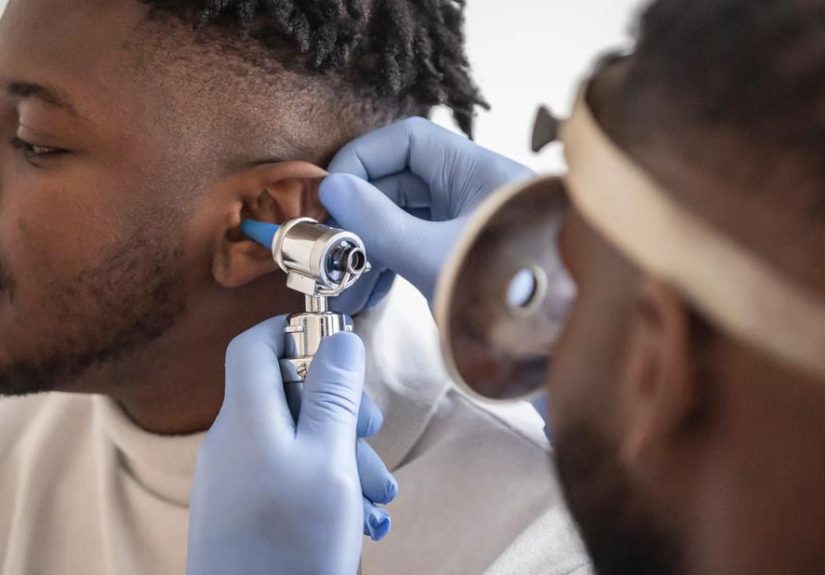
Step 1: Ear exam (otoscopy)
Clinicians look for the obvious conductive culprits: wax, swelling, infection signs, or fluid behind the eardrum. If the canal and eardrum look normal, SSNHL becomes more likely.
Step 2: Basic bedside checks
A simple tuning fork test (when available) can help separate conductive from sensorineural patterns. It’s not the final wordbut it can point the workup in the right direction fast.
Step 3: Hearing test (audiometry)
A hearing test measures how loud different pitches must be before you can hear them. This confirms whether the drop is sensorineural, how severe it is, and which frequencies are affected. That pattern matters for prognosis and next steps.
Step 4: Imaging (when appropriate)
If SSNHL is confirmed (or strongly suspected), clinicians often evaluate for “retrocochlear” problemsissues beyond the inner ear, like a tumor along the hearing nerve. MRI (or sometimes auditory brainstem response testing) may be used depending on the situation.
Step 5: Targeted labs only (not a fishing trip)
Most people with SSNHL won’t need a huge lab panel “just because.” When labs are done, they’re usually guided by your symptoms and risk factorslike signs of autoimmune disease, infection exposure, or other clues from your history.
Treatment: Why Timing Matters (And What’s Actually Used)
Let’s be real: the internet is full of miracle cures for hearing loss that sound like they were invented by a raccoon with a marketing degree. Evidence-based treatment for SSNHL is more straightforwardand much more time-dependent.
Corticosteroids: the main first-line treatment
When SSNHL is suspected or confirmed, clinicians commonly use corticosteroids to reduce inflammation and swelling in the inner ear. Steroids can be given:
- Orally (pills) for a short course
- By injection through the eardrum (intratympanic steroids), which delivers medication closer to the inner ear
- Sometimes as a combination depending on severity and specialist preference
Timing matters. The earlier treatment begins, the more likely it is to help. Delays can reduce the chance of meaningful recovery.
“Salvage” intratympanic steroids
If hearing recovery is incomplete after initial treatment, ENT specialists may offer intratympanic steroid therapy as a salvage option within a specific time window.
Hyperbaric oxygen therapy (HBOT)
Some patients are referred for hyperbaric oxygen therapyusually as an add-on to steroid treatment. It’s not available everywhere, and it’s not used for every case, but it can be considered in certain time frames and clinical scenarios.
Treat the underlying cause when there is one
If testing reveals a specific triggerlike an infection, medication toxicity, or autoimmune processtreatment is tailored accordingly (for example, changing an ototoxic medication or treating an infection). The key is that this is targeted medicine, not “throw everything at the ear and hope.”
What’s usually NOT recommended routinely
Many guidelines advise against routinely prescribing medications like antivirals or certain blood-flow agents for SSNHL when there’s no clear indicationbecause evidence doesn’t support broad, automatic use.
What You Can Do Right Now (Practical, Not Panicky)
While you’re arranging care, you can do a few smart things that help the evaluation go faster and smoother:
- Write down the exact start time (or best estimate) of the hearing change. This is surprisingly important for treatment decisions.
- List symptoms: ringing, fullness, dizziness, nausea, headache, ear pain, recent cold, loud noise exposure, diving/flying, head injury.
- Bring your medication list (including supplements and anything “as needed”).
- Don’t put objects in your ear to “clean it out.” If wax is the cause, you want removal done safely.
- Avoid loud noise and keep headphone volume low. Your ear is already having a bad daydon’t add a soundtrack.
If you’re feeling dizzy, have someone go with you. Balance symptoms can make falls more likely, and it’s just easier to have backup when your body is being dramatic.
Recovery: What to Expect (And What “Improvement” Can Look Like)
Recovery after sudden one-sided hearing loss varies widely. Some people regain hearing fully. Others recover partially and still notice trouble in noisy places. Some have lingering tinnitus even if hearing improves.
Why outcomes vary
- Severity of the initial loss (mild vs. profound)
- How fast treatment begins (for SSNHL)
- Presence of vertigo (often linked with a tougher course)
- Underlying cause (when identifiable)
Follow-up is part of treatment
Even when things improve, follow-up hearing tests matter. They confirm recovery, document any remaining loss, and guide next stepslike hearing rehab options or tinnitus support.
Living well with residual one-sided hearing loss
If hearing doesn’t fully return, there are still effective ways to improve daily life:
- Hearing aids (including options designed for one-sided loss)
- Assistive listening devices (classroom/work/TV tools)
- Communication strategies (positioning in restaurants, reducing background noise, advocating for yourself)
- Tinnitus management (sound therapy, counseling approaches, sleep strategies)
One important mindset shift: “Not perfect” is not the same as “hopeless.” Many people return to school, work, music, sports, and normal conversationswith a few adjustments.
Prevention (Because Your Ears Deserve Better)
You can’t prevent every case of sudden hearing loss, but you can lower the risk of avoidable triggers:
- Protect your hearing around loud sounds (concert earplugs, workplace protection).
- Take sudden ringing after loud noise seriouslythat’s often a warning sign.
- Be cautious with pressure changes (diving safely, don’t forcefully “pop” ears).
- Ask about ototoxic risks if you’re prescribed certain high-risk medications (especially in hospital settings).
- Manage overall health (vascular and inflammatory conditions can affect tiny structures, including the inner ear).
500+ Words of Real-World Experiences: What People Commonly Report
To make the topic feel less abstract, here are experiences that many patients describe (compiled as typical scenariosno two cases are exactly the same). If any of these sound familiar, the takeaway is simple: don’t try to “power through” sudden one-ear hearing loss. Get checked.
Experience 1: “I thought my ear was clogged from allergies.”
A lot of people start here. They wake up with one ear muffled and assume it’s sinus pressure, a cold, or sleeping weird. They chew gum, yawn dramatically, swallow 400 times, and attempt the classic “hold my nose and blow” maneuver like they’re trying to inflate their own skull. Sometimes it really is fluid or Eustachian tube dysfunction and it improves. But many people later say the same sentence: “I wish I’d gone in sooner.” The reason is that SSNHL can feel exactly like congestion at firstfullness, muffled hearing, and a weird sense that the ear needs to pop. If a full day goes by with no improvement (or it’s clearly sudden), most experts recommend same-day evaluation rather than waiting it out.
Experience 2: “It came with ringing that wouldn’t quit.”
Tinnitus often shows up like an unwanted houseguest who refuses to leave. People describe a high-pitched whine, buzzing, hissing, or even a “roaring” sound. Some notice the ringing first and then realize speech sounds distant on that side. That pairingsudden muffled hearing plus new ringingis one of the patterns that makes clinicians more suspicious of SSNHL. The emotional part is real: tinnitus can spike anxiety fast, especially at night. A common tip people share is using gentle background sound (a fan, white noise, quiet music) to make sleep possiblewhile still pursuing medical evaluation urgently. Comfort measures can help you cope; they shouldn’t replace getting assessed.
Experience 3: “The dizziness freaked me out more than the hearing loss.”
Vertigo can make people feel like the room is spinning or like they’re walking on a boat deck. When hearing changes and vertigo appear together, it tends to feel more dramaticand it should be taken seriously. Some people end up sitting on the floor because standing feels unsafe. Others get nausea and can’t focus their eyes well. In these cases, going in quickly matters not only for hearing, but for safety and to rule out other urgent issues. Many people report that once they were evaluated, just having a planhearing test, ENT referral, possible steroids, follow-up testingmade them feel less helpless. The uncertainty is often the worst part.
Experience 4: “Waiting for answers was surprisingly hard.”
Even with quick care, SSNHL can involve a stretch of “watch and re-test.” People talk about the strange mental loop: leaning in with the “good ear,” turning the TV volume up, asking “what?” more than usual, and constantly checking whether things sound better today. Some describe feeling isolated in noisy places because one-sided hearing affects how you locate sound and separate voices from background noise. And yesrestaurants become the final boss. The encouraging part is that many people learn practical strategies: choosing quieter seating, placing the better ear toward conversation, using captions, and being direct with friends (“Hey, my left ear is down right nowcan you sit on my right?”). Recovery isn’t always instant, but support and adaptation can be life-changing while the medical side unfolds.
Bottom line: Sudden hearing loss in one ear is not the time for stubborn optimism. It’s the time for fast evaluation, because the best treatment windowif you need itdepends on time.
Conclusion
Sudden hearing loss in one ear can be caused by something simple like wax or fluidbut it can also signal sudden sensorineural hearing loss (SSNHL), which needs urgent evaluation. The smartest move is to treat a sudden one-sided hearing change as time-sensitive: get examined, confirm the type of hearing loss with audiometry, and follow through on recommended treatment and follow-up testing. If you recover fully, greathigh five your inner ear. If you don’t, you still have real options for hearing support, tinnitus relief, and day-to-day strategies that make life feel normal again.