Table of Contents >> Show >> Hide
- What Is Body Checking?
- Why Do People Body Check?
- When Does Body Checking Become a Problem?
- Body Checking vs. Normal Grooming
- How Body Checking Relates to Eating Disorders and Body Dysmorphic Disorder
- How To Stop Body Checking
- A Practical Daily Script for Tough Moments
- When To Seek Help Right Away
- Final Thoughts
- Real-Life Experiences Related to Body Checking and Recovery
Body checking sounds harmless, almost responsible, like the sort of thing a very organized adult would do right after alphabetizing the spice rack. But in real life, it often looks less like “being aware” and more like getting stuck in a loop: checking the mirror again, pinching your stomach again, comparing your body to old photos again, stepping on the scale like it personally owes you peace of mind. Spoiler: it usually does not deliver.
If you have ever changed outfits three times because one waistband made you spiral, zoomed in on a selfie like you were investigating a crime scene, or judged your whole day based on how your body looked at 7:12 a.m., you are not alone. Body checking is common, especially in people struggling with body image, anxiety, eating disorder symptoms, or appearance-based distress. The good news is that it can be unlearned. And no, you do not need to achieve mystical “I love every angle of myself” status by Friday to make progress.
This guide explains what body checking is, when it becomes a problem, why it can feel impossible to stop, and what actually helps. We will keep it honest, practical, and free of the usual “just love yourself” glitter cannon.
What Is Body Checking?
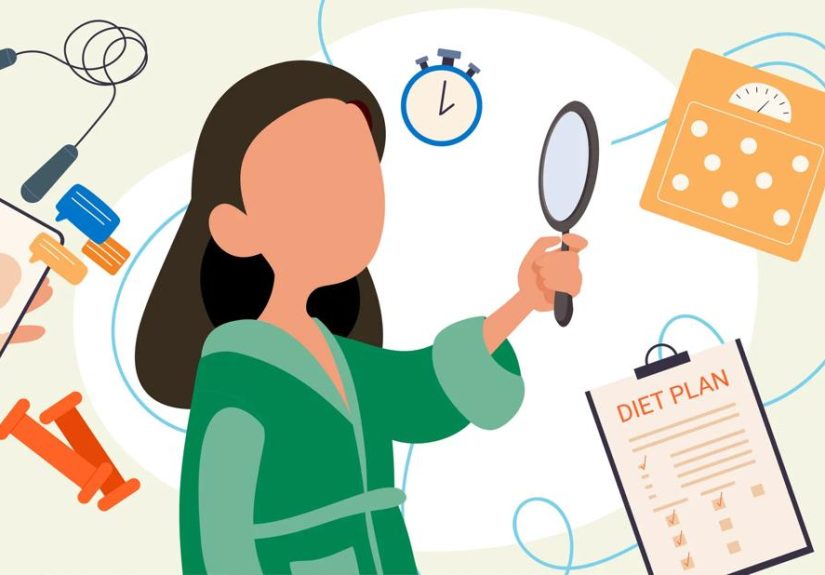
Body checking is the repeated habit of monitoring, measuring, or evaluating your body’s size, shape, weight, or appearance. Sometimes it is obvious, like staring in the mirror and criticizing your stomach. Other times it is sneaky, like absentmindedly touching your jawline, comparing your thighs while walking past a window, or taking “just one more” selfie to see whether your face looks different today.
Not every glance in a mirror counts as a mental health emergency. Most people groom themselves, notice their appearance, and move on with their lives. Body checking becomes more concerning when it is compulsive, emotionally loaded, and tied to self-worth. In other words, you are not simply noticing your body. You are scanning it for proof that you are acceptable, safe, attractive, in control, or “doing well.”
Common examples of body checking
Body checking can show up in many forms, including:
- Looking in the mirror repeatedly or from multiple angles
- Pinching your stomach, arms, waist, or thighs
- Weighing yourself too often
- Measuring body parts with a tape measure or your hands
- Trying on the same clothes to test how they fit
- Taking frequent selfies to assess your body or face
- Comparing yourself to other people in person or online
- Comparing yourself to older photos of your body
- Seeking reassurance from friends, partners, or the internet
- Checking “problem areas” every time you pass a reflective surface
The behavior can happen in seconds or take over an hour. It can look subtle from the outside and feel huge on the inside. That is part of what makes it so frustrating.
Why Do People Body Check?
Most body checking is not about vanity. It is about anxiety, uncertainty, and control. Your brain wants information. It wants to know whether your body has changed, whether you are “good enough,” whether anyone else will notice what you notice. The check seems like it should calm you down. Sometimes it even does, briefly. But that relief fades fast, which is exactly why the cycle repeats.
The false promise of relief
Body checking often works like this:
- You feel uncomfortable, insecure, or anxious.
- You check your body for reassurance.
- You get a moment of relief, or you feel worse and keep checking.
- Your brain learns that checking is the thing to do when discomfort shows up.
- The habit grows stronger.
That is why body checking can become compulsive. It is not random. It is your nervous system trying to reduce uncertainty in a way that backfires.
Triggers that often fuel body checking
Several things can make body checking worse:
- Social media: filtered photos, comparison-heavy feeds, body check videos, transformation posts, and “thinspo” or “fitspo” content
- Stress: when life feels messy, the body can become an easy target for control
- Major body changes: puberty, illness, injury, pregnancy, postpartum changes, aging, medication effects, or changes in activity level
- Comments from others: even “compliments” about weight can keep people hyper-focused on appearance
- Perfectionism: the belief that the body must meet a rigid standard before you are allowed to feel okay
- Anxiety or eating disorder symptoms: body checking often tags along with them like an unwanted roommate
Social media deserves special mention because it can turn ordinary insecurity into a full-time internship. Between curated photos, face-altering filters, body-altering apps, and nonstop comparison, your brain can start treating distorted images as reality. That is a rough deal for anyone’s self-image.
When Does Body Checking Become a Problem?
Here is the simplest test: after you check, do you actually feel better in a lasting way? Or do you feel worse, more preoccupied, and more likely to keep checking?
Body checking is more likely to be a problem when:
- It takes up a lot of time or mental energy
- Your mood depends on what you see or think you see
- You avoid social events because of how your body feels that day
- You cannot focus because you are evaluating your appearance
- You change how you eat, exercise, or dress based on the check
- You need more frequent checking to feel calm
- You feel ashamed, panicky, or disgusted after checking
- The habit feels automatic or hard to stop
If any of that sounds familiar, the issue is not “You care too much how you look.” The issue is that body checking may be acting like a compulsive coping strategy. It promises control while quietly stealing peace.
Body Checking vs. Normal Grooming
This distinction matters because the goal is not to become a person who never notices their body. You are allowed to fix your hair, put on sunscreen, and ask whether a shirt has coffee on it. That is called living in society.
Normal grooming is practical and limited. Body checking is repetitive and emotionally charged. Grooming says, “Do I look put together enough to leave the house?” Body checking says, “Am I acceptable as a human being today?” One of these is helpful. The other is an exhausting audition you never signed up for.
How Body Checking Relates to Eating Disorders and Body Dysmorphic Disorder
Body checking is often linked to eating disorders, body dysmorphic disorder, anxiety, and related distress around appearance. It does not automatically mean you have a diagnosis, but it can be a meaningful warning sign.
With eating disorders, body checking can become part of a larger pattern that includes food rules, fear of weight gain, compulsive exercise, meal skipping, bingeing, purging, or extreme body dissatisfaction. In body dysmorphic disorder, the person becomes intensely preoccupied with a perceived flaw in appearance and may engage in repeated behaviors like mirror checking, comparing, camouflaging, or asking for reassurance.
One important point: you cannot tell by looking at someone whether they are struggling. People of any body size, gender, race, or age can experience body checking and eating disorder symptoms. This is one reason the habit gets missed. People assume suffering has a certain look. It does not.
How To Stop Body Checking
Stopping body checking is not about willpower alone. It is about changing the loop: trigger, check, temporary relief, repeat. The more you interrupt that loop, the weaker it becomes.
1. Start by noticing, not judging
Before you can reduce the habit, you need to spot it. For a few days, keep a simple log. Write down:
- What you did
- When it happened
- What you were feeling before it happened
- What you hoped the checking would tell you
- How you felt afterward
You are not collecting evidence for a trial. You are identifying patterns. Maybe you check more after scrolling social media, before meals, after arguments, while getting dressed, or when you feel lonely. That information is gold.
2. Make checking less convenient
Habits thrive when they are easy. So make body checking slightly annoying. Move the scale. Cover or relocate mirrors that trigger spirals. Stop keeping “goal clothes” in plain sight. Unfollow accounts that make you feel like your body is under surveillance. Turn off the front camera preview if selfies send you into critique mode.
The goal is not punishment. It is friction. Even a small pause between the urge and the action can help you choose something different.
3. Set a boundary around the behavior
Some people do well with a gradual reduction plan. For example, if you weigh yourself five times a day, cutting to once a day is a meaningful step. If you inspect your stomach in every reflective surface, you might choose one mirror check in the morning and then practice walking past the rest.
Think of it like volume control, not an all-or-nothing personality makeover.
4. Replace checking with a grounding action
You cannot remove a coping habit without giving your brain another way to regulate discomfort. Good replacements include:
- Taking three slow breaths
- Placing both feet on the floor and naming five things you can see
- Texting a safe friend about what you feel instead of what you look like
- Stretching, walking, or changing rooms
- Listening to music or a short guided meditation
- Using a neutral phrase like, “My body is not a problem to solve right now”
Will it feel awkward at first? Absolutely. Most healthy things do. Salads, therapy intake forms, and setting boundaries all prove this.
5. Challenge the thought behind the urge
Body checking usually sits on top of a thought. Examples:
- “I need to know if I look bigger today.”
- “If I do not check, something bad will happen.”
- “I cannot relax until I know how I look.”
- “If my body changed, I need to fix it immediately.”
Ask yourself:
- Is this thought a fact or a fear?
- Has checking ever truly solved this problem?
- What would I say to a friend in this moment?
- What do I need right now besides appearance information?
This is one reason cognitive behavioral therapy, or CBT, can be so effective. It helps separate thoughts from facts and teaches you how to respond differently to distorted beliefs.
6. Clean up your environment
Your brain does not exist in a vacuum. If your online feed is a parade of body comparison, your body image probably will not improve because you bought a nicer water bottle.
Audit your environment. Keep the accounts that make you feel informed, inspired, funny, connected, or human. Mute the ones that make you feel ranked, reduced, or behind. Choose clothes that fit your current body instead of treating your closet like a passive-aggressive motivational speaker.
7. Get professional support when the pattern is strong
If body checking is tied to intense anxiety, food restriction, bingeing, purging, compulsive exercise, depression, panic, or obsessive thoughts, reaching out to a therapist or eating disorder specialist is a smart move. It is not overreacting. It is maintenance for your mind.
Support may include therapy, nutritional support, medical evaluation, or a combination of care. The earlier you address the cycle, the easier it can be to interrupt.
A Practical Daily Script for Tough Moments
When the urge to body check hits, try this:
“I am having the urge to check my body because I feel anxious and uncertain. That makes sense. But checking will probably give me a few seconds of relief and then pull me deeper into the loop. I am going to pause, breathe, and do one thing that helps me feel grounded instead.”
Will this feel cheesy the first few times? Probably. But cheesy and helpful beats dramatic and miserable.
When To Seek Help Right Away
Please reach out to a qualified professional sooner rather than later if body checking is affecting your eating, daily functioning, mood, relationships, or safety. The same is true if you are dealing with rapid weight change, extreme fear of weight gain, purging, compulsive exercise, or thoughts of harming yourself. You do not need to wait until things look “serious enough.” If it is disrupting your life, it matters.
Final Thoughts
Body checking often disguises itself as self-awareness, discipline, or motivation. But if it leaves you more anxious, more self-critical, and less present in your life, it is not helping. It is just a loop with good branding.
You do not need to win a daily war against your reflection to feel okay in your body. You can build something steadier: less surveillance, less comparison, more neutrality, more trust. The goal is not to never notice your body again. The goal is to stop making your body the referee of your worth.
And that, thankfully, is a habit your brain can learn.
Real-Life Experiences Related to Body Checking and Recovery
These are composite experiences based on common patterns people describe when dealing with body checking. They are included here to make the topic feel more human, because sometimes a definition explains the habit, but a lived experience explains the ache.
Experience 1: The mirror marathon before work
One person described mornings as a full-contact sport with reflective surfaces. She would get dressed, catch her reflection, change shirts, check again, turn sideways, suck in, change pants, and restart the entire sequence. On “bad body days,” she could be late to work by 20 minutes and still leave the house feeling awful. What made the cycle so tricky was that she thought she was being practical. In her mind, she was just trying to “look normal.” But underneath that was a fear that if her body looked wrong, the whole day would go wrong too. Once she started tracking the habit, she realized the urge spiked on stressful mornings, not just appearance-related ones. That changed everything. The problem was not the mirror. The mirror was just the stage where anxiety did its monologue.
Experience 2: The social media spiral
Another person noticed that her body image tanked every evening, right after an innocent little scroll that somehow lasted 58 minutes. She followed fitness influencers, “what I eat in a day” creators, and people who posted transformation photos like it was their civic duty. After scrolling, she would examine her stomach in the bathroom mirror, compare her legs to old photos, and promise herself she would “be better” tomorrow. Better usually meant stricter, meaner, and hungrier. What finally helped was not some magical burst of confidence. It was environmental cleanup. She unfollowed the accounts that turned her body into a problem to fix, filled her feed with content unrelated to appearance, and noticed that the urge to inspect herself started losing steam. Not overnight, but enough to prove the point: comparison had been feeding the behavior all along.
Experience 3: The gym check that stopped being about fitness
A guy in recovery said he originally thought body checking was “not his thing” because he was not weighing himself obsessively. Then he realized he was checking in a different costume. He flexed in mirrors at the gym, measured progress by how “flat” or “tight” he looked, and skipped social plans if he felt bloated. If a workout left him feeling pumped, he was on top of the world. If it did not, his mood crashed. He called it motivation for years, but eventually recognized that his self-worth was hanging from a very flimsy hook. In therapy, he learned to separate movement from surveillance. Exercise became something he did with his body instead of against it. That shift sounds small, but to him it felt like getting his weekends back.
Experience 4: Recovery felt boring at first, then peaceful
Several people describe the early phase of reducing body checking as weirdly empty. When you stop checking, your brain may complain loudly. It may tell you that you are being irresponsible, that you need one more look, one more number, one more confirmation. At first, not checking can feel less like freedom and more like forgetting your phone at home. But over time, many people say the same thing: life gets quieter. They spend less time negotiating with mirrors. They buy clothes for comfort instead of punishment. They stop canceling plans because of how their stomach looks after lunch. They become more available for actual life, which turns out to be far more interesting than doing emotional taxes in front of a bathroom mirror.