Table of Contents >> Show >> Hide
- Why people worry about microwaving Styrofoam
- Is microwaving Styrofoam ever safe?
- How to tell whether a foam container belongs in the microwave
- The safest alternative: move the food
- What can go wrong if you microwave the wrong foam container?
- Common questions about microwaving Styrofoam
- Best practices for reheating food without the drama
- The bottom line on microwaving Styrofoam
- Real-life experiences with microwaving Styrofoam: what people usually learn the hard way
Note: People often say “Styrofoam” when they really mean foam takeout boxes, coffee cups, or expanded polystyrene food containers. In normal kitchen talk, that’s fine. In safety talk, the important question is simpler: Does the container clearly say microwave-safe?
If your lunch came in a white foam clamshell and your microwave is already humming in anticipation, pause for one tiny moment. This is one of those kitchen habits that feels harmless until your noodles come out piping hot, the container looks slightly wilted, and now you’re staring at lunch like it betrayed you. Fair.
The short version is this: you should not microwave Styrofoam or foam food containers unless they are specifically labeled microwave-safe. Some foam containers are made to handle microwave heat for a short period. Many are not. And when they are not, they can soften, crack, warp, or release unwanted chemicals into your food. None of that makes dinner more exciting in a good way.
That does not mean one accidental 20-second reheat automatically turns your leftovers into a science experiment gone rogue. But it does mean the safer everyday habit is to transfer food into glass or ceramic before reheating. It is cleaner, more predictable, and much less likely to leave you wondering whether your soup now contains a side dish of melted container.
Why people worry about microwaving Styrofoam
There are really two issues here: container performance and chemical migration.
First, foam containers are not all built the same. Some are designed only to hold warm food briefly, not to survive microwave reheating. Microwave ovens do not directly heat the container the same way they heat food, but the food itself can get hot enough to damage the container. That is why foam trays, takeout boxes, and flimsy single-use cups may bend, sag, or partially melt even if the microwave itself seems innocent.
Second, polystyrene-based foam has long raised questions about chemical migration, especially when it is heated. The chemical most often mentioned is styrene. That is where the concern comes from, and it is the reason many experts take a cautious “why risk it?” approach. The concern becomes more relevant with hot, fatty, oily, or acidic foods, because those conditions can be harder on packaging than a quick reheat of something mild and watery.
So no, the issue is not that microwaves magically “radiate poison” into food. The issue is that heat plus the wrong container is a bad partnership. Think of it like wearing flip-flops to hike a mountain. Could you do it? Possibly. Is it the smartest equipment choice? Absolutely not.
Is microwaving Styrofoam ever safe?
The only reasonable yes
If the container is clearly labeled microwave-safe, it has been made and tested for that kind of use. That label matters. It is not decorative. It is the closest thing to the packaging waving a little flag and saying, “I was built for this.”
If you do see that label, you still want to use common sense. Microwave-safe does not mean indestructible. It does not mean oven-safe. It does not mean “reheat greasy lasagna for 12 minutes and hope for the best.” It simply means the container is intended for microwave use under normal conditions.
The much more common no
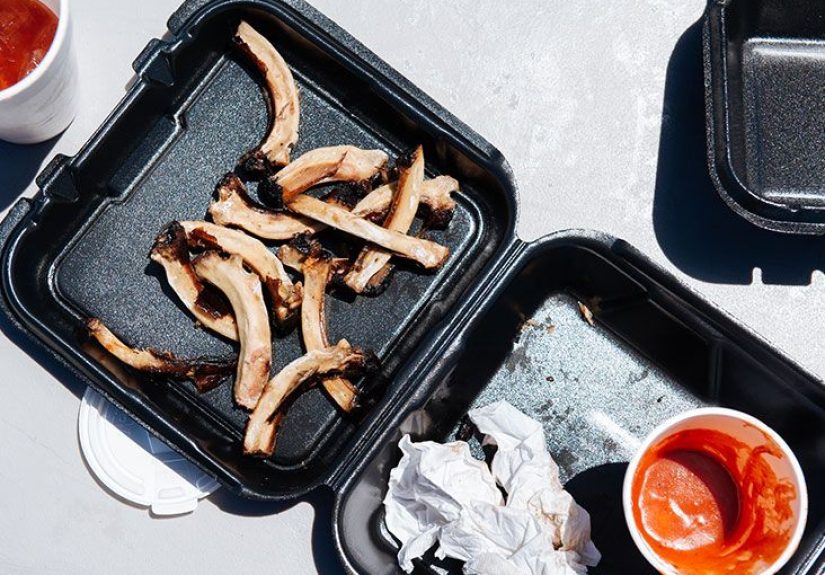
If there is no microwave-safe label, skip it. Restaurant carryout boxes, foam cups, grocery-store meat trays, margarine tubs, whipped topping bowls, and other single-use containers are exactly the kinds of items food-safety experts warn people about. These are convenience containers, not long-term cookware.
That is especially true when reheating:
- soups or stews that can get extremely hot around the edges
- greasy foods like pasta with cream sauce, fried rice, curry, or leftover pizza toppings
- foods that need more than a very short burst of heat
- containers that are old, cracked, bent, or scratched
How to tell whether a foam container belongs in the microwave
Here is the practical checklist:
1. Look for the words “microwave-safe”
This is the main thing. Do not assume a container is safe just because it held hot food at the restaurant. Serving hot food and reheating hot food are not the same job.
2. Check the bottom and the lid
Sometimes the base and lid are made from different materials. A lid that looks innocent may warp faster than the bowl underneath it. If one part is not labeled, treat the whole setup like a no.
3. Watch for warning signs
If the container is flimsy, scratched, stained, brittle, or oddly shiny after previous use, retire it. A tired old takeout box is not the hero your leftovers need.
4. Consider what you are reheating
A plain baked potato is one thing. A creamy chowder, buttery noodles, or oily takeout stir-fry is another. The richer and hotter the food, the less I would trust foam.
The safest alternative: move the food
If there is any doubt, transfer the food into:
- glass
- ceramic
- microwave-safe stoneware
- a clearly labeled microwave-safe plastic container designed for reheating
Glass and ceramic usually win the popularity contest for a reason. They are sturdy, heat-tolerant, and far less likely to leave you second-guessing the container. They also tend to heat food more predictably during normal reheating.
If you are reheating leftovers, cover the dish loosely, stir or rotate partway through, and make sure the food is heated evenly. For safety, leftovers should reach 165°F. That matters because microwaves are famous for creating hot spots and cold spots. A steaming corner does not always mean the center is ready.
What can go wrong if you microwave the wrong foam container?
Melting or warping
This is the obvious one. The container may soften, bow inward, or collapse under the heat of the food. That can create spills, burns, and a spectacular loss of confidence in your lunch.
Chemical migration
This is the less visible issue. When foam or plastic is heated beyond what it was designed to handle, some chemicals may move from the packaging into the food. That is the scenario food-safety guidance is trying to help you avoid.
Uneven reheating
Food can heat unevenly in flimsy containers, especially when piled high. One bite may be cold, the next may be lava, and the center may still be hiding in the temperature danger zone. That is annoying for quality and not ideal for food safety.
Pressure problems
Closed or poorly vented containers can trap steam. Even a microwave-safe lid needs venting. Otherwise, your leftovers may attempt a dramatic exit the moment you peel the top back.
Common questions about microwaving Styrofoam
Can I microwave a foam cup of coffee?
Only if it is labeled microwave-safe. Even then, it is smarter to pour the coffee into a mug. Hot liquids can create very hot zones quickly, and foam cups are not something worth gambling on for a caffeine refill.
Can I microwave takeout for just 30 seconds?
Maybe the container will survive. Maybe it will not. The short time helps, but it does not replace the need for a microwave-safe label. A brief shortcut is still a shortcut.
What about instant noodles or soup in a foam bowl?
Follow the package instructions exactly. Some products are designed for microwave preparation; others are only meant for adding hot water or for heating after transfer. The instructions are not there to waste ink.
Can I put Styrofoam in the oven instead?
No. That is a faster route to warping, melting, and kitchen regret.
Is all foam the same?
No. That is the whole problem. Some foam food containers are manufactured for short microwave use. Many are not. Since you usually cannot tell by looks alone, the label matters more than guesswork.
Best practices for reheating food without the drama
- Move food from foam into glass or ceramic whenever possible.
- Cover loosely with a microwave-safe lid, parchment, or paper towel.
- Stir, rotate, or pause halfway through reheating.
- Use shorter bursts rather than one heroic marathon session.
- Check that leftovers are hot all the way through.
- Let the food stand briefly after heating so the temperature evens out.
This routine is not glamorous, but it works. It protects the food, protects the container situation, and protects your microwave from becoming a soup-splattered confession booth.
The bottom line on microwaving Styrofoam
If you remember only one rule, make it this: do not microwave Styrofoam or foam food containers unless they are clearly labeled microwave-safe.
That label is the dividing line between “possibly designed for reheating” and “random lunch roulette.” Even with labeled containers, glass and ceramic are still the safest and least fussy options, especially for hot, fatty, or longer-cooking foods.
In other words, your leftovers deserve better than a mystery container. Transfer first, microwave second, eat in peace.
Real-life experiences with microwaving Styrofoam: what people usually learn the hard way
Ask enough people about microwaving Styrofoam, and you start hearing the same little kitchen stories over and over. Nobody frames them as a life-changing event, but nearly everyone remembers the moment they realized a foam container and a microwave are not always a happy couple.
One common experience is the “it looked fine until I picked it up” moment. Someone reheats leftover soup or noodles in a foam clamshell, opens the microwave, and everything appears normal. Then they slide a hand underneath the container, and the bottom feels softer than expected, almost like it has turned into a warm paper towel with ambitions. The food may still be edible, but trust in the container is suddenly gone. That alone is reason enough to switch to a bowl next time.
Another classic is the greasy takeout test. A person brings home pad thai, butter chicken, Alfredo pasta, or some other deliciously rich leftover, leaves it in the original foam box, and reheats it because they are hungry and not in the mood to wash a dish. Halfway through, the smell changes a little. Not burnt, exactly. Just… plasticky. That is usually the moment when people realize the container is part of the meal now, and not in a way that would impress a chef.
Dorm rooms are full of these lessons too. Students often become accidental experts in what should not go in a microwave simply because convenience is king when your schedule is chaos and your sink is emotionally unavailable. Someone tries to reheat pizza in a foam tray. Someone else warms up a coffee in a foam cup. A third person notices the lid puckering like it just heard bad news. By mid-semester, there is usually one communal rule everyone somehow understands: use a mug, use a bowl, and stop testing fate with takeout packaging.
Office kitchens tell a similar story. A coworker reheats lunch in the container it came in, then discovers one corner has buckled, the sauce is leaking, and the microwave turntable looks like it lost a food fight. That situation is rarely dangerous in a dramatic sense, but it is messy, annoying, and exactly the kind of thing that makes people start keeping a glass container at work.
There are also the people who microwave foam once, nothing bad happens, and they conclude it is always fine. That is probably the most misleading experience of all. The fact that one container survives one reheat does not mean every foam container is microwave-safe. It only means you got away with it that time. Kitchen habits built on luck tend to expire sooner or later.
The smartest experience people report is the one where they stop making the decision while hungry. They create a tiny routine: unpack takeout, transfer leftovers to glass, label the container, reheat later without thinking twice. Suddenly there is no guesswork, no strange odor, no saggy container, and no debate about whether the lunch is safe. It is not glamorous, but it is peaceful. And in the world of weekday leftovers, peaceful is a very underrated luxury.