Table of Contents >> Show >> Hide
- Meet IVAS: The Army’s High-Tech Helmet
- What the Army’s Augmented Reality Helmets Actually Do
- The Upside: Why the Army Loves the Idea
- The Downside: Headaches, Bugs, and Budget Drama
- What’s Changing: A Family of Systems, Not Just One Helmet
- What It All Means for the Future Battlefield
- Real-World Experiences with Army Augmented Reality Helmets
- So, Should You Be Impressed or Concerned?
If you’ve ever wished your favorite first-person shooter HUD could follow you into real life, the U.S. Army is already on it.
For years, the service has been working on high-tech augmented reality helmets and goggles that promise to give soldiers an
always-on stream of tactical information: maps, targets, teammates’ locations, even what’s happening outside a vehicle’s armor.
The flagship effort is called the Integrated Visual Augmentation System, or IVAS. On paper, it looks like the Swiss army knife
of soldier gear. In practice, it’s been a mix of big ambitions, painful headaches (sometimes literally), and constant redesigns.
Here’s what you need to know about the Army’s augmented reality helmets right nowwhat they do, why they matter, and why the story
is still very much in progress.
Meet IVAS: The Army’s High-Tech Helmet
IVAS in plain English
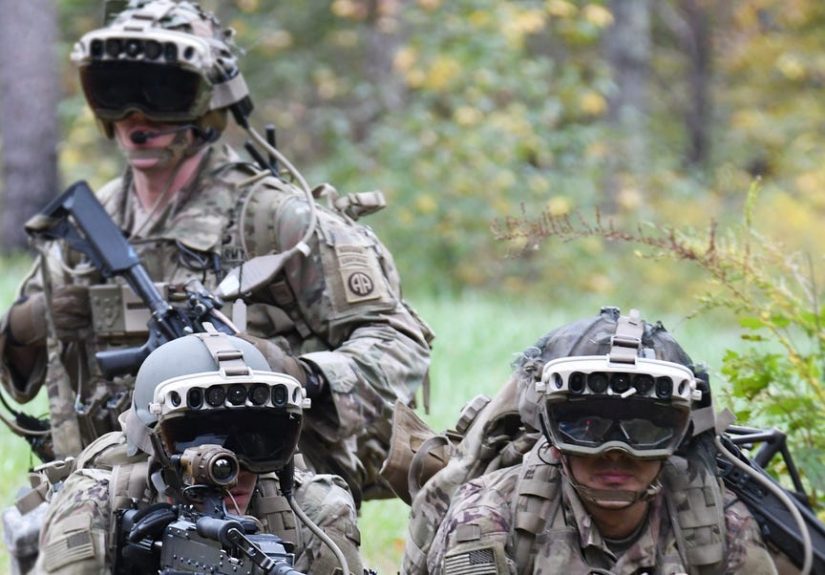
IVAS is essentially a ruggedized, militarized augmented reality headset attached to a combat helmet. It started as a customized
version of Microsoft’s HoloLens 2 mixed-reality device, built to survive mud, dust, recoil, and being tossed into the back of
a Bradley or Stryker instead of an office conference room. The current system combines:
- A visor or goggle-style display that overlays digital graphics in front of the soldier’s eyes.
- A “puck” computer and power pack mounted on the helmet or body armor.
- A radio that links every helmet into a shared digital network.
- Connections to external sensors, like weapon-mounted optics or vehicle cameras.
The goal is simple to describe and hard to build: give troops better situational awareness, faster decision-making, and more
precise targeting without burying them in gadgets or forcing them to stare at a handheld screen.
How we got here: a quick timeline
The Army kicked off the IVAS journey in 2018 with a major contract to Microsoft to adapt HoloLens for close-combat forces.
Early versions, dubbed IVAS 1.0 and 1.1, were used mostly for training and experimentation while the more advanced 1.2
hardware was redesigned to be lighter, more rugged, and easier on soldiers’ eyes and necks.
The original plan was to field IVAS widely by 2021. That slipped as testing revealed comfort issues, reliability problems,
and concerns from both the Pentagon’s testers and Congress. Fielding is now tied to newer prototypes, and the Army has been
running multiple user assessments with combat units to decide what to keep, what to fix, and what to scrap.
In 2025, the storyline got a new twist: defense-tech company Anduril joined the program, taking a leading role in future
hardware and software development while still working with Microsoft’s cloud and AR tech. At the same time, the Army
started talking about “IVAS Next” and a follow-on effort called Soldier Borne Mission Command (SBMC), signaling that the
concept is bigger than one headset design.
What the Army’s Augmented Reality Helmets Actually Do
Heads-up display for the battlefield
At its core, an IVAS-style helmet is a flying (or walking) heads-up display. Instead of checking a paper map or a wrist-mounted
GPS, a soldier can see navigation cues and waypoints projected into their field of view. The system can:
- Show a 3D map of the terrain or building layout.
- Mark friendly units (blue force tracking) and potential threats.
- Highlight key objectives, routes, and danger areas.
- Share information across a squad in near real time.
The idea is to keep troops “heads up, eyes out,” instead of hunched over handheld devices or constantly asking for updates on the radio.
Night vision, thermal vision, and “see-through” capability
Army augmented reality helmets also integrate night-vision and thermal imaging, replacing traditional green-tinted goggles with
full-color or white-hot imagery layered over the real world. With the right sensors tied in, soldiers can:
- See at night with improved clarity and contrast.
- Detect heat signatures, such as vehicles or people in low-visibility conditions.
- View video feeds from cameras mounted on the outside of armored vehicles, allowing them to “see” through the metal hull.
The Army has already tested IVAS in combat vehicles so riders can look “through” the armor and maintain 360-degree awareness
without popping hatches or relying solely on periscopes.
Built-in training simulator
One of the flashier features is the training mode. IVAS 1.2 includes a “Squad Immersive Virtual Trainer” that can project
holographic enemies, buildings, and obstacles into the real environment. In theory, a unit can run realistic scenarios on
its home training field without building huge sets or traveling to specialized facilities.
For commanders, that means more repetitions with detailed after-action reviews, since the helmets can record what each soldier
saw and did. For soldiers, it means your regular training range could suddenly feel like a video game levelminus the respawn button.
The Upside: Why the Army Loves the Idea
Faster decisions and better coordination
Modern combat is a data problem as much as a firepower problem. Units are flooded with drone feeds, sensor reports, radio calls,
and digital messages. An augmented reality helmet is one way to tame that chaos by pulling everything into a unified view that
every soldier shares.
In concept, IVAS-style headsets can:
- Reduce the time from spotting a threat to reacting to it.
- Help small units operate more independently with clear visual cues and shared maps.
- Cut down on miscommunication and “where are you again?” moments.
Army leaders have repeatedly described IVAS as potentially “transformational” for lethality and survivabilityif the hardware
can match the software’s promise.
One device instead of a tangle of gear
Historically, soldiers have carried separate gadgets for GPS, night vision, thermal sights, and digital maps. Augmented reality
helmets aim to consolidate all of that into one integrated system. That’s appealing not only for convenience but also for
logistics, maintenance, and training.
In the long run, a modular AR helmet could plug into future sensors and AI toolslike automated target recognition or smarter
threat warningswithout redesigning everything from scratch.
The Downside: Headaches, Bugs, and Budget Drama
When your helmet makes you less combat-ready
The biggest headline problem for IVAS has been human factors. Soldiers in early large-scale tests reported headaches, eye strain,
neck pain, nausea, and general discomfort after wearing the goggles for extended periods. Pentagon test reports even warned of
“mission-affecting physical impairments” and noted that performance in some training scenarios actually got worse with IVAS on.
In plain language: if your fancy augmented reality helmet makes soldiers slower, dizzier, and less accurate on the range,
you’ve got a problem. That feedback pushed the Army and Microsoft back to the drawing board for IVAS 1.2, with changes to
weight distribution, optics, and software.
Schedule slips and sticker shock
IVAS is not a small side projectit’s a multibillion-dollar modernization effort. Estimates have put the potential value
of the program in the tens of billions of dollars over its life cycle, and it’s been described as one of the Army’s
top-priority soldier systems.
With that kind of money on the line, delays and negative test results attract scrutiny fast. Oversight bodies and lawmakers
have pressed the Army to show that IVAS will actually deliver improved combat performance, not just cool tech demos. Some
analysis has even questioned whether the Army should open up future versions to more competitors instead of sticking with a
single vendor approach.
That pressure is partly why you now see Anduril and other firms in the mix for “IVAS Next” and SBMC, with a focus on faster
prototyping sprints and more direct soldier feedback.
What’s Changing: A Family of Systems, Not Just One Helmet
One of the most important shifts in the Army’s thinking is that “soldier AR” may not be a single, universal helmet that every
troop wears all the time. Recent commentary points toward a future where different units might use different AR solutions,
ranging from full helmets to lighter glasses or visorsdepending on mission, environment, and role.
The SBMC concept reflects that change in mindset. Instead of treating the helmet as the star of the show, the Army is now
emphasizing a fused digital awareness system that can plug into emerging modular sensors, AI-powered analytics, and
battlefield networks. The helmet is still importantbut it’s a window into a much larger data and command ecosystem.
In other words, the real competition isn’t just which company builds the best visor; it’s who can deliver the most useful
information to that visor without overwhelming the human wearing it.
What It All Means for the Future Battlefield
If the Army can solve the comfort and reliability issues, augmented reality helmets could reshape how small units move and fight.
Imagine patrols where every soldier instantly sees the same updated map; aircrews that can dismount with the same helmet they
used in the cockpit; and medics who get step-by-step AR guidance while treating casualties under fire.
But there are also big questions:
- Cognitive overload: How much information is too much before it distracts rather than helps?
- Cybersecurity: What happens if an adversary jams or hacks the underlying networks?
- Dependence on tech: Will soldiers stay proficient at “analog” skills if they get used to digital overlays for everything?
The Army’s cautious, test-heavy approach with IVAS 1.2 and beyond shows that the service knows it’s walking a fine line.
AR helmets could be a force multiplieror an expensive distractiondepending on how well they fit the realities of combat.
Real-World Experiences with Army Augmented Reality Helmets
Because the program is still in testing, most of what we know about day-to-day experiences with the Army’s augmented reality
helmets comes from user assessments, controlled trials, and limited deployments rather than full combat use. Still, those
snapshots tell a surprisingly rich story about what it’s like to wear IVAS in the real world.
In the field: excitement and eye strain
During user assessments at places like Fort Drum and other training ranges, squads ran mock missions wearing IVAS 1.2
prototypes. Soldiers reported that the navigation and mapping tools were especially helpful in complex terrain, where
traditional paper maps and hand signals can get messy fast. Waypoints and unit icons floating in their field of view
cut down on the need to constantly check a handheld device or yell across a formation.
At the same time, the hardware isn’t invisible. Even after redesigns, troops have talked about pressure points on the head,
limited peripheral vision, and the simple reality that adding anything to a helmet changes how it feels after hours of
patrolling, crawling, or riding in a vehicle. Testing reports and media coverage have highlighted cases where prolonged use
led to headaches, nausea, or eye fatigueespecially when the display was too bright, misaligned, or cluttered with graphics.
Mounted and dismounted: seeing through steel
One of the most eye-opening experiences comes when IVAS helmets are paired with cameras mounted around combat vehicles.
Soldiers inside an armored hull can look around and see a stitched-together view of the outside world, almost as if the
steel walls were transparent. That’s a huge improvement over narrow periscopes or small viewports, and it can make it
easier to spot ambush points, obstacles, or civilians near the vehicle.
Troops who’ve tried this capability describe it as both empowering and slightly surreal. You’re physically inside the vehicle,
but your brain feels like you’re standing outside. That can boost awareness but also demands careful training so soldiers
don’t get disoriented when jumping in and out of mixed-reality views.
Border tests and training ranges: learning what not to do
In some recent test deployments, including work along the U.S.–Mexico border and other operational environments, soldiers
used IVAS to monitor areas, move through challenging terrain, and coordinate with other units. Reports from these events
underscore a recurring theme: the tech is powerful, but the user experience matters just as much as raw features.
For example, when too many icons or alerts clutter the display, soldiers spend more time mentally sorting through symbols
than watching their surroundings. When battery life falls short, units have to juggle power management instead of focusing
on the mission. And when the fit isn’t dialed in, small issueslike a slightly crooked visor or bouncing cablebecome big
annoyances over a long patrol.
How soldier feedback is reshaping the system
The most encouraging part of the story is how central soldier feedback has become to IVAS’s evolution. User assessments
don’t just collect complaints; they feed directly into design changes. When soldiers said menus were too complex, developers
simplified the interface. When troops flagged weight and balance as major issues, engineers shifted components and looked
for lighter parts.
That iterative looptest, complain, tweak, repeatmay be the real “secret sauce” behind any future success. Augmented reality
helmets aren’t going away; if anything, they’re likely to spread across more units and more roles as the technology matures.
The question is not whether the Army will use AR, but what version of AR will actually earn soldiers’ trust. Right now, the
answer is being written one user assessment at a time.
So, Should You Be Impressed or Concerned?
Both reactions are fair. The Army’s augmented reality helmets represent some of the most ambitious wearable tech ever aimed
at ordinary troops. The potential is enormous: faster decisions, better coordination, richer training, and a more connected
battlefield where every soldier has a digital edge.
But the challenges are just as real. Human bodies don’t magically adapt to new gadgets because a program office wants them to.
Eyes get tired. Necks get sore. Complexity creeps in. And adversaries get a votethey will jam, spoof, and probe any system
that becomes central to U.S. warfighting.
If the Army and its industry partners can dial in comfort, simplicity, and resilience, augmented reality helmets could become
as standard as night-vision goggles. If not, they may end up as an expensive lesson in the limits of “there’s an app for that”
thinking. For now, IVAS and its successors are a live experiment in what happens when the battlefield meets the mixed-reality age.