Table of Contents >> Show >> Hide
- The simple reason bruises change color
- The bruise “paint chart”: what each color usually means
- Why one bruise can show multiple colors at the same time
- Why your bruise colors might not match your friend’s bruise colors
- Can you tell how old a bruise is by its color?
- When bruising is worth checking out
- What to do for a normal bruise (the “be nice to your tissues” plan)
- FAQ: quick bruise questions people secretly Google at 1:00 a.m.
- 500-word experiences section: what people notice about “rainbow bruises” in real life
- Conclusion
One minute you bonk your shin on the coffee table. The next, your leg is hosting what looks like a tiny
modern-art exhibit: red, purple, blue, green, yellow… and maybe a weird brown edge for dramatic flair.
If you’ve ever stared at a bruise and thought, “Is my skin trying out for a rainbow?”you’re not alone.
The good news: most bruises are normal. The even-more-interesting news: the colors aren’t random.
They’re basically a visible timeline of your body doing cleanup after a small “internal spill” under the skin.
Let’s break down what’s happening, why bruises can show multiple colors at once, and when bruising deserves
a quick check-in with a healthcare professional.
The simple reason bruises change color
A bruise (also called a contusion or ecchymosis) happens when a bump, hit, or pressure damages tiny blood
vessels (capillaries) under your skin. Blood leaks out into nearby tissues, but the skin doesn’t breakso the blood
gets “stuck” underneath like a hidden ink spill.
Over the next several days, your body sends in cleanup crewsespecially immune cells called macrophagesto break down
and recycle the leaked blood. As the blood’s pigments change during that breakdown, your bruise changes color.
Think of it like your body composting a mini blood puddle: same material, different stages.
The bruise “paint chart”: what each color usually means
Bruise colors don’t follow a perfect schedule (more on that soon), but there’s a common pattern. Here’s the classic
progressionand the biology behind it.
| Typical timing (very approximate) | Common color | What’s happening underneath |
|---|---|---|
| Minutes to hours | Red or pink | Fresh blood has leaked into the tissue; early inflammation starts. |
| Hours to 1–2 days | Blue, purple, or very dark | Oxygen levels in the trapped blood change and light scatters through skin, making it look darker. |
| 2–5 days | Green | Hemoglobin is being broken down into pigments such as biliverdin (green). |
| 5–10 days | Yellow | Biliverdin is further processed into bilirubin (yellow). |
| 1–2+ weeks | Brown, tan, or fading | Leftover iron-containing pigments (like hemosiderin) and residual staining fade as tissue clears. |
Why purple/blue happens so fast
Early bruises often look purple, blue, or almost black because of how light passes through skin and hits pooled blood.
The deeper the blood sits, the more the color can skew darker or bluish. That’s also why a bruise can look different
depending on lightingbathroom fluorescent lighting is basically the villain of accurate bruise color judgment.
Why green and yellow are a big deal (and totally normal)
The green and yellow phases are your body’s “recycling program” in action. As red blood cells break down, the protein
hemoglobin is dismantled into components that the body can reuse or remove. Along the way, pigments appearmost famously
biliverdin (green) and bilirubin (yellow). If your bruise turns green or yellow, it’s usually a sign
it’s healingnot auditioning for a traffic light.
Why one bruise can show multiple colors at the same time
If bruises changed color like a single uniform screen saver, life would be simpler. But bruises are messy because
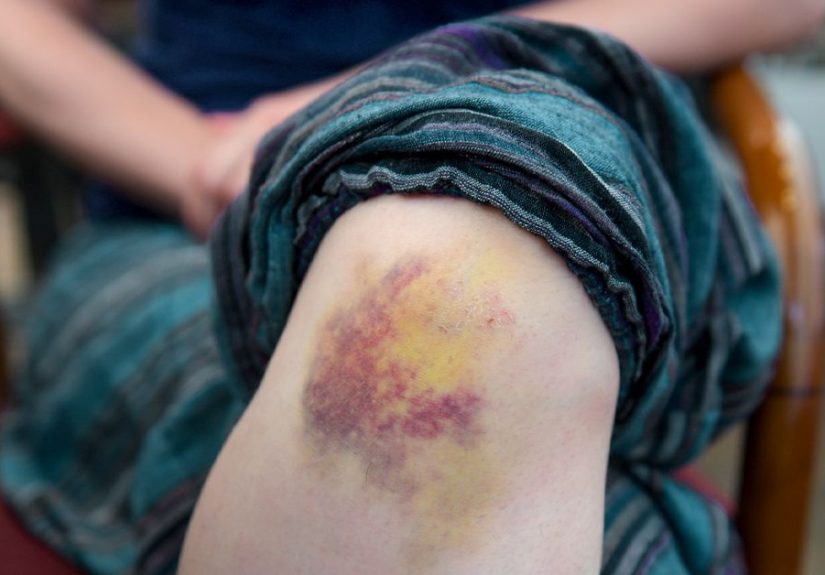
real bodies are messy. It’s common to see a bruise with a purple center, green edges, and a yellow halo like a
moody sunset. That happens because:
-
Bruises aren’t evenly deep. Blood can spread into different tissue layers. Deeper areas may look darker longer,
while shallower areas shift to green/yellow sooner. -
The “spill” spreads outward. Leaked blood can drift between tissue planes. The center might be older (started breaking down earlier),
while edges may be newer or thinner. -
Cleanup doesn’t happen everywhere at once. Immune cells and lymphatic drainage can be more active in some areas than others,
creating a patchwork of stages.
Why your bruise colors might not match your friend’s bruise colors
1) Skin tone can change what you see
On lighter skin, bruises often show obvious purple-to-green-to-yellow transitions. On medium to deeper skin tones,
bruises may look more subtlesometimes appearing dark brown, deep purple, or just “shadowy” without dramatic green/yellow.
That doesn’t mean the healing chemistry isn’t happening; it may just be less visible on the surface.
2) Depth and location matter (shin bruises are drama queens)
Bruises over bone (hello, shins and hips) often look more intense because there’s less cushioning, and the impact can
squeeze tissues hard. Bruises in areas with more fat may spread wider but look softer. Bruises in muscle can hurt more
and may take longer to fully calm down.
3) Size changes the timeline
A tiny bruise from bumping a desk corner might clear quickly. A larger bruise (especially after a hard hit or sports collision)
contains more leaked bloodmeaning more material for your body to dismantle and remove. Bigger bruises often show more colors,
for longer.
4) Age, medications, and health can make bruises “louder”
People often bruise more easily as they get older because skin thins and support structures for small vessels become more fragile.
Certain medicines can also make bruising more likely or more dramaticespecially blood thinners, antiplatelet medications, and long-term
steroid use. Some supplements may also affect bleeding risk. If you notice a big change in how easily you bruiseespecially after starting
a new medicationflag it for a clinician.
Can you tell how old a bruise is by its color?
Not reliably. While bruises often follow a general color progression, experts caution against “dating” a bruise based on appearance alone.
Too many variables influence color: skin tone, bruise depth, location, lighting, size, the force of injury, and individual biology.
In other words: bruises don’t wear name tags that say “Hello, I’m Day 4.”
A more useful way to think about bruise color is this: it’s a sign your body is processing leaked bloodrather than a precise calendar.
If you need medical documentation or timing matters for any reason, rely on a healthcare professional rather than internet color charts.
When bruising is worth checking out
Most bruises are harmless and fade over about two weeks (sometimes longer). But certain patterns deserve medical attentionespecially if bruising
is frequent, unexplained, or comes with other symptoms.
Call a healthcare professional if you notice:
- Bruises that appear with no known injury (especially if this is new for you).
- Lots of bruises or very large bruises after minor bumps.
- Bruising plus unusual bleeding (frequent nosebleeds, bleeding gums, heavy bleeding from small cuts, or blood in urine/stool).
- A bruise that isn’t improving or fading over time, or lasts much longer than usual for you.
- Severe pain, significant swelling, or a firm lump that could suggest a larger collection of blood (a hematoma).
- Signs of infection around the area (worsening redness, warmth, drainage, fever).
- Sudden increase in bruising after starting a new medicationespecially blood thinners or antiplatelet drugs.
- Head injury with concerning symptoms (like worsening headache, confusion, repeated vomiting, or major drowsiness)seek urgent care.
This isn’t meant to scare youjust to help you spot when bruising might be a symptom instead of just a souvenir from your furniture.
What to do for a normal bruise (the “be nice to your tissues” plan)
First 24–48 hours: cool it
- Cold pack for 10–20 minutes at a time (wrap it in cloth; don’t ice-burn your skin).
- Elevation if possibleraising the area above heart level may help reduce swelling.
- Gentle rest of the injured area if it’s sore.
After 48 hours: encourage circulation gently
- Warm compress (not hot) can feel soothing and may help the body clear the area.
- Light movement is fine if it doesn’t increase pain.
Pain relief tip
If you need an over-the-counter pain reliever, many clinicians recommend acetaminophen for pain because some medications (like aspirin
and certain NSAIDs) can affect bleeding. If you’re not sure what’s best for youespecially if you’re on other medsask a pharmacist or clinician.
FAQ: quick bruise questions people secretly Google at 1:00 a.m.
“Why did my bruise show up a day later?”
Sometimes swelling or deeper bleeding takes time to reach the surface where you can see it. Also, you may not notice it until the color darkens
or the area becomes tender.
“Why is my bruise yellow first?”
It can happen if the bruise is mild, more superficial, or you’re noticing it later in its healing process. Yellow often appears as pigments break down.
“Why do bruises itch?”
Healing tissues can itch due to inflammation settling down, skin stretching, or nerve irritation. Mild itch can be normalbut intense itching, warmth,
worsening redness, or drainage should be checked.
“Does the bruise color mean it’s ‘toxic blood leaving my body’?”
Noyour body isn’t purging anything spooky. It’s simply breaking down and recycling blood components that leaked into tissue. The color changes are chemistry,
not detox drama.
500-word experiences section: what people notice about “rainbow bruises” in real life
People’s lived experiences with bruises tend to fall into a few familiar storylinesbecause bruises show up in the same places, for the same reasons, in
everyday life. Here are some common (and very relatable) patterns people describe, along with what those experiences usually mean.
The “mysterious shin constellation.” A lot of people swear they don’t remember hitting anything… while standing in a room full of furniture
set precisely at shin height. Shins bruise easily because there’s not much padding over bone. People often notice their shin bruises look especially dramatic:
a deep purple center with green and yellow creeping around the edges. That multi-color effect is usually just different tissue depths healing at different speeds.
The bruise may also feel tender longer than expected because the impact irritated the bone’s covering and nearby tissues, even if nothing is “seriously wrong.”
The athlete’s “bruise gradient.” In sportssoccer, basketball, skateboardingpeople often report a bruise that looks like a gradient map:
dark where the impact landed, lighter where swelling spread. A soccer player might describe a calf bruise that starts deep blue, then turns green on day three,
and yellow by the end of the week. That timeline is classic, but athletes also notice bruises can “travel,” appearing lower than the original hit because gravity
and tissue planes allow fluid to shift. It can be unsettling the first time you see itlike your bruise is migrating for winterbut it’s often a normal physical
behavior of fluids under the skin.
The parent’s “toddler art project.” Caregivers commonly observe that kids collect bruises in clustersknees, shins, elbowsbecause they’re
learning coordination and have a talent for turning ordinary walking into parkour. Parents often say bruises look different on different days and worry it means
the bruise is “getting worse.” In many cases, it’s just the expected color shift as hemoglobin breaks down. What matters more is how the child feels:
normal energy and improving tenderness usually point to a routine bruise. On the other hand, bruises in unusual places (like the torso, back, or face without
a clear explanation) or bruising plus frequent nosebleeds may deserve medical advice.
The “new medication surprise.” A common experience among adults (and sometimes teens on specific medications) is noticing bruises appear more easily
after starting a new prescription. People describe being shocked by how large or dark bruises become after minor bumps. This can happen with medications that affect
clotting or platelets. The experience is often less about a single bruise and more about a pattern shift: “I used to bump into things and get nothingnow I get a
full watercolor masterpiece.” That kind of change is a solid reason to ask a clinician or pharmacist whether your medication list (including supplements) could be
contributing.
The takeaway from these experiences: bruises can look intense while still being normalbecause the colors reflect chemistry, depth, and timing, not
necessarily severity. When bruising patterns change, show up without explanation, or come with other bleeding symptoms, that’s when your real-life experience becomes
valuable data to share with a healthcare professional.
Conclusion
Bruises have multiple colors because they’re basically a visible “cleanup timeline.” First there’s trapped blood under the skin, then your body breaks down and recycles
hemoglobin into different pigmentseach with its own color. A single bruise can show several colors at once because the blood isn’t evenly distributed and doesn’t heal
uniformly. Most of the time, rainbow bruises are normal and fade on their own.
If bruises are frequent, unexplained, unusually large, slow to heal, or paired with other bleeding symptoms, get checked out. Otherwise, treat your bruise kindly,
give it time, and try not to take it personally when your coffee table wins again.