Table of Contents >> Show >> Hide
- What Woody Allen Actually Saidand Why It’s Being Re-Litigated Now
- The Core Issue: Why Some Actors Won’t Work With Him
- Who Backed Awayand What They Said
- Who Still Defends Him (Or at Least Won’t Throw the First Stone)
- Allen’s Angle: “Cancel Culture Is Dumb,” and the Confidence of a Man With 50 Films
- So… Did Those Actors “Make a Mistake”?
- The Bigger Debate: Can You Separate Art From the Artist?
- FAQ: The Questions People Actually Google
- Conclusion: The “Mistake” Is in the Eye of the Career Planner
- Experience Corner: What This Feels Like From the Inside (And Why It’s So Complicated)
Woody Allen has never been shy about narrating his own storypreferably with a shrug, a one-liner,
and the kind of moral certainty most of us can only access after our third cup of coffee.
So when he recently suggested that actors who refuse to work with him “made a mistake,” it landed
exactly the way you’d expect: loudly, instantly, and in the middle of Hollywood’s ongoing argument
about art, accountability, and whether “cancel culture” is a real thing or just a new name for
consequences.
This isn’t a new feud so much as the latest chapter in a decades-long public disputeone that flared
again during #MeToo, intensified with documentaries and celebrity statements, and now shows up whenever
Allen releases (or attempts to release) new work. The quote matters not because it’s surprisingAllen
doing Allen thingsbut because it’s a neat little pressure test of where the industry is right now:
What does it mean to “refuse” a filmmaker? Is it moral clarity, career strategy, both, or just a very
expensive form of boundary-setting?
What Woody Allen Actually Saidand Why It’s Being Re-Litigated Now
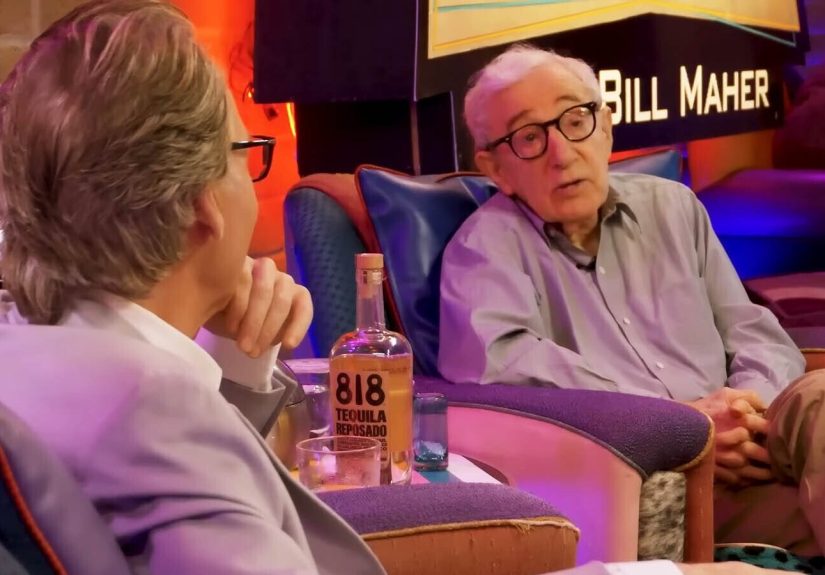
In a rare stretch of recent interviews, Allen framed the professional distance some actors have taken
as an error in judgment. In one account, he argued that performers who avoid him believe they’re doing
something “honorable,” but that they “guessed wrong” and simply “made a mistake.” He also suggested he
isn’t bitter, just… unconvinced by their logic.
The timing is not random. Allen has been promoting a novel, What’s with Baum?, and speaking
about his life with his wife, Soon-Yi Previn, in the context of renewed questions about the allegations
that have followed him for decades. In that coverage, he characterized public readiness to believe the
allegations as surprisingly eager, implying people should read the details and be more skeptical.
Translation: Allen isn’t asking Hollywood to forgive him; he’s asking Hollywood to agree with him.
That’s a higher barand also, if we’re being honest, kind of his brand.
The Core Issue: Why Some Actors Won’t Work With Him
The refusal movementactors publicly saying “I won’t work with him again”centers on long-standing
allegations by Dylan Farrow, Allen’s adopted daughter, that he sexually abused her when she was a child.
Allen has consistently denied the allegations and has not been charged. The controversy dates back to
the early 1990s, but it has repeatedly resurfaced in new waves: open letters, op-eds, interviews, and,
more recently, the HBO documentary Allen v. Farrow (which Allen and Soon-Yi Previn criticized).
For actors, the question has rarely been “Is Woody Allen talented?” (Hollywood already answered that
decades ago). The question is whether working with him now signals complicityor at minimum, indifference
in an industry trying to look less like a museum of powerful men and more like a place where harm is taken
seriously.
#MeToo Changed the Matheven When the Facts Stayed the Same
One uncomfortable truth about celebrity moral awakenings is that they often arrive on a schedule.
In 2018, a wave of actors began issuing statements of regret, refusing future collaborations, and in some
cases donating salaries connected to Allen projects. The common theme wasn’t “I just learned this existed.”
It was closer to: “I no longer believe I can treat this as background noise.”
That shift wasn’t limited to social media. News coverage at the time described a growing chorus of performers
distancing themselves, arguing that casting and financing could become more difficult for Allen as reputational
risk became part of studio decision-making.
Who Backed Awayand What They Said
If you want to understand why Allen’s “made a mistake” comment stings, look at who he’s talking about.
These weren’t just random co-stars; they included high-profile collaborators and admired filmmakers.
A few examples illustrate the range of reactions.
Greta Gerwig: “I will not work for him again.”
Gerwig’s statement became one of the most cited because it captured a generational pivot. She said that
if she had known then what she knows now, she would not have acted in an Allen filmand she explicitly
said she would not work with him again. She also described the emotional impact of realizing her involvement
may have increased “another woman’s pain.”
The subtext was loud: admiration for the work is not a lifetime pass for the person. In Hollywood terms,
that’s not just a moral statementit’s a cultural demotion.
Colin Firth and Michael Caine: A Quiet “No,” From Very Loud Names
Colin Firth delivered one of the simplest refusalshe wouldn’t work with Allen againwithout the long essay,
which somehow made it feel even more final. Michael Caine also said he would not work with Allen again,
a notable shift given his long-standing status as a respected elder statesman in film.
When actors like that step away, it’s not about chasing trends. It signals that the professional cost of
association has become too highor that the moral cost feels too heavyor both.
David Krumholtz and the “I’m Not Perfect, It’s My Truth” Era
Actor David Krumholtz publicly regretted working with Allen, calling it one of his “most heartbreaking mistakes.”
The follow-uparguing online, clarifying, getting criticized for “not knowing sooner”is basically a case study
in how modern accountability works: messy, public, and rarely satisfying for anyone.
Rebecca Hall: Regret, Then Regret About the Regret
The Woody Allen debate also highlights how public statements can age badlysometimes within the same career.
Rebecca Hall previously apologized and donated her salary from an Allen film, then later said she regretted
the apology itself, arguing it shouldn’t be on actors to speak for a filmmaker’s controversies.
This is the tricky middle ground many performers live in: they may want to support survivors and still question
whether a public confession is meaningful, performative, or demanded by the moment.
Who Still Defends Him (Or at Least Won’t Throw the First Stone)
Allen’s “made a mistake” comment also implies an alternate roster: the people who either keep supporting him,
defend him publicly, or argue he should be presumed innocent because he was never convicted.
Scarlett Johansson: “I believe him.”
Scarlett Johansson has repeatedly maintained her support for Allen, describing the importance of having integrity
and standing by her beliefs. In the same breath, she also signaled a more mature awareness of when it may not be
her “turn” to speakan acknowledgement that public discourse has a spotlight, and not everyone should fight for it.
Sean Penn: “I’d work with him in a heartbeat.”
Sean Penn has also said he would work with Allen again, emphasizing a presumption of innocence argument.
Reactions to those defenses tend to split along familiar lines: some hear “due process,” others hear “power protects power.”
The result is an industry stalemate: one side sees refusal as moral responsibility; the other sees continued collaboration
as fairness or resistance to mob logic.
Allen’s Angle: “Cancel Culture Is Dumb,” and the Confidence of a Man With 50 Films
In a 2025 podcast appearance, Allen described being “canceled” as “interesting and amusing,” largely because it didn’t
materially ruin himhe was older, financially secure, and already deep into a legacy career. He said the backlash would
have been far more painful if it had hit earlier.
That context matters. Allen’s view of “cancellation” isn’t the experience of someone locked out of opportunity; it’s the
experience of someone watching the temperature change while still owning a coat.
He also pointed out that he continued working, including releasing Coup de Chance in 2023, described as his 50th feature.
So when he calls refusal a “mistake,” it’s not coming from a person begging for a comebackit’s coming from someone who believes
he never left.
So… Did Those Actors “Make a Mistake”?
Here’s the heart of the SEO-friendly, human-unfriendly question: is refusal a mistake if it protects your reputation,
aligns with your values, and matches what your audience expects?
If you define “mistake” as “missing out on working with a famous director,” Allen might have a pointpurely in career résumé terms.
His films have historically offered strong roles, prestige, and that unmistakable Woody Allen tone (neurotic charm, jazz-inflected gloom,
existential jokes that flirt with despair and then ask you out for coffee).
But Hollywood in 2026 is not Hollywood in 1996, and it’s definitely not Hollywood in 1976. For a growing number of actors, the “mistake”
would be ignoring how association lands with fans, collaborators, and future employers. The industry’s risk calculus now includes:
- Brand safety: studios and distributors hate controversy that eats marketing oxygen.
- Workplace ethics: performers don’t want to be seen as indifferent to abuse allegations.
- Audience expectations: public trust is now a business asset, not just a PR bonus.
- Peer pressure and solidarity: actors watch what their colleagues sayand what they don’t.
In other words, refusing to work with Allen may be less of a moral performance and more of an updated professional standard:
“I don’t want this argument attached to my face at every press junket for the next ten years.”
The Bigger Debate: Can You Separate Art From the Artist?
Woody Allen’s filmography is a magnet for this debate because it’s both influential and deeply personal in tone. His movies often
blur the line between author and protagonist, which makes it harderemotionally and culturallyto treat the work as a sealed container.
That’s part of why the conversation keeps returning: the art feels like it’s in the room with the artist.
Practically, the “separate art from artist” argument tends to matter most when:
- someone wants to keep enjoying the work without feeling complicit,
- someone wants to keep hiring the talent without absorbing the backlash, or
- someone wants to believe brilliance and harm can’t coexist (spoiler: history disagrees).
Allen’s critics argue that continued collaboration normalizes power without accountability. His defenders argue that allegations
are not convictions and that blacklisting is its own kind of injustice. Those positions often talk past each other because they
answer different questions: “What’s provable?” versus “What’s responsible?”
FAQ: The Questions People Actually Google
Why do some actors say they regret working with Woody Allen?
Many point to the Dylan Farrow allegations and say they no longer feel comfortable being professionally associated with Allen,
especially after #MeToo reframed how Hollywood responds to accusations of abuse.
Has Woody Allen been charged with a crime related to the allegations?
Allen has denied the allegations and has not been charged. Reporting has also noted that a Connecticut prosecutor once said there was
probable cause for a criminal case, even though no charges were filed.
Who still supports Woody Allen?
Some celebrities have continued to defend him or say they would work with him again, including Scarlett Johansson and Sean Penn,
often citing presumption-of-innocence arguments.
What is Woody Allen doing now?
Recent coverage describes him promoting his novel What’s with Baum? and discussing his personal life, while also reflecting
on the professional fallout of being shunned by parts of the industry.
Conclusion: The “Mistake” Is in the Eye of the Career Planner
Woody Allen calling actors’ refusal “a mistake” is less a revelation than a reminder: he sees the world as a courtroom where he’s
already acquitted, while many actors see the world as a workplace where values and optics mattersometimes more than legacy.
In 2026, the question isn’t whether an actor can work with him. It’s whether they want to inherit the argument that comes with the paycheck.
Some will say yes, some will say no, and everyone will pretend their choice was made purely on principle (Hollywood’s favorite genre:
moral certainty with a side of plausible deniability).
Experience Corner: What This Feels Like From the Inside (And Why It’s So Complicated)
Here’s the part that gets lost in hot takes: for actors and crew, these decisions rarely happen in a vacuum. They happen in group chats,
on hurried calls with agents, and in that oddly sacred moment when a publicist says, “We need to talk,” and you immediately assume your
career has been traded for a goat in a studio executive’s backyard.
In the modern entertainment business, “Will you work with him?” isn’t just a moral questionit’s a logistics question. Your agent is thinking
about roles, awards, relationships, and whether you’re about to become the lead character in a controversy you didn’t audition for. Your manager
is thinking about long-term positioning: do you want to be known as “brave,” “reckless,” “principled,” or “the person who made that decision
and then gave a seven-minute apology on Instagram Notes”?
And the actor is thinking something much simpler: “Will I be proud of this when someone asks me about it in five years?” That sounds philosophical,
but it’s basically brand management with a conscienceand it’s exhausting. Every film is already a gamble (schedule chaos, creative disagreement,
box office randomness). Adding moral controversy is like choosing to run a marathon and then asking someone to throw Legos onto the course.
There’s also the unglamorous truth that people don’t talk about: saying “no” can be a privilege. If you’re an A-lister, you can refuse a project
and call it values. If you’re a working actor trying to pay rent, turning down a role can feel like turning down stability. That doesn’t mean people
should ignore allegations; it means the industry often asks for ethical heroism unevenly, depending on who can afford it.
Another thing insiders will tell youquietly, usually over a sad salad at a studio commissaryis that reputational risk spreads faster than facts.
The public conversation doesn’t wait for nuance. It rarely rewards “I’m still learning.” It punishes hesitation because hesitation looks like evasion.
That’s why you see extremes: loud denunciations, loud defenses, or total silence.
And silence has its own PR gravity. If you say nothing, people assume you’re hiding. If you speak, people screenshot it forever. If you apologize,
someone says it’s performative; if you don’t, someone says you’re heartless. It’s like being trapped in a choose-your-own-adventure book where every
ending is titled “Backlash.”
That’s also why Allen’s “they made a mistake” comment hits a nerve. Because from his perspective, refusing him is irrationalan overcorrection,
a cultural panic, a failure of “common sense.” But from many actors’ perspective, refusing him is a boundary: not necessarily a declaration that they
know every fact, but a decision about what they want attached to their name.
If you’re looking for a neat moral of the story, Hollywood refuses to provide one (it’s too busy rebooting a 1997 romantic comedy into a streaming
series nobody asked for). The real lesson is messier: in the post-#MeToo era, the industry is still negotiating how to balance legal outcomes,
personal beliefs, public perception, and professional opportunity. Allen’s quote is just the latest flare in the sky reminding everyone that this
debate isn’t overit’s just between seasons.