Table of Contents >> Show >> Hide
- What Was the Year Without a Summer?
- 10 Doomsday Scenes from 1816
- 1. A Blood-Red Sun and a Permanent Twilight
- 2. June Snowstorms in New England
- 3. Frozen Fields and Rotting Harvests
- 4. Starving Animals and Sky-High Oat Prices
- 5. Food Riots and Bread Lines Across Europe
- 6. “Eighteen Hundred and Froze to Death” in Rural America
- 7. Famine, Disease, and the March of Typhus
- 8. Monsoons Gone Mad and Hunger in Asia
- 9. Dark Days at the Lake: How Bad Weather Inspired Gothic Nightmares
- 10. Mass Migration and the Birth of New Frontiers
- What Really Caused the Volcanic Winter?
- Lessons from a Summer That Never Came
- Imagined Experiences from the Year Without a Summer
Imagine waking up in June, throwing open the shutters, and seeing… snow.
Not a cute Hallmark dusting, but a full-on winter scene, right when you
should be planting corn or planning a picnic. That was reality in 1816,
the infamous “Year Without a Summer,” when the sky dimmed, crops failed,
and people around the world started to wonder if the end times had quietly
arrived while nobody was looking.
Today we know it wasn’t divine wrath or a cursed calendarit was
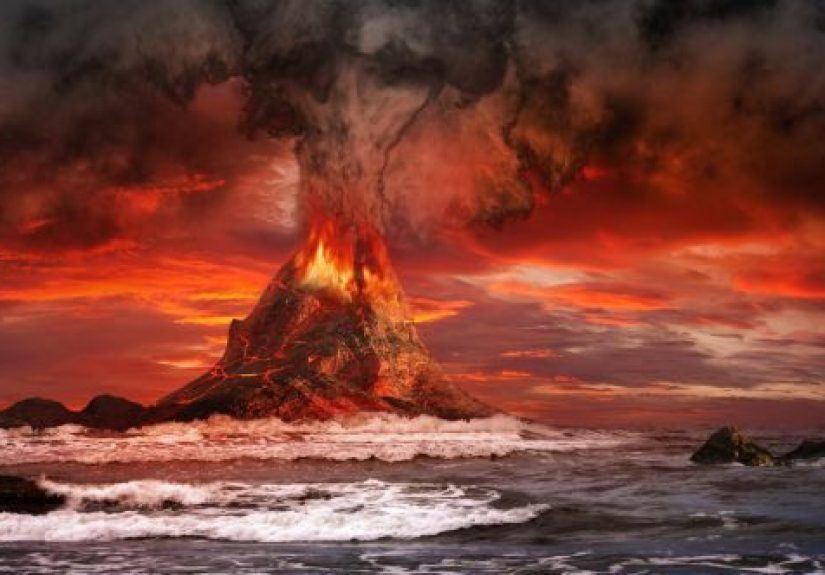
atmospheric science. In April 1815, Mount Tambora in what is now Indonesia
exploded in one of the largest volcanic eruptions in recorded history.
The blast hurled ash and sulfur high into the stratosphere, wrapped the
Northern Hemisphere in a hazy veil, and knocked global temperatures down
by roughly 0.7–1°F (0.4–0.7°C). The result was a year where summer mostly
didn’t show up, and daily life often looked like a slow-motion apocalypse
in New England, Europe, and parts of Asia.
What Was the Year Without a Summer?
Historians and climatologists call 1816 the “Year Without a Summer” because
seasonal weather simply refused to cooperate. In North America and Europe,
June felt like March, July flirted with frost, and August brought more
cloudy, soaking rain than sun. In the eastern United States, people
reported a “dry fog” that dimmed the daylight and turned sunsets
blood-redeven when the sky looked cloudless. The chill didn’t just ruin
vacation plans; it devastated harvests, drove up food prices, and helped
spark disease outbreaks and mass migrations.
To people living through it, the science was a mystery. They didn’t know
about aerosols or volcanic forcing. They saw only dying crops, starving
animals, and governments that could not magically fix the weather. What
follows are ten of the most “doomsday” scenes from this eerie yearmoments
when the Summer That Never Came genuinely felt like the beginning of the
end.
10 Doomsday Scenes from 1816
1. A Blood-Red Sun and a Permanent Twilight
Before people felt the cold, they saw the sky change. In much of New
England and parts of Europe, witnesses described a strange “dry fog” that
dimmed the sun even on clear days. The sun often looked pale and blurred
at noon and glowed red at sunset, like a warning light in the sky.
Today we know that volcanic aerosols from Tambora scattered sunlight and
turned those sunsets into fiery smears across the horizon. At the time,
though, the effect was unnerving. Farmers couldn’t rely on the sun to
warm the soil, and churchgoers whispered that this might be a sign of
divine judgment. When your days look like perpetual late afternoon, it
becomes very easy to believe the world is winding down.
2. June Snowstorms in New England
If you live in the northeastern United States, you expect the occasional
freak snowstorm in April. But June? In 1816, snow fell in parts of New
York, Vermont, New Hampshire, and Maine during what should have been
peak planting season. Reports described several inches of snow in early
June, with ice coating ponds and fields.
For farmers, this wasn’t quirky weather triviait was catastrophic. Tender
shoots that had finally made it out of the ground were buried or frozen.
People spoke of “corn blackened in the field” and “ice in the water pails
every morning.” Imagine standing in your field in a coat and mittens,
watching what should be your year’s income slowly die under a mid-June
snow cover. That’s not just disappointing. It feels dangerously close to
the end of the world.
3. Frozen Fields and Rotting Harvests
The trouble wasn’t just snow. Repeated hard frosts and relentless cold
rain hammered crops from New England to the British Isles and central
Europe. In the United Kingdom and Ireland, soggy fields and low
temperatures ruined wheat, oats, and potatoes. In Germany and Switzerland,
grains and vineyards suffered heavy losses, and hillsides that normally
turned gold in late summer stayed stubbornly gray-green or turned brown.
Even when crops did manage to grow, weeks of rain and sudden cold snaps
could rot the harvest before it was safely stored. Barns filled with
moldy hay and spoiled grain were as terrifying as any monster. The
doomsday feeling didn’t come from one dramatic event but from watching
months of work slowly disintegrate under a season that refused to behave.
4. Starving Animals and Sky-High Oat Prices
Before cars, horses were your transportation, your tractor, your delivery
truckand they were hungry. Oats were the fuel that kept the world moving,
and in 1816 oat crops failed across much of the Northern Hemisphere.
Prices shot up, and some farmers simply couldn’t afford to feed their
animals. Horses were sold off, starved, or slaughtered.
That shortage had strange ripple effects. In Europe, the cost of horse
feed was one reason an inventor named Karl Drais experimented with a
human-powered vehicle that didn’t need hay at allan early ancestor of the
bicycle. But for ordinary people, there was nothing innovative about it;
it was just one more sign that the old way of life was breaking down.
When even your animals can’t eat, it’s hard not to wonder whator who
might be next.
5. Food Riots and Bread Lines Across Europe
In many European cities, the “Year Without a Summer” looked like a slow
economic collapse. Bread prices soared as grain harvests failed. Crowds
gathered outside bakeries and grain markets, hoping to buy a few loaves
before supplies ran out. When shipments failed to arrive or merchants
raised prices, tempers boiled over.
Food riots broke out in parts of Germany, Switzerland, and the British
Isles. People attacked warehouses and grain carts, shouting that merchants
were hoarding food while families starved. In some places, authorities
sent in soldiers to guard bakeries as if they were banks full of gold.
Famine didn’t hit every street equally, but when your neighbors are
clutching stale bread like treasure, the social contract starts to feel
very fragile.
6. “Eighteen Hundred and Froze to Death” in Rural America
In parts of New England and eastern Canada, people later called 1816
“Eighteen Hundred and Froze to Death” or “the Summer of Mittens.” The
nickname sounds darkly funny until you picture what it meant. Frosts hit
in May, June, July, and even August. Lakes froze in places where they
were usually swimmable by mid-summer. Families wore winter clothing year-
round and burned through firewood that should have lasted into the
following winter.
Food insecurity pushed many people to leave. Thousands of New England
farmers gave up on their rocky, unreliable fields and headed west toward
what would become Ohio, Indiana, and beyond. Entire communities seemed to
thin out. To a farmer watching neighbors pack up wagons and vanish down
the road, it might have looked less like migration and more like an
organized retreat from an unlivable world.
7. Famine, Disease, and the March of Typhus
Famine rarely travels alone. In the wake of poor harvests, weakened
populations become easy prey for disease. In parts of Europe, including
Ireland and Italy, typhus outbreaks followed on the heels of food
shortages. Crowded workhouses, refugee camps, and makeshift shelters gave
the disease everything it needed to spread.
To families already stretched thin by high prices and failed crops,
sickness felt like one more layer of catastrophe. The connection between
poor nutrition and disease wasn’t fully understood yet, but the pattern
was hard to miss: the thinner people became, the more beds in the village
filled with fever. When your pantry is nearly empty and half the town is
coughing, the word “apocalypse” doesn’t feel like such an exaggeration.
8. Monsoons Gone Mad and Hunger in Asia
The volcanic haze from Tambora didn’t just cool Europe and North America.
It also disturbed the monsoon patterns in Asia. In parts of China and
India, altered rainfall and lower temperatures damaged crops, contributed
to flooding in some regions, and added to the global tapestry of hunger
and uncertainty.
In southern China, for example, unusually cold weather and heavy rains
damaged rice harvests. In India, changes in monsoon timing are thought to
have contributed to crop failures and may have helped fuel the spread of a
new cholera strain. For millions of people who had never heard of a
volcano called Tambora, the “year without a summer” was simply the year
when the rains didn’t behave and food suddenly became scarce.
9. Dark Days at the Lake: How Bad Weather Inspired Gothic Nightmares
Not all doomsday scenes involved empty barns and bread riots. Some played
out in drawing rooms lit by candlelight. In the summer of 1816, a group of
young writersincluding Mary Shelley, Percy Bysshe Shelley, Lord Byron,
and John Polidorigathered at Lake Geneva in Switzerland. They had planned
a picturesque summer of sailing and mountain walks. Instead, they got
almost nonstop rain and gloomy skies.
Trapped indoors by the strange, stormy weather, they challenged each other
to write ghost stories. Out of that moody, volcanic summer came
Frankenstein, one of the most enduring tales of science, hubris,
and horror, along with Polidori’s vampire story that would help shape the
modern image of the undead aristocrat. The skies outside looked like the
end of the world; inside, they imagined new ways the human world could go
horribly wrong.
10. Mass Migration and the Birth of New Frontiers
When the weather refuses to cooperate, people move. In the northeastern
United States and parts of Canada, repeated crop failures in 1816 and
1817 convinced many families to abandon their farms and head toward the
Midwest. Letters and diaries from the time describe people selling land at
a loss, packing carts with whatever they could carry, and taking their
chances on “better weather out West.”
This shift helped populate states like Ohio and Indiana and subtly
reshaped the map of North America. But for those making the journey, it
must have felt less like opportunity and more like escape. When your home
is locked in what feels like permanent late winter, leaving can feel like
the only rational choiceone last human response to what looked eerily
like a slow-motion doomsday.
What Really Caused the Volcanic Winter?
At the core of all these scenes is Mount Tambora, a volcano on the island
of Sumbawa, then part of the Dutch East Indies. Its April 1815 eruption is
estimated to have blasted tens of cubic miles of rock, ash, and gases into
the atmosphere. Sulfur dioxide combined with water vapor high above the
Earth to form tiny droplets that spread around the globe and reflected
sunlight back into space.
This “volcanic winter” didn’t instantly freeze the planet, but it nudged
average temperatures downward just enough to flip marginal growing seasons
into disaster zones. Regions already vulnerablebecause of poor soil,
political turmoil, or recent warswere hit hardest. The result was a
patchwork of crises: famine there, disease here, migration somewhere else.
The Year Without a Summer wasn’t a single global catastrophe so much as a
chain reaction of local disasters, all linked by one distant mountain’s
eruption.
Lessons from a Summer That Never Came
Looking back, the Year Without a Summer feels like a warning shot from the
past. It shows how tightly human societies are tied to climateand how
quickly things can unravel when the weather system is nudged even slightly
off balance. A drop of a degree or two might not sound like much, but add
it to a short growing season, fragile economies, and limited food storage,
and you get bread riots, migrations, and haunting nicknames like
“Eighteen Hundred and Froze to Death.”
At the same time, the year showcases human adaptability. People found new
places to live, experimented with new tools, and even turned the gloom
into art and literature that still shapes our imaginations. It’s a
reminder that while we’re vulnerable to climate shocks, we’re not
powerless. We can plan, adapt, andhopefullylearn from moments when the
sky goes strange and summer never really arrives.
Imagined Experiences from the Year Without a Summer
To really feel the “doomsday” flavor of 1816, it helps to slip into the
shoes (or the worn leather boots) of people who lived through it. The
following scenes are imaginative reconstructions based on historical
detailsblending what we know from letters and reports with a little
narrative empathy.
Picture a farmer in Vermont, waking up just before dawn on June 7. The
air coming through the cabin cracks feels wrongsharp and metallic, like
November. He steps outside, half-dressed, and the ground crunches under
his boots. Yesterday, his young corn plants were a hopeful green. Today,
they lean, black and limp, under a glittering skin of frost. His breath
steams as he walks the rows, counting how many might survive. By the time
he gets back to the cabin, his fingers are numb and his stomach is in a
cold knot that has nothing to do with the temperature.
Across the Atlantic, in a Swiss village near the mountains, a weaver’s
family stares at their pantry. The grain sacks that are usually full at
this time of year sit slack and half-empty. Rain has drummed on the roof
for days, and the fields outside look more like a swamp than farmland.
The children ask when they will have fresh bread again. Their mother
measures out flour with almost ceremonial care, stretching each loaf a
little thinner than the last. The conversations at the communal oven are
hushed and sharp: Who has grain left? Who is selling? Who can afford the
new prices?
In India, a farmer in the Ganges basin watches the sky, waiting for the
monsoon that doesn’t behave the way it should. The timing feels off, and
when the rains do come, they arrive in confused burststoo heavy here,
too late there. The rice crop, which usually responds to a familiar
rhythm, looks uncertain. Some fields flood, others dry out. There are no
satellite maps or climate models to explain why the patterns have
changedonly rumors that something is wrong far away, or that the gods
are displeased.
On the shore of Lake Geneva, Mary Shelley and her companions gather near a
window streaked with rain. There is supposed to be a stunning view of the
Alps, but the mountains are lost behind heavy cloud. The air feels
closeted and damp, making the fire in the hearth more necessity than
luxury. They talk about science, about experiments with electricity,
about life and death and the strange red sunsets they keep seeing through
the haze. When they challenge each other to invent ghost stories, it’s not
hard to imagine why the tales skew dark and uncanny. The world outside
already feels haunted.
Back in New England, that same Vermont farmer has a decision to make by
the following spring. Another cold year seems likely. The woodpile is low,
the soil feels cursed, and stories are drifting in about rich fields to
the west. One evening, he and his wife sit by a dwindling fire and do
the kind of math that really matters: How many mouths, how much grain,
how far can a wagon realistically go? In the end, they sell the farm at a
loss, pack everything onto a creaking cart, and join the quiet procession
of families heading toward a future they can barely picture. As the old
homestead disappears behind them, the mountains look gray and sullen, and
the air still tastes like late winter. The decision doesn’t feel bold; it
feels necessarylike stepping away from a place that no longer wants
humans in it.
None of these people knew the name “Tambora.” They didn’t know about
sulfurous aerosols or global climate feedbacks. They knew only what they
could see: dead crops, shivering animals, swollen prices, strange skies,
and neighbors packing up and leaving. For them, the Year Without a Summer
wasn’t a historical curiosity. It was a lived experience that blurred the
line between bad weather and the end of the worlda reminder that,
sometimes, doomsday doesn’t arrive with a bang. It creeps in as a season
that refuses to change.