Table of Contents >> Show >> Hide
- What the Official Record Says First
- 1. The Motorcade Became Pure Chaos in Seconds
- 2. The Secret Service Was Officially Criticized
- 3. Witnesses Disagreed About What They Heard
- 4. One Shot Seems to Have Missed, Which Complicates Everything
- 5. The Single-Bullet Debate Keeps Alternative Sequences Alive
- 6. The Zapruder Film Is Powerful, but Not Self-Explaining
- 7. Later Firsthand Recollections Reopened Old Questions
- 8. The Accidental-Discharge Theory Does Not Require a Giant Conspiracy
- 9. Pop Culture Kept the Theory Alive
- 10. Secrecy Made Every Alternative Theory Stronger
- What This Theory Still Cannot Prove
- The Human Experience Behind the Theory
- Conclusion
Important context: The official historical record does not classify John F. Kennedy’s death as an accident. The Warren Commission concluded that Lee Harvey Oswald fired the shots, and later investigations did not officially adopt an accidental-death theory. Still, the idea refuses to leave American history’s group chat. Why? Because confusion, conflicting memories, security failures, and decades of secrecy created a perfect habitat for alternate explanations to grow like weeds through a cracked sidewalk.
So this article is not here to stamp “case closed” on a controversial claim. It is here to examine why some writers, researchers, and documentary-makers keep arguing that JFK’s death might have resulted from an accidental discharge during the chaos of Dealey Plaza rather than from a neat, fully understood shooting sequence. In other words, we are not replacing one certainty with another. We are looking at why uncertainty has had the lifespan of a Hollywood franchise.
What the Official Record Says First
Before we get into the ten reasons, it helps to keep both feet on the floor. The mainstream historical position remains that JFK was assassinated on November 22, 1963, during the Dallas motorcade. The Warren Commission said Oswald fired three shots from the Texas School Book Depository. Years later, the House Select Committee on Assassinations criticized parts of the earlier investigation and raised the possibility of conspiracy, but it still did not endorse the popular accidental-shot theory. That matters.
But here is the rub: when official conclusions arrive after public trauma, contradictory witness statements, disputed medical interpretations, and years of withheld records, many people begin to suspect that the clean version of events is cleaner than reality ever was. That is exactly where the accidental-death argument has found room to breathe.
1. The Motorcade Became Pure Chaos in Seconds
One reason the accident theory survives is simple: the scene turned chaotic almost instantly. In fast-moving emergencies, people mishear sounds, misread motion, and remember sequences differently. That is not a moral failure. That is human firmware.
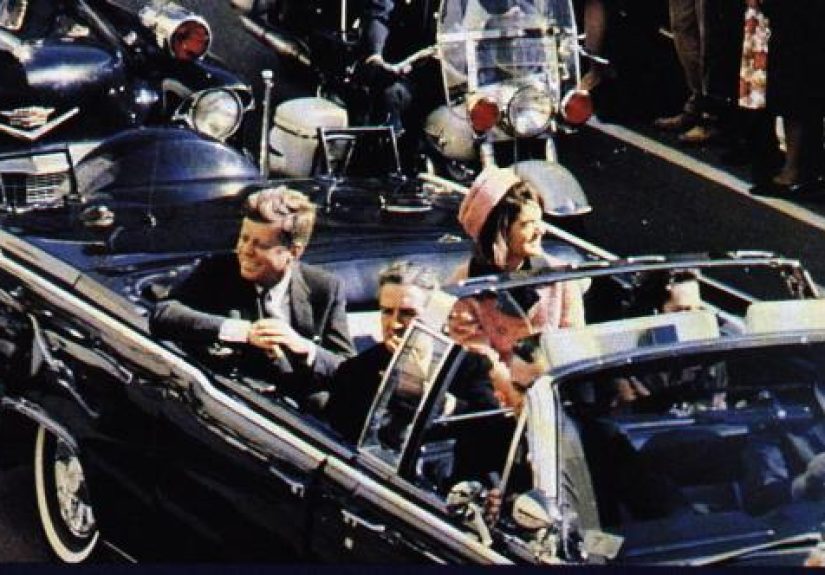
In Dealey Plaza, there were echoes, movement, panic, acceleration, shouted reactions, and multiple people trying to understand what was happening before they even knew a shooting had occurred. Supporters of the accidental-discharge idea argue that in such confusion, a secondary gunshot by a security agent could have been mistaken for part of the original attack. Whether that happened is another question. But the chaos makes the theory feel plausible to many readers because chaos is fertile ground for misinterpretation.
2. The Secret Service Was Officially Criticized
This is a big one. Even people who reject the accident theory often admit that the Secret Service’s performance on that day was imperfect. Later official review described the agency as deficient in its preparation and response. That does not prove an accidental shot, of course. A bad football team is not automatically guilty of arson. But it does weaken the comforting idea that every protective action in the motorcade was flawlessly executed.
Once the public accepts that the protective operation was flawed, another question naturally sneaks in through the side door: if the security detail was unprepared for a sniper attack, could a rushed response involving firearms have gone wrong? The accident theory lives in that question.
3. Witnesses Disagreed About What They Heard
If there were ever a historical event built to generate endless Thanksgiving-dinner arguments, this was it. Witnesses disagreed about the number of shots, their timing, and the direction they came from. Some heard three shots. Some thought four. Some believed the sound came from behind. Others thought it came from the knoll area. A few descriptions were all over the map.
That matters because accidental-discharge theories thrive when the soundscape is muddy. If witnesses cannot even agree on how many shots they heard, proponents argue, then a mistaken extra shot from a different weapon cannot be dismissed emotionally as “impossible.” Again, that is not the same as evidence that it happened. It is evidence that the event was experienced in a deeply unstable way.
4. One Shot Seems to Have Missed, Which Complicates Everything
The Warren Commission concluded that three shots were fired and that one probably missed the limousine and its occupants. That “probably missed” phrase has done more long-term cardio than half the theories on the internet.
Why? Because once one shot is unaccounted for in a straightforward, emotionally satisfying way, people start asking what else might be less straightforward than advertised. Accident-theory advocates often use that uncertainty to argue that the final sequence may have been more complicated than a simple three-shot narrative suggests. If one bullet missed, confusion increased. If confusion increased, then response actions inside the security detail become more relevant to alternative explanations.
5. The Single-Bullet Debate Keeps Alternative Sequences Alive
Few phrases in American historical argument have worked harder than “single-bullet theory.” To supporters, it is a reasonable explanation based on positioning, timing, and ballistics. To skeptics, it sounds like history doing yoga in a trench coat.
The debate matters here because accidental-death proponents usually begin by questioning whether the accepted shot sequence explains every injury and movement as neatly as official reports claimed. If they can create doubt around wound timing or bullet paths, they can create space for an alternate final shot. That alternate shot, in some versions of the theory, comes not from a hidden conspiracy team but from an unintended discharge by someone in the protective convoy.
Even when experts disagree with that conclusion, the very existence of long-running disputes about the sequence helps keep the accident argument alive in books, documentaries, and online essays.
6. The Zapruder Film Is Powerful, but Not Self-Explaining
The Zapruder film is one of the most analyzed pieces of footage in modern history, and it is still not a magical truth vending machine. People watch the same frames and come away with sharply different conclusions. Some see confirmation of the official narrative. Others see motion that seems inconsistent with it. Still others see a visual Rorschach test for national distrust.
Accident theorists lean heavily on that ambiguity. They argue that the film captures a rapid, chaotic response in which the timing of movements and reactions may leave room for an unintended shot from behind the presidential limousine. Critics answer that the film and forensic evidence still better support a shot from the rear by Oswald. But because the film is both vivid and incomplete, it remains a launchpad for reinterpretation rather than a universal peace treaty.
7. Later Firsthand Recollections Reopened Old Questions
History gets weird when memory joins the party decades later. In 2023, former Secret Service agent Paul Landis published an account that challenged part of the traditional bullet narrative. His recollection did not prove the accidental-shot theory, but it did something almost as important for public debate: it reminded everyone that eyewitness memory, official sequence, and later interpretation do not always line up neatly.
That kind of late-emerging testimony tends to revive every dormant theory in the neighborhood. Once one witness’s later account appears to disturb a settled detail, people begin wondering which other details might also be shakier than they look in textbook summaries. Accident advocates use such moments to argue that the historical record still contains cracks wide enough for alternate explanations.
8. The Accidental-Discharge Theory Does Not Require a Giant Conspiracy
This is arguably the most psychologically appealing feature of the theory. Many people dislike the lone-gunman explanation because it feels too simple for such a world-changing event. But they also dislike giant conspiracy theories because those can balloon into a cinematic parade of mobsters, spies, anti-Castro militants, rogue agencies, shadow businessmen, and probably a suspiciously intense umbrella.
The accident theory offers a middle path. It says: what if the original attack happened, but the fatal outcome was compounded by a catastrophic accident during the response? That version feels dramatic, human, and tragically believable. No sprawling secret cabal required. Just bad luck, panic, weapon handling, and history taking the worst possible bounce.
That emotional structure is one reason the theory has staying power. It sounds less like a thriller and more like a nightmare mistake.
9. Pop Culture Kept the Theory Alive
Books and documentaries have repeatedly revived the idea that the fatal shot may have come from an accidental discharge by a Secret Service agent. Once a theory enters popular culture, it stops being just an argument and becomes a recurring character in the national imagination. It gets invited back. It gets recast. It gets its own ominous soundtrack.
Popular media matter because many readers encounter JFK history not first through archival reports but through television, magazine features, film, podcasts, and long-form essays. The accidental-shot theory has benefited from that ecosystem. Even when scholars reject it, each new documentary or anniversary special gives it another lap around the public square.
10. Secrecy Made Every Alternative Theory Stronger
Finally, there is the trust problem. The federal government’s long, uneven release of assassination-related records damaged confidence for decades. Once people believe information was withheld, delayed, or too tightly controlled, they become less willing to accept official certainty. That does not automatically make an accidental-death theory correct. It does, however, make many people more willing to listen to it.
And that is the strange fuel source behind this whole debate: the accident theory has survived not only because of ballistics questions or witness memories, but because secrecy trained the public to suspect that the first clean answer might not be the whole answer. When trust goes missing, alternate narratives move in like new tenants.
What This Theory Still Cannot Prove
For all its emotional appeal, the accidental-death argument has real weaknesses. No official investigation adopted it as the best explanation. The available physical evidence has not produced broad expert consensus in its favor. Later reinterpretations may raise questions, but they do not automatically overturn decades of forensic and historical work. That distinction matters.
So the honest conclusion is not “JFK definitely died by accident.” The honest conclusion is narrower and more careful: some people continue to argue for that possibility because documented failures, conflicting memories, visual ambiguity, and institutional secrecy made the official narrative feel incomplete to millions of Americans.
History does not always fail because there are no facts. Sometimes it fails because there are too many facts filtered through fear, politics, memory, media, and time. The JFK case is the poster child for that problem.
The Human Experience Behind the Theory
To understand why the accidental-death theory still attracts attention, it helps to leave the lab for a minute and walk into the living room of America in late November 1963. Families were glued to televisions. Offices closed. School routines changed. Churches filled. Newspapers sold like hotcakes with existential dread baked into the crust. People were not just processing the death of a president. They were processing the collapse of a national mood.
Kennedy had become tied to youth, energy, and the shiny idea that the country was striding toward something modern and confident. His death felt, to many Americans, like the floor dropping out from under the future. That kind of shock does something powerful to memory. It freezes images. It magnifies doubt. It makes ordinary citizens feel that such a huge event must contain more meaning than a single miserable man with a rifle.
Then came the visual age. Millions watched the aftermath unfold in real time. They saw the funeral, the mourning, the stunned faces, and later the famous film footage. When a tragedy is replayed often enough, people do not merely remember it. They begin to inhabit it. They scrutinize it. They slow it down. They argue over frames and gestures and timing as if certainty might finally emerge if they just look harder one more time.
That is where theories like the accidental-discharge idea gain emotional traction. For some people, it feels easier to imagine catastrophe born of confusion than to accept either the lonely randomness of a lone assassin or the labyrinth of a giant conspiracy. An accident has a grim, almost unbearable humanity to it. It says history can turn not only on evil, but also on panic, bad preparation, and one terrible second. That possibility haunts people because it makes the event feel both enormous and horribly ordinary.
There is also the experience of mistrust. Through the Vietnam years, Watergate, classified files, anniversary documentaries, and new memoirs, Americans learned to view official narratives with caution. Each delayed document release and each revived debate reinforced the feeling that the story was never fully settled. Even people who do not believe the accidental-death theory often understand why others remain drawn to it. They are not always chasing fantasy. Sometimes they are reacting to a long historical experience of partial answers.
In that sense, the endurance of this theory tells us almost as much about America as it does about Dealey Plaza. It reveals a country still trying to reconcile trauma, institutions, memory, and media. JFK’s death was a historical event. The argument over how it happened became a national habit. And like many habits, it has outlived the original moment by decades.
Conclusion
So, could JFK’s death have been an accident in the sense proposed by later writers and documentaries? The evidence does not establish that as the accepted historical conclusion. But there are real reasons the theory keeps resurfacing: documented security failures, conflicting witness memories, unresolved arguments over shot sequence, the enduring ambiguity of visual evidence, late-emerging recollections, and the trust-destroying power of government secrecy.
That combination has kept the accidental-death interpretation alive as one of the most persistent alternative readings of one of the most studied tragedies in American history. It may not be the mainstream answer, but it remains part of the larger story of why the Kennedy assassination still refuses to sit quietly in the past.