Table of Contents >> Show >> Hide
- Why the Kazoo Is So Easy to StartAnd So Easy to Get Wrong
- Before You Start: What You Actually Need
- How to Play the Kazoo: 9 Steps
- Step 1: Stop Blowing and Start Humming
- Step 2: Hold the Kazoo the Right Way
- Step 3: Make One Good Note Before You Try a Song
- Step 4: Change Pitch With Your Voice, Not With Your Fingers
- Step 5: Use Breath Support, But Do Not Overdo It
- Step 6: Articulate Notes With Simple Syllables
- Step 7: Practice Scales and Very Simple Songs
- Step 8: Add Style With Rhythm, Dynamics, and Hand Effects
- Step 9: Troubleshoot, Care for the Membrane, and Keep Practicing
- Common Beginner Mistakes to Avoid
- How Long Does It Take to Learn the Kazoo?
- Final Thoughts
- Experiences Related to “How to Play the Kazoo: 9 Steps”
If there were an award for “most likely to be underestimated at a family gathering,” the kazoo would win by a landslide, then celebrate by buzzing the victory theme. It looks simple, sounds silly, and has been handed to many children by adults who clearly had a chaos streak. But here is the twist: the kazoo is a real musical instrument with a real technique, a real history, and a very real ability to make a plain melody sound like it just woke up with swagger.
If you want to learn how to play the kazoo, the good news is that you do not need years of lessons, expensive gear, or lungs like a jazz trumpeter. What you do need is a working kazoo, a voice, and the willingness to hum without embarrassment. This beginner-friendly guide breaks the process into 9 clear steps, from making your first buzz to playing simple songs with better tone, rhythm, and confidence. By the end, you will know not only how to use a kazoo, but how to sound less like a confused bee and more like a musician who chose joy on purpose.
Why the Kazoo Is So Easy to StartAnd So Easy to Get Wrong
The kazoo belongs to a family of instruments that change the sound of your voice through a vibrating membrane. That little membrane is the star of the show. Your voice provides the pitch, and the kazoo adds the famous buzzy color. This is why beginners often struggle for one funny reason: they blow into it like a whistle and then stare at it as if it has betrayed them. It has not. It is innocent. It is waiting for you to hum.
That one idea changes everything. A kazoo does not work because air rushes through it like a flute. It works because your humming causes the membrane to vibrate. Once you understand that, learning kazoo techniques for beginners becomes much easier. You stop fighting the instrument and start partnering with it. Think of the kazoo as your voice wearing a shiny costume. The voice does the singing. The kazoo does the dramatic entrance.
Before You Start: What You Actually Need
You do not need much, which is part of the instrument’s charm. A basic plastic or metal kazoo is enough to begin. If the membrane is intact and the kazoo is clean, you are ready. It also helps to start in a quiet room, because hearing the difference between blowing, humming, and controlled phrasing matters in the beginning.
- A functioning kazoo
- A relaxed voice
- A few minutes of quiet practice time
- A simple tune you already know, like “Happy Birthday” or “Twinkle, Twinkle, Little Star”
That is it. No reeds to soak. No valves to oil. No terrifying instruction manual that makes you wonder whether you accidentally bought a submarine component. Just a kazoo and your own voice.
How to Play the Kazoo: 9 Steps
Step 1: Stop Blowing and Start Humming
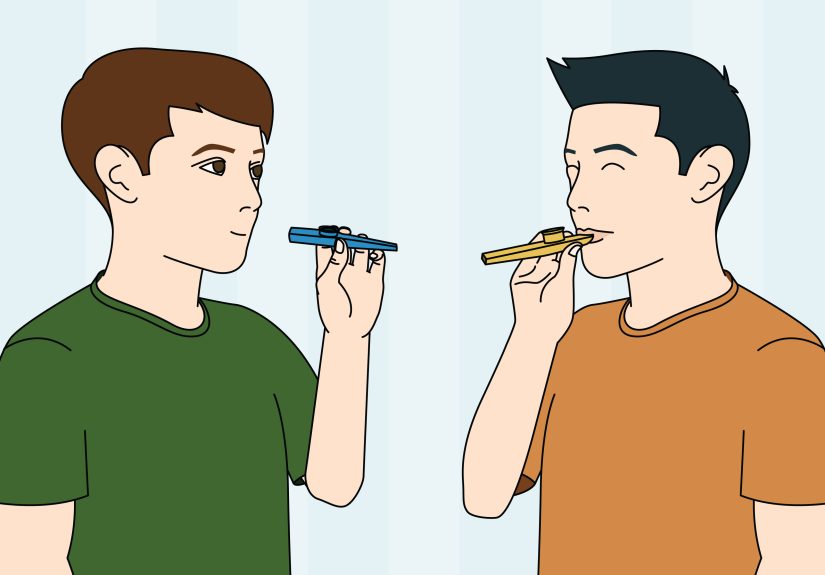
The first and most important step is learning the difference between blowing air and humming a note. Put the kazoo down for a second and hum “mmm” out loud. Now hum “doo” or “zoo.” Hear that steady vocal sound? That is what makes a kazoo work.
Now bring the kazoo to your mouth and hum into it instead of blowing. If you only exhale air, the kazoo will stay quiet or sound weak. If you hum, the membrane will vibrate and the instrument will buzz to life. This is the breakthrough moment for almost every beginner. One second you are holding a silent piece of plastic; the next second you are leading an imaginary parade.
Step 2: Hold the Kazoo the Right Way
Most standard kazoos have a wider or flatter end and a smaller end, plus a round cap on top or on the side where the membrane sits. Place your lips gently around the wider mouthpiece end. Do not bite it. Do not clamp it like you are wrestling it into submission. A light, comfortable seal works best.
Keep your fingers away from the membrane unless you are intentionally experimenting with tone later. If you cover that area too aggressively, you may muffle the sound. Think relaxed, not death grip. The kazoo should feel like an extension of your voice, not a stress ball with ambition.
Step 3: Make One Good Note Before You Try a Song
Beginners often rush straight to a melody. That is charming, but not strategic. Start with one steady hum on a comfortable pitch. Hold it for two or three seconds. Then try another. Your goal is a clean, even buzznot the musical equivalent of a lawn mower waking up unwillingly.
Listen for consistency. If the note fades in and out, your humming may be too weak or too airy. If the sound feels forced, relax your throat and lower the effort. A kazoo does not need heroic power. It needs clear vibration. Gentle but focused usually beats loud but messy.
Step 4: Change Pitch With Your Voice, Not With Your Fingers
Unlike instruments that use keys, valves, or finger holes, the kazoo gets its pitch from you. That means when you want to play higher or lower, you change the note with your voice. Sing up, and the kazoo goes up. Sing down, and the kazoo follows.
This is why people who can already match a tune often learn the kazoo very quickly. Practice moving between two notes, then three. Hum a short pattern like low-high-low or do-re-mi. You are not learning finger positions; you are learning voice control. In a weirdly encouraging way, the kazoo is both a musical instrument and a tiny vocal coach with a sense of humor.
Step 5: Use Breath Support, But Do Not Overdo It
Yes, the kazoo responds to breathbut not in the way many beginners assume. Breath supports your humming. It should not bulldoze the instrument. If you push too much air, the tone may become harsh, unstable, or oddly lifeless. The sweet spot is a supported hum with a relaxed throat and steady airflow.
Try this: hum a note softly, then a little louder, then softer again. Notice how the kazoo responds. The goal is control. You want to be able to shape the sound instead of blasting through it. Good kazoo playing tips are often less about force and more about balance.
Step 6: Articulate Notes With Simple Syllables
Once you can hold a steady buzz, start shaping notes with syllables. Instead of one long “mmmmmmmm,” try “doo-doo-doo,” “ta-ta-ta,” or “bum-bum-bum.” This helps separate notes and makes melodies more recognizable. Without articulation, everything can blur together into one cheerful drone.
Different syllables create slightly different attacks. “Doo” feels smooth. “Ta” is sharper. “Brrr” can make things more playful. Try a few and notice what happens. This is one of the easiest ways to improve your phrasing and one of the reasons experienced players sound more musical even on a very simple instrument.
Step 7: Practice Scales and Very Simple Songs
Now it is time to graduate from single notes to actual music. Start with short, familiar melodies you can already sing. “Happy Birthday,” “Mary Had a Little Lamb,” and “Twinkle, Twinkle, Little Star” are perfect because you know how they should sound. If you can sing them, you can usually kazoo them.
Move slowly. Hum the first phrase, pause, then repeat it more smoothly. If a note goes off course, do not panic. The kazoo is extremely forgiving. It sounds like comedy even when you are trying to be serious, which means it has already lowered the emotional stakes for you. Use that. Practice with a sense of play, and you will improve faster than if you treat every missed note like a national emergency.
Step 8: Add Style With Rhythm, Dynamics, and Hand Effects
Once you can play a tune, you can start making it fun. This is where the kazoo stops being a novelty object and starts feeling expressive. Use rhythm to give your melody energy. Make some notes short and snappy, others long and dramatic. Get louder in one phrase, softer in the next. Lean into the ridiculous elegance of it all.
You can also experiment with cupping your hand around the resonator area or partially shaping the sound around the membrane without pressing hard on it. This can create a loose wah-wah effect or a change in tone color. Small changes can make a basic melody feel more alive. The kazoo is not just about making noise. It is about making character.
Step 9: Troubleshoot, Care for the Membrane, and Keep Practicing
If your kazoo suddenly stops buzzing, do not assume it is broken forever. First, check your technique. Are you humming clearly? Are you using a steady pitch? Are you accidentally just blowing air? If your technique is fine, inspect the membrane. If it is dirty, loose, damaged, or missing, the sound will suffer.
Treat the membrane gently. It is the tiny diva responsible for the whole performance. Avoid poking holes in it, pressing on it too hard, or stuffing the kazoo into a bag where it gets crushed. A little care goes a long way. And remember: improvement comes through repetition. Five minutes a day of relaxed practice beats one dramatic 45-minute session where you try to become a kazoo legend before lunch.
Common Beginner Mistakes to Avoid
The biggest mistake is still the classic one: blowing instead of humming. Right behind that comes trying to sing full words too early. Words can be fun later, but when you are learning, a clean hum is more reliable. Another common issue is forcing the sound with too much breath. The kazoo likes clarity, not chaos.
Some beginners also expect the kazoo to produce notes independently, like a recorder or harmonica. It does not. You are the pitch source. The instrument colors your voice rather than replacing it. Once you understand that relationship, your sound improves quickly. The kazoo becomes less mysterious and more cooperative.
How Long Does It Take to Learn the Kazoo?
You can make your first decent sound in minutes. You can play a simple tune in a day. You can get better tone, phrasing, and control over a few weeks if you practice consistently. In other words, the kazoo offers one of the most satisfying effort-to-fun ratios in music. That is not a small thing.
And while it is easy to start, it is not completely shallow. Strong players can shape rhythm, phrasing, vocal inflection, and tone in ways that make the instrument surprisingly expressive. There is a reason it has shown up in blues, jug band traditions, novelty performance, group singing, and classroom music. The kazoo may arrive as a joke, but it often stays as a tool for real musical play.
Final Thoughts
Learning how to play the kazoo is refreshingly simple once you know the secret: hum, do not blow. From there, everything becomes a matter of voice control, rhythm, articulation, and a little confidence. Start with one clear note, then short phrases, then familiar songs. Keep your membrane in good shape, keep your breath relaxed, and keep your sense of humor fully operational.
Because honestly, that may be the kazoo’s greatest lesson. Music does not always have to be solemn to be skillful. Sometimes the shortest path to better musicianship begins with a buzzing little instrument that sounds like happiness wearing a mustache.
Experiences Related to “How to Play the Kazoo: 9 Steps”
One of the funniest things about learning the kazoo is how predictable the first experience tends to be. Almost everyone begins with misplaced confidence. You pick it up, assume it is basically a whistle with better branding, blow into it, and get nothing useful back. Then comes the suspicious look. Maybe the kazoo is broken. Maybe the universe has singled you out. Then somebody says, “No, you have to hum,” and suddenly the room fills with that unmistakable buzz. The transformation is instant. So is the grin.
Another common experience is discovering that the kazoo is unexpectedly revealing. A simple melody will tell you very quickly whether you can actually match pitch. People who thought they could sing “well enough” learn that “well enough” is a flexible term. But that is part of the fun. The kazoo turns vocal awareness into a game. It does not shame you. It just amplifies the truth with a cartoon sound effect.
Group settings make the experience even better. In classrooms, family parties, camps, and casual jam sessions, the kazoo has a way of flattening the musical hierarchy. The beginner, the confident singer, the uncle who claims he “used to be in a band,” and the child who is mostly here for chaos all end up participating. A fancy instrument can intimidate people. A kazoo practically dares them not to join in. Within minutes, someone is overperforming, someone is inventing harmony, and someone else is taking the whole thing far too seriously in the best possible way.
Then there is the moment when a beginner realizes the kazoo can actually sound good. Not just funnygood. Maybe it happens while playing a simple blues line, or a march, or a children’s song with a strong rhythm. The notes lock in. The phrasing starts to feel intentional. The buzz becomes focused instead of random. That moment changes how people think about the instrument. It stops being a gag and starts becoming musical equipment with personality.
There is also a very specific experience that happens when practicing alone: the kazoo makes it easier to keep going. Many instruments punish the early learner with squeaks, wrong fingerings, sore hands, or notes that refuse to cooperate. The kazoo is more encouraging. You can improve quickly, hear progress fast, and laugh at mistakes instead of spiraling over them. That matters more than people think. Consistency often grows where embarrassment shrinks.
Some players eventually bring the kazoo into real performance situations, and that is where the instrument’s personality really shines. It can be playful in a folk song, cheeky in a singalong, or oddly soulful in a stripped-down blues number. Audiences respond because the sound is familiar, human, and impossible to take entirely for granted. It is a reminder that music can be expressive without becoming overly polished.
In the end, the lasting experience of learning the kazoo is not just about buzzing through a tune. It is about discovering that music becomes easier to approach when it leaves room for humor. A kazoo invites mistakes, experimentation, and joy. It rewards curiosity almost immediately. And for many beginners, that is the exact kind of start that turns “I’m not musical” into “Wait, play that againI think I’ve got it.”