Table of Contents >> Show >> Hide
- Intro: Darwin Never Saw This Coming
- Is Natural Selection Really Over?
- 10 Ways Modern Technology Is Destroying Natural Selection
- 1. Modern Medicine Keeps Almost Everyone in the Gene Pool
- 2. IVF and Fertility Treatments Bypass Reproductive Barriers
- 3. Genetic Testing and Future Gene Editing Rewrite the Rules
- 4. Glasses, Contacts, and Laser Surgery Save Our Terrible Eyes
- 5. Assistive Tech Lets People Thrive in Ways Nature Never Planned
- 6. Safety Tech Removes Old-School Environmental Filters
- 7. The Modern Food System Keeps Us Alive… and Comfortably Unfit
- 8. Contraception and Family Planning Break the Old Reproductive Link
- 9. Dating Apps and Algorithms Hijack Mate Selection
- 10. Sedentary, Screen-Based Life Shrinks Physical Selection Pressures
- So… Are We Doomed?
- Reflections and Real-World Experiences with Tech vs. Natural Selection
Intro: Darwin Never Saw This Coming
When Charles Darwin wrote about natural selection, he pictured a world where the “fittest” survive, pass on their genes, and slowly shape the species.
He did not picture a world where you could survive on instant noodles, two hours of sleep, and a Wi-Fi connection that’s somehow stronger than your bones.
Today, modern technology keeps us alive, connected, and constantly entertainedbut it also seriously meddles with the old-school rules of evolution.
Natural selection used to be brutal: diseases, predators, harsh environments, and sheer bad luck filtered out traits that weren’t helpful for survival.
Now, technology acts like a cosmic cheat code. We’ve wrapped ourselves in layers of medicine, safety gear, and digital tools that protect us from the very pressures that once drove human evolution.
Is that bad? Not necessarily. Longer, healthier lives are a huge win. But if you zoom out and look at the big evolutionary picture, it’s clear that technology isn’t just making life easierit’s rewriting the rulebook.
Here are 10 ways modern technology is “destroying” (or at least seriously messing with) natural selection.
Is Natural Selection Really Over?
Before we jump into the list, a quick reality check: natural selection hasn’t stopped. Humans are still evolving. The difference is that technology has shifted the pressures.
Instead of lions, famine, and plagues, we’re now shaped by things like healthcare systems, algorithms, urban planning, and even dating apps.
So when we say modern technology is “destroying” natural selection, it’s more accurate to say that it’s disrupting, diluting, and redirecting it.
Traits that once meant the difference between life and death can now be managed with a prescription, a device, or an appand that changes who survives, reproduces, and passes on their genes.
10 Ways Modern Technology Is Destroying Natural Selection
1. Modern Medicine Keeps Almost Everyone in the Gene Pool
In a pre-technology world, a lot of genetic conditions, infections, and injuries were fatal. If you were born with a serious defect, had a weak immune system, or suffered a major injury, your chances of surviving to adulthood were much lower.
That’s exactly the kind of scenario where natural selection went to work.
Today, medicine steps in before nature does. Antibiotics clear infections that once killed millions. Chronic conditions like diabetes, hypertension, and heart disease can be managed for decades with medications, surgeries, and monitoring devices.
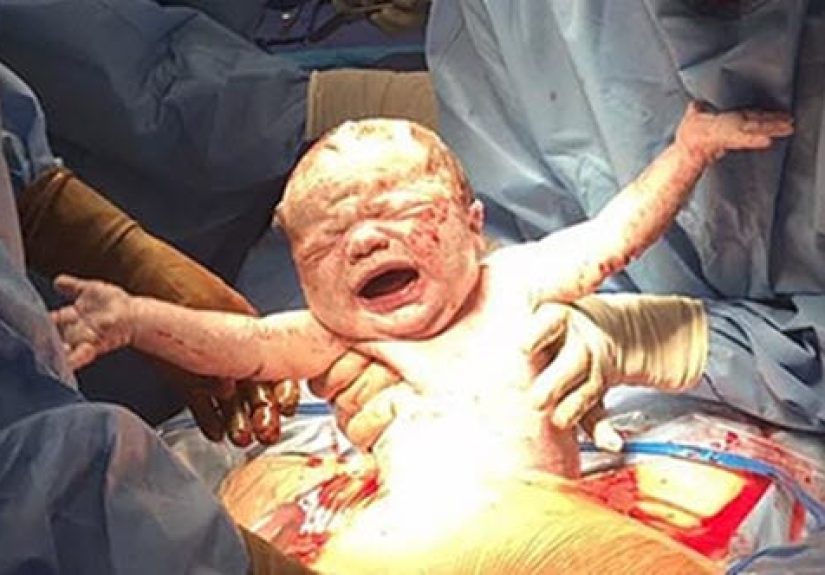
Babies born prematurely or with serious health issues are kept alive with intensive care and advanced neonatal technology.
From a human standpoint, this is an incredible moral and medical achievement. From evolution’s perspective, it means that genes that might once have been strongly selected against can persistand even become more commonbecause survival is no longer tightly linked to biological “fitness” in the old Darwinian sense.
2. IVF and Fertility Treatments Bypass Reproductive Barriers
For most of human history, infertility was a dead end in evolutionary terms. If you couldn’t conceive, your genes didn’t move forward.
That sounds harsh, but that’s how natural selection works: individuals who can’t reproduce simply disappear from the genetic story.
Enter modern fertility technologyIVF, hormone therapy, egg retrieval, sperm injection, and even embryo freezing. These tools allow people who would naturally struggle to conceive to have biological children.
Technology is essentially reaching in and saying, “Don’t worry, evolution, we’ll handle this part.”
On top of that, preimplantation genetic testing allows parents to screen embryos for certain conditions before implantation. Instead of nature deciding which traits move forward, specialists review embryos in a lab and choose which ones get a chance.
Natural selection hasn’t just been softened; in some cases, it’s being manually edited.
3. Genetic Testing and Future Gene Editing Rewrite the Rules
We’re still early in the era of widespread genetic testing, but even now, the impact on natural selection is obvious.
Carrier screening can warn couples if they share risk for certain inherited diseases. Prenatal testing can detect genetic conditions before birth.
In the future, gene editing tools like CRISPR could allow us to directly fix or remove genetic mutations.
Instead of traits being “tested” by harsh environments over generations, we’re starting to look under the hood and tweak the code directly.
Imagine a future where hereditary conditions are edited out of embryos as casually as we correct typos in a document. At that point, natural selection isn’t the main editor anymorewe are.
This doesn’t mean evolution stops; it means human intention becomes a major selective force. We’re not just adapting to our environmentwe’re redesigning ourselves to fit the environment (or the aesthetic) we want.
4. Glasses, Contacts, and Laser Surgery Save Our Terrible Eyes
Here’s a fun experiment: if everyone had to live without glasses or contacts for a year, how many people could safely drive, read road signs, or even recognize friends across the street?
A huge chunk of the population depends on corrective lenses. In a hunter-gatherer world, being unable to see clearly at a distance could be a serious survival disadvantage.
Thanks to centuries of optical innovation, poor eyesight is now one of the least evolutionarily “punished” traits. Glasses, contacts, and surgeries like LASIK turn what used to be a serious liability into a minor inconveniencesometimes even a fashion flex.
As a result, genes associated with nearsightedness and other vision issues don’t get filtered out. They stay, spread, and even flourish in a screen-heavy world where everyone is staring at something six inches from their face for eight hours a day.
Natural selection used to reward sharp eyes; technology now does the job for us, no good genes required.
5. Assistive Tech Lets People Thrive in Ways Nature Never Planned
Wheelchairs, prosthetic limbs, cochlear implants, mobility scooters, and advanced assistive devices have transformed what disability means in modern life.
In evolutionary terms, traits that severely limited mobility, hearing, or daily functioning would once have drastically reduced survival and reproduction.
Today, assistive technology turns those limitations into challenges that can often be managed or overcome. A person born without a limb can walk, run, and lead an independent life.
Someone with significant hearing loss can connect to the world through implants or devices. None of this relies on their underlying genes changingit’s all external support.
And that’s a beautiful thing from a human dignity perspective. It also means natural selection is no longer ruthlessly trimming away any trait that makes survival harder.
Technology steps in as a powerful equalizer, softening nature’s harshest edges and allowing a wider variety of traits to persist.
6. Safety Tech Removes Old-School Environmental Filters
Natural selection loves danger. Cliffs, predators, accidents, and extreme weather all used to do a lot of “filtering.”
Modern life, however, is wrapped in layers of safety technology that cushion us from risk.
Think about it: cars have seatbelts, crumple zones, airbags, backup cameras, and lane assist. Construction workers wear harnesses, helmets, and high-visibility gear.
We have building codes, fire alarms, sprinkler systems, safe drinking water, and weather alerts. Many of the things that used to be deadly are now inconveniences.
Over time, that means natural selection has fewer opportunities to act through blunt-force environmental hazards.
People who might have died in accidents now survive and go on to have families. Again, that’s obviously good news for individual humansbut it also means technology increasingly stands between our genes and our environment.
7. The Modern Food System Keeps Us Alive… and Comfortably Unfit
In nature, food scarcity is a powerful selective pressure. If you couldn’t find, hunt, or store food, you didn’t last long.
Traits that helped people resist faminelike efficient fat storagewere often favored.
Now we’ve built a world where high-calorie, ultra-processed food is available 24/7. You can get 2,000 calories delivered to your door without standing up.
Our bodies, tuned by evolution for scarcity, now exist in an environment of surplus, and technology made that possible.
Instead of natural selection filtering out traits that don’t cope well with feast-or-famine cycles, we’ve removed the famine and kept the feast.
Conditions like obesity, type 2 diabetes, and cardiovascular disease are heavily influenced by this mismatchyet many people live long enough to pass on their genes thanks to medicine and lifestyle management.
8. Contraception and Family Planning Break the Old Reproductive Link
One of the most profound technological disruptions to natural selection isn’t a medical device or genetic toolit’s birth control.
Contraceptives, fertility awareness apps, and long-acting devices allow people to have children if and when they want them.
In evolutionary terms, reproduction is the scoreboard. Traits that help individuals have more children tend to become more common.
But now, people make reproductive decisions based on finances, lifestyle goals, education, personal values, and timingfactors only loosely related to raw biological “fitness.”
That means natural selection is no longer just about who can have kids; it’s about who chooses to have kids, and how many.
Cultural, economic, and technological forces combine to override simple biology. It’s not the strongest or healthiest who necessarily pass on their genesit’s the ones whose lives align with the choice to become parents.
9. Dating Apps and Algorithms Hijack Mate Selection
Once upon a time, mate selection depended on who lived near you, who your community approved of, and who you happened to meet at the market, church, or the village festival.
Today, entire relationshipsand thus entire future family lineagesare determined by algorithms and swipe decisions.
Dating apps filter potential partners based on height, age, hobbies, political preferences, education, and even Spotify playlists.
The traits that get someone more matches might have little to do with classic evolutionary fitness and a lot to do with how well they photograph in soft lighting.
Over time, that changes which traits are rewarded. Instead of natural selection favoring survival skills, it may favor social media charisma, digital fluency, or even specific aesthetic trends.
We’ve traded “survival of the fittest” for “survival of the most right-swiped.”
10. Sedentary, Screen-Based Life Shrinks Physical Selection Pressures
For most of human history, survival required movement. Hunting, gathering, farming, building, carrying, and walking long distances were part of daily life. Physical weakness came with real consequences.
Now, many people can live, work, socialize, and entertain themselves without leaving a chair. Office jobs, remote work, food delivery, streaming entertainment, and online everything mean that physical strength is optional rather than essential.
Natural selection once favored bodies that could handle harsh physical demands. Today, it’s possible to be physically fragile and still live a long, productive life with the help of technology, healthcare, and a well-timed grocery delivery.
Evolution is still happeningbut it’s responding to screen time, stress, and sleep patterns as much as to physical endurance.
So… Are We Doomed?
Not at all. Technology might be “destroying” natural selection in its old, brutal form, but it’s also giving us something new:
intentional evolution. Instead of waiting passively for nature to test our genes against famine, infection, and predators, we use science, ethics, and policy to steer our futurehowever imperfectly.
The real challenge isn’t that natural selection is fading; it’s that we’ve become one of the biggest selective forces acting on ourselves.
Our tools, our systems, and our choices shape who survives, who reproduces, and which traits thrive in the generations ahead.
In other words, evolution is still very much alive; it’s just wearing a lab coat, holding a smartphone, and complaining about the algorithm.
Reflections and Real-World Experiences with Tech vs. Natural Selection
You don’t have to be an evolutionary biologist to see this process in actionyou just have to look around your own life.
Maybe you know someone whose life was literally saved by modern medicine: a premature baby who grew up to be a healthy adult, a person who survived a cancer that used to be a death sentence,
or a friend with a chronic condition who lives a full life thanks to daily medication and regular checkups. A few generations ago, those stories would have ended very differently.
Today, they’re almost ordinary. That’s technology quietly nudging natural selection aside.
Or think about eyesight. In many classrooms and offices, half the room wears glasses or contacts. In a hunter-gatherer group, being unable to clearly see prey, predators, or terrain could have been a serious disadvantage.
Now, a pair of lenses restores full function. The genes that contribute to poor eyesight don’t disappearthey ride along, generation after generation, because technology picks up the slack.
The same pattern shows up with mental health, mobility, and disability. People who might once have been isolated or unable to support themselves can now work, form relationships, and raise families, thanks to medication,
therapy, assistive devices, and accessible design. That’s not a bug in the system; it’s a feature of a compassionate society. But it also means that “fitness” is no longer measured only in terms of raw biological survival.
Even our daily habits tell the story. Many of us spend our days moving text, code, money, or designs around instead of moving rocks, soil, or animals.
Our ability to earn a living and support a family depends more on cognitive skills and digital fluency than on physical strength.
In evolutionary terms, selection is increasingly about who can adapt mentally and socially to a hyper-connected, high-information world, not who can run the fastest or carry the heaviest load.
Dating and relationships may be where the shift feels most personal. Couples meet through apps, social media, and niche online communities.
Algorithms suggest potential partners based on patterns in our clicks and swipes. Preferences that would never have mattered in a small villagelike favorite music genres, fandoms, or texting stylescan now influence who pairs up and has children.
Does this mean we’ve “broken” evolution? Not exactly. It means we’re living in a world where cultural evolution and technological evolution move faster than biological evolution.
Our genes are still playing catch-up to the environment we’ve built. That mismatch is where many of our modern health, social, and psychological problems live.
The practical takeaway isn’t to romanticize a brutal, pre-technology past or to panic about the future. It’s to recognize that we’re now active participants in our own evolutionary story.
The policies we support, the technologies we build, and the ethical lines we draw will influence not just our lives, but the genetic and cultural landscape our descendants inherit.
If Darwin were alive today, he might update “survival of the fittest” to something like “survival of the most adaptable to their own inventions.”
We’ve replaced sabertooth tigers and plagues with passwords, algorithms, and healthcare systemsand whether that’s progress or a long-term problem depends on what we do next.