Table of Contents >> Show >> Hide
- 1) Your machine gun was trying to destroy your propeller (and you had to make them get along)
- 2) The engine’s spin could decide which direction you were “allowed” to turn
- 3) “Open cockpit” is a polite way of saying “wind tunnel with responsibilities”
- 4) Oxygen was a developing technology, but hypoxia showed up fully formed
- 5) Many fights happened without radiocoordination was vibes, hand signals, and hope
- 6) Parachutes existedbut many airplane pilots didn’t get them (while balloon observers often did)
- 7) Aerial combat was often about protecting (or attacking) the real prize: reconnaissance
- 8) Observation balloons were “sitting ducks”… protected by everything, and still terrifying
- 9) Some WWI fighters were “tricky” in the nicest possible way (and training could be deadly)
- 10) Dogfight “moves” were realbut physics, visibility, and chaos made them messy
- Conclusion: The sky was new, the rules were improvised, and the weirdness was the point
- Extra: of “What It Felt Like” (Experiences From the Weirdness)
World War I didn’t invent flying, but it absolutely invented the idea that two people could meet in the sky and decide,
in a matter of seconds, whether one of them gets to keep having a day. The era’s aircraft were often made of wood,
wire, and fabricmore “ambitious kite” than “invincible war machine”yet pilots were asked to scout trenches, photograph
enemy positions, direct artillery, and (eventually) hunt each other like airborne duelists.
That’s why WWI aerial combat is full of bizarre, specific, “wait… they did what?” details: machine guns that had to
cooperate with spinning propellers, engines that tried to twist the plane mid-turn, and communication systems that were
basically “good luck, see you at dinner (maybe).” Below are ten strange realities that made early dogfights equal parts
engineering experiment, survival sport, and pure nerve.
1) Your machine gun was trying to destroy your propeller (and you had to make them get along)
Early fighters didn’t start out as dedicated “fighters.” They were often reconnaissance platforms, and the moment pilots
began taking shots at each other, the obvious problem appeared: the propeller lives exactly where you’d like to aim.
Mounting guns on the wings helped, but it could be awkward to reload, jam-prone, and hard to aim precisely.
The weird part
Some early solutions were blunt-force practical. One famous approach used metal deflector plates on the propeller to
protect it from bullets that struck it. Shortly after, the real game-changer arrived: synchronization (interrupter) gear
that timed the gun to fire between propeller blades. This turned the airplane into a forward-firing weapon system and
helped kick off an arms-and-ideas race in the air. One tiny timing mistake, though, and you could “self-own” your aircraft
in the most literal way possible. (Flying home with fewer propeller pieces than you started with was… suboptimal.)
2) The engine’s spin could decide which direction you were “allowed” to turn
Many WWI fighters used rotary engineswhere the engine mass spins with the propeller. It was a clever way to keep things
light and cool, but physics doesn’t care about your tactical needs.
The weird part
The spinning engine created a strong gyroscopic effect. In some aircraft, quick turns in one direction felt easier while
turns the other way felt stubborn, slower, and sometimes downright rude. In a tight dogfight, that meant a pilot’s
“favorite turn” wasn’t just personal styleit was mechanical reality. Add in castor oil flung from the engine (which could
make life unpleasant in an open cockpit), and the plane could feel like it had opinions about everything you tried to do.
3) “Open cockpit” is a polite way of saying “wind tunnel with responsibilities”
WWI pilots didn’t sit behind pressurized glass. They sat in the weather. At altitude. For long stretches. With the wind,
cold, vibration, and engine fumes all applying for full-time jobs on their faces.
The weird part
The flying gear could look half “adventurer,” half “arctic expedition.” Heavy coats, gloves, goggles, and leather
face coverings weren’t fashion statementsthey were basic survival equipment. Even then, cold stress was constant,
especially when missions climbed higher and higher. Imagine trying to spot a speck of an aircraft against haze while your
eyes water and your fingers slowly turn into frozen paperclips. The sky did not care that you were doing important
military history.
4) Oxygen was a developing technology, but hypoxia showed up fully formed
As the war progressed, aircraft performance improved and missions pushed to higher altitudespartly to survive, partly to
see farther, and partly to counter threats that also moved upward. But the human body is famously not designed for
“hanging out at high altitude while stressed.”
The weird part
Oxygen equipment existed and improved during the war, but it wasn’t uniform, and it wasn’t always comfortable or easy to
use. Hypoxia can reduce judgment and coordinationtwo things you’d prefer to keep, especially when you’re balancing an
aircraft, scanning for enemies, and navigating by landmarks. It’s a uniquely WWI kind of strange: a duel where one of your
opponents is the atmosphere, quietly trying to turn your brain into a slower computer.
5) Many fights happened without radiocoordination was vibes, hand signals, and hope
Modern air combat depends on communication. WWI aviation often depended on improvisation. Pilots and observers used
colored flares, message streamers, panels on the ground, and prearranged signals to communicate. Directing artillery, for
example, could involve specific signal systems meant to be read quickly in the air.
The weird part
Picture trying to coordinate a team maneuver while flying a loud, vibrating aircraft and simultaneously searching the sky
for enemiesthen realizing your “comms” are basically, “If I rock my wings twice, that means… something.” This made
disciplined formations and teamwork incredibly valuable, but also fragile: weather, glare, distance, and confusion could
turn a plan into a guess.
6) Parachutes existedbut many airplane pilots didn’t get them (while balloon observers often did)
Here’s a detail that sounds fake until you learn how the war treated different air crews: balloon observers commonly wore
parachute harnesses because their balloons were obvious targets and could be abandoned quickly. Airplane pilots, however,
often flew without parachutes for much of the war.
The weird part
Balloon operations logged numerous parachute escapes, and sources note the parachute systems used in balloon baskets and
how they deployed. Meanwhile, standard parachutes for fighter pilots came late and unevenlyGermany introduced a standard
design for pilots in 1918 (with early reliability issues), while widespread Allied issue lagged. The result was a
psychologically brutal reality: in many cases, “getting hit” didn’t mean “bail out.” It meant “find a way to land” or
“ride it down.” If you want to understand why WWI pilots sounded both fearless and exhausted in memoirs, start there.
7) Aerial combat was often about protecting (or attacking) the real prize: reconnaissance
Pop culture loves the idea of ace pilots dueling for personal glory, but a lot of WWI air fighting was driven by a more
practical job: information. Aerial photography and observation helped armies map trenches, spot artillery positions, and
track troop movement. That made observation aircraftand even the cameras themselveshigh-value targets.
The weird part
Many fighters were essentially bodyguards for the “work” aircraft. A pilot might spend a mission not chasing fame, but
chasing away threats long enough for a reconnaissance plane to complete a photo run. This creates a strange strategic
contrast: the dogfight looks like the main event, but it’s often the brawl happening around the person quietly carrying
the notebook.
8) Observation balloons were “sitting ducks”… protected by everything, and still terrifying
Tethered observation balloons were enormously useful: they could watch the front for hours, spot artillery fire, and
report movements. They were also large, visible targetsso pilots who attacked them earned reputations as “balloon
busters.”
The weird part
Attacking a balloon wasn’t always a clean, heroic swoop. Balloons were defended by anti-aircraft fire and often by
fighters. Pilots used special ammunition and tactics to ignite balloons (which could be filled with hydrogen), and
successful attacks could be dramatic. American ace Frank Luke Jr., for instance, became famous for balloon-busting
victories in a short period. Meanwhile, observers had parachute setups specifically because balloon attacks were expected,
and historical accounts even tally the number of balloon parachute jumps during the war.
9) Some WWI fighters were “tricky” in the nicest possible way (and training could be deadly)
WWI aircraft development moved fast, but that speed came with sharp edges. Some designs were highly maneuverable, but
demanded constant attention and punished mistakes. The line between “agile” and “unforgiving” could be razor-thin.
The weird part
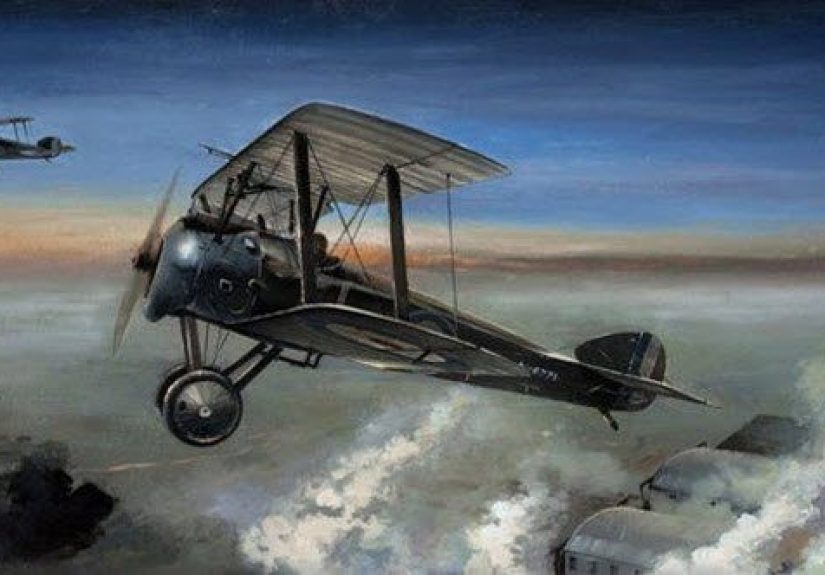
Take the Sopwith Camel: celebrated for combat performance, notorious for challenging handling. A pilot transitioning from
a slower trainer to a high-performance rotary-engined fighter could face a steep learning curve. It’s one of the oddest
truths of the era: aviation could be so hazardous that a pilot’s riskiest moments might happen before meeting the
enemysimply learning to master the machine.
10) Dogfight “moves” were realbut physics, visibility, and chaos made them messy
WWI helped codify aerial tactics and maneuvers. Names like the Immelmann became part of aviation lore. Pilots developed
team tactics, defensive circles, and principles meant to keep them alive long enough to fight again tomorrow.
The weird part
The reality was less like a neat chess match and more like a three-dimensional scramble where the board keeps shaking.
Visibility could be poor. Clouds and haze could hide an enemy until the last second. Aircraft performance varied wildly.
And without reliable comms, teamwork relied on practice and trust. A tactic might be sound on paper and still fail because
someone got separated, a gun jammed, or the sun suddenly turned the sky into a giant glare trap.
Conclusion: The sky was new, the rules were improvised, and the weirdness was the point
WWI aerial combat feels strange because it happened at the intersection of brand-new technology and ancient human
instincts. Pilots fought with machines that were evolving month by month, using tactics that had to be invented on the
flyoften by people who were barely out of their teens. The “weird realities” weren’t side notes; they were the daily
texture of survival: engines that twisted your turns, oxygen systems that lagged behind ambition, and parachutes that
existedjust not always for you.
If you want the simplest takeaway, it’s this: WWI didn’t just introduce air combat. It introduced a world where bravery
wasn’t only about facing an enemy. It was about climbing into a vibrating, wind-blasted prototype and trusting that you
could outthink the weather, outfly the physics, and come home with your propeller still attached.
Extra: of “What It Felt Like” (Experiences From the Weirdness)
Imagine your day starting before sunrise, not because you love mornings, but because the sky is calmer and the mission
schedule is the mission schedule. The airfield smells like damp grass, fuel, oil, and yesterday’s smoke. Someone yells
something over an engine test, and you nod even if you didn’t fully catch itbecause nodding is half the communication
system in this era.
When you climb into the cockpit, it’s not a cockpit in the modern sense. It’s a seat, some instruments that feel more
“helpful suggestion” than “reassuring certainty,” and the knowledge that your face is about to be exfoliated by cold wind
for the next hour. Your gloves are thick, which is great for warmth and terrible for doing anything delicatelike, say,
clearing a weapon jam or adjusting anything smaller than a dinner plate.
Up you go, and the world shrinks into patterns: trenches like scars, roads like lines drawn with a ruler, and towns that
look peaceful from a height they definitely don’t feel peaceful on. Then the engine’s vibration becomes your constant
companion. You start scanningleft, right, above, belowbecause the sky is huge and enemies are tiny until they aren’t.
The weirdest part is how quiet danger can look at first: a speck, a flash, a shadow crossing sunlit haze.
If you’re escorting a reconnaissance plane, your job is to be the loud friend in the group projectdrawing attention,
chasing trouble away, and making sure the person doing the “important work” gets enough time to finish it. If you’re
hunting balloons, you’re watching for the defenses as much as the target, because balloons don’t just sit there alone;
they sit there protected by the entire neighborhood. You think about your approach angle. You think about the wind. You
think about whether your special ammunition will do what it’s supposed to do. Mostly, you think about not lingering.
And always, in the background, is the uncomfortable math of the era: if something goes wrong, do you have options? In a
modern plane, you might have a radio call, a navigation system, a parachute, a rescue plan. In WWI, the options can feel
thinner. That changes how you fly. You become conservative in strange ways and reckless in others. You learn to treat
engine sounds like a language. You learn that weather can be as dangerous as a hostile aircraft. You learn that a “normal”
landing is a gift.
When you finally return, you’re not just relieved that you beat the enemy. You’re relieved you beat the propeller timing,
the cold, the altitude, the visibility, the engine’s personality, and the era’s overall attitude of “we’ll figure it out
as we go.” And if that sounds weirdly modernlike debugging a complicated system under pressurethat’s because WWI aerial
combat was exactly that… except the bug fixes happened at 8,000 feet.