Table of Contents >> Show >> Hide
- Before You Dig: A Newbie-Friendly Front Yard Game Plan
- 14 Front Yard Garden Ideas for Beginners
- 1) The One-Bed Wonder (A Simple Foundation Border)
- 2) Curved Edges + Mulch: The Fastest Curb Appeal Upgrade
- 3) A Walkway Welcome Strip (Low Plants That Don’t Flop Into Your Path)
- 4) “Thriller-Filler-Spiller” Pots by the Front Door
- 5) The Mailbox Moment (Tiny Bed, Big Impact)
- 6) A Pollinator Patch That Still Looks “Neat”
- 7) Rock + Plant “Ribbon” for Drought-Friendly Style
- 8) A Low Hedge That Frames the House (Without Becoming a Monster)
- 9) “Drifts” of One Perennial (The Designer Look Made Easy)
- 10) A Mini Rain Garden Where Water Already Collects
- 11) “Soft Landing” Under a Tree (No More Bare Dirt Circles)
- 12) A Small Seating Nook (Yes, Even in the Front Yard)
- 13) Edible Landscaping That Still Looks Polished
- 14) Seasonal “Pop” Spots (Color Without Commitment)
- Simple Maintenance Rules That Keep It Looking Great
- Beginner Experiences: What Front-Yard Gardening Really Feels Like (and Why That’s Good)
- Conclusion
Want a front yard that makes people slow down (in a good way) without turning you into a full-time weeder? Same.
The secret isn’t “having a green thumb.” It’s picking beginner-friendly moves that look intentional, stay tidy,
and don’t require you to whisper motivational speeches to your plants every morning.
Below are 14 front yard garden ideas for beginners that bring serious curb appealplus simple steps, plant examples,
and the “oops” mistakes to avoid. Think of this as landscaping training wheels… but the cool kind with flames on the side.
Before You Dig: A Newbie-Friendly Front Yard Game Plan
Great-looking front yard landscaping starts with three quick checks. Do these once, and you’ll save yourself
a season of “Why is this dying?” drama.
- Sun check: Watch the yard for one day (morning, midday, late afternoon). Label areas full sun, part sun, shade.
- Zone check: Know your USDA Hardiness Zone so you don’t accidentally buy plants that think winter is a myth.
- Water reality: Note where rain collects, where sprinklers hit, and where the ground stays bone-dry.
Then pick a “maintenance budget” (time, not just money). If you’re aiming for easy, choose fewer plant varieties,
repeat them in groups, and lean on mulch, edging, and hardy perennials. A simple design done well beats a complicated
design you’ll eventually avoid like a group project.
14 Front Yard Garden Ideas for Beginners
1) The One-Bed Wonder (A Simple Foundation Border)
Create one clean planting bed along the front of your house to instantly look “put together.” Use three layers:
taller shrubs in back, mid-height bloomers, and a low groundcover edge.
Try boxwood or dwarf holly (structure), hydrangea or spirea (color), and creeping thyme or ajuga (edge). Keep it
beginner-proof by choosing plants with similar sun and water needs. Skip the tiny “dot” plantinggroup plants in
clusters of 3 or 5 so it looks designed, not scattered.
2) Curved Edges + Mulch: The Fastest Curb Appeal Upgrade
If your front yard looks “meh,” it might just be missing definition. A gently curved bed edge (not a wiggly noodle)
makes the yard feel intentional. After edging, spread mulch for a clean, finished look that also helps with weeds
and moisture. Newbie move: keep mulch a few inches away from trunks and stems (no mulch volcanoes, please).
Choose a mulch color that matches your house tones for a cohesive look.
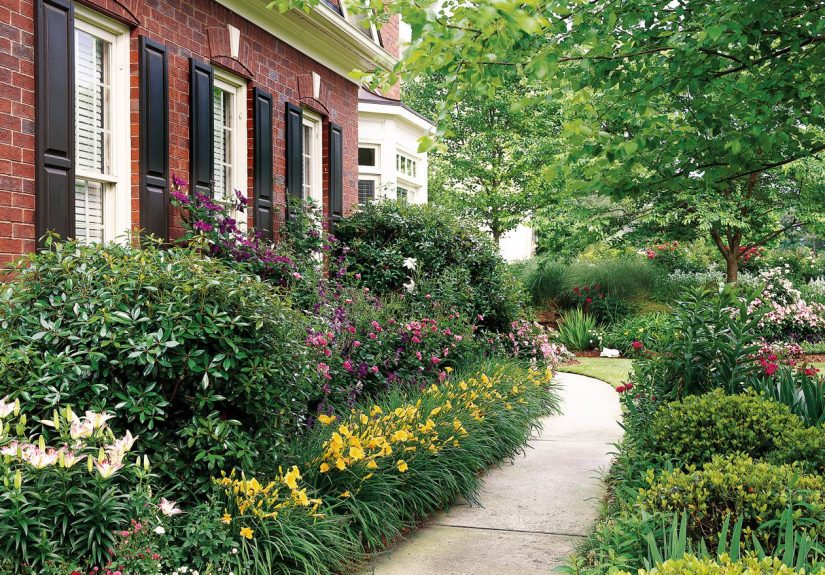
3) A Walkway Welcome Strip (Low Plants That Don’t Flop Into Your Path)
Line your walkway with compact, tidy plants that stay in their lane. Think lavender, catmint, salvia, dwarf daylilies,
or ornamental grasses that behave. Repeat the same 1–2 plants down the length for a polished “designed” vibe.
Add a narrow border of stone or metal edging to keep lawn and mulch from mixing like roommates who hate each other.
4) “Thriller-Filler-Spiller” Pots by the Front Door
Containers are the cheat code for beginners: instant color, zero digging, and easy to swap when you get bored.
Use a tall “thriller” (like a small ornamental grass), a mounding “filler” (petunias, begonias, coleus),
and a trailing “spiller” (sweet potato vine, ivy, calibrachoa). Match the pot style to your homeclassic house,
classic pots; modern house, simple geometric planters. Water pots more often than in-ground beds, especially in heat.
5) The Mailbox Moment (Tiny Bed, Big Impact)
A small garden around the mailbox or post can make the whole street-side view look upgraded. Keep plants low enough
to avoid blocking visibility. Use drought-tolerant, tough options like coneflower, black-eyed Susan, sedum, or dwarf
ornamental grasses. Add one “star” plant (a compact flowering shrub or a bold perennial) and repeat two supporting
plants around it. Finish with mulch or gravel for a neat, low-maintenance look.
6) A Pollinator Patch That Still Looks “Neat”
Pollinator gardens don’t have to look wild. The trick is structure: a defined border, repeated plant groups, and a
simple path or stepping stones. Choose native plants that bloom in spring, summer, and fall so there’s
always something happening. Easy favorites include milkweed (for monarchs), bee balm, coneflower, asters, and native
grasses. Bonus curb appeal: add a small sign or decorative stake so it reads as “intentional habitat,” not “I forgot
to mow.”
7) Rock + Plant “Ribbon” for Drought-Friendly Style
If you’d rather not spend summer dragging hoses like an unhappy pioneer, try a rock-mulch bed with drought-tolerant
plants. Use a landscape-friendly gravel (not random driveway rocks) and plant in pockets: sedum, hardy succulents,
lavender, yarrow, or compact shrubs. Keep it beginner-friendly by limiting the palette and spacing plants correctly
so the bed fills in without becoming a crowded, prickly traffic jam.
8) A Low Hedge That Frames the House (Without Becoming a Monster)
A short, tidy hedge gives your front yard instant structure, like eyeliner for your landscaping. Choose slow-growing
or naturally compact shrubs so you’re not pruning every weekend. Options include boxwood, inkberry holly, dwarf yaupon,
or other region-appropriate evergreen shrubs. Plant in a straight line or gentle curve, then underplant with seasonal
flowers or low perennials. Newbie tip: leave enough space between hedge and house for airflow and access.
9) “Drifts” of One Perennial (The Designer Look Made Easy)
Instead of buying one of everything at the garden center (we’ve all been personally victimized by impulse buys),
pick one tough perennial and plant it in a big sweep. Mass planting looks high-end and is simpler to maintain.
Try daylilies, coneflower, salvia, black-eyed Susan, or catmintdepending on sun and your climate.
Keep weeds down with mulch, and deadhead only when you feel like it (many still look good without constant fuss).
10) A Mini Rain Garden Where Water Already Collects
Got a soggy spot that turns into a sad puddle every time it rains? A small rain garden can turn that problem into a
feature. It’s basically a shallow depression planted with water-tolerant plants that help soak up runoff.
Choose plants that handle both wet and dry spells (many natives do). Add a stone edge or clean border so it looks
tidy from the street. If you’re unsure about drainage, start small and observe after heavy rain.
11) “Soft Landing” Under a Tree (No More Bare Dirt Circles)
The classic ring of sad mulch under a tree can look like a landscaping afterthought. Upgrade it with shade-tolerant
groundcovers and perennials: ferns, hostas, sedges, coral bells, or woodland phlox (regional options vary).
Use a wide, gentle-edged bed (not a tight donut) and keep plants away from the trunk. This adds texture, reduces
mowing headaches, and gives the yard a layered, garden-like feel.
12) A Small Seating Nook (Yes, Even in the Front Yard)
A bench or small bistro set near a front garden adds charm and makes the space feel welcominglike your home is
saying, “Hello, we are friendly humans.” Place it where it won’t block pathways and use plantings to “frame” it:
two matching planters, a pair of small shrubs, or tall grasses behind it. Keep maintenance low with hardy plants and
a mulch base; you want the vibe of a retreat, not a chore.
13) Edible Landscaping That Still Looks Polished
You can absolutely mix beauty and snacks. Think herbs as edging (rosemary, thyme), blueberries as shrubs (in the right
soil), rainbow chard as a colorful accent, or dwarf fruit trees where climate allows. The curb appeal trick is
repeating shapes and keeping edges cleanedibles can look messy if they sprawl. If you have HOA rules, keep edibles
closer to the house and blend them into ornamental beds for a “designed” look.
14) Seasonal “Pop” Spots (Color Without Commitment)
If you’re nervous about planting a whole front yard, use two or three small “pop” zones for seasonal color:
near the entry, by the mailbox, and at a walkway corner. Rotate annuals or tuck bulbs into existing beds for spring
fireworks. Keep the rest of the design steady with evergreens and perennials. This gives you curb appeal year-round
without constantly redoing everything like it’s a reality TV makeover.
Simple Maintenance Rules That Keep It Looking Great
- Water smarter: Soak deeply, then let the soil dry slightlyplants often do better than with daily sprinkles.
- Mulch matters: Refresh as needed to suppress weeds and keep beds looking crisp.
- Edge once, enjoy for months: Clean borders instantly make a garden look maintained.
- Repeat plants: Repetition looks professional and is easier for beginners to manage.
Beginner Experiences: What Front-Yard Gardening Really Feels Like (and Why That’s Good)
Most newbies start front-yard gardening with a mix of excitement and mild panickind of like assembling furniture
without reading the instructions, except the furniture is alive. One of the first “aha” moments is realizing curb
appeal isn’t about rare plants or perfect symmetry. It’s about clarity. Clean edges. A simple pattern.
A bed that looks like you meant it.
A super common beginner experience: you plant everything, step back, and think, “Why does it look… small?”
That’s normal. Freshly planted beds look sparse at first because plants need time to fill in. This is where many
beginners overcorrect by cramming in extra plants (which later becomes a crowded jungle). The better move is patience
plus mulch. Mulch makes a new bed look finished while plants grow into their space. It’s the landscaping version of
wearing a nice jacket while you’re still deciding on the outfit underneath.
Watering is another rite of passage. New gardeners often water too often but not deeply. The result: shallow roots,
stressed plants, and you carrying a hose around like it’s an emotional support accessory. Once you switch to deeper,
less frequent watering, plants tend to get sturdierand you get your evenings back. You’ll also start noticing how
different areas of the yard behave: the spot near the driveway runs hotter and dries faster; the corner by the downspout
stays damp; the bed under the eaves barely gets rain at all. That observation skill is basically your new superpower.
Then there’s the “plant personality” learning curve. Some plants are polite roommates. Others are chaos goblins.
Beginners often discover that certain fast growers look amazing in year one and then try to annex the entire bed in
year two. That’s why repeating a few reliable plantsrather than buying 25 different “just one” optionsusually leads
to a calmer, better-looking front yard. It’s also why many people fall in love with easy perennials and compact shrubs:
they show up, do their job, and don’t start drama.
Finally, a surprisingly joyful beginner experience is realizing your front yard can be both beautiful and useful.
A few herbs near the walkway? Smells incredible when you brush past. A small pollinator patch? Suddenly you’re noticing
butterflies, bees, and birds like your yard is a tiny nature documentary. Even a simple bench turns the front yard from
“area you mow” into “place you enjoy.” And once that happens, you’re not just improving curb appealyou’re building a
space that feels like home from the sidewalk to the front door.
Conclusion
The best front yard garden ideas for beginners aren’t complicatedthey’re strategic. Start with one clear bed, define
edges, repeat a few hardy plants, and use mulch to keep things neat while everything grows in. Choose a style that fits
your home, match plants to your sun and climate, and give yourself permission to build curb appeal in stages. Your front
yard doesn’t need perfection. It needs a planand maybe fewer impulse buys shaped like tiny shrubs you “rescued.”