Table of Contents >> Show >> Hide
- How This Debunk List Works
- 15 Convincing Fan Theories, Debunked
- 1) Grease: “Sandy actually died at the beginning, and the movie is her fantasy.”
- 2) Titanic: “Jack could have fit on the door, so his death makes no sense.”
- 3) Inception: “The spinning top proves Cobb is still dreaming forever.”
- 4) Lost: “They were dead the whole time.”
- 5) WandaVision: “Mephisto is secretly behind everything.”
- 6) Game of Thrones: “Bran is the Night King.”
- 7) Aladdin: “The story happens in a post-apocalyptic future.”
- 8) Aladdin: “There’s a hidden ‘take off your clothes’ line in the balcony scene.”
- 9) The Wizard of Oz: “A Munchkin hanged himself in the background of a scene.”
- 10) Three Men and a Baby: “A dead child’s ghost appears in the curtains.”
- 11) Breaking Bad: “Walter White survived the finale.”
- 12) Disney Crossover Theory: “Frozen and Tangled are secretly one royal family timeline.”
- 13) Disney Theory 2.0: “Tarzan is Anna and Elsa’s brother.”
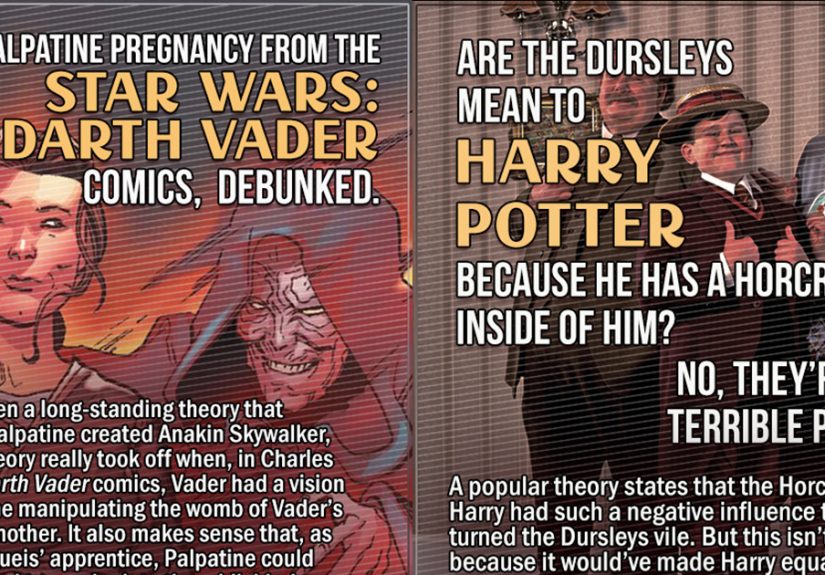
- 14) Star Wars: “Rey is a Kenobi.”
- 15) Star Wars: “Snoke is Darth Plagueis in disguise.”
- Why Debunked Theories Still Matter
- Extended Section: on the Real Fan Experience Behind “Debunked” Theories
- Conclusion
Fan theories are the internet’s favorite sport: no helmets, unlimited speculation, and at least one person confidently posting, “I solved the entire franchise at 2:14 a.m.” on a Tuesday.
Some theories are brilliant. Some are pure chaos. And some are so convincing they briefly feel more “real” than the official plot.
In this guide, we’re breaking down 15 convincing fan theories across movies and TVthen walking through the canon details, creator comments, and evidence that debunked them.
This is not a “fan theories are bad” piece. It’s actually the opposite: a celebration of how deeply people engage with stories.
We’re just separating the fun possibilities from what the text (and creators) actually confirms.
How This Debunk List Works
For each theory, we use a simple framework:
- Why it felt believable (clues, symbolism, editing choices, unresolved arcs)
- What debunked it (canon events, later installments, official interviews, or production facts)
Spoiler note: this article discusses major plot points from Lost, Breaking Bad, WandaVision, Game of Thrones, Star Wars, and more.
15 Convincing Fan Theories, Debunked
1) Grease: “Sandy actually died at the beginning, and the movie is her fantasy.”
Why it sounded convincing: The lyric “I saved her life; she nearly drowned” and that wildly dreamy ending where the car literally flies away made people feel like this was a heaven-bound metaphor.
Why it’s debunked: The film’s co-writer, Jim Jacobs, has publicly rejected this interpretation. The movie is a stylized musical romance, not a secret afterlife thriller. The flying car is theatrical exaggeration, not evidence of a fatal timeline.
2) Titanic: “Jack could have fit on the door, so his death makes no sense.”
Why it sounded convincing: Freeze-frame geometry. Fans have measured that floating panel for years and concluded two people could physically fit on it.
Why it’s debunked: Later testing and creator commentary clarified the issue wasn’t just surface areait was buoyancy and body heat loss. In other words: “fit” does not equal “survive.” The internet solved shape; physics still had opinions.
3) Inception: “The spinning top proves Cobb is still dreaming forever.”
Why it sounded convincing: The final shot cuts before the top falls, so viewers naturally read it as Nolan’s wink that reality never returns.
Why it’s debunked: Michael Caine later said scenes featuring his character were intended as reality markers, and Cobb reunites with his children in exactly that context. Also, the top visibly wobbles before cut. The ending is emotionally ambiguous by designbut “definitely still dreaming” is not canon certainty.
4) Lost: “They were dead the whole time.”
Why it sounded convincing: The show is full of spiritual imagery, metaphysical language, and unexplained phenomena. By the finale, “everyone was dead all along” sounded neat and tidy.
Why it’s debunked: The island events were real in the show’s timeline. The finale’s church sequence functions as a separate afterlife reunion, not a retroactive cancellation of six seasons of events. Translation: yes, the symbolism is heavy; no, Oceanic 815 wasn’t a six-season ghost retreat.
5) WandaVision: “Mephisto is secretly behind everything.”
Why it sounded convincing: Hex reality warping, devil-adjacent comic lore, mysterious clues, and a weekly episode cadence that supercharged theory culture.
Why it’s debunked: The finale resolves the conflict through Wanda’s grief arc and Agatha’s manipulationnot a hidden Mephisto reveal. Marvel leadership later indicated Mephisto was not planned for that series. The fan energy was elite; the villain prediction missed.
6) Game of Thrones: “Bran is the Night King.”
Why it sounded convincing: Bran’s time-vision abilities + Hodor timeline trauma + internet confidence = one of fandom’s biggest pre-finale theories.
Why it’s debunked: The show never reveals Bran as the Night King, and the Night King is killed by Arya in the Battle of Winterfell. The theory had elegant symmetry, but the canon chose direct confrontation over time-loop identity twist.
7) Aladdin: “The story happens in a post-apocalyptic future.”
Why it sounded convincing: Genie makes modern pop-culture references, so fans inferred that Agrabah might be a far-future remnant civilization.
Why it’s debunked: Directors Ron Clements and John Musker rejected this interpretation in interviews. The anachronisms are comedic performance choices, not timeline breadcrumbs for a hidden dystopian universe.
8) Aladdin: “There’s a hidden ‘take off your clothes’ line in the balcony scene.”
Why it sounded convincing: VHS-era audio fuzz plus playground rumor networks (the original social media) created a legendary “you can totally hear it” myth.
Why it’s debunked: The claim has been denied repeatedly by people involved with the film. No verified production evidence supports an intentional subliminal instruction. It’s a classic case of misheard audio becoming pop-culture folklore.
9) The Wizard of Oz: “A Munchkin hanged himself in the background of a scene.”
Why it sounded convincing: Grainy copies and shadowy movement in one shot gave rise to a very dark rumor that spread for decades.
Why it’s debunked: Fact-checking and higher-quality analysis found no hanging person. The background movement is attributed to a bird/animal on set in that sequence, not a death captured on camera. A notorious myth, but still a myth.
10) Three Men and a Baby: “A dead child’s ghost appears in the curtains.”
Why it sounded convincing: On older transfers, a cardboard silhouette looked eerie enough to launch one of the most durable home-video urban legends ever.
Why it’s debunked: The figure is a cardboard cutout/standee tied to Ted Danson’s character (a production prop), not paranormal footage. This one was solved by better quality home releases and cast explanationsnot an exorcist.
11) Breaking Bad: “Walter White survived the finale.”
Why it sounded convincing: He collapses as police arrive, and TV has trained us to expect last-second survival twists.
Why it’s debunked: Vince Gilligan has confirmed Walt dies at the end. The ending is tragic closure, not a cliffhanger for a secret escape. If anything, the scene is the show’s final statement: consequences finally collect every debt.
12) Disney Crossover Theory: “Frozen and Tangled are secretly one royal family timeline.”
Why it sounded convincing: Shared visual motifs, timeline speculation, and eagle-eyed frame comparisons made this theory feel like MCU-level planning before that was everyone’s hobby.
Why it’s debunked: Cast comments and franchise continuity discussions have repeatedly treated this as fan imagination, not official canon. Fun connective tissue? Sure. Binding narrative law? No.
13) Disney Theory 2.0: “Tarzan is Anna and Elsa’s brother.”
Why it sounded convincing: A director once framed it as a playful personal headcanon, and fandom interpreted that as official confirmation.
Why it’s debunked: “In my little head” is not the same as canon. Subsequent continuity and production commentary do not lock this in as official storyline. It remains one of the internet’s favorite “almost true because it’s cool” theories.
14) Star Wars: “Rey is a Kenobi.”
Why it sounded convincing: The voice echoes, legacy-family expectations, and trilogy mystery structure made Kenobi lineage feel plausible for years.
Why it’s debunked: Canon reveals Rey as Palpatine’s granddaughter. The narrative pivots from “which famous Jedi bloodline?” to “you are more than your bloodline,” which is a very different thematic destination.
15) Star Wars: “Snoke is Darth Plagueis in disguise.”
Why it sounded convincing: The sequel trilogy introduced a mysterious dark-side figure with unclear origins, and Plagueis had already been mythologized in prequel lore.
Why it’s debunked: Official Star Wars materials describe Snoke as a puppet creation under Palpatine’s control, not Plagueis returning in costume. The reveal is less reincarnation mystery and more strategic manipulation by Sidious.
Why Debunked Theories Still Matter
Here’s the best part: a debunked theory is not a “failed” theory. It’s evidence that audiences are paying attention.
The best fan theories come from close readingdialogue choices, costume symbols, frame composition, score motifs, and continuity details that casual viewers might miss.
Even when they turn out wrong, they make fandom smarter.
In SEO terms, this is exactly why people search for phrases like fan theories explained, movie theories debunked, and TV ending explained:
people don’t just want a plot summarythey want interpretation, context, and receipts.
Storytelling no longer ends at credits; it continues in conversation.
Extended Section: on the Real Fan Experience Behind “Debunked” Theories
If you’ve ever watched a finale and immediately opened three tabsone for Reddit, one for a recap, and one for “wait… did anyone else catch that necklace?”you already understand the emotional economy of fan theories.
They are less about “being correct” and more about participation.
A theory is a ticket into the conversation, a way of saying: I saw this too, and I think it means something.
That impulse is deeply human.
The most intense theory cycles usually follow a predictable rhythm.
First, an episode drops and everyone is calm for about four minutes.
Then one weird prop appears, one line is delivered with suspicious emphasis, and one actor gives a mysterious interview quote.
Suddenly the fandom enters detective mode.
Screenshots are circled.
Timelines are built.
Side characters become “definitely the final villain” by midnight.
By Thursday, someone has linked the theory to ancient mythology, particle physics, and a wallpaper pattern from season one.
By Sunday, there are charts.
The charts are beautiful.
What’s fascinating is how often theories reveal audience hopes more than narrative truth.
People wanted Mephisto in WandaVision not just because clues existed, but because many viewers expected a giant male “final boss” reveal in a genre trained to escalate that way.
People believed “Bran = Night King” because they wanted elegant symmetry and mythic recursion.
People clung to “Rey is a Kenobi” because legacy franchises train us to look for legacy bloodlines.
In each case, the theory acted like a mirror: it reflected what fans thought the story should do, not always what the story would do.
Debunk moments can feel like emotional whiplash.
There’s that split second after a reveal when the timeline you built in your head collapses like a beautifully formatted spreadsheet.
But then something interesting happens: the community adapts.
New interpretations form around the actual canon.
People rewatch scenes through a different lens.
Long threads transform from “proof posts” into “theme posts.”
Instead of “Who is secretly related to whom?” the questions become “What is this story saying about grief, power, destiny, or identity?”
In that shift, fandom grows up a little.
There’s also a practical media-literacy upside.
Theory culture teaches viewers to evaluate evidence: creator statements vs. clickbait, canon text vs. rumor accounts, production constraints vs. narrative intent.
Over time, fans get better at distinguishing confirmed, implied, and headcanon.
That’s a useful skill far beyond entertainment.
So yes, most fan theories get debunked.
That’s normal.
The value was never only in the reveal.
The value is in the collective close reading, the excitement of collaborative interpretation, and the shared joy of caring this much about fictional worlds.
A debunk doesn’t end the fun; it just starts the next round.
And if history is any guide, by next week we’ll all be back online confidently explaining why the side character with four lines is definitely the key to everything.
Again.
Conclusion
The internet loves a bold fan theory, and honestly, so do we.
But the strongest analysis balances imagination with evidence.
As these 15 examples show, convincing theories can spread fastespecially when they align with what audiences want to be true.
Still, canon, creator commentary, and later installments eventually sort speculation from fact.
Keep theorizing. Keep questioning. Keep pausing at suspicious props like your life depends on it.
Just remember: being debunked doesn’t make a theory pointlessit proves people care enough to look deeper.
And that’s the real magic of fandom.