Table of Contents >> Show >> Hide
- What makes a side table look expensive (even when it isn’t)?
- 15 magazine-worthy side tables that only look expensive
- 1) The “faux travertine” cube
- 2) The hammered-metal drum table
- 3) The fluted (reeded) pedestal
- 4) The cane-shelf round table
- 5) The “invisible” acrylic table
- 6) The nesting tables set
- 7) The slim sofa C-table
- 8) The lift-top storage side table
- 9) The campaign-style accent table
- 10) The thick-top hairpin-leg table
- 11) The glossy lacquer-look block
- 12) The thrifted pedestal (plant stand turned side table)
- 13) The “stool as side table” trick
- 14) The tile-top or mosaic accent table
- 15) The sculptural “orb base” statement table
- How to style your side table like it came with a magazine subscription
- Quick buying checklist: how to spot “looks expensive” quality
- Real-life experiences: how people actually get the “expensive” side table look (without paying for it)
- Conclusion
A side table is the unsung hero of a living room. It holds your drink, hides your remote, supports your lamp, and quietly tells guests,
“Yes, I have my life together.” The funniest part? The side table doesn’t actually need to be expensive to look expensive.
With the right shape, finish, and styling, you can get a magazine-worthy vibe on a very un-magazine-worthy budget.
This guide breaks down what makes a side table feel “designer,” then serves up 15 high-impact looks you can buy affordably, thrift, or DIY.
Think: stone-look cubes, fluted pedestals, sleek C-tables, hidden storage, and a couple of “how is that not $800?” tricks.
Bonus: styling rules that keep your end table from looking like a lost-and-found bin.
What makes a side table look expensive (even when it isn’t)?
Expensive-looking furniture usually has two things going for it: intentional design and visual weight.
You don’t need rare Italian marblejust cues that read as thoughtful, tailored, and not randomly assembled in a panic.
1) Proportions that make sense
If a side table is too tall, it towers awkwardly. Too short, it feels like a footstool that got lost on the way to the sofa.
Aim for a height that lines up comfortably with the sofa arm so the table looks built-in, not tacked on.
2) Materials (or convincing look-alikes)
Stone, metal, solid wood, cane, and glass read “premium” because they have texture, depth, and light play.
The good news: faux finishes have gotten ridiculously convincingespecially when you pick simple shapes and let the surface do the talking.
3) Details that suggest craftsmanship
Fluting, rounded edges, tapered legs, slim profiles, and intentional hardware are classic “designer” signals.
Even a basic table can look upgraded with a better knob, a cleaner finish, or a more architectural silhouette.
4) Styling that’s curated, not cluttered
A table can be beautiful and still become a dumping ground. The trick is to style it like a mini “scene”:
one functional anchor (lamp or coaster), one soft element (plant/flowers), and one personal piece (book/object).
Then leave breathing room so it doesn’t look like you’re hosting a tiny yard sale.
15 magazine-worthy side tables that only look expensive
Each idea below includes: why it looks expensive, how to get the look for less, and a quick
styling move to make it feel editorial.
1) The “faux travertine” cube
Why it looks expensive: Stone cubes feel architectural, minimal, and high-endlike they belong in a sunlit designer loft where nobody owns a TV remote.
Get the look for less: Look for resin, concrete-look, or faux-stone laminate cubes. Keep the shape simple so the finish reads intentional.
Style it: Add one sculptural object (a bowl or knot), one small stack of books, and a coaster. Done.
2) The hammered-metal drum table
Why it looks expensive: Texture + shine = instant “boutique hotel lobby.” Hammered metal hides fingerprints and adds depth.
Get the look for less: Try aluminum-look or powder-coated “metal” drums, or thrift a basic drum/pedestal shape and refinish it with metallic paint or wax.
Style it: Pair it with a matte lamp or matte vase so the table becomes the star.
3) The fluted (reeded) pedestal
Why it looks expensive: Fluting reads customlike it was built by someone with a workshop and excellent taste.
Get the look for less: Buy an affordable fluted pedestal table, or DIY the reeded texture with half-round trim pieces and paint.
Style it: Keep decor streamlined: a lamp + one object. Fluting is already “busy” in a good way.
4) The cane-shelf round table
Why it looks expensive: Cane and rattan add warmth and craftsmanship, and the extra shelf looks purposeful (not “I ran out of tabletop space”).
Get the look for less: Choose a round table with a woven or cane shelf, or add cane webbing to an existing shelf panel.
Style it: Use the lower shelf for a basket or a couple of booksnothing more than that.
5) The “invisible” acrylic table
Why it looks expensive: Clear acrylic (lucite) feels modern and gallery-like, and it visually lightens a crowded room.
Get the look for less: Go for thick acrylic and clean edgesthin, wobbly versions look cheap fast.
Style it: Place one bold item on top (a colored glass vase or a graphic book) so it “floats.”
6) The nesting tables set
Why it looks expensive: Nesting tables feel flexible and intentionallike you planned for hosting instead of scrambling with kitchen chairs.
Get the look for less: Pick a mixed-material set (metal + wood or stone-look top) for contrast.
Style it: Keep the top table simple; let the second table peek out with one small tray or candle.
7) The slim sofa C-table
Why it looks expensive: It’s the “I have a designer” tablesleek, practical, and perfect for small spaces.
Get the look for less: Choose sturdy metal framing and a thicker top. Avoid anything too lightweight that screams “temporary dorm solution.”
Style it: One coaster and one small catchall dish. The whole point is clean and functional.
8) The lift-top storage side table
Why it looks expensive: Hidden storage feels premium because it solves real life without looking like a plastic bin had a bad day.
Get the look for less: Look for tables with a removable/lift top compartment to stash remotes, chargers, and that one mystery cable you refuse to throw away.
Style it: Put a tray on top so your essentials look curatedand the top stays “photo ready.”
9) The campaign-style accent table
Why it looks expensive: Corner hardware and structured lines feel tailored and classic, like luggage from a glamorous old movie.
Get the look for less: Thrift a plain wood table and add campaign-style corner brackets and a polished pull.
Style it: Add a small lamp and one framed photo. Campaign style loves simple, bold accents.
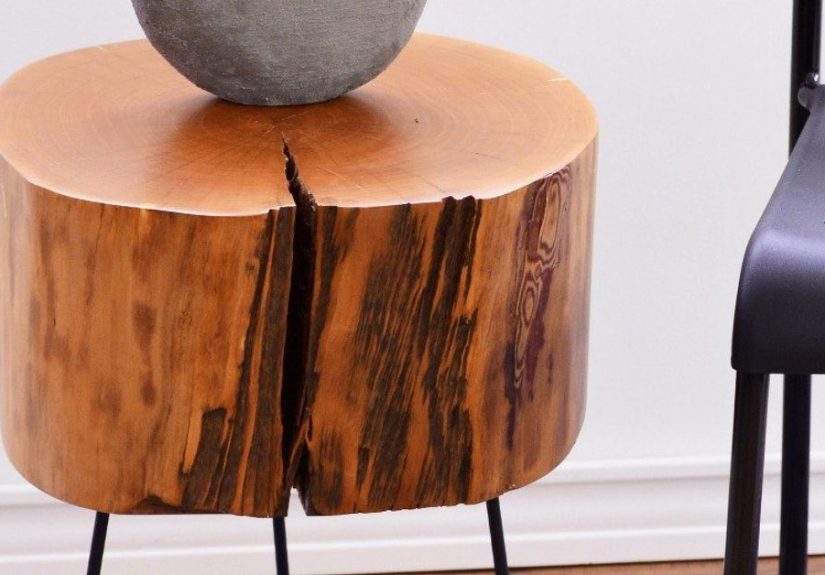
10) The thick-top hairpin-leg table
Why it looks expensive: Mid-century-inspired legs + a substantial top = clean and confident.
Get the look for less: Buy hairpin legs and attach them to a thick butcher-block-style round or square top (even a budget top looks better when it’s thick).
Style it: Add a plant with shape (like a small monstera or fern) and a textured coaster.
11) The glossy lacquer-look block
Why it looks expensive: High-gloss finishes look custom and modernlike a design showroom piece that costs more than your first car.
Get the look for less: Paint a simple cube or Parsons table with a durable high-gloss enamel, sanding between coats for that smooth “expensive” shine.
Style it: Pair with matte objects (ceramic lamp, linen shade) to balance the shine.
12) The thrifted pedestal (plant stand turned side table)
Why it looks expensive: Unusual shapes read “collected,” not “I clicked add-to-cart at 2 a.m.”
Get the look for less: Use a sturdy plant stand or small pedestal as a side tableespecially next to a chair.
Style it: Add a small round tray on top to create a stable surface and a finished look.
13) The “stool as side table” trick
Why it looks expensive: Designers love doubles-duty pieces. A stool or small accent ottoman can look intentional and layered.
Get the look for less: Choose a sturdy stool with an interesting finish (wood, ceramic, or woven). Add a tray for stability.
Style it: Tray + candle + book. Minimal, but cozy.
14) The tile-top or mosaic accent table
Why it looks expensive: Tile looks artisanal and custom, especially in simple patterns and neutral palettes.
Get the look for less: DIY a tile top on a basic table (peel-and-stick tile for renters, real tile for permanence). Seal it so it’s easy to clean.
Style it: Keep everything else quiet so the tile can shineliterally and stylistically.
15) The sculptural “orb base” statement table
Why it looks expensive: Sculptural bases feel like art. Art feels expensive. Even when it’s secretly clever DIY.
Get the look for less: Look for rounded bases, sphere legs, or DIY an orb-style base with affordable components and a simple top.
Style it: One tall lamp or vase to echo the curves and create a strong silhouette.
How to style your side table like it came with a magazine subscription
Start with function (yes, really)
A side table should hold what you actually use: a drink, a book, a lamp, a coaster, a remote.
When you skip function, you get a gorgeous table… that you can’t touch. That’s not “designer.” That’s a museum exhibit.
Use the “rule of three” without overthinking it
Group items in odd numbersespecially threebecause it creates movement and balance. The easiest trio:
something tall (lamp or vase), something medium (book stack), something small (dish/candle).
Vary height and texture, then stop
Mixing textures (ceramic + wood + metal, or glass + linen + stone-look) adds depth fast.
Then leave some empty space so the table doesn’t look like it’s auditioning to be a storage unit.
Keep your palette on purpose
If your room is warm and earthy, echo that with brass, wood tones, and creamy ceramics.
If your room is cool and modern, echo that with black metal, glass, and crisp whites.
Repeating just one color from your rug or pillows on the table styling makes everything look “planned.”
Quick buying checklist: how to spot “looks expensive” quality
- Stability: If it wobbles in the store, it will wobble at homeespecially at 11 p.m. when you’re reaching for water in the dark.
- Finish: Look for smooth paint, even stain, and clean edges (messy seams scream “budget”).
- Weight: Heavier often feels higher quality. Not always, but frequently.
- Hardware: A cheap knob can ruin a good table. Swapping hardware is an easy upgrade.
- Material honesty: Veneer and engineered wood can be fine, but avoid thin, peeling surfaces in high-wear homes.
Real-life experiences: how people actually get the “expensive” side table look (without paying for it)
Here’s what tends to happen in the real world (where drinks sweat, pets judge your choices, and “minimalist” lasts until Tuesday).
First, most people start with the wrong measurement. You find a table online, it arrives, and suddenly it’s either shoulder-height
or sitting so low it looks like it’s trying to hide. The fix is simple: measure your sofa arm height before you shop, and treat the
side table like a teammate, not a random extra. When the heights line up, the entire room looks more intentionaleven if the table was
a bargain.
The second big “aha” moment is realizing that finish beats price. A $40 table with a clean, matte finish can look far more
expensive than a $200 table with shiny, plasticky glare and visible seams. DIYers learn quickly that prep work is the difference between
“custom” and “crafty.” Light sanding, a good primer, and patient paint coats can turn a thrift-store find into something that looks
boutique. People also discover that certain styles are basically cheat codes: fluted pedestals hide little imperfections; drum tables
disguise dents; stone-look cubes stay classy because the shape is simple; and slim C-tables look pricey as long as they’re sturdy.
Then there’s the styling learning curve. Many folks start by putting everything they own on the table: candle, coaster stack, plant,
framed photo, bowl, another bowl (why two bowls?), and a decorative object that is definitely just a rock. The table ends up looking busy,
not beautiful. The “magazine” moment happens when people edit down to a small, balanced setupusually a trio of items with different heights.
A lamp becomes the anchor. A small stack of books adds structure. A dish or tray corrals little items (and quietly prevents the remote from
disappearing into the sofa cushions for the 400th time). Once a tray is involved, the table stops looking like clutter and starts looking
like a styled vignette.
Real homes also teach you about practicality. Glass and acrylic look amazing, but fingerprints are enthusiastic. High-gloss lacquer is
gorgeous, but it’s basically a spotlight for dust. Tile tops are stunning, but you need coasters unless you enjoy explaining water rings
to your future self. Storage tables become instant favorites because they hide chargers, remotes, and the things you want closebut not visible.
That hidden compartment is what makes a space feel calm, and calm is a luxury look all by itself.
Finally, people learn the most underrated trick: matching “expensive” isn’t the goalmatching your room is. A side table looks high-end
when it repeats something already happening in the space: the metal tone from your lamp, the wood tone from your floors, the curve of your mirror,
or the texture of your rug. When those details echo each other, even a budget piece looks like it belongs. And when it belongs, it looks expensive.
(Or at least expensive enough that your guests won’t ask, “So… is this from the ‘temporary furniture’ chapter of your life?”)
Conclusion
The secret to “magazine worthy” side tables isn’t spending moreit’s choosing shapes that feel intentional, finishes that look clean, and styling
that’s curated rather than crowded. Pick one of the 15 looks above, keep proportions in check, and use a simple trio of decor to finish it off.
Your living room will look more polished, your essentials will stay within reach, and your floor can finally retire from being a beverage stand.