Table of Contents >> Show >> Hide
- Why Randy Marsh Became South Park’s MVP Dad
- The 15 Trivia Tidbits About Randy Marsh
- 1) Randy debuted as a background dadthen quietly stole the whole show
- 2) He’s named after Trey Parker’s real-life dad (and the resemblance is the point)
- 3) Randy is voiced by Trey Parkerwho uses him as a comedy pressure valve
- 4) “I thought this was America!” wasn’t improvit’s a signature Randy thesis statement
- 5) He won a Nobel Prize for “Break Wind Theory” (yes, really)
- 6) Randy’s “normal job” is a geologist… and the show actually uses it
- 7) His obsession cycles are basically a masterclass in how fads work
- 8) His Food Network era is peak “midlife crisis, but make it gourmet”
- 9) The “internet apocalypse” episode parodies classic American migration stories
- 10) He disguised himself as Princess Leia for a Pinewood Derby scandal
- 11) Randy’s pop-star era wasn’t just a gagit became a full storyline (with real musical talent)
- 12) “Push (Feeling Good on a Wednesday)” is a real earworm with a very Randy origin story
- 13) Tegridy Farms rewired Randy’s entire identity (and became a long-running era)
- 14) Randy can carry heavy social commentary… by being the worst possible messenger
- 15) The “Pandemic Special” made Randy a fictional patient-zero punchline
- Bonus: of Randy Marsh “Experience” for Fans
- Build a Randy Marsh watch-night that actually feels like South Park
- Turn the trivia into a game (and let Randy’s patterns do the work)
- Try a “spot the Randy moment” challenge during any random episode
- Use Randy as a lens for real-life media literacy (seriously)
- Create a “Tegridy-free” Randy playlist for skeptics
- Conclusion
If South Park had a “Most Likely to Turn a Normal Tuesday Into a Federal Incident” trophy, Randy Marsh would win it, lose it, accuse the trophy of being “woke,” and then start a boutique trophy farm called Tegridy Trophies. He’s Stan Marsh’s dad, Sharon’s husband, a (sometimes) respectable geologist, and the living proof that adulthood is just childhood with bills and worse decisions.
What makes Randy such a fan-favorite isn’t just that he’s funny. It’s that he’s alarmingly believable: the guy who reads one article, becomes an expert, and ruins everyone’s weekend with his “research.” From shouting matches at Little League to surprise pop stardom, Randy’s character evolution mirrors South Park’s own shift from kid-centered chaos to full-town satire. So grab a microwaved frozen burrito (Randy would insist it’s “artisan”), and let’s dig into the best Randy Marsh triviawith enough South Park Randy Marsh deep cuts to impress even the friend who corrects episode numbers at parties.
Why Randy Marsh Became South Park’s MVP Dad
Early on, Randy was mostly “one of the parents.” Over time, he became the show’s go-to adult disaster magnet: impulsive, overconfident, weirdly passionate, and always one bad idea away from turning the town into a cautionary tale. In SEO terms, Randy is the ultimate high-engagement character: strong emotions, memorable catchphrases, constant reinvention, and a surprisingly deep role in the show’s social commentary.
The 15 Trivia Tidbits About Randy Marsh
1) Randy debuted as a background dadthen quietly stole the whole show
Randy’s first appearance goes way back to the early seasons, when he was mostly a “Stan’s dad” type with a job and a pulse. Fast-forward a few years and he’s the adult character most likely to headline an episode, derail a community meeting, and accidentally trigger an international crisis. That slow-burn upgrade is part of the joke: Randy didn’t become outrageous overnight. He evolved like a science experiment nobody asked to runyet somehow can’t stop watching.
2) He’s named after Trey Parker’s real-life dad (and the resemblance is the point)
One of the best pieces of Randy Marsh trivia is that he’s intentionally tied to co-creator Trey Parker’s family life. Randy’s name and even his original profession connect back to Parker’s father, which helps explain why Randy feels so oddly specific: the cadence, the confidence, the “I’m not wrong, reality is wrong” vibe. It’s like an animated tribute to the universal experience of hearing your dad say something questionable with complete certainty.
3) Randy is voiced by Trey Parkerwho uses him as a comedy pressure valve
Trey Parker doesn’t just voice Randy; he uses him like a storytelling Swiss Army knife. Need a suburban dad? Randy. Need a moral panic with legs? Randy. Need someone to take a small inconvenience and treat it like a constitutional crisis? Randy, clearing his throat dramatically. That flexibility is why Randy works in almost any plot: he’s credible enough to start in reality, and chaotic enough to launch the episode into orbit.
4) “I thought this was America!” wasn’t improvit’s a signature Randy thesis statement
Randy’s infamous “I thought this was America!” moment lands because it’s pure Randy philosophy: he’s offended, confused, and passionately committed to being the victimoften while actively causing the problem. The scene comes from a baseball episode that nails sports-parent culture: grown men treating Little League like the Super Bowl, except with fewer commercials and more felony energy. It’s also one of the most quoted South Park dad lines for a reason: it’s ridiculous… and somehow recognizable.
5) He won a Nobel Prize for “Break Wind Theory” (yes, really)
Randy has done many things. Some heroic, most regrettable. But one of his greatest (and weirdest) achievements is being celebrated for scientific work involving flatulence. In an episode that spirals from spontaneous combustion to a full-town “solution,” Randy ends up winning a Nobel Prizethen immediately creates another disaster because the town takes his advice to an extreme. Classic Randy arc: genius for five minutes, menace for the rest of the runtime.
6) Randy’s “normal job” is a geologist… and the show actually uses it
Before the farm, before the pop-star twist, before the town meetings that should legally require a fire extinguisher, Randy had a legitimate career in geology. The series leans into his work at seismic and geological offices as a grounding detailuntil Randy does something that makes you wonder how he ever earned a paycheck without a handler. It’s funnier because it’s real: Randy isn’t a cartoon villain. He’s a credentialed adult with the emotional regulation of a caffeinated squirrel.
7) His obsession cycles are basically a masterclass in how fads work
Randy is the embodiment of a trend-driven internet brainexcept he’s doing it in a small Colorado town where everyone knows his name and is tired of his “new phase.” One week it’s cooking. Another week it’s entrepreneurship. Another week it’s a moral crusade. Randy doesn’t just try fads; he canonizes them. He needs the whole town to agree he’s right, even when he clearly discovered the concept three hours ago. If you’ve ever had a friend who won’t stop talking about their “new lifestyle,” you’ve met a Randy.
8) His Food Network era is peak “midlife crisis, but make it gourmet”
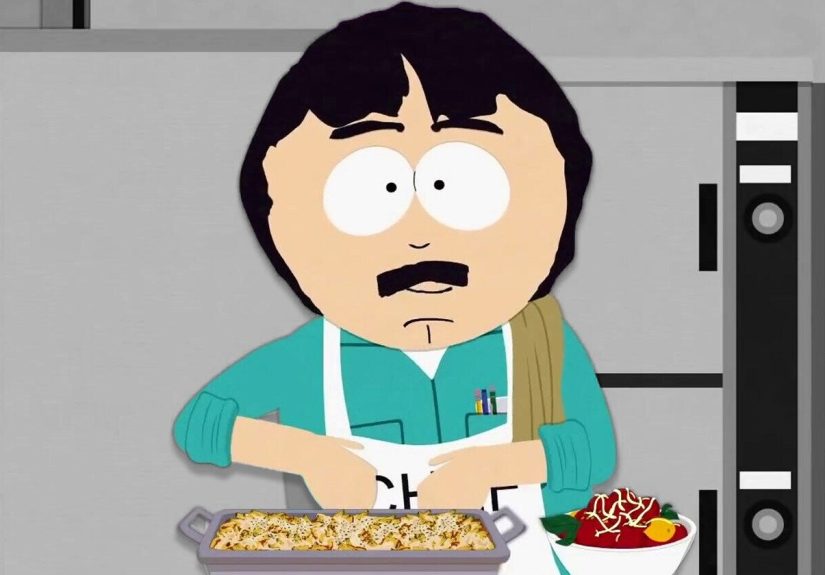
Randy’s cooking obsession episode is infamous because it turns something wholesomelearning to cookinto something hilariously unhinged. He becomes fixated on culinary TV, starts talking like a chef, and treats ingredients with the kind of reverence usually reserved for sacred artifacts or brand-new electronics. The punchline isn’t just the absurdity; it’s the accuracy: Randy acts like he’s discovered sophistication, but he’s really discovered a new way to avoid responsibility while feeling superior about it.
9) The “internet apocalypse” episode parodies classic American migration stories
When the internet goes down, Randy doesn’t calmly troubleshoot. He panics like civilization has ended, then leads the family on a journey that riffs on old-school American “hard times” narratives. It’s one of the smartest uses of Randy as a satire engine: his overreaction turns a modern inconvenience into a dramatic historical parody, with the Marsh family basically acting out a digital-era dust bowl. Randy’s gift is turning “Wi-Fi’s out” into “pack the wagon.”
10) He disguised himself as Princess Leia for a Pinewood Derby scandal
Randy’s parenting style can be summarized as: “If my kid loses, the universe is unfair.” In the Pinewood Derby episode, he’s so determined to help Stan win that he crosses multiple ethical lines, then doubles down when consequences appear. The disguise detail is pure South Park: committed, ridiculous, and just plausible enough in Randy’s mind to feel like a good plan. It’s also a perfect example of Randy logic: if you can’t win fairly, win confidently and act offended anyone noticed.
11) Randy’s pop-star era wasn’t just a gagit became a full storyline (with real musical talent)
Randy being revealed as a famous pop star parody starts as a surprise punchline, then grows into a longer arc that leans into identity, fame, and media obsession. The show even brings serious musical firepower into the mixturning Randy’s “secret” into a bizarrely catchy production. If you only know Randy as “the Tegridy guy,” this chapter is a reminder: Randy has had multiple eras, like a pop icon… except the merch is mostly lawsuits.
12) “Push (Feeling Good on a Wednesday)” is a real earworm with a very Randy origin story
The fictional song “Push (Feeling Good on a Wednesday)” is peak South Park: it sounds legitimately polished while still being a joke with layers. The humor comes from contrastRandy’s middle-aged dad energy colliding with moody pop aestheticsplus the show’s commitment to treating the bit like it’s high art. It’s one of those moments where you laugh, then realize you might accidentally hum it at the grocery store.
13) Tegridy Farms rewired Randy’s entire identity (and became a long-running era)
The move to Tegridy Farms is a major pivot: Randy shifts from office geologist to full-time marijuana entrepreneur, dragging his family into a lifestyle brand built on the idea of “integrity,” loudly misspelled as a marketing slogan. The storyline lets the show satirize modern wellness branding, cannabis commercialization, and the way people use “authenticity” as a weapon. Randy doesn’t just sell a producthe sells a version of himself, and he’s always the first customer.
14) Randy can carry heavy social commentary… by being the worst possible messenger
A key reason Randy stays relevant is that he can anchor episodes about uncomfortable topics without the show pretending he’s a saint. Sometimes Randy’s role is to make a terrible mistake in public and force everyoneespecially Stanto deal with the consequences and the real-world meanings underneath the joke. That structure turns Randy into a narrative tool: he’s not “the moral,” he’s the spark that makes the moral unavoidable.
15) The “Pandemic Special” made Randy a fictional patient-zero punchline
In the show’s pandemic-era storytelling, Randy becomes central againthis time as a character desperate to hide his connection to the outbreak while also trying to profit from it. It’s dark comedy with a Randy twist: he’s simultaneously guilty, panicked, opportunistic, and convinced he can talk his way out of consequences. If Tegridy Farms was Randy as a businessman, this is Randy as a walking satire of denial, blame-shifting, and “please don’t look at my browser history.”
Bonus: of Randy Marsh “Experience” for Fans
Want to experience Randy Marsh trivia the fun waywithout needing a lawyer, a town council meeting, or an emergency family therapy session? Here are fan-friendly ways to turn Randy into a mini event, whether you’re rewatching old seasons or introducing a friend to the chaos.
Build a Randy Marsh watch-night that actually feels like South Park
The best Randy episodes hit different when you watch them in “era blocks.” Try grouping them by theme instead of season: start with “Randy the Responsible Adult” (early seasons), then jump to “Randy the Obsession Machine” (Food Network and internet panic), and finish with “Randy the Brand” (Tegridy Farms and beyond). You’re not just watching jokesyou’re watching a character slowly discover that attention is an addictive substance.
Turn the trivia into a game (and let Randy’s patterns do the work)
Randy is perfect for a low-effort trivia night because he repeats behaviors, not sentences. Make questions like: “What tiny problem does Randy treat like a national emergency?” or “Which Randy ‘phase’ lasts exactly long enough to ruin dinner?” People don’t even need perfect memory to playthey just need to understand the Randy algorithm: overconfidence → escalation → public embarrassment → zero lessons learned.
Try a “spot the Randy moment” challenge during any random episode
Here’s the funny part: you can watch episodes where Randy is not the main focus and still find his fingerprints on the comedy. Look for the background parent conversations, the town-meeting overreactions, the adult herd mentality. Randy often acts like a temperature gauge for whatever the episode is satirizingif the topic is stupid, Randy will treat it like gospel; if the topic is serious, Randy will approach it with exactly the wrong kind of confidence.
Use Randy as a lens for real-life media literacy (seriously)
This sounds dramatic, but it’s true: Randy episodes are weirdly useful for talking about how misinformation spreads. Randy doesn’t need to be “evil” to cause damagehe just needs to be convinced he’s right. That makes him a perfect conversation starter: how does a normal person become a loud spokesperson for nonsense? How do communities reward certainty over accuracy? Randy is the comedic version of that spiral, which is why he still feels contemporary even decades into the show’s run.
Create a “Tegridy-free” Randy playlist for skeptics
Not everyone loves the Tegridy era, and that’s fine. If you’re trying to sell someone on Randy without farm fatigue, pick episodes that show his range: the sports-parent meltdown, the pseudo-science hero moment, the household obsession that wrecks family peace, and the big public mistake that forces Stan to grow up faster than he wants to. Randy is funniest when he’s relatable for 30 secondsthen wildly, gloriously not.
Most of all, the Randy experience is this: you laugh at him, then you recognize the impulse underneathwanting to matter, wanting to be seen, wanting to feel like you’re doing something important. Randy just takes that very human need and drives it straight into a ditch at 80 miles an hour. And somehow, we keep watching… because deep down, we’re all grateful it’s Randy making the mess and not us.
Conclusion
Randy Marsh is more than a running gaghe’s South Park’s ultimate adult mirror: a well-meaning, poorly calibrated guy who keeps mistaking intensity for wisdom. Whether he’s chasing “tegridy,” inventing science with side effects, or shouting his way into a headline, Randy stays iconic because he’s endlessly flexibleand painfully familiar. If you’re hunting for the best Randy Marsh trivia, the real secret is simple: Randy isn’t just Stan’s dad anymore. He’s the show’s chaos mascot, and he’s never met a bad idea he couldn’t turn into a lifestyle.