Table of Contents >> Show >> Hide
- Why Foreshadowing Works So Well in Horror
- 17 Clever Clues And Foreshadowing In Horror Movies
- 1. The Sixth Sense quietly tells you Malcolm is already gone
- 2. Get Out turns awkward small talk into a warning siren
- 3. Hereditary sprinkles doom everywhere before it drops the piano on your soul
- 4. Midsommar basically spoils itself in the artwork
- 5. Us telegraphs its doubles through rabbits, signs, and old pop culture leftovers
- 6. The Shining tells you the Overlook is studying the family before it breaks them
- 7. Scream hides its solution inside its own genre jokes
- 8. Psycho gives away Norman Bates through birds, language, and that very wrong energy
- 9. Halloween uses background space like a threat
- 10. A Nightmare on Elm Street warns you that reality is already leaking
- 11. The Babadook introduces the monster as grief wearing a top hat
- 12. The Ring turns fragmented images into a countdown
- 13. Final Destination treats tiny visual details like loaded traps
- 14. The Others keeps functioning by ghost rules before it admits why
- 15. Saw hides its answer in the middle of the room
- 16. The Cabin in the Woods tells you horror is a machine before the victims know it
- 17. It Follows uses background movement as a clue you can never unsee
- What These Horror Clues Reveal About Great Storytelling
- The Experience of Catching Foreshadowing in Horror Movies on a Rewatch
- Conclusion
Horror movies love a good jump scare, but the really great ones do something even sneakier: they whisper the ending to you long before they scream it. A glance in the background, one odd line of dialogue, a prop that seems harmless until it absolutely is not: this is where horror earns its rewatch value. The first time through, you are busy clutching your snack and making terrible life choices on behalf of the characters. The second time, you realize the movie was practically waving a bloody little flag the whole time.
That is the magic of foreshadowing in horror movies. It does not just set up a twist; it builds dread. It tells your nervous system that something is wrong before your brain can name it. The best horror clues feel invisible on a first watch and obvious on a second, which is a neat trick and also a little rude.
Below are 17 clever clues and foreshadowing moments in horror movies that prove the genre is smarter than it gets credit for. Some are visual, some are thematic, and some are hiding in plain sight like the worst game of cinematic hide-and-seek ever invented.
Why Foreshadowing Works So Well in Horror
In comedy, a setup leads to a punchline. In horror, a setup leads to a locked basement, a phone call from inside the house, or a smiling cult member standing where no smiling cult member should be. Foreshadowing matters because horror depends on tension, and tension depends on anticipation. If viewers feel that a story is random, the scares may land, but the movie will not linger. When a film plants clues early, the ending feels earned. That is why the best scary movie details are not just decorative Easter eggs. They are the bones of the whole thing.
17 Clever Clues And Foreshadowing In Horror Movies
1. The Sixth Sense quietly tells you Malcolm is already gone
M. Night Shyamalan’s most famous twist works because the movie plays fair. Malcolm appears to be part of everyday life, but if you look closely, he is always isolated. He is framed in conversations without truly participating in them, and his scenes with his wife are built around distance, silence, and painful misinterpretation. The restaurant scene is especially sneaky: on a first watch, it looks like marital tension. On a rewatch, it looks like a man speaking into a void. That is not a cheap trick. That is elegant horror movie foreshadowing.
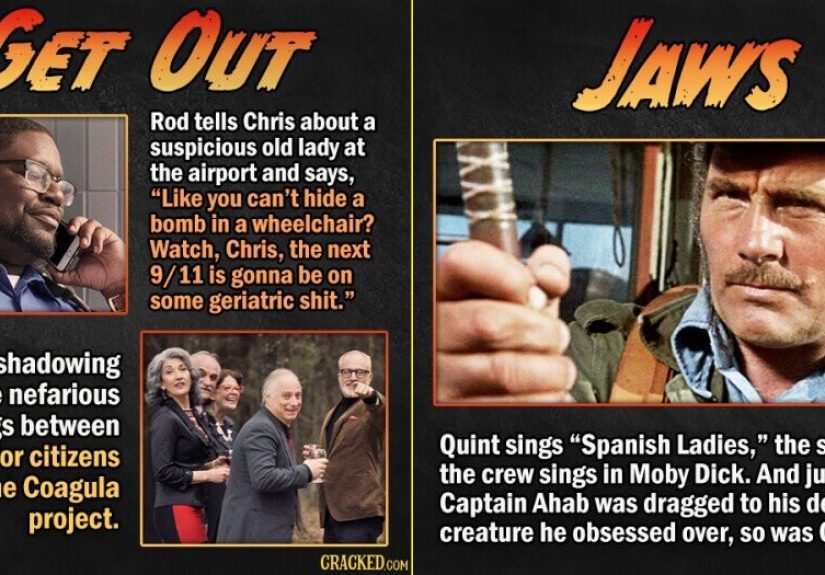
2. Get Out turns awkward small talk into a warning siren
One reason Get Out is so rewatchable is that nearly every “weird” moment is actually the plot blurting out the truth. The party guests talk about Chris’s body like shoppers inspecting a luxury appliance. Georgina and Walter do not behave like employees because, well, they are not functioning as ordinary employees at all. Even the family’s casual comments about physical traits, strength, and genetics stop sounding clumsy and start sounding terrifyingly transactional. Jordan Peele hides the horror in politeness, which is a brutally effective move.
3. Hereditary sprinkles doom everywhere before it drops the piano on your soul
Hereditary is practically wallpapered with clues. The movie uses symbols, miniature environments, strange background figures, and repeated images of decapitation to set up what is coming. There are cult references tucked into the frame, odd figures standing in darkness, and school scenes that echo the family’s lack of control over their fate. By the time the film reaches its horrifying final stretch, you realize the characters were never steering the car. The road was chosen for them ages ago. Which is comforting only if you are a demon king, I suppose.
4. Midsommar basically spoils itself in the artwork
Ari Aster apparently believes subtlety is fun, but only in a sadistic Scandinavian way. Midsommar lays out much of its story in the opening imagery, especially in the murals and decorative artwork that surround the characters. Once you know where the story goes, the paintings feel like a storyboard for the emotional and ritual violence to come. There is also the now-famous visual echo involving the bear and the flower-crowned heroine. The film is bright, beautiful, and deeply confident that you will not notice it is telling on itself.
5. Us telegraphs its doubles through rabbits, signs, and old pop culture leftovers
Us is stuffed with recurring images that do more than create atmosphere. Rabbits point to duplication, testing, and uneasy innocence. The Hands Across America reference looks like a quirky bit of cultural background at first, but later it becomes one of the film’s most unsettling visual ideas. Even the biblical line from Jeremiah 11:11 hangs over the movie like an alarm bell. Jordan Peele does not rely on one giant clue; he builds a web of them, so the movie feels haunted by its own structure.
6. The Shining tells you the Overlook is studying the family before it breaks them
Stanley Kubrick’s film is a buffet of ominous detail. One of its smartest tricks is how often the hotel seems to know the family better than they know themselves. Danny’s visions arrive early, yes, but the film’s visual design also makes the Overlook feel like an active intelligence. The hedge maze is not just a cool set piece; it is a metaphor for the family’s mental trap. The eerie symmetry, the impossible geography, and the repeated sense of watching and being watched all foreshadow Jack’s collapse. The hotel is not a backdrop. It is the predator.
7. Scream hides its solution inside its own genre jokes
Scream is funny enough that viewers can miss how carefully it sets up its killers. The movie’s obsession with horror “rules” is not just satire; it is a way of controlling what the audience expects. Billy acts suspiciously enough to seem like a red herring, which is exactly what makes him useful. Stu, meanwhile, plays the fool so effectively that he slips under the radar. On rewatch, the dialogue between them has a sly edge that feels almost smug. It is the cinematic version of two kids trying not to laugh during a prank call from hell.
8. Psycho gives away Norman Bates through birds, language, and that very wrong energy
Alfred Hitchcock was not exactly in the business of accidental choices. In Psycho, Norman’s stuffed birds are more than creepy decor. They suggest predation, fixation, and a frozen version of life. His dialogue also keeps nudging toward his fractured identity, especially when he talks about his mother in terms that feel both intimate and performative. The movie does not spoil itself outright, but it surrounds Norman with clues that something is divided, artificial, and deeply unhealthy. Which is one way to describe a motel, I guess.
9. Halloween uses background space like a threat
John Carpenter’s genius move in Halloween is how often Michael Myers is simply there. Not lunging. Not shouting. Just existing in the frame like suburbia has grown a serial-killer-shaped tumor. These background appearances foreshadow the movie’s whole philosophy of evil: it can be ordinary, patient, and weirdly persistent. The white mask itself becomes a clue too, because it flattens Michael into a shape rather than a person. He is less a man than a stalking idea, and the movie teaches you that before the body count really starts climbing.
10. A Nightmare on Elm Street warns you that reality is already leaking
Wes Craven’s film thrives on the feeling that sleep is no longer a safe border. Long before the finale, the movie keeps blurring dream logic and waking life in ways that prepare viewers for Freddy’s total invasion. Hallway visuals, body distortions, bizarre transitions, and surreal school scenes all hint that reality is unstable. Nancy spends much of the movie trying to identify the rules, while the audience slowly realizes the rules are dissolving in front of them. That makes every later scare hit harder, because the floorboards of reality have already started to buckle.
11. The Babadook introduces the monster as grief wearing a top hat
The genius of The Babadook is that the title character is both a literal horror figure and a psychological warning. Once the pop-up book appears, the movie starts forecasting emotional collapse as much as supernatural danger. Amelia’s exhaustion, resentment, and isolation are not side notes; they are the runway. The Babadook becomes terrifying because the film foreshadows that it can only grow stronger in a home where grief is buried rather than spoken. It is a monster movie with the emotional honesty of a therapy session gone terribly, terribly wrong.
12. The Ring turns fragmented images into a countdown
One reason The Ring burrows into your skull is how it weaponizes images before the cursed videotape is fully understood. The film’s strange visual fragments, watery motifs, and repeated emphasis on recording, copying, and replaying all foreshadow that the horror is not just supernatural. It is transmissible. The movie keeps hinting that the curse behaves like media: it spreads by being seen and repeated. That makes the dread feel modern, contagious, and annoyingly efficient.
13. Final Destination treats tiny visual details like loaded traps
This franchise turned foreshadowing into a full-contact sport. In Final Destination, death scenes are often preceded by tiny visual or behavioral clues that make the world feel rigged. A gesture, a reflection, a household object, a bit of design in the background: all of it can become a preview. The film teaches viewers to scan the frame for doom, which is why even harmless objects start feeling suspicious. Ceiling fan? Menace. Water on the floor? Menace. Loose wire? Obviously menace. The movie effectively turns everyday life into an OSHA-themed nightmare.
14. The Others keeps functioning by ghost rules before it admits why
The Others is one of those movies that becomes extra satisfying once you realize how strict its internal logic has been all along. The house rules about light, silence, curtains, and closed doors are not merely Gothic atmosphere. They are clues about the family’s true condition. The servants’ calm behavior and Grace’s disoriented certainty also play differently on rewatch. The film never cheats; it simply lets you misread what you are seeing until the final reveal clicks into place.
15. Saw hides its answer in the middle of the room
The first Saw has one of the cheekiest setups in modern horror because the movie plants the truth right in front of you. The so-called corpse on the bathroom floor feels like set dressing, not story. That assumption is the trick. The film distracts viewers with puzzles, panic, and a parade of red herrings, all while the biggest clue remains motionless in the center of the frame. It is a wonderfully nasty piece of horror engineering. The movie does not hide the truth from you. It hides it inside your own assumptions.
16. The Cabin in the Woods tells you horror is a machine before the victims know it
This movie works because it treats genre convention like a literal operating system. The control-room scenes, the manipulation of archetypes, and the strange confidence of the unseen organizers all foreshadow that the cabin scenario is not random misfortune. It is managed. Every creepy object and every forced decision starts to feel less like coincidence and more like ritualized engineering. By the time the full meta-horror framework is revealed, the movie has already told you that someone is pulling strings. It just waited until later to show the whole puppet theater.
17. It Follows uses background movement as a clue you can never unsee
David Robert Mitchell’s film may have one of the simplest and smartest setups in modern horror: the threat can look like anybody, and it is always walking toward you. That premise turns every background figure into possible foreshadowing. A slow approach in a long shot suddenly becomes a panic event. The movie teaches you to scan hallways, streets, and doorways, which means the audience starts participating in the suspense. That is brilliant design. Few horror movies make the viewer work this hard, and fewer still reward that attention so consistently.
What These Horror Clues Reveal About Great Storytelling
The common thread in all these examples is not just cleverness. It is control. Great horror directors understand that fear grows in the gap between what viewers notice and what they understand. A clue can be visual, thematic, or verbal, but it needs to do two things at once: feel natural in the moment and meaningful in hindsight. That is why the best foreshadowing in horror movies does not feel like homework. It feels like atmosphere until the ending snaps it into focus.
And that is also why horror fans rewatch everything. We are not simply checking whether a scare still works. We are studying the crime scene. We are looking for the evil little breadcrumbs that were there the whole time. Sometimes that means catching a symbol in the wallpaper. Sometimes it means realizing a joke was actually a confession. Sometimes it means discovering that a movie told you the ending in the first five minutes and you still walked straight into the trap. Respectfully, that is on us.
The Experience of Catching Foreshadowing in Horror Movies on a Rewatch
There is a very specific joy that comes from rewatching a horror movie and realizing the film has been several steps ahead of you the whole time. On a first watch, you are mostly surviving the movie. You are reacting. Your brain is busy sorting out danger, noise, faces in the dark, and whether that creak upstairs is “old house settling” or “congratulations, you are about to become Act Three.” But on a rewatch, the panic calms down just enough for your attention to get sharper. That is when the hidden clues start showing off.
You notice the background extra who lingers half a second too long. You notice that the camera keeps returning to one innocent-looking object as if it has union-mandated screen time. You notice that the dialogue everyone laughed at during the first viewing was actually a spoiler wearing a fake mustache. Horror movies become almost playful at that point. They stop feeling like roller coasters and start feeling like magic tricks you are finally close enough to study.
That experience is part of what makes the genre so addictive. Good horror is not disposable. It is layered. A movie like Get Out changes when you know what the Armitage family is really doing. Hereditary becomes more tragic when every little symbol and off-kilter behavior clicks into place. The Sixth Sense goes from emotional mystery to technical flex. Instead of weakening the film, knowing the reveal often makes it stronger, because the craftsmanship becomes visible. You stop asking, “What happens?” and start asking, “How did they pull that off without me seeing it?”
There is also a communal side to it. Horror fans love comparing notes after the fact. Somebody notices a line of dialogue. Somebody else points out a visual callback. Another person says, “Wait, was that creepy painting on the wall there the whole time?” Suddenly the movie becomes a conversation, not just an experience. That is why horror movie forums, video essays, and post-screening debates never really die. The genre encourages investigation. It practically dares viewers to come back with a flashlight and better instincts.
And maybe that is the funniest thing about horror. It is a genre built on fear, but some of its deepest pleasures come from admiration. When foreshadowing is done well, viewers feel tricked and respected at the same time. The movie scared you, yes, but it also trusted you. It trusted that eventually you would catch up, connect the dots, and appreciate the design. That delayed recognition is satisfying in a way cheap shocks can never be.
So if you ever finish a horror movie and immediately want to watch it again, that is not weird. That is the sign of a well-built nightmare. The best scary films do not end when the credits roll. They crawl back into your head, rearrange the evidence, and make you realize the monster left footprints on page one.
Conclusion
The best horror foreshadowing does not just prepare a twist ending. It deepens theme, sharpens mood, and makes the whole movie feel more deliberate. Whether it is a background figure in Halloween, a loaded line in Get Out, or a mural in Midsommar that practically shrugs and says, “Yep, that is the plot,” these clues reward close attention. That is why horror remains one of the richest genres for rewatching. The scream may bring you in, but the hidden structure is what keeps you coming back.