Table of Contents >> Show >> Hide
- The Original Trilogy Was Basically a Beautiful Emergency
- 1. Darth Vader’s voice was rebuilt after filming
- 2. James Earl Jones recorded A New Hope in less than three hours
- 3. Vader’s breathing came from a scuba tank regulator
- 4. The lightsaber hum came from a projector and a misbehaving cable
- 5. Chewbacca’s voice was an animal cocktail
- 6. Anthony Daniels wore a 60-pound C-3PO suit locked on with screws
- 7. R2-D2’s ride into the sandcrawler was an old-school camera trick
- 8. Mark Hamill once climbed inside a dewback and found a David Bowie review
- 9. The stormtrooper head-bonk was real
- 10. Hoth weather was so brutal that scenes were shot outside the hotel
- Empire and Jedi Somehow Got Even Stranger
- 11. Yoda was almost played by a monkey in a mask
- 12. Hamill’s Yoda earpiece kept picking up pop radio
- 13. Vader’s father reveal was protected with a fake script page
- 14. Han Solo’s “I know” was an ad-lib
- 15. C-3PO’s movement on Chewbacca’s back was controlled with fishing line
- 16. Anthony Daniels accidentally overheard a major plot secret while napping
- 17. Some Ewok battle extras were office workers and dock workers
- 18. Peter Mayhew was warned not to wander in costume because hunters might think he was Bigfoot
- 19. The rancor worked once the crew stopped trying to stuff a human into it
- The Prequels Brought in New Technology and Fresh Madness
- 20. George Lucas wrote The Phantom Menace by hand
- 21. A massive storm wrecked Mos Espa and the Tunisian army helped rebuild it
- 22. The “Duel of the Fates” shoot chewed through 300 aluminum lightsaber blades
- 23. The podrace crowd included cotton swabs and football fans
- 24. Attack of the Clones used no physical clone trooper costumes
- 25. The Wookiee army in Revenge of the Sith was way smaller than it looked
- The Sequel Era Quietly Brought Back Handmade Magic
- Why These True Star Wars Behind The Scenes Stories Make the Movies Even Better
- Conclusion
Every blockbuster claims to have “movie magic,” but Star Wars has always specialized in the kind of magic that looks suspiciously like chaos, duct tape, panic, genius, and one deeply stressed person holding a fishing rod just out of frame. That is part of what makes these true Star Wars behind the scenes stories so irresistible. The galaxy far, far away did not arrive fully polished. It was built through blizzards, broken props, practical creatures, weird sound experiments, and a long parade of moments that sound completely made up until you realize they actually happened.
If you love Star Wars movie facts, Star Wars production stories, and the nuts-and-bolts craft behind legendary scenes, this list is for you. These are the real tales that make the franchise feel even bigger: actors trapped in armor, monsters made from household materials, secrets guarded like Imperial military data, and entire worlds created from things you would never expect to find anywhere near a film set. In other words, this is the side of Star Wars where the Force meets pure filmmaking insanity.
The Original Trilogy Was Basically a Beautiful Emergency
-
1. Darth Vader’s voice was rebuilt after filming
David Prowse performed Vader physically on set and spoke the lines during production, but George Lucas decided the final voice needed a different sound. James Earl Jones was brought in later to re-record Vader’s dialogue, turning the character from intimidating costume into full-on cinematic thundercloud. It is one of the most famous voice swaps in movie history.
-
2. James Earl Jones recorded A New Hope in less than three hours
Yes, really. One of the most recognizable voices in film history took shape in a session shorter than many people’s trip to Costco. Jones reportedly recorded all of Vader’s dialogue for A New Hope in less than three hours, which is frankly unfair to every mortal actor who has ever needed 27 takes to say “hello.”
-
3. Vader’s breathing came from a scuba tank regulator
Star Wars sound design has always been gloriously hands-on. Ben Burtt created Vader’s mechanical breathing by placing a microphone inside a scuba regulator. That means one of the creepiest sounds in cinema was born from underwater equipment, which somehow makes Vader even more dramatic. He was basically half Sith Lord, half haunted snorkeling lesson.
-
4. The lightsaber hum came from a projector and a misbehaving cable
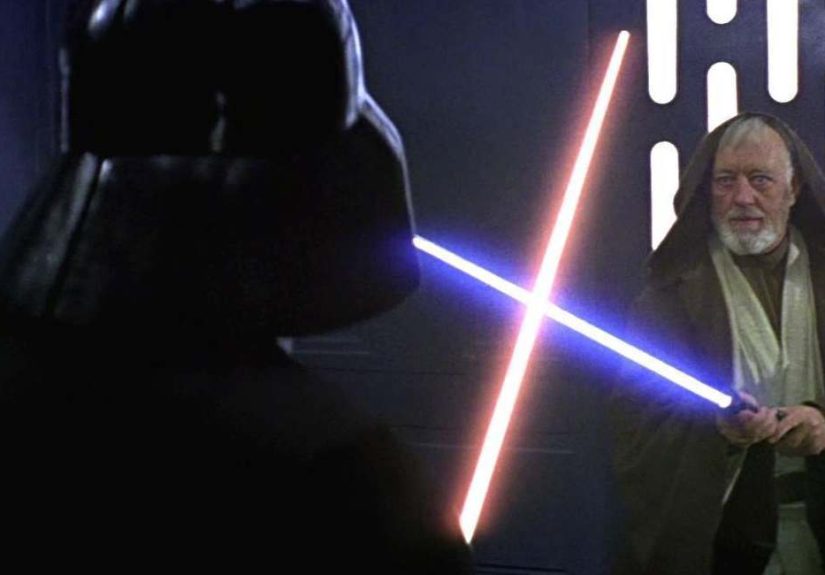
The iconic lightsaber sound was made by blending the hum of an idle 35mm film projector with audio captured from a slightly broken microphone cable passed by an old TV set. So the weapon of elegant Jedi knights was crafted from analog weirdness, electrical accident, and a sound designer poking at machines until they sang. That is art, folks.
-
5. Chewbacca’s voice was an animal cocktail
Chewie does not “talk,” but he absolutely communicates, and that was by design from day one. Ben Burtt built Chewbacca’s vocal palette from recordings of bears, lions, walruses, and badgers. The result feels emotional rather than random, which is why Chewie can grunt, howl, complain, and grieve harder than some fully scripted human characters.
-
6. Anthony Daniels wore a 60-pound C-3PO suit locked on with screws
Fans remember C-3PO as sleek and polished. Anthony Daniels probably remembers him as elegant suffering. The original costume weighed around 60 pounds and was secured with four screws, leaving Daniels dependent on the crew to get in and out. Every nervous complaint from Threepio suddenly feels less like acting and more like highly polished autobiography.
-
7. R2-D2’s ride into the sandcrawler was an old-school camera trick
That shot of Artoo moving upward into the sandcrawler was not a fancy digital effect. The droid was sent down a tube, and the film was later reversed. It is a classic moviemaking trick, but it works so smoothly that most viewers never question it. Sometimes the smartest effect is just doing something simple and pretending it is space technology.
-
8. Mark Hamill once climbed inside a dewback and found a David Bowie review
This is the kind of detail no screenwriting class can prepare you for. Hamill said that when he climbed inside the dewback prop outside the cantina in Tunisia, he found newspaper papier-mâché inside, including a review of a David Bowie concert in Paris. Somewhere in the sands of Tatooine lived a tiny accidental shrine to glam rock. Cinema contains multitudes.
-
9. The stormtrooper head-bonk was real
One of the most beloved goofs in Star Wars happened when a stormtrooper smacked his head on a blast door while chasing the heroes through the Death Star. The moment stayed in the movie, and later stories traced it to actor Laurie Goode feeling a bit urgent in the stomach department. The Empire may be efficient, but that hallway said otherwise.
-
10. Hoth weather was so brutal that scenes were shot outside the hotel
The snow sequences in The Empire Strikes Back were not just convincing; they were miserable. Production in Norway got hit by brutal weather, and some shots had to be staged just outside the crew’s hotel while the camera stayed inside. That means Luke collapsing in the snow was captured in genuinely nasty conditions, which explains why nobody looks like they are enjoying vacation.
Empire and Jedi Somehow Got Even Stranger
-
11. Yoda was almost played by a monkey in a mask
Before the wise little Jedi Master became one of film’s greatest puppets, there was a bizarre idea to use a trained monkey wearing a mask and costume. Thankfully, that plan was abandoned, Frank Oz took over, and the galaxy was spared from what would have been the single most alarming pep talk in movie history. “Do or do not” just hits differently from a monkey.
-
12. Hamill’s Yoda earpiece kept picking up pop radio
On Dagobah, Hamill had an earpiece to hear Frank Oz’s performance while the puppeteer worked below set level. The problem was that the earpiece would sometimes catch local radio waves. So while Luke was meant to be training with an ancient Jedi master, Hamill occasionally heard Top 40 songs instead. Nothing says spiritual discipline like surprise disco.
-
13. Vader’s father reveal was protected with a fake script page
The “I am your father” moment was treated like a state secret. Most of the cast and crew did not know the real line, and false script pages were circulated with dialogue saying Obi-Wan killed Luke’s father. Mark Hamill was reportedly told the truth only shortly before the take. Lucasfilm basically ran its own spoiler security division before the internet made that a full-time sport.
-
14. Han Solo’s “I know” was an ad-lib
The carbon-freezing farewell is legendary because Harrison Ford knew the character inside out. Instead of the more conventional scripted reply, Han answered Leia’s “I love you” with “I know.” It was cooler, funnier, and somehow more romantic because it sounded exactly like something Han Solo would say while trying not to collapse under genuine feelings.
-
15. C-3PO’s movement on Chewbacca’s back was controlled with fishing line
For one Empire scene, the mechanical plan for animating broken-up Threepio did not work. So the crew improvised. A very long fishing rod and nylon wire were used to move the droid’s arm, while extra wire linked Chewbacca’s hand movements to Threepio’s head turns. The result looked better than motors. Movie magic often means, “Well, the weird workaround somehow won.”
-
16. Anthony Daniels accidentally overheard a major plot secret while napping
During Return of the Jedi, Daniels fell asleep behind a tree on set and woke up just in time to hear Leia reveal her relationship to Luke. He was not supposed to know that yet. It is a wonderfully absurd image: one of the saga’s best-kept secrets nearly spoiled by a protocol droid taking a nap in the woods like a tired gold cricket.
-
17. Some Ewok battle extras were office workers and dock workers
The forest battle in Return of the Jedi feels huge and scrappy because the extras came from wildly different backgrounds. Reports from the production note that some of the Ewok-versus-stormtrooper players were British dock workers, salespeople, and typists, while others included California lumberjacks. So yes, the Battle of Endor had a strong “community theater meets woodland warfare” energy.
-
18. Peter Mayhew was warned not to wander in costume because hunters might think he was Bigfoot
While filming in the California redwoods, Peter Mayhew was reportedly told not to roam around alone in full Chewbacca gear. The reason was simple and hilarious: someone might mistake him for Bigfoot and take a shot. That sentence sounds like a prank, but it was a real concern. Being the galaxy’s most lovable Wookiee came with some oddly Earthbound risks.
-
19. The rancor worked once the crew stopped trying to stuff a human into it
Jabba’s rancor was initially attempted as a man-in-suit creature, but that approach did not create the right scale or movement. The final effect used an 18-inch rod puppet filmed on a miniature set with several puppeteers, then combined with Mark Hamill’s blue-screen footage. The result still feels tactile, ugly, and gloriously monstrous. Sometimes tiny monsters read bigger than human-sized ones.
The Prequels Brought in New Technology and Fresh Madness
-
20. George Lucas wrote The Phantom Menace by hand
For a filmmaker associated with cutting-edge visual technology, Lucas had a surprisingly analog habit: he wrote the script for The Phantom Menace by hand using pencil and notebook paper. There is something charming about one of cinema’s most technologically ambitious sagas beginning not on a glowing screen, but with old-school handwriting and probably a lot of eraser crumbs.
-
21. A massive storm wrecked Mos Espa and the Tunisian army helped rebuild it
Production on The Phantom Menace got walloped when a fierce storm tore through the Mos Espa set and wrecked much of the construction. The Tunisian army reportedly helped rebuild it so filming could continue. It is one of those behind the scenes stories that sounds like deleted dialogue from the movie itself: desert disaster, emergency response, and the show still going on.
-
22. The “Duel of the Fates” shoot chewed through 300 aluminum lightsaber blades
The prequels were not subtle about their lightsaber ambition, and the Maul-versus-Obi-Wan-and-Qui-Gon showdown is proof. According to production details, the team burned through roughly 300 aluminum blades while filming The Phantom Menace. That duel was physically intense, visually iconic, and apparently rough enough on equipment to qualify as a metal-eating event.
-
23. The podrace crowd included cotton swabs and football fans
The Boonta Eve Classic is one of the wildest set pieces in the saga, and its background details are wonderfully unglamorous. Parts of the model crowd were made from colorful cotton swabs, while some of the cheers and jeers in the sound mix came from a San Francisco 49ers game recorded by Ben Burtt. Apparently the Force is strong with stadium noise.
-
24. Attack of the Clones used no physical clone trooper costumes
Those clone troopers marching, fighting, and piloting across the movie? Not one was wearing a real suit in front of the camera. The armored clones in Attack of the Clones were computer-generated, with motion-capture work helping refine performance. It was a huge marker of how far digital filmmaking had pushed the saga, for better or worse depending on your nostalgia level.
-
25. The Wookiee army in Revenge of the Sith was way smaller than it looked
The Kashyyyk battle suggests a bustling Wookiee force, but the production used only eight Wookiee suits and varied the characters with interchangeable armor and weapons. That is a classic illusion-of-scale trick: build a little, shuffle the details, and let the camera do the boasting. It is filmmaking thrift wrapped in giant fur and battle gear.
The Sequel Era Quietly Brought Back Handmade Magic
-
26. BB-8 was a practical effect, not just a CG doodle
One of the most delightful sequel-era decisions was making BB-8 feel physically present. The droid was developed as a practical effect, and even when shown onstage before release, the operator had only done one rehearsal. That commitment paid off. Actors had something real to play against, and audiences immediately fell for the tiny rolling overachiever.
-
27. Crait and the porgs were born from real-world problems
The Last Jedi found beauty in inconvenience. To make Crait’s surface explode with that striking red underlayer, the effects team used shredded paper dyed red. Meanwhile, the puffins overrunning Skellig Michael were too difficult to remove cleanly, so the production leaned in and evolved them into porgs. That is peak Star Wars: solve one problem, accidentally create a merchandising empire.
Why These True Star Wars Behind The Scenes Stories Make the Movies Even Better
There is a special kind of joy that comes from learning how these true Star Wars behind the scenes stories happened, because they do not make the movies feel smaller. They make them feel human. Once you know a blizzard trapped the crew near a hotel in Norway, Luke’s freezing struggle on Hoth becomes more than acting. It becomes a weird little collaboration between performance, suffering, weather, and a production team stubborn enough to keep rolling. Once you know the lightsaber hum came from a projector and a broken cable, the weapon somehow feels more magical, not less. The illusion survives because the craftsmanship underneath it is so clever.
That is the emotional secret of great behind-the-scenes material. It reveals that massive cultural myths are often built from tiny decisions. A prop maker chooses one material instead of another. A sound designer records the world and bends it into alien life. An actor improvises a line that suddenly becomes immortal. A crew gives up on one complicated technical solution and fixes the problem with fishing line, a puppet, or a practical rig that should not work nearly as well as it does. The finished scene feels effortless, but the story underneath it is gloriously messy.
As a viewing experience, that changes everything. Rewatching Star Wars after learning these production stories is like finding a second movie hidden inside the first one. You are no longer only watching Luke, Leia, Han, Vader, Rey, or Obi-Wan. You are also watching the costume team trying to make armor functional, the sound department building a new sonic language, the puppeteers turning foam and mechanics into personality, and the effects artists solving impossible visual puzzles before modern software made certain tasks easier. The saga starts to feel less like one giant monolith and more like a long relay race of artistic problem-solving.
That is also why the franchise has lasted. Plenty of movies have bigger budgets, louder marketing, and newer tools. Very few have this combination of ambition and handmade invention. Star Wars keeps surviving format changes, generational arguments, and endless ranking wars because the filmmaking itself is sticky. You remember it. You feel it. Even when the technology changes, the best entries still chase that tactile sense of wonder. A droid should seem alive. A creature should feel like it has weight. A world should look lived in, not merely rendered.
And maybe that is what makes these stories so addictive for fans. They remind us that the Force behind the franchise was never just lore, nostalgia, or box-office power. It was the willingness to experiment. To fail oddly. To fix things at the last minute. To turn problems into features. To make a puppet instead of a monkey. To keep a stormtrooper head-bonk because it is funny. To transform puffins into porgs because reality would not cooperate. Those choices are not side notes; they are part of the soul of the series.
So the next time you rewatch the movies, take a second to appreciate the hidden galaxy behind the galaxy. Somewhere behind every heroic entrance, heartbreaking reveal, or spaceship flyby is a crew member with glue on their hands, a performer sweating inside a costume, or a filmmaker grinning because an outrageous idea somehow worked. That is not a distraction from the magic. That is the magic.
Conclusion
The best Star Wars behind the scenes stories are not just trivia for hardcore fans. They are proof that the saga’s biggest moments were powered by ingenuity, nerve, and the kind of creative stubbornness that can turn scuba gear into villain breathing and cotton swabs into a roaring podrace crowd. From Vader’s voice to BB-8’s practical charm, these stories reveal why Star Wars still feels handmade even at its most epic. The movies may take place in a galaxy far, far away, but their greatest secret is wonderfully close to home: talented people making impossible things feel real.