Table of Contents >> Show >> Hide
- Why Japanese Urban Legends Feel So Unsettling
- 28 Terrifying Japanese Urban Legends
- 1. Kuchisake-onna, the Slit-Mouthed Woman
- 2. Teke Teke
- 3. Aka Manto, the Red Cape
- 4. Toire no Hanako-san
- 5. Kashima Reiko
- 6. Kokkuri-san
- 7. Hachishakusama
- 8. Kunekune
- 9. Noppera-bō, the Faceless Ghost
- 10. Jinmenken, the Human-Faced Dog
- 11. Mary-san’s Phone Call
- 12. Kisaragi Station
- 13. The Red Room Curse
- 14. The Cow Head Story
- 15. Tomino’s Hell
- 16. Okiku and the Counting Plates
- 17. The Okiku Doll
- 18. Inunaki Village
- 19. The Inunaki Tunnel
- 20. The Purple Mirror
- 21. The Dream School
- 22. The Girl from the Gap
- 23. The Man Under the Bed
- 24. The Human Pillar
- 25. The Warning from the Taxi Passenger
- 26. The Vanishing Hitchhiker
- 27. The Phone Number You Should Not Call
- 28. The Elevator to Another World
- What These Legends Reveal About Japanese Horror
- Experiences That Make These Legends Feel Even Scarier
- Conclusion
Japanese urban legends have a special talent: they do not need a haunted castle, a thunderstorm, or a dramatic violin screech to ruin your sleep. Give them a school bathroom, an empty train platform, a red paper choice, or a strange woman asking one polite question, and suddenly your bedroom lamp feels like the only trustworthy adult in the room.
What makes these stories so sticky is the way they blend old Japanese folklore with modern life. Traditional ideas about yūrei, restless ghosts, and yōkai, strange supernatural beings, slip easily into subway stations, apartment hallways, phone screens, rural roads, and classrooms. In other words, Japanese horror does not always knock from beyond the grave. Sometimes it waits in the third bathroom stall.
Below are 28 terrifying Japanese urban legends, retold in a fresh, readable style for fans of scary Japanese folklore, Japanese ghost stories, internet horror, and the kind of late-night reading that makes every tiny sound in the house audition for a horror movie.
Why Japanese Urban Legends Feel So Unsettling
Many Japanese urban legends work because they invade ordinary spaces. A school restroom should be boring. A train ride should be predictable. A rice field should be peaceful. Then the legend adds one impossible detail: a voice behind the stall door, a station that does not exist, a white figure bending in the distance. The fear comes from a simple thought: “What if the normal world has a trapdoor?”
These legends also travel well because they are flexible. Every region, school, message board, and sleepover can add its own rule. That is why there are multiple versions of Kuchisake-onna, Hanako-san, Aka Manto, and many others. The core stays the same, but the details mutate like a ghost story with Wi-Fi.
28 Terrifying Japanese Urban Legends
1. Kuchisake-onna, the Slit-Mouthed Woman
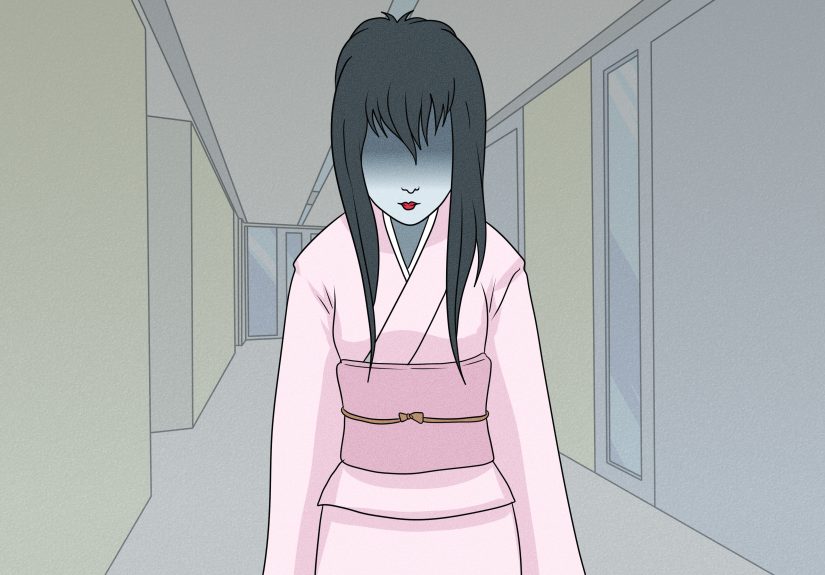
Kuchisake-onna is one of the most famous Japanese urban legends. She appears as a masked woman who asks, “Am I beautiful?” Answer wrong, hesitate too long, or get too clever, and the encounter turns nightmarish. The legend became especially popular as a schoolyard rumor, proving once again that children are excellent horror distributors.
2. Teke Teke
Teke Teke is named for the eerie sound she makes while moving through the night. In many versions, she is a restless spirit connected to train tracks and late-night streets. The scariest part is not what she does, but how fast the story says she appears once you hear that scraping rhythm.
3. Aka Manto, the Red Cape
Aka Manto is a bathroom legend with a simple but terrible choice: red paper or blue paper. Like the worst multiple-choice test ever invented, neither answer is comforting. The tale is especially tied to school restrooms, which explains why generations of students have learned to fear plumbing with suspicious enthusiasm.
4. Toire no Hanako-san
Hanako-san is said to haunt school bathrooms, often the third stall on the third floor. Knock three times, ask if she is there, and a small voice may answer. The legend works because it turns childhood curiosity into a dare. It is Bloody Mary with indoor shoes and better restroom geography.
5. Kashima Reiko
Kashima Reiko is often connected to questions asked in the dark. Her legend usually involves a spirit demanding answers about her name or missing body. Like many Japanese ghost stories, it relies on rules: say the right words and you may escape; forget them and the night becomes much less friendly.
6. Kokkuri-san
Kokkuri-san is a spirit-divination game sometimes compared to a Ouija board. Players place a coin on paper marked with letters and numbers, then ask questions. Skeptics point to unconscious movement; believers point to all the stories where the coin seems a little too eager to answer. Either way, maybe do homework instead.
7. Hachishakusama
Hachishakusama means “Eight Feet Tall,” and the name is already doing too much. She is described as a towering woman with an odd, repeated call. The legend often frames her as a predatory presence around children and rural places, making open fields and quiet roads feel suddenly oversized and unsafe.
8. Kunekune
The Kunekune is a pale, twisting figure seen from far away, often in rice fields on hot days. The warning is simple: do not stare too long and do not go closer. It is a brilliant horror concept because it weaponizes curiosity. Your brain says, “What is that?” The legend says, “Exactly.”
9. Noppera-bō, the Faceless Ghost
Noppera-bō appears human until the face vanishes into smooth blankness. No snarling monster, no dramatic claws, just the horrifying absence of features. This legend taps into social fear: the stranger who looks normal until the moment normal disappears. It is minimalist horror, like a jump scare designed by a very patient artist.
10. Jinmenken, the Human-Faced Dog
Jinmenken are dogs with human faces, often reported near roads or urban areas. They may speak, complain, or simply stare with unsettling intelligence. Compared with other legends, Jinmenken can feel almost darkly funnyuntil you imagine one under a streetlamp, looking exhausted and annoyed, like it has taxes.
11. Mary-san’s Phone Call
Mary-san is a doll legend built around phone calls. The victim receives messages saying Mary is getting closer: outside town, outside the house, behind the door. The final call is the one nobody wants. It is an old fear updated perfectly for modern life: technology does not protect you; it gives the ghost your number.
12. Kisaragi Station
Kisaragi Station is an internet-era legend about a train passenger who arrives at a station that should not exist. Empty platform, strange silence, no helpful mapbasically public transportation with extra existential dread. The story spread online because it feels like a real-time disappearance unfolding one post at a time.
13. The Red Room Curse
The Red Room Curse is a digital urban legend about a pop-up that asks whether you like the red room. Close it, and it comes back. The tale belongs to the era when the internet felt like a haunted arcade: slow-loading pages, strange ads, and the possibility that one bad click could invite something home.
14. The Cow Head Story
The Cow Head legend claims there is a story so terrifying that anyone who hears it becomes overwhelmed with fear. Conveniently, the actual story is usually missing. That absence is the point. Cow Head proves that sometimes the scariest tale is the one your imagination writes for free, with no editor and terrible boundaries.
15. Tomino’s Hell
Tomino’s Hell is connected to a poem surrounded by rumors that reading it aloud brings misfortune. The poem itself is a real literary work, but the curse legend grew around it like ivy on an old wall. The fear here is ritualistic: words become doors, and your voice becomes the key.
16. Okiku and the Counting Plates
Okiku is a classic ghostly figure tied to a well and a missing plate. Her spirit is said to count plates again and again, always reaching the painful gap. The story is older than many modern urban legends, but it survives because repetition is terrifying. One, two, threethen the silence you dread.
17. The Okiku Doll
The Okiku Doll is a famous haunted doll legend involving hair that is said to keep growing. Whether treated as folklore, mystery, or temple curiosity, the idea is deeply unsettling. Dolls already look like they know secrets. Give one changing hair, and suddenly it needs its own apartment and possibly a manager.
18. Inunaki Village
Inunaki Village is rumored to be a hidden settlement cut off from Japanese law, where outsiders are unwelcome. Different versions place it near tunnels or remote roads. The fear is not only supernatural; it is social. You cross the wrong boundary, lose the familiar world, and discover a place that does not want witnesses.
19. The Inunaki Tunnel
The Inunaki Tunnel legend often overlaps with stories of curses, strange noises, and an oppressive atmosphere around an abandoned passage. Tunnels are perfect horror architecture: one way in, one way out, and too much darkness in between. Add a local legend, and suddenly every echo sounds like it has plans.
20. The Purple Mirror
The Purple Mirror is a memory-based curse legend. The warning says that if you remember the phrase by a certain age, bad luck follows. It is clever because trying not to remember something usually makes it louder. Congratulations, brain, you are once again the villain of your own horror story.
21. The Dream School
Some Japanese internet legends describe dreamlike schools where familiar corridors twist into impossible places. The dream-school motif is scary because schools already have rules, bells, locked rooms, and long hallways. Add a supernatural loop, and detention suddenly looks like a metaphysical problem with fluorescent lighting.
22. The Girl from the Gap
This legend centers on the tiny spaces people ignore: gaps between furniture, cracks beside doors, shadows under beds. A girl watches from those narrow places. It is terrifying because every home has gaps. After hearing the story, even moving a dresser feels like opening a suspiciously personal portal.
23. The Man Under the Bed
Versions of this legend appear in many cultures, but Japanese tellings often emphasize the calm discovery of something impossible in a familiar room. The monster is not outside. It is already inside, waiting where children check before sleep. That is why the legend works: it turns routine safety habits into suspense.
24. The Human Pillar
Human pillar legends, or stories of spirits tied to buildings and bridges, belong more to folklore than modern rumor, but they still haunt urban imagination. They suggest that a structure may stand because someone’s sorrow was sealed into it. The result is architectural horror: concrete, stone, and a memory that will not rest.
25. The Warning from the Taxi Passenger
Ghostly taxi passenger legends are common in Japan, especially in stories after disasters or near lonely roads. A driver picks up a quiet passenger, only to discover later that the destination, person, or payment does not make sense. It is melancholy horror, the kind that chills more than it jumps.
26. The Vanishing Hitchhiker
The vanishing hitchhiker is another traveling ghost legend with Japanese variations. A driver helps someone on a lonely road, then the passenger disappears before arrival. The story reflects a universal fear: you do a kind thing, but the night answers in a language you were not prepared to understand.
27. The Phone Number You Should Not Call
Some Japanese urban legends involve forbidden phone numbers that connect callers to strange voices or impossible places. The appeal is obvious. A phone is ordinary, private, and always within reach. The legend asks, “What if one number does not call a person, but calls the wrong side of reality?”
28. The Elevator to Another World
The elevator-to-another-world legend describes a sequence of floors that supposedly transports a rider into a silent, altered version of reality. The details vary online, but the fear remains the same: modern buildings are full of vertical boxes, sealed doors, and buttons. Press the wrong pattern, and the city becomes unfamiliar.
What These Legends Reveal About Japanese Horror
The best Japanese urban legends are not random monsters thrown into the dark like spooky confetti. They reflect anxieties about school pressure, isolation, technology, strangers, public transportation, crowded cities, forgotten rural places, and the uneasy relationship between old beliefs and modern routines. That is why so many stories happen in transitional spaces: tunnels, train stations, bathrooms, elevators, roads, and doorways.
They also show how folklore evolves. A yūrei from an old ghost story can become a restroom rumor. A yōkai-like figure can become an internet creepypasta. A message board post can become a modern myth. Japanese urban legends are not frozen museum pieces; they are living stories, constantly retold by students, horror fans, travelers, filmmakers, and extremely brave people who apparently read scary things at 2:00 a.m. with one lamp on.
Experiences That Make These Legends Feel Even Scarier
The strangest thing about reading Japanese urban legends is how quickly they attach themselves to ordinary life. You can start the evening as a responsible person with snacks, water, and a perfectly normal browsing session. Thirty minutes later, you are evaluating your hallway like a crime scene detective because the light flickered once. Not twice. Once. Apparently that is enough for the imagination to file an emergency report.
These stories are especially powerful when experienced in places that match their settings. Read Hanako-san before entering a quiet school bathroom, and every stall door seems to have developed a personality. Read Kisaragi Station before a late train ride, and the platform signs suddenly deserve close inspection. Read the Kunekune legend during summer, then glance across a field where heat makes the air shimmer, and your brain may politely suggest going indoors forever.
Another memorable experience is sharing these legends with friends. Japanese urban legends are built for group storytelling because they often include rules, questions, and dares. “Would you answer Kuchisake-onna honestly?” “Would you knock for Hanako-san?” “Would you play Kokkuri-san?” These questions turn listeners into participants. Everyone laughs at first, because laughter is cheaper than courage. Then someone lowers their voice, the room gets quiet, and suddenly the snack bowl is the emotional support object.
The internet has made the experience even more intense. Older ghost stories traveled by word of mouth, but modern Japanese urban legends spread through forums, videos, comment sections, podcasts, and social media threads. Kisaragi Station feels frightening because it was framed like live updates from someone trapped in the impossible. The Red Room Curse feels creepy because it uses the language of pop-ups and screens. Even when you know a story is fiction or folklore, the format makes it feel close enough to tap on your window.
Travelers in Japan may also find these legends changing how they interpret space. A spotless train station after midnight can feel cinematic. A narrow alley in Kyoto or Tokyo may seem to hold centuries of whispered stories. A rural tunnel, a shrine path, a closed school gate, or an old apartment staircase can trigger the same thought: “This is exactly where a legend would begin.” That does not mean every shadow is haunted. Sometimes a shadow is just a shadow. But after reading 28 Japanese urban legends, even a normal shadow starts acting suspiciously qualified.
Ultimately, the experience of these legends is not only fear. It is curiosity, cultural fascination, and the thrill of seeing how stories transform everyday places into emotional landmarks. They remind us that horror does not need to be loud to be effective. Sometimes all it needs is a question, a phone call, a bathroom stall, a distant figure in a field, or a train stopping at a station that nobody can find on the map.
Conclusion
Japanese urban legends endure because they understand one universal truth: the familiar can become frightening with one small twist. A woman asks a question. A doll seems to change. A train stops where it should not. A restroom answers back. These stories combine traditional Japanese ghost lore, modern anxiety, and unforgettable imagery into legends that feel both culturally specific and instantly relatable.
Whether you are fascinated by yūrei, curious about yōkai, or simply hunting for scary Japanese folklore to read with the lights on, these 28 legends prove that Japan’s supernatural storytelling is deep, inventive, and dangerously good at making bedtime negotiable.