Table of Contents >> Show >> Hide
- Before You Pot Up: The Quick Rules That Make Pots Thrive
- 29 Flower Pot Ideas You Can Use Anywhere
- Classic Pots That Never Miss
- 1) The “Front Door Welcome” Urn
- 2) Terracotta with Painted Pattern Tape
- 3) Monochrome Pot + One Color Family
- 4) The “All Foliage, No Apologies” Pot
- 5) A Bowl Planter for a Living Bouquet
- 6) The Tall Cylinder for Architectural Drama
- 7) Glazed Ceramic as a Color Echo
- 8) Grouped Pots in Three Sizes
- 9) Window Box Overflow
- Upcycled Pots With Personality
- 10) Colander Planter for Instant Drainage
- 11) Teapot or Kettle “Fairy Garden” Pot
- 12) Wooden Crate Herb-and-Flower Mix
- 13) Vintage Toolbox Planter
- 14) Wine Cork “Pot Feet” Upgrade
- 15) Boot Planters for Whimsy
- 16) Hanging Basket from a Repurposed Wire Frame
- 17) Galvanized Tub “Mini Meadow”
- 18) Clamshell Seedling Starters (Then Upgrade)
- Style-Forward Pot Ideas for Big Visual Impact
- 19) Self-Watering Planter for Vacation-Proof Pots
- 20) The “Butterfly Bar” Nectar Pot
- 21) The Scent-Sational Evening Pot
- 22) A “Shade Spa” Fern + Begonia Combo
- 23) The Hot-Color Fiesta Pot
- 24) Cool-Color Calm Pot
- 25) Succulent Sculptures in a Low Dish
- 26) Edible-Pretty Pot (Herbs + Flowers)
- 27) Tall Planters for Accessibility
- 28) Wind-Resistant “Heavy Base” Pot
- 29) The “Swap-and-Refresh” Seasonal Showcase
- A Few Real-Life Container Gardening Experiences (About )
- Conclusion
If you’ve ever bought a plant because it looked “low maintenance” and then watched it dramatically faint by Thursday,
welcome. Container gardening is the friendliest way to get big color, lush foliage, and “wow” curb appealwithout
committing to a full garden bed makeover (or a lifelong relationship with a wheelbarrow).
The secret is simple: the right pot idea isn’t just about style. It’s about creating the best mini-environment for
rootsgood drainage, stable moisture, and enough spaceso your blooms can show off and your foliage can flex.
Below are 29 flower pot ideas you can copy, remix, or totally steal (politely) for porches, patios, balconies,
steps, and sunny corners that need a little personality.
Before You Pot Up: The Quick Rules That Make Pots Thrive
1) Drainage isn’t optionalit’s plant insurance
A container needs drainage holes unless you’re intentionally building a bog-style planting. No holes means water
collects at the bottom, roots suffocate, and your plant’s “mystery decline” becomes very un-mysterious. If your pot
doesn’t have holes, drill them or use an insert pot with holes inside a decorative outer container.
2) Skip the gravel layer myth (most of the time)
Filling the bottom with rocks or gravel usually doesn’t improve drainage the way people think. Instead, it reduces
soil volume, which can make moisture swing wildly. A better move is to cover drainage holes with mesh or a coffee
filter to keep potting mix from escaping, then use a quality potting mix designed for containers.
3) Bigger pots are easier (yes, really)
Larger containers dry out more slowly, buffer heat better, and give roots room to growespecially for thirsty
summer annuals and big leafy plants. If your pots keep drying out by lunchtime, your “watering problem” may actually
be a “pot size problem.”
4) Match material to your life (and your weather)
Terracotta is porous and great for plants that hate soggy feet, but it dries quickly and can crack in freezing
climates. Glazed ceramic is stylish and holds moisture longer. Plastic and resin are lightweight and practical.
Metal can heat up fast in full sun. Choose the pot that supports your schedule and your climate, not just your
color palette.
5) Consider self-watering if you travelor forget water exists
Self-watering planters use a reservoir system (often with a wick or root access) to keep moisture steadier. They’re
a lifesaver for busy weeks, but not ideal for plants that prefer drying out between waterings (hello, succulents).
29 Flower Pot Ideas You Can Use Anywhere
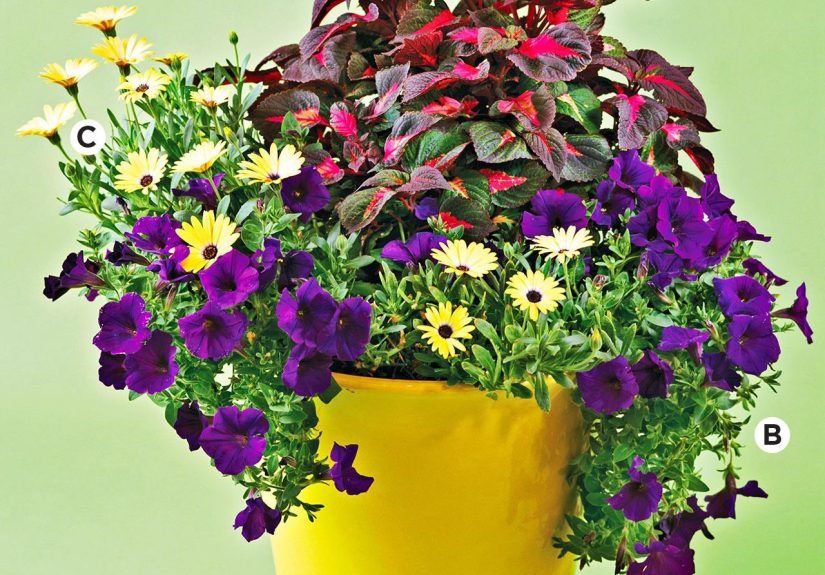
Each idea below includes a design concept plus a plant pairing suggestion. Mix “thrillers” (tall focal plants),
“fillers” (mounding plants), and “spillers” (trailing plants) to make pots look full and intentional.
Classic Pots That Never Miss
1) The “Front Door Welcome” Urn
Use a tall urn on each side of your entry for instant symmetry. Pair a bold thriller (like a canna lily or dwarf
evergreen) with bright annuals and a cascading spiller. This is the container version of wearing a blazer: it makes
everything look more put-together.
2) Terracotta with Painted Pattern Tape
Painter’s tape turns basic terracotta into modern, geometric art. Paint stripes or blocks, then peel for crisp
lines. Plant drought-tolerant bloomers like lantana, portulaca, or geraniums that appreciate terracotta’s
breathability.
3) Monochrome Pot + One Color Family
Choose white, black, or charcoal containers and plant one color familylike all purples (salvia, petunia, verbena).
The pot disappears, and the flowers do the talking. This is the easiest way to look “designer” with minimal effort.
4) The “All Foliage, No Apologies” Pot
Flowers are lovely, but foliage is the long-game hero. Combine coleus, heuchera, ferns, and ornamental grasses for
texture that lasts. Perfect for shady porches where blooms can be fussy.
5) A Bowl Planter for a Living Bouquet
Wide, shallow bowls create a “centerpiece” look. Use low growers like pansies (cool seasons), begonias (shade), or
succulents (bright light). Great on patio tablesjust don’t forget it’s alive when you set the lemonade down.
6) The Tall Cylinder for Architectural Drama
Tall cylindrical planters make narrow spaces feel intentional. Use spiky forms (dracaena, cordyline) or upright
grasses, plus trailing sweet potato vine. This is the pot that makes your neighbors think you know things.
7) Glazed Ceramic as a Color Echo
Pick a glazed pot color that matches something nearbydoor paint, outdoor cushions, even house trim. Then choose
flowers that repeat the color in a softer way. It looks curated without screaming “I tried.”
8) Grouped Pots in Three Sizes
Cluster three potssmall, medium, largefor a layered look. Keep the pot material consistent (all terracotta or all
matte black) and vary plant height. This reads as “planned,” not “I bought these at different times and hoped for
the best.”
9) Window Box Overflow
Window boxes are basically flower eyeliner for your home. Use compact upright blooms (angelonia, calibrachoa) plus
spillers like trailing lobelia or ivy. Add herbs if you want “pretty” and “useful” to high-five each other.
Upcycled Pots With Personality
10) Colander Planter for Instant Drainage
Old metal colanders already have holes, so you’re halfway to plant success. Line with coconut coir or a breathable
fabric, fill with potting mix, then plant trailing flowers for a cottage vibe.
11) Teapot or Kettle “Fairy Garden” Pot
A chipped teapot becomes charming when it’s on purpose. Drill a hole if possible, or use it as a cachepot (a
decorative outer pot) with a nursery pot inside. Plant tiny blooms like alyssum or miniature violets.
12) Wooden Crate Herb-and-Flower Mix
Line a crate with landscape fabric, add potting mix, and plant basil or thyme alongside marigolds or nasturtiums.
You get fragrance, color, and an edible bonuslike a garden that multitasks better than most adults.
13) Vintage Toolbox Planter
A metal toolbox looks great planted with low mounders and spillers. Because metal can heat up, use it in part sun
or buffer with an inner plastic pot. Add calibrachoa for nonstop color.
14) Wine Cork “Pot Feet” Upgrade
Cut wine corks in half and glue them under a pot to lift it slightly for better airflow and drainage. This tiny
change can reduce water pooling and stains on decksplus it’s a classy excuse to “collect supplies.”
15) Boot Planters for Whimsy
Old rain boots or shoes become playful planters. Punch drainage holes, add potting mix, and plant creeping Jenny or
petunias so it looks like your boots are walking into a flower parade.
16) Hanging Basket from a Repurposed Wire Frame
Use a wire basket lined with coir for airflow and classic hanging-basket style. Plant wave petunias and trailing
verbena for a waterfall effectyour porch ceiling will feel like it earned a promotion.
17) Galvanized Tub “Mini Meadow”
Large galvanized tubs can hold a lot of soil, which means steadier moisture. Drill holes, then plant a meadowy mix:
ornamental grass, zinnias, cosmos, and a trailing accent. It’s “wildflower field” energy in a neat container.
18) Clamshell Seedling Starters (Then Upgrade)
Clean produce clamshells can start seedlings indoors with a greenhouse effect. Once seedlings are established,
transplant them into larger pots. It’s budget-friendly and oddly satisfying.
Style-Forward Pot Ideas for Big Visual Impact
19) Self-Watering Planter for Vacation-Proof Pots
If you travel or forget to water, use a self-watering pot with a reservoir. Plant thirsty annuals like impatiens or
petunias that appreciate steady moisture. Avoid cacti and succulents, which prefer drying out.
20) The “Butterfly Bar” Nectar Pot
Build a pollinator-friendly container with lantana, salvia, verbena, and zinnias. Place it where you can see it
from a chair. Congratulationsyour patio now has entertainment.
21) The Scent-Sational Evening Pot
Put fragrant plants near seating: sweet alyssum, scented geraniums, lavender (sun), or nicotiana (evening bloom).
This is the pot that makes people lingerand possibly ask for “just one more minute.”
22) A “Shade Spa” Fern + Begonia Combo
For shade, combine a fern thriller with begonias and trailing ivy. Add a textured pot (glazed, ridged, or woven
look) to amplify the lush vibe. It’s basically a spa day for a dark corner.
23) The Hot-Color Fiesta Pot
Use oranges, reds, and yellows: marigolds, calibrachoa, coleus, and a bright spiller like sweet potato vine. Pair
with a simple neutral pot so the plants don’t start an argument with the container.
24) Cool-Color Calm Pot
Blues, purples, and whites create a calming palettegreat near bedrooms or quiet patios. Try lobelia, salvia,
petunias, and dusty miller. It reads “relaxing” even when your group chat is not.
25) Succulent Sculptures in a Low Dish
Use a shallow bowl with gritty, fast-draining mix. Combine rosette succulents (echeveria types), trailing sedums,
and a spiky accent. Keep it in bright light and water sparinglysucculents love attention, just not water.
26) Edible-Pretty Pot (Herbs + Flowers)
Mix basil, chives, and thyme with edible flowers like nasturtiums or calendula. You’ll get kitchen convenience and
a pot that looks like it belongs in a magazinethen you’ll snip it for dinner and feel powerful.
27) Tall Planters for Accessibility
Use taller containers to reduce bending and make gardening more comfortable. Plant compact bloomers and herbs at
hand height. Practical can still be gorgeousthis is proof.
28) Wind-Resistant “Heavy Base” Pot
In windy spots, choose heavier containers or ones with wide bases. Plant sturdy options like ornamental grasses,
compact shrubs, or dense annuals. Your pots should not be auditioning for a rolling competition.
29) The “Swap-and-Refresh” Seasonal Showcase
Keep one statement pot and change plants by season: pansies and bulbs in spring, tropicals and annuals in summer,
mums and ornamental kale in fall. Same container, fresh looklike a closet rotation, but for plants.
A Few Real-Life Container Gardening Experiences (About )
The first thing I learned the hard way: a beautiful pot can still be a plant trap. I once fell for a sleek,
hole-less decorative container because it looked “modern.” The plant inside didn’t care about modern. It cared that
water pooled at the bottom like a tiny swamp. After a couple of weeks, the leaves started yellowing, and I did what
many of us doI watered it “just to be safe.” (Narrator voice: it was not safe.) When I finally pulled the plant
out, the roots were stressed and soggy. That was the day I became a drainage-hole evangelist.
The second lesson: bigger pots feel like overkill until July arrives. During the first real heat wave of summer,
small pots dry out fastsometimes within hours. If you work away from home or you’re not a “check the pots twice a
day” person, small containers can become a daily rescue mission. Once I started sizing upmoving from little
decorative pots to larger, deeper containersmy plants stopped acting like they were on a hydration roller coaster.
Watering became less frantic, and the plants looked steadier and fuller.
I also learned that pot material is basically a silent partner in plant care. Terracotta is a superstar for plants
that hate wet roots, but in full sun it can dry quickly. That can be a good thing (for rosemary or lavender) or a
constant chore (for thirsty annuals). Glazed pots and plastic containers hold moisture longer, which can make
petunias or impatiens much happierespecially if you’re prone to forgetting a watering day. On the flip side, those
same moisture-holding pots can punish you if you overwater, so I started checking soil with a finger test before
grabbing the hose like it was a reflex.
One of my favorite upgrades has been using self-watering planters for “needy” plants on the porch. It doesn’t mean
you never waterit means the plant gets a steadier supply and I get fewer dramatic collapses at 3 p.m. The
difference is most obvious when you’re busy or traveling. But I don’t use that system for succulents. Those plants
want a drier rhythm, and keeping their soil consistently moist is like insisting a cat enjoys bath time.
Finally, I got more confident when I treated container design like a recipe instead of a mystery. Pick a thriller,
add two fillers, then a spiller, and repeat a color or texture somewhere else nearby. Once you do it a few times,
you stop worrying about “perfect” and start enjoying the processbecause the truth is, plants are surprisingly
forgiving when the basics (light, drainage, soil, water) are handled. And when they’re not… well, you’ll learn
quickly. Containers make excellent teachers.
Conclusion
The best flower pot ideas balance beauty and plant comfort: good drainage, appropriate pot size, and a material that
matches your climate and lifestyle. Whether you’re going classic with urns, playful with upcycled planters, or
practical with self-watering systems, the real win is creating containers that look lush for monthsnot just the
day you bring them home. Start with one pot you love, use a thriller-filler-spiller combo, and let your porch or
patio become the happiest little plant runway on the block.