Table of Contents >> Show >> Hide
- What Is Lumbar Lordosis, Exactly?
- Way #1: Rebuild Your Support System With Targeted Exercise
- Way #2: Fix the Daily Habits That Keep Feeding the Curve
- Way #3: Treat the Underlying Cause Instead of Blaming Your Posture for Everything
- Common Mistakes People Make When Trying to Fix Lumbar Lordosis
- The Bottom Line
- Experiences Related to “3 Ways to Fix Lumbar Lordosis”
If your lower back looks extra arched, your stomach seems to drift forward, and your butt appears to arrive in a room a full second before the rest of you, you may be dealing with excessive lumbar lordosis. That is the technical term for an exaggerated inward curve in the lower spine. The internet often calls it “swayback,” which sounds almost charming until your back starts complaining every time you stand, walk, or sit through one more painfully long meeting.
Here is the good news: in many cases, lumbar lordosis can improve. The less-fun-but-important news is that there is no magical “one weird stretch” fix. A normal lumbar curve is actually necessary for balance and movement. The problem is too much curve, especially when it comes with pain, stiffness, tight hip flexors, weak core muscles, or posture habits that keep feeding the problem. And if the curve is tied to a structural spine issue, nerve compression, or another medical condition, you need more than a yoga mat and optimism.
This article breaks down three realistic ways to fix lumbar lordosis, or more accurately, improve excessive lumbar lordosis safely and effectively. We will cover what helps, what usually does not, and when it is time to stop Googling and call a professional.
What Is Lumbar Lordosis, Exactly?
Lumbar lordosis refers to the natural inward curve of the lumbar spine, which is the lower back. Everyone has some degree of this curve. That is normal. Problems start when the curve becomes exaggerated enough to affect posture, comfort, mobility, or daily function. At that point, you may hear terms like hyperlordosis, swayback posture, or excessive lumbar lordosis.
Common signs can include low back pain, muscle tightness, a forward-tilted pelvis, tight hamstrings or hip flexors, a more prominent backside, and a visible gap under the lower back when lying flat. Some people also notice fatigue with standing or walking, while others mainly feel stiff and “compressed” through the lower spine.
Here is the key point: lumbar lordosis is not always caused by the same thing. In some people, posture and muscle imbalance play a major role. In others, body weight, pregnancy, hip tightness, spinal conditions, or degenerative changes can contribute. That is why the best approach is not “attack your back with random stretches.” It is “figure out what is driving the curve, then match the solution to the cause.” Revolutionary, I know.
Way #1: Rebuild Your Support System With Targeted Exercise
If there is one treatment that shows up again and again in discussions of lumbar lordosis, it is physical therapy and targeted exercise. Not because exercise is trendy, but because the muscles around your spine, pelvis, and hips influence how your lower back is positioned all day long.
Why exercise helps
Excessive lumbar lordosis often travels with a familiar crew: weak abdominal muscles, sleepy glutes, tight hip flexors, and limited control of the pelvis. When that mix shows up, the pelvis can tilt forward and the lower back may arch more than it should. Strengthening and stretching the right areas can improve support, reduce strain, and make posture easier to maintain without having to think, “ribs down, hips neutral, do not turn into a banana,” every five seconds.
What to focus on
The goal is usually not aggressive back bending or intense “core punishment.” It is better control and balance. Helpful training targets often include:
- Deep core and abdominals: These muscles help control pelvic tilt and support the lumbar spine.
- Glutes: Strong glutes help stabilize the pelvis and reduce the tendency to dump forward into the lower back.
- Hamstrings: These muscles assist pelvic positioning and often need both strength and flexibility work.
- Hip flexors: Tight hip flexors can pull the pelvis forward and exaggerate the curve.
- Postural muscles: Better trunk and hip coordination often improves overall alignment.
Exercises that are commonly used
Exact programming should be individualized, but many people benefit from a routine built around movements such as:
- Pelvic tilts or abdominal bracing: Great for learning what a more neutral pelvis feels like.
- Glute bridges: Helpful for strengthening the glutes without asking the lower back to do all the work.
- Knee-to-chest stretches: Often used to reduce tightness and improve comfort in the lower back.
- Hip flexor stretches: Especially useful if prolonged sitting has turned your front hips into overcaffeinated violin strings.
- Wall posture drills: Useful for teaching alignment and helping you recognize when you are over-arching.
- Gentle hamstring work: Helpful when the backs of the legs are tight or weak.
One smart move is to think less about “fixing the curve” and more about improving how you move. If an exercise makes your back feel pinched, jammed, or sharper rather than better, that is a clue to back off and get guidance. More effort is not always more effective. Sometimes it is just louder.
How to make exercise actually work
Consistency beats intensity. A short program done four or five times a week is often more helpful than one heroic workout followed by three days of walking like a rusty robot. Start with controlled, low-irritation movements. Focus on quality. Breathe. Do not rush. If you can keep your ribs stacked over your pelvis and feel your hips and abdominals working more than your low back, you are usually heading in the right direction.
And if you can see a physical therapist, even better. A PT can spot the difference between “mild posture-driven swayback” and “something that needs a more careful plan.” That distinction matters.
Way #2: Fix the Daily Habits That Keep Feeding the Curve
You can have the world’s best lordosis exercises, but if you spend ten hours a day standing with your ribs flared, your knees locked, and your pelvis dumped forward like you are posing for an invisible action-movie poster, your lower back may remain unimpressed.
Daily mechanics matter. A lot. In fact, for many people, the real battle is not the 20-minute exercise routine. It is the other 23 hours and 40 minutes.
Posture changes that help
You do not need “perfect posture.” You need less stressful posture. That usually means:
- Standing with your weight balanced over both feet instead of hanging into your lower back.
- Keeping your ribs from flaring upward all day.
- Softening locked knees.
- Using a chair that supports a neutral, comfortable sitting position.
- Getting up regularly if you sit for long periods.
Many people with excessive lordosis have a hard time finding neutral because the arched position feels normal. That is why wall drills, mirror checks, and simple cues can help. Think: “stack ribs over pelvis,” “keep the chest open without leaning backward,” and “stand tall, not arched.”
Why sitting is often part of the problem
Long periods of sitting can stiffen the hips, weaken the glutes, and encourage posture patterns that throw the pelvis out of balance. Then, when you stand up, your body may compensate by overusing the lower back. If your job glues you to a chair, try movement breaks every 30 to 60 minutes. Walk. Stretch your hips. Reset your posture. Your spine loves variety more than your calendar does.
Weight management, if relevant
Not every case of lumbar lordosis is weight-related, but excess body weight can increase mechanical load on the lower back and influence posture. If that applies to you, gradual weight loss may reduce stress on the spine and improve comfort, especially when paired with exercise and better movement habits. No crash diets required. Your spine does not care whether your plan is glamorous. It cares whether it is sustainable.
Be smarter with activity, not less active
Avoiding movement entirely usually backfires. Gentle walking, appropriate strength work, and regular mobility practice can help many people feel better. The trick is to limit activities that repeatedly crank the back into painful extension while building tolerance for better movement patterns. Translation: moving well tends to beat freezing in fear.
Way #3: Treat the Underlying Cause Instead of Blaming Your Posture for Everything
This is the part people skip because it is less exciting than “Top 5 stretches to fix your swayback tonight.” But it may be the most important section in the whole article.
Sometimes lumbar lordosis is mostly functional and posture-related. Sometimes it is not. In some people, an exaggerated curve is linked to structural spine issues, muscle disorders, spondylolisthesis, degenerative changes, or other medical conditions. That means the right fix is not always a home workout. It may involve imaging, supervised rehabilitation, bracing, medication for symptom relief, or referral to a spine specialist.
When to see a clinician
Get medical advice sooner rather than later if you have:
- Persistent or worsening low back pain
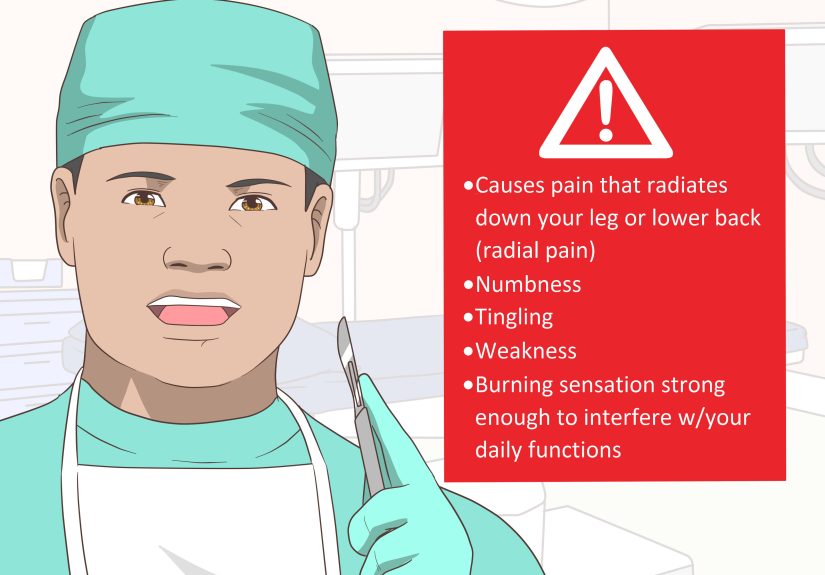
- Pain, numbness, or tingling that travels into the legs
- Weakness, balance changes, or trouble walking
- Bowel or bladder changes
- A curve that seems to be progressing
- Symptoms after injury, or symptoms that disrupt sleep and daily function
Those are not “just posture” symptoms until proven otherwise. They deserve a proper evaluation.
What treatment may look like
Depending on the cause and severity, a clinician may recommend a more structured physical therapy plan, temporary bracing in selected cases, medication for pain, or further workup if nerve compression or a spinal condition is suspected. Severe deformity or neurologic symptoms may sometimes require surgery, but that is generally not the first stop for the average person with mild or moderate hyperlordosis.
So yes, it is possible to improve lumbar lordosis. But the smartest fix is the one that matches the reason your spine is doing this in the first place.
Common Mistakes People Make When Trying to Fix Lumbar Lordosis
- Stretching only the lower back: Often the bigger issue is poor pelvic control, weak glutes, or tight hip flexors.
- Doing endless ab workouts without form: If you brace by holding your breath and tensing everything like a statue, you are not necessarily building better control.
- Forcing “perfect posture” all day: Overcorrection can be as uncomfortable as undercorrection.
- Ignoring pain that radiates, worsens, or affects function: That is your sign to get evaluated.
- Expecting instant results: Postural and movement changes usually improve over weeks and months, not by Tuesday.
The Bottom Line
The three best ways to fix lumbar lordosis are straightforward, even if they are not flashy: strengthen and stretch the right muscle groups, change the posture and daily habits that reinforce the curve, and get professional help when the problem may be structural or medically significant. In mild cases, that combination can make a meaningful difference in pain, posture, and daily comfort. In more complex cases, it can help you stop guessing and start treating the real problem.
So no, you do not need a miracle gadget, a punishing boot-camp core challenge, or a wellness influencer yelling “engage your center” over a ukulele soundtrack. You need a practical plan, a little consistency, and enough patience to let your body relearn a better pattern.
Experiences Related to “3 Ways to Fix Lumbar Lordosis”
Note: The examples below are composite-style experiences based on common patterns people report when dealing with excessive lumbar lordosis. They are included for educational context and are not individual medical case reports.
One common experience is the desk-worker spiral. Someone spends years sitting for long stretches, notices increasing low back tightness, then starts to feel a pinchy ache after standing or walking. At first, they blame the chair, then the mattress, then perhaps Mercury in retrograde. Eventually they notice they stand with their pelvis tipped forward and their ribs flared. When they begin doing simple core-control work, glute strengthening, and hip flexor stretching several times a week, the biggest surprise is not that their back instantly transforms. It is that standing starts to feel less effortful. They often describe needing a few weeks before the new posture feels normal, because the old arch had become their default setting.
Another familiar experience shows up after pregnancy or a long period of reduced activity. A person may feel like their core is not providing the same support it used to, while the front of the hips feels tight and the lower back feels overworked. In that situation, “fixing lordosis” often turns into relearning how to move well again. Gentle abdominal retraining, walking, glute work, and more attention to lifting mechanics can make daily tasks feel easier. Instead of chasing a cosmetic posture change, the person usually notices practical wins first: less discomfort while carrying groceries, less soreness after being on their feet, and less fatigue by the end of the day. In other words, function improves before they start admiring themselves sideways in the mirror.
There is also the experience of the person who does everything right at home and still does not get better. This matters. Sometimes people commit to stretching, strengthening, and posture work, but the pain persists or starts radiating into the buttock or leg. That is often the moment they realize the internet’s favorite advice has limits. A proper evaluation may uncover something like spondylolisthesis, stenosis, or another structural issue that needs a more specific treatment plan. Oddly enough, many people describe feeling relieved at that point. Not because they love medical appointments, obviously, but because having a clear reason for the symptoms is better than wondering whether they just failed at doing bridges correctly.
And then there is the most universal experience of all: frustration with how slow progress can feel. People often want their posture to change in a dramatic, movie-montage way. Real life is less cinematic. More often, improvement looks like this: fewer flare-ups, better tolerance for standing, less stiffness in the morning, easier walking, and a growing ability to find a comfortable neutral posture without thinking so hard about it. That can feel almost boring, but boring progress is still progress. In spine care, boring is underrated.