Table of Contents >> Show >> Hide
- Before You Start: What Makes a Good Trading Card?
- Way #1: Design and Print Your Trading Cards at Home
- Way #2: Make Handmade Trading Cards from Scratch
- Way #3: Use Print-on-Demand or a Local Print Shop
- Smart Design Tips for Better DIY Trading Cards
- Common Mistakes to Avoid
- Which Method Is Best?
- Hands-On Experience: What I Learned Making DIY Trading Cards
- Conclusion
- SEO Tags
Trading cards have a special kind of magic. They are tiny rectangles of cardboard that somehow manage to hold stats, stories, bragging rights, and a suspicious amount of personality. One minute you are “just making a fun set for friends,” and the next minute you are debating foil finishes like a sleep-deprived art director in a sports bar.
The good news is that making your own trading cards is more doable than ever. You do not need a giant print shop, a warehouse of glossy paper, or a dramatic soundtrack. With the right approach, you can create cards for family keepsakes, classroom rewards, game prototypes, team gifts, creator merch, or hobby collections that look polished and feel genuinely fun to hold.
In this guide, you will learn three practical ways to make your own trading cards, from fast home printing to handcrafted one-of-a-kind cards to professional short-run printing. Along the way, we will cover card size, layout, cardstock, image quality, finishing, storage, and design tips so your DIY trading cards do not end up looking like they lost a fight with a glue stick.
Before You Start: What Makes a Good Trading Card?
Before diving into the three methods, it helps to know what separates a card that feels “real” from one that feels like a school flyer that wandered into the wrong hobby. A strong custom trading card usually includes a few essentials:
- A standard-size layout: Most modern trading cards use a 2.5 x 3.5 inch format, which makes them easier to sleeve, store, and trade.
- A clear front design: This usually features the main image, card name, branding, or a signature visual element.
- An organized back: Stats, fun facts, lore, character abilities, dates, or short bios belong here.
- High-resolution images: Fuzzy photos make cards look homemade in the wrong way.
- Thoughtful margins: Leave breathing room so text and faces are not sliced off at the edges.
- Durable materials: Better cardstock and protective sleeves make a huge difference.
If your goal is to make cards that feel collectible, consistency matters more than expensive tools. Matching fonts, aligned text, even borders, and uniform sizing will do more for your final result than random decorative explosions in twelve different colors. Your card set should look like a collection, not like three cousins showed up to the reunion wearing unrelated outfits.
Way #1: Design and Print Your Trading Cards at Home
This is the easiest and most accessible method, and it is perfect for beginners. If you have a decent printer, printable cardstock, and a design platform like Canva or Adobe Express, you can create a small custom card set from your desk.
Why this method works
Home printing is great for quick projects, gifts, classroom cards, test designs, and one-off collections. It is affordable on a small scale, easy to edit, and fast enough that you can fix mistakes without crying into a shipping confirmation email.
What you need
- A design tool such as Canva, Adobe Express, or Avery templates
- Cardstock or printable card sheets
- An inkjet or laser printer that supports heavier paper
- A paper trimmer or precision scissors
- Optional: corner rounder, laminating sheets, sleeves, or top loaders
How to do it
Step 1: Build your card template. Set your design to the size you want. If you want a classic trading card feel, use the standard 2.5 x 3.5 inch format. Create a front and back design. Keep key text and faces away from the edges, because trim lines are not always as polite as we hope.
Step 2: Use print-friendly design settings. If your platform supports bleed and crop marks, turn them on. This helps avoid white slivers along the edge after trimming. Export your file as a print-ready PDF when possible, especially if your design includes sharp text and detailed images.
Step 3: Choose the right paper. Plain printer paper is fine for grocery lists and passive-aggressive household notes, but it will not make a satisfying trading card. Use cardstock for a sturdier result. Matte cardstock looks clean and classic, while gloss or coated stock can make colors pop more dramatically.
Step 4: Adjust printer settings. Select the proper paper type in your printer settings, such as cardstock, heavy paper, or thick paper. This matters more than people think. If your printer treats thick cardstock like regular paper, smudges and misfeeds may show up like uninvited party guests.
Step 5: Print a test sheet first. Always do one test run. Check alignment, color, front/back orientation, and trimming space. The first print is your rehearsal dinner, not the wedding.
Step 6: Trim and finish. Use a paper cutter for straight edges. If you want a more authentic card look, round the corners slightly. Slide finished cards into sleeves for instant “I definitely know what I am doing” energy.
Best use cases for home printing
- Family photo trading cards
- Teacher reward cards
- Sports team keepsakes
- Pet trading cards, which are objectively adorable
- Prototype game cards
- Fan art or creator merch mockups
Way #2: Make Handmade Trading Cards from Scratch
If you want something personal, artsy, and impossible to mistake for mass production, handmade trading cards are the way to go. This method is ideal for crafters, artists, kids’ projects, or anyone who enjoys making objects with a little more soul and a little less screen time.
Why this method works
Handmade cards feel unique. They are perfect for small batches, mixed media designs, and custom sets where charm matters more than flawless uniformity. Think artist trading cards, personalized gifts, or themed mini collections built around illustrations, pressed elements, stamps, stickers, or collage.
What you need
- Heavy cardstock, index cards, or chipboard backing
- Markers, pens, colored pencils, paint, or stamps
- Printed photos or illustrations
- Glue stick or adhesive runner
- Ruler, craft knife, and cutting mat
- Optional: washi tape, embossing powder, foil accents, or labels
How to do it
Step 1: Cut your base cards. Measure and cut each blank card to the same size. Consistency matters here. If one card is heroic and tall while another is short and chaotic, your stack will look less “collectible set” and more “drawer full of mysteries.”
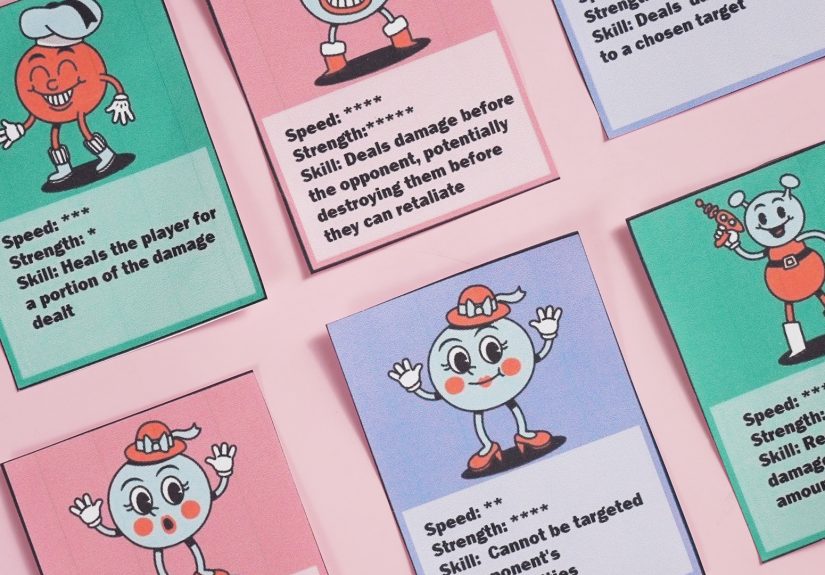
Step 2: Plan a simple card system. Even if your cards are handmade, they should still follow a repeatable structure. For example:
- Top area: card title or character name
- Middle area: portrait or illustration
- Bottom area: category, rating, or special feature
- Back side: short story, fun fact, stat grid, or collectible number
Step 3: Create your artwork. You can draw directly on the card, use collage pieces, or print small images and mount them onto the base. Hand lettering can look beautiful, but if readability matters, consider printing names and text labels separately and attaching them neatly.
Step 4: Build texture carefully. Layered paper, metallic pens, sticker accents, and stamped patterns can make handmade cards look incredible. Just avoid piling on so much material that the card becomes a tiny cardboard lasagna.
Step 5: Seal and protect. If your card uses paint, markers, or collage pieces, consider a protective sleeve or a light finishing spray suitable for paper crafts. You can also laminate the cards, but be aware that lamination changes the feel and thickness.
Best use cases for handmade cards
- Artist trading card swaps
- Birthday party activities
- Kids’ craft projects
- Custom fantasy or character sets
- Scrapbook-style memory cards
- Limited-edition handmade gifts
The beauty of this method is that perfection is not the goal. Personality is. A hand-drawn dragon card with crooked little stars in the border can feel more memorable than a slick template if it has heart and intention behind it.
Way #3: Use Print-on-Demand or a Local Print Shop
If you want your DIY trading cards to look as close to commercial quality as possible, this is the grown-up option. Well, grown-up in the sense that you care about finish quality and edge consistency, not in the sense that you suddenly stop getting excited about shiny cards. That part stays.
Why this method works
Professional printing is ideal when you want cleaner cutting, better color consistency, more durable stock, and multiple copies. It is especially useful for creators selling card sets, designers testing a game, or event planners making polished giveaways.
What you need
- A properly sized front-and-back card design
- High-resolution images
- A print-ready PDF or image files
- Basic understanding of bleed, safe margins, and trim
- A budget for short-run or custom printing
How to do it
Step 1: Build your design like a pro. Use a standard card size, and keep important text inside the safe area. Add bleed if the printer asks for it. This is not overkill. It is how you avoid cutting off half a player name or accidentally giving your hero a haircut at the print stage.
Step 2: Use sharp images. If your artwork is low resolution, professional printing will not magically rescue it. It will simply reproduce your blur with confidence. Use high-quality files and check every image at actual print size.
Step 3: Choose your finish. Matte looks premium and readable. Gloss makes color feel bold and vibrant. Some services also offer thicker stock or specialty finishes. For gifts and prototypes, standard premium cardstock usually does the job beautifully.
Step 4: Order a sample or small batch. Before printing a large run, order a small proof set if possible. Check color, crop, thickness, and back alignment. This is the difference between “nice” and “why is the back upside down on all 80 cards?”
Step 5: Store them correctly. Once printed, protect them. Sleeves and rigid holders help keep edges crisp and surfaces clean, especially if the cards are meant for trading, gifting, or display.
Best use cases for professional printing
- Indie card game prototypes
- Creator merchandise
- Sports or club commemorative sets
- Brand promo cards
- Event souvenirs
- Higher-end gifts and collector-style projects
Smart Design Tips for Better DIY Trading Cards
No matter which method you choose, a few design principles will instantly improve your cards:
Use a repeatable visual system
Assign consistent placements for title, image, category, and stats. A card set feels more collectible when each card belongs to the same visual family.
Do not overload the back
Yes, you have room for facts. No, you do not need to write a doctoral dissertation on the reverse side. Keep information compact, readable, and skimmable.
Limit your fonts
Use one display font and one body font, maybe two if you are feeling daring. Any more than that and your card begins to look like it is having an identity crisis.
Think in sets, not singles
Even if you only make five cards, create shared numbering, series names, categories, or rarity styles. A tiny collection with structure feels more exciting than random one-offs.
Protect your finished cards
If your cards fit standard sleeves and holders, they will be easier to keep clean and store neatly. This also makes them feel more legitimate in hand, which is a sneaky but powerful upgrade.
Common Mistakes to Avoid
- Using low-resolution photos pulled from old messages or screenshots
- Forgetting bleed or trim space when printing edge-to-edge designs
- Printing on flimsy paper and expecting collectible-card vibes
- Skipping a test print before doing a full batch
- Overcrowding text on the back of the card
- Mixing inconsistent sizes within the same set
- Ignoring printer settings for thick paper or cardstock
In other words, do not sabotage your own project. Your future self deserves better.
Which Method Is Best?
If you want fast, flexible, and budget-friendly, print at home. If you want personality and handmade charm, craft them by hand. If you want polished cards with a commercial feel, use print-on-demand or a local print shop.
There is no single best way to make custom trading cards. The right method depends on your goal. Are you making a funny family card set for a reunion? Handmade might be perfect. Are you designing a prototype for a card game? Home printing is probably your best first move. Are you selling a creator set or making high-end gifts? Professional printing makes more sense.
The main point is simple: you can absolutely make your own trading cards, and you do not need a giant production setup to do it well. Start with a small set, test your process, improve your template, and let the project get better as you go. That is how most good creative work happens anyway: one version, one fix, one “okay, that actually looks awesome” moment at a time.
Hands-On Experience: What I Learned Making DIY Trading Cards
The first time I made my own trading cards, I was wildly confident for someone who had not yet printed a single test sheet. I had the design, the images, the clever category names, and the kind of optimism that only exists before you realize your printer has different opinions about margins. I thought I would be done in an hour. What I actually created was an educational journey featuring crooked trims, color surprises, and one card that looked like it had been cut during a minor earthquake.
That first attempt taught me something useful right away: making trading cards is not hard, but making good trading cards is a game of small details. Once I slowed down and treated the project like a real design process, everything improved. I started with a simple template and stopped trying to reinvent the wheel on every card. Same title area, same text placement, same image ratio, same back layout. Suddenly the set looked intentional instead of accidental.
I also learned that paper changes everything. On regular printer paper, my cards looked like temporary coupons for a fictional baseball team. On sturdy cardstock, they immediately felt more collectible. The difference in hand-feel was huge. A card does not have to be expensive to feel satisfying, but it does need enough thickness to hold shape and enough surface quality to show off the design.
Another lesson was that trimming matters almost as much as printing. Even a strong design can look sloppy if the cuts are uneven. Once I switched from scissors to a simple paper trimmer, the cards started looking cleaner and more consistent. Later I added a corner rounder, which felt slightly dramatic at the time, but it made the final cards feel much closer to the real thing. Tiny upgrade, big payoff.
The funniest surprise was the back of the card. I had spent so much time obsessing over the front image that I treated the back like an afterthought. Big mistake. The back is where the card becomes more than a pretty rectangle. Stats, trivia, mini bios, rankings, jokes, fictional abilities, numbering systems, and series names all make the set more fun. Once I started designing the back with as much care as the front, the cards became more engaging to collect, compare, and talk about.
I have also found that homemade trading cards are weirdly great for group projects. Friends get invested fast. Family members start suggesting categories. Someone always wants a “rare holo version,” even when no holo version exists yet. A simple card project turns into a mini event because people love seeing familiar faces, pets, teams, or inside jokes turned into collectible objects.
The biggest takeaway from experience is this: your first set does not need to be perfect. It just needs to exist. Once you have a card in your hand, you instantly understand what you want to tweak. Maybe the text is too small. Maybe the images need more contrast. Maybe the border should be thicker. Maybe your dog deserves a legendary-tier card with a gold nameplate. All of those discoveries happen faster when you stop waiting for perfection and start making prototypes.
That is why DIY trading cards are such a satisfying project. They combine design, storytelling, printing, and collecting into one small format that feels approachable. You can make them funny, polished, sentimental, competitive, artistic, or wildly nerdy. Ideally all at once. And once you make one good card, your brain immediately says the most dangerous thing in any creative hobby: “You know what would be cool? A full set.”
Conclusion
Whether you print them at home, build them by hand, or order them from a professional printer, custom trading cards are one of the most fun small-format projects you can make. They are personal, flexible, collectible, and surprisingly addictive to design. Choose the method that fits your budget and goals, keep your layout consistent, use quality materials where you can, and do not skip the test print unless you enjoy chaos as a design partner.
Make a few. Learn fast. Improve the next batch. Then watch people smile when they hold a card you created from scratch. That little rectangle can do a lot.