Table of Contents >> Show >> Hide
- Quick Cheat Sheet: Pick Your Spinach-Freezing Personality
- Before You Freeze: The 5-Minute Prep That Makes Everything Better
- Method 1: Blanch + Portion Pucks (The Classic “Cook-Ready” Freeze)
- Method 2: Blanch + IQF (Loose Spinach You Can Grab by the Handful)
- Method 3: Raw Dry-Pack (Fastest Method, Best for Smoothies)
- Method 4: Spinach Cubes (Purée Cubes or Chopped Portions)
- Storage Rules: Keep Spinach Tasty, Not Frostbitten
- Thawing and Cooking: Don’t Let Spinach Turn Your Dinner into a Puddle
- Common Spinach Freezing Mistakes (and the Easy Fixes)
- 500+ Words of Real-Kitchen “Experience” (a.k.a. What People Actually Learn Freezing Spinach)
- Conclusion: Freeze Spinach Like You Mean It
Spinach has two superpowers: (1) it’s ridiculously good for you, and (2) it can turn from “fresh and perky”
to “sad, slimy science experiment” in the time it takes to forget it’s in the crisper drawer. Freezing spinach
is the easiest way to save money, cut food waste, and keep future-you stocked for smoothies, soups, pasta,
omelets, and that “I swear I’m cooking tonight” moment.
The trick is matching the freezing method to how you’ll use it later. If you want bright green spinach that holds up
in cooked dishes, blanching is your best friend. If you want something you can toss straight into a blender, raw
freezing is fast and totally valid. Below are four practical, reliable ways to freeze spinachplus how to avoid the
most common freezer mistakes (a.k.a. “Why is my spinach now an iceberg?”).
Quick Cheat Sheet: Pick Your Spinach-Freezing Personality
- Method 1: Blanch + Portion Pucks best for soups, dips, casseroles, and anything cooked.
- Method 2: Blanch + IQF (Loose Leaves) best when you want to grab a handful at a time.
- Method 3: Raw Dry-Pack best for smoothies and fast add-ins (texture gets softer).
- Method 4: Spinach Cubes (Purée or Chopped) best for measured portions and “drop-in” convenience.
Before You Freeze: The 5-Minute Prep That Makes Everything Better
1) Choose spinach that’s worth saving
Freeze spinach when it still looks alivebright green, not wilted, not soggy, and not hiding a mystery smell.
Older spinach can freeze, but it won’t magically get fresher later. (Freezers are powerful, not supernatural.)
2) Wash like you mean it
Even bagged “pre-washed” spinach can carry grit. Rinse in cold water, swish it around, and lift the leaves out so
any sand sinks. Repeat if the water looks like it came from a beach vacation.
3) Dry thoroughly (this is how you avoid freezer snow)
Water turns into ice crystals. Ice crystals lead to freezer burn and mushy spinach. Use a salad spinner if you have one.
If not, pat dry with clean kitchen towels or paper towels. You don’t need every leaf bone-dry for blanching methods,
but for raw freezing, dryness is the whole game.
4) Trim if needed
Baby spinach usually needs nothing. Mature spinach can have thicker stemstrim the tough parts so you don’t end up
chewing on “leafy dental floss” later.
5) Set up a labeling system now (because future-you is busy)
Label bags or containers with: “Spinach,” the date, and the method (raw, blanched, cubes). If you portion it,
add the measurement (like “1/2 cup pucks”). This prevents the classic freezer mystery: “Is this spinach… or pesto… or
something I made during my experimental phase?”
Method 1: Blanch + Portion Pucks (The Classic “Cook-Ready” Freeze)
Blanching briefly heats spinach to slow the natural enzymes that can dull flavor, color, and texture over time.
Translation: it helps frozen spinach taste more “spinach-y” later. It’s the best choice if most of your future meals
involve heat: soups, sautés, casseroles, lasagna, quiche, spinach dipbasically anything that ends up warm and delicious.
What you’ll need
- Large pot of boiling water
- Big bowl of ice water (a real ice bath, not just “cool-ish water”)
- Colander
- Clean towels (or cheesecloth) for squeezing
- Freezer bags or airtight containers
Step-by-step
- Boil water: Bring a large pot of water to a rolling boil.
- Blanch: Add spinach in batches. Once the water returns to a boil, blanch for about 2 minutes. (Don’t overcrowd.)
- Ice bath: Immediately transfer spinach to ice water for about the same amount of time so it stops cooking.
- Drain and squeeze: Drain well, then squeeze firmly to remove excess water. This matters. Water left inside becomes ice, and ice becomes sadness.
- Portion: Form the spinach into small “pucks” (think golf ball to hockey puck size), or measure by the 1/2 cup.
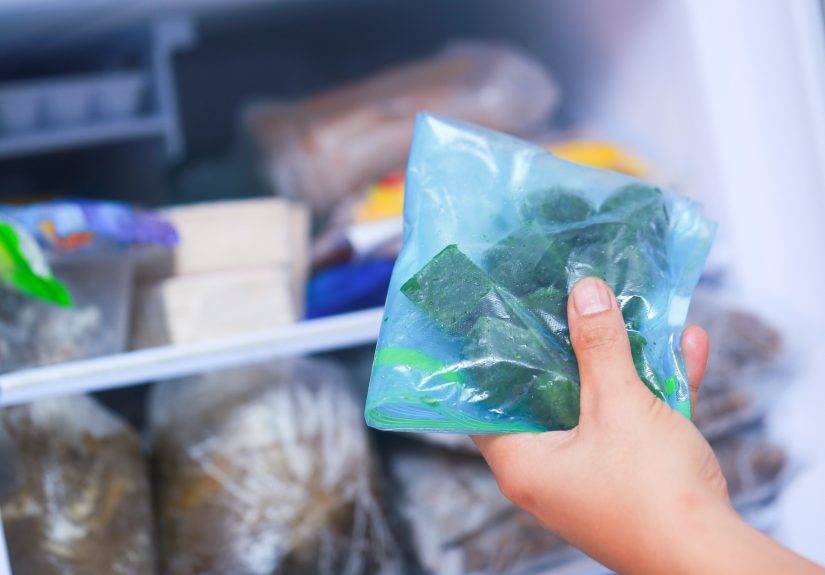
- Pack and freeze: Put pucks in freezer bags, press out air, seal, freeze.
How to use it later
Toss pucks straight into hot soups or sauces. For dips or baked dishes, thaw in the fridge or microwave, then squeeze
again to remove extra liquid (especially important for creamy recipes).
Method 2: Blanch + IQF (Loose Spinach You Can Grab by the Handful)
IQF stands for “individually quick frozen,” which is a fancy way of saying: freeze it spread out first, then bag it.
This keeps spinach from freezing into one mega-brick. If you love adding “just a little spinach” to scrambled eggs,
pasta sauce, or soup, this method is your new favorite habit.
Step-by-step
- Blanch, ice bath, drain, squeeze exactly like Method 1.
- Chop (optional): Chop if you prefer smaller pieces for quick cooking.
- Spread: Line a baking sheet with parchment paper. Spread the spinach in a thin layer.
- Freeze: Freeze until firm (usually 1–3 hours, depending on your freezer).
- Bag it: Transfer to freezer bags, remove air, seal, and return to freezer.
Why it’s worth the extra tray
You get flexibility. A quick handful melts into a skillet fast, and you don’t have to thaw a whole block for a small
recipe. It’s the difference between “I’ll cook” and “I’ll cook… after I chip this spinach boulder with a spoon.”
Method 3: Raw Dry-Pack (Fastest Method, Best for Smoothies)
Yes, you can freeze spinach without blanching. It’s quick, convenient, and great for blending or cooking where texture
isn’t the star. The trade-off: raw-frozen spinach can darken a bit over time and gets softer when thawed. If your main
plan is smoothies, soups, stews, or pasta sauce, you’ll probably love this method.
Step-by-step
- Wash and dry thoroughly: The drier the better.
- Optional pre-freeze: Spread leaves on a tray and freeze for 30–60 minutes to reduce clumping.
- Pack: Put spinach into freezer bags in a fairly flat layer.
- Remove air: Press out as much air as possible (air = freezer burn’s favorite snack).
- Freeze flat: Freeze bags flat for easy stacking and faster freezing.
Best uses
- Smoothies (no thawing needed)
- Soups and stews
- Green sauces, curries, or anything where spinach “disappears”
Pro tip: If you freeze raw spinach in “recipe-sized” bundles (like a few handfuls per bag),
you won’t end up thawing more than you need.
Method 4: Spinach Cubes (Purée Cubes or Chopped Portions)
If you want spinach in neat, measured doseslike a responsible adult with a planspinach cubes are the way to go.
These are perfect for smoothies, sauces, soups, or adding a sneaky nutrition boost to almost anything.
Option A: Spinach purée cubes (smoothie MVP)
- Prep: Use fresh spinach (raw) or blanched-and-squeezed spinach (for a brighter green flavor).
- Blend: Blend spinach with a small splash of water until smooth.
- Freeze in trays: Pour into ice cube trays or silicone trays. Freeze until solid.
- Store: Pop cubes out and transfer to a freezer bag. Remove air, seal, label.
A standard ice cube is roughly about 2 tablespoons, but trays varyso consider doing one quick test batch
if you want precise “recipes per cube” math.
Option B: Chopped spinach portions (for cooking)
- Blanch + squeeze: Use Method 1 up through the squeezing step.
- Pack into muffin tins: Press spinach into silicone muffin cups (or a lined muffin tin).
- Freeze: Freeze until firm, then pop out and store in bags.
These “spinach muffins” (the non-bakery kind) are fantastic for tossing into soups, pasta, or casseroles without measuring.
Storage Rules: Keep Spinach Tasty, Not Frostbitten
Keep your freezer cold and consistent
For best safety and quality, your freezer should stay at 0°F (-18°C) or below. Fluctuating temperatures
create more ice crystals, which damages texture and invites freezer burn.
Air is the enemy
Freezer burn happens when moisture escapes food and the surface dries out. Remove as much air as you can from bags.
If you have a vacuum sealer, spinach is a great candidateespecially for long storage.
How long does frozen spinach last?
If stored properly, frozen spinach stays safe much longer than you’ll probably keep it. For best flavor and texture,
aim to use it within about 10–12 months. (Translation: it’ll still be “okay” later, but peak spinach
vibes happen within the first year.)
Thawing and Cooking: Don’t Let Spinach Turn Your Dinner into a Puddle
For smoothies
No thawing needed. Frozen spinach blends easily, especially if you pair it with something creamy (banana, yogurt, nut butter).
For soups and sauces
Add frozen spinach directly to the pot. It thaws quickly in heat and saves you an extra step.
For dips, quiche, lasagna, and baked dishes
Thaw first, then squeeze again. This is the difference between “creamy spinach dip” and “spinach dip soup.”
Use a towel, cheesecloth, or even a sturdy paper towel in a pinch.
Food-safety note (quick and helpful, not scary)
Freezing slows bacteria but doesn’t magically erase them. Thaw spinach safely (fridge, microwave, or directly in cooking),
not on the counter for hours like it’s sunbathing.
Common Spinach Freezing Mistakes (and the Easy Fixes)
- Mistake: Freezing wet spinach. Fix: Dry well (raw method) or squeeze well (blanched methods).
- Mistake: Overstuffing bags. Fix: Freeze flat and portion smaller so you can break pieces off.
- Mistake: Skipping labels. Fix: Date + method + portion size takes 10 seconds and saves 10 minutes of confusion.
- Mistake: Expecting frozen spinach to be salad-ready. Fix: Use frozen spinach in cooked dishes or smoothies, not crunchy salads.
500+ Words of Real-Kitchen “Experience” (a.k.a. What People Actually Learn Freezing Spinach)
If you’ve ever bought one of those giant clamshells of spinach because it felt like a healthy decisionand then watched it
wilt by Day 3you’re not alone. One of the most common spinach experiences is the optimism-to-regret pipeline:
“I’ll make salads!” becomes “I’ll sauté it!” becomes “I will emotionally process this later.” Freezing is the most peaceful
middle ground between good intentions and real life.
Here’s what usually happens in real kitchens: the first time someone freezes spinach, they skip the drying step. The bag goes
into the freezer, and when it comes out, it looks like spinach trapped in a glacier. It still works, but now you’re chiseling
off pieces like an archaeologist. After that, people get smarter fast: they freeze flat, they pre-freeze on a tray, or they
portion into pucks/cubes so it’s grab-and-go instead of grab-and-grunt.
Another classic experience: underestimating how much spinach shrinks. A full sink of fresh leaves turns into a small pile after
blanchingsurprising at first, but actually great news for freezer space. It’s also why portioning matters. People often freeze
spinach in one giant lump, then discover recipes rarely need “one entire boulder of spinach.” The win is creating portions that
match your habits: smoothie folks love cubes, soup folks love loose IQF handfuls, and casserole folks love pucks.
There’s also the “spinach water” lesson. Frozen spinach carries moisture, and moisture changes recipes. Home cooks quickly learn
that for creamy dips, quiches, or lasagna layers, squeezing thawed spinach is non-negotiable. It’s not about perfectionit’s
about preventing your dish from turning watery. Many people end up keeping a dedicated “squeeze towel” (or cheesecloth) because
it’s simply the easiest tool for the job. (And yes, it feels slightly ridiculous. It also works.)
Freezer organization becomes the next chapter. A bag of spinach disappears behind frozen waffles, then reemerges six months later
like a time capsule. The most useful habit people pick up is labeling plus storing spinach in a consistent spotsame shelf,
same bin, same general “greens zone.” Some even write portion notes like “2 cubes = 1 smoothie” or “1 puck = pasta night.”
That tiny bit of planning turns frozen spinach from “emergency ingredient” into “weeknight superpower.”
Finally, there’s the funniest experience of all: once spinach is frozen and portioned well, people start putting it in places they
never expectedscrambled eggs, chili, marinara, mac and cheese, even breakfast sandwiches. It’s not about tricking anyone; it’s
about making the easy choice the healthy one. And if a couple cubes of spinach can slide into your dinner unnoticed, that’s not
sneaky. That’s strategic.
Conclusion: Freeze Spinach Like You Mean It
Freezing spinach doesn’t have to be complicated. Pick a method that matches how you cook, remove moisture and air like they owe you
money, and store it in portions that make sense for your real life. Whether you’re team blanch, team smoothie, or team “I just want
this spinach to stop judging me from the fridge,” you now have four reliable ways to freeze spinachand actually enjoy using it later.