Table of Contents >> Show >> Hide
- Why a Drunk “I Love You” Text Feels So Complicated
- How to Decide What to Text Back
- 5 Simple Ways to Respond to a Drunk “I Love You” Text
- What Not to Do
- Best Responses Based on Who Sent It
- How to Handle the Conversation the Next Day
- When a Drunk “I Love You” Text Is a Red Flag
- Final Thoughts
- Experience: What This Situation Feels Like in Real Life
- SEO Tags
It is 12:47 a.m. Your phone lights up. You squint. And there it is: I love you.
From a drunk person.
Now your brain is doing gymnastics. Are they being sincere? Are they being sentimental? Are they being dramatic because tequila turned their phone into a truth cannon? Most importantly, what are you supposed to text back without accidentally starting a relationship, ending a friendship, or starring in tomorrow morning’s awkward recap?
If you have ever wondered how to respond to a drunk “I love you” text, you are not alone. This kind of message can feel sweet, messy, confusing, flattering, uncomfortable, or all five at once. The good news is that you do not need to panic-text a novel. The best response is usually simple, calm, and honest. Think less Shakespeare, more emotionally responsible adult with decent Wi-Fi.
In this guide, we will cover five simple ways to respond, how to choose the right reply based on your relationship, what not to say, and how to handle the conversation the next day when everyone is sober and the night has stopped auditioning for a romantic comedy.
Why a Drunk “I Love You” Text Feels So Complicated
A drunk confession text can hit differently depending on who sent it. If it is your partner, it may feel affectionate but not surprising. If it is your ex, it can feel like emotional jump rope. If it is a friend, it may be innocent, heartfelt, or the beginning of a conversation neither of you ordered.
Alcohol often makes people more impulsive, more emotional, and less filtered. That does not automatically mean the message is fake. It also does not automatically mean it is fully thought through. A drunk “I love you” text sits in the weird middle ground between honesty and chaos. In other words, it may contain real feelings, but it is being delivered by a brain currently running on vibes and bad decisions.
That is why your response matters. A thoughtful reply can protect feelings, maintain boundaries, and keep things from spiraling into an unnecessary midnight drama festival.
How to Decide What to Text Back
Before you respond, ask yourself three quick questions:
1. Who sent the text?
Your reply to a longtime partner should not look the same as your reply to a coworker you once split nachos with at happy hour.
2. What do you actually feel?
This is not the time to text what seems polite if it does not match your real feelings. Mixed signals at midnight become bigger problems by noon.
3. Do you want to continue the conversation now?
You are allowed to wait. You are allowed to be kind without turning the moment into a late-night emotional summit. You are also allowed to set a boundary if the text feels inappropriate or uncomfortable.
Once you know your position, picking a reply becomes much easier.
5 Simple Ways to Respond to a Drunk “I Love You” Text
1. Keep it warm, but neutral
If you care about the person but do not want to match the intensity, a gentle neutral reply is usually your safest move. This works especially well when you suspect they are being emotional but you do not want to validate something you are not ready to discuss.
Examples:
“That is sweet. Get home safe and we can talk tomorrow.”
“Aww, I care about you too. Drink some water and get some sleep.”
“That is kind of you to say. Let’s check in when you are sober.”
This type of response does three smart things at once: it stays kind, avoids overcommitting, and moves the real conversation to a better time. It also lowers the odds of waking up to seventeen follow-up texts, three crying emojis, and a voice note that sounds like it was recorded inside a moving blender.
2. Be honest if you feel the same
If the feeling is mutual, you do not have to pretend otherwise. But even then, it is wise to keep your response grounded. Matching their energy with a full emotional fireworks show at 1 a.m. might feel romantic in the moment, but sober clarity is still your friend.
Examples:
“I love you too. Let’s talk tomorrow when you’re rested.”
“That made me smile. I feel a lot for you too, and I want to talk about it when we both have clear heads.”
“I’m glad you told me. I feel the same, and I’d love to talk more tomorrow.”
This approach is mature, sweet, and far less likely to create confusion later. It lets the other person know they are not shouting their heart into the void, while also respecting the fact that important conversations deserve a sober follow-up.
3. Set a boundary if you are uncomfortable
Sometimes the message is not cute. Sometimes it is from an ex who only becomes poetic after two margaritas and a bad playlist. Sometimes it is from someone you do not see that way at all. In those cases, responding with clarity is better than responding with guilt.
Examples:
“I’m not comfortable having this conversation by text tonight.”
“I care about you, but I don’t want to blur lines here.”
“I think it’s best if we talk when you’re sober, if this is something you really want to discuss.”
Notice what these replies do not do. They do not insult the person. They do not shame them. They also do not invite more emotional chaos. A clear boundary is not mean. It is clean communication, and clean communication is a public service.
4. Redirect to safety first
If the sender sounds very intoxicated, upset, or out of control, the most helpful response may have nothing to do with the “I love you” part. It may be about making sure they are safe. That does not mean you become their emergency manager forever, but it does mean reading the room before chasing the romance plot.
Examples:
“Are you with friends right now?”
“Please drink water and make sure you get home safely.”
“I want to make sure you’re okay. Do you have someone with you?”
This is especially important if the text sounds frantic, sad, or unusually emotional. If someone seems deeply distressed or in danger, the right response is not witty banter. It is safety, support, and practical help.
5. Wait until morning if needed
Yes, this counts as a strategy. No, you are not legally required to answer every emotional text the second it arrives. If you are confused, tired, irritated, or simply do not trust yourself to say the right thing, wait.
Examples for the next day:
“I saw your text last night. Did you want to talk about it now that you’re sober?”
“You sent a pretty big message last night. How are you feeling about it today?”
“I wanted to wait and respond when we could have a clearer conversation.”
Delaying your response can prevent miscommunication and give both people a chance to show up more honestly. Sometimes the sender will say, “Please ignore that.” Sometimes they will say, “Actually, I meant it.” Either way, morning is usually less chaotic than midnight.
What Not to Do
Even if you are tempted, try to avoid these classic mistakes:
Do not mock them
If someone sends a vulnerable text, turning it into a joke can make things worse. You can keep your dignity without stepping on theirs.
Do not say “I love you too” unless you mean it
Politeness is lovely. False hope is not. A temporary save can become a long-term mess.
Do not start a serious argument by text
If there is history, pain, or confusion behind the message, this is rarely the ideal moment to unpack all of it over tiny blue bubbles.
Do not overanalyze every word at 1 a.m.
Sometimes a drunk text is meaningful. Sometimes it is emotional static with autocorrect. You do not have to decode the entire human condition before breakfast.
Best Responses Based on Who Sent It
If it is your current partner
You can usually respond warmly, but it is still fine to save any deeper talk for the next day. A simple “I love you too, get some sleep” works beautifully.
If it is your ex
Proceed with caution. Nostalgia and alcohol are a chaotic duo. If you do not want to reopen that door, keep your reply brief or wait until morning. If the relationship ended for serious reasons, a boundary is probably wiser than a sentimental reunion tour.
If it is a friend
Friend-love is real, but context matters. You can reply kindly without assuming romance. Try: “Love you too, friend. Please hydrate immediately.” If the message felt romantic and that makes things awkward, bring it up gently the next day.
If it is someone you just started dating
Do not let one tipsy confession force the relationship to jump three chapters ahead. A warm but steady reply is your best move. You want honesty, not pressure.
If it is someone you do not want romantically
Kind clarity wins. You do not owe a romantic response just because the text arrived wrapped in vulnerability and bad spelling.
How to Handle the Conversation the Next Day
Morning-after conversations are where the real meaning shows up. If the message matters, talk about it directly. You do not need to be dramatic; you just need to be clear.
You might say:
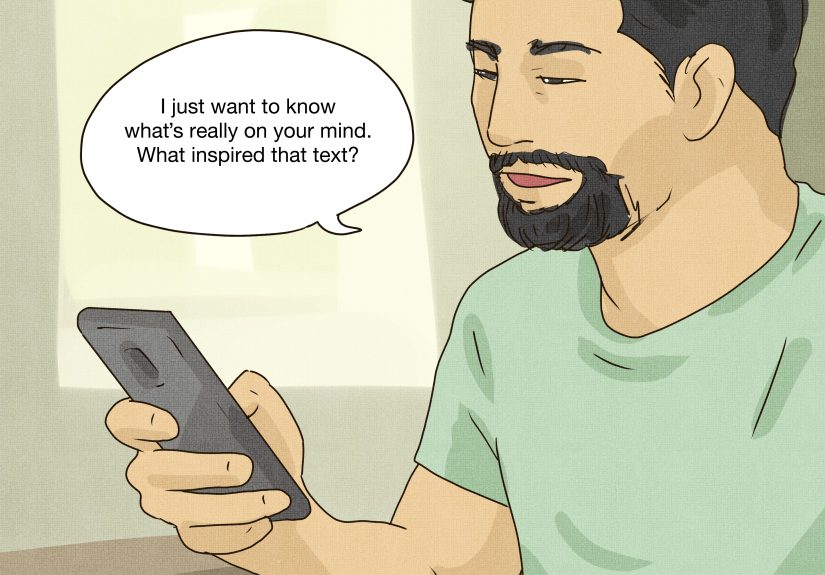
“I wanted to check in about what you said last night.”
“Were you just being affectionate, or were you trying to tell me something important?”
“I care about you, and I want to make sure we’re on the same page.”
This lets both people step out of late-night ambiguity and into adult communication. Revolutionary concept, honestly.
If the person apologizes and says they did not mean it, you can accept that and move on. If they say they did mean it, then great, now you can have a real conversation instead of trying to build emotional clarity out of emojis and slurred confidence.
When a Drunk “I Love You” Text Is a Red Flag
Not every drunken confession is harmless. Sometimes repeated drunk texts, guilt-heavy language, boundary-pushing, or manipulative behavior point to a bigger problem. If someone only says intense things while intoxicated, then avoids accountability when sober, pay attention.
Watch for patterns like:
They only express feelings when drunk.
They pressure you to respond romantically.
They get angry if you set limits.
They use emotional messages to pull you back in after conflict or distance.
In those situations, your job is not to decode them into a healthier person. Your job is to protect your peace. Boundaries are not the villain of the story. They are often the only adult in the room.
Final Thoughts
The best way to respond to a drunk “I love you” text is usually the simplest: be kind, be honest, and do not let the moment pressure you into saying more than you mean. Whether you answer with warmth, caution, humor, or a boundary, the goal is the same. You want your response to reflect your real feelings, not panic, guilt, or midnight confusion.
Remember, a drunk text can reveal emotion, but it does not have to dictate your next move. You are allowed to slow things down. You are allowed to ask for clarity. And you are definitely allowed to let a big emotional message wait until the sender is no longer typing like their thumbs are wearing oven mitts.
Experience: What This Situation Feels Like in Real Life
In real life, a drunk “I love you” text rarely arrives in a neat emotional package. It usually shows up in the middle of something ordinary. You are brushing your teeth. You are half-asleep. You are watching a show you are not even that invested in, and suddenly your phone turns into a tiny emotional grenade.
For some people, the first reaction is excitement. If the message came from someone they already care about, it can feel thrilling. Their heart starts racing, they reread the text six times, and for ten glorious seconds they imagine this is the beginning of something wonderful. Then the rational side kicks in and says, “Hold on. This person is drunk. Let us not plan the wedding between episodes.” That push and pull is common. The text feels meaningful, but the timing makes it unstable.
For others, the experience is stressful from the start. Maybe the text came from an ex, a situationship, or a friend who has blurry boundaries. In those moments, the message does not feel romantic at all. It feels like emotional homework that was assigned without consent. The person receiving it may feel pressure to be nice, pressure to respond quickly, and pressure not to make things worse. That is why simple replies matter so much. A short, respectful response can keep the moment from turning into a bigger mess.
There is also the morning-after effect, which deserves its own little trophy for awkwardness. Sometimes the sender acts like nothing happened. Sometimes they apologize immediately. Sometimes they double down and say they meant every word. And sometimes they send the classic follow-up: “Omg please ignore me lol.” That response may sound casual, but it can leave the other person holding all the confusion. Were the feelings real? Was it just the alcohol talking? Is this now a Thing?
Many people learn through experience that the healthiest response is not the cleverest one. It is the clearest one. The reply that works best is usually the one that respects the relationship, respects your own comfort level, and leaves room for a sober conversation later. That is true whether the ending is sweet, awkward, disappointing, or unexpectedly honest.
And perhaps that is the most relatable part of all: this situation is rarely about crafting the perfect line. It is about staying grounded when someone else is not. If you can do that, you have already handled the moment better than most people do at midnight with 12% battery and a front-row seat to emotional chaos.