Table of Contents >> Show >> Hide
- Why Hand Signals Work So Well in the Classroom
- 1. “Me, Too!”
- 2. “I Have a Point of Interest”
- 3. “I Have Something to Add”
- 4. “I Can Paraphrase”
- 5. “Complete the Thought”
- 6. “I Have a Conjecture”
- How to Introduce These Signals Without Creating Chaos
- Real Classroom Experiences: What These Signals Feel Like in Practice
- Conclusion
Let’s be honest: the raised hand has been hogging classroom fame for a very long time. It gets all the spotlight, all the drama, and all the squeaky “Ooh! Pick me!” energy. But in a strong classroom, one lonely raised hand should not be the entire communication system. Learning gets richer when students can show agreement, curiosity, confusion, connection, and deeper thinking without turning every discussion into a verbal traffic jam.
That is where classroom hand signals shine. Used well, they do much more than keep the room quiet. They make participation more equitable, help teachers check understanding in real time, give students a low-pressure way to join a discussion, and turn thinking into something visible. In other words, they help the teacher read the room before the room starts reading the clock.
Hand signals are especially powerful because they sit at the intersection of engagement and clarity. Students who are shy, multilingual, still processing, or simply not in the mood to compete with the class extrovert can still participate. Teachers can gather instant feedback. Peers can respond to one another instead of performing only for the adult at the front of the room. The best part is that these signals can be taught in a playful way while still serving serious academic goals.
Below are six hand signals that can bring learning to life, not because they are cute, but because they support reasoning, listening, discourse, and classroom community. These are not random jazz hands for education. They are practical tools that help students think better, talk better, and learn with more intention.
Why Hand Signals Work So Well in the Classroom
Before we jump into the six signals, it helps to understand why these moves matter. Research and classroom practice both point in the same direction: gestures can support attention, comprehension, memory, and participation. Teachers also use nonverbal signals to reduce interruptions and preserve momentum during instruction. When students can show “I agree,” “I need clarification,” or “I’m building on that idea” with a quick motion, the lesson keeps moving while the thinking gets deeper.
There is also a strong equity benefit here. Traditional discussion often rewards the fastest processor, the loudest voice, or the student most comfortable speaking on the spot. Hand signals widen the doorway. Students can participate while they think, listen, compare, and prepare to speak. That matters in every classroom, but especially in rooms with English language learners, students with executive function challenges, or students who need more wait time before responding.
One caution, though: hand signals only work when they are taught clearly, used consistently, and connected to real thinking. If they become empty routines, students will use them like tiny theater props. The goal is not to create a silent mime convention. The goal is to make reasoning visible.
1. “Me, Too!”
What it means
This signal shows, “I had the same idea,” or “That matches my thinking.” It is a quick way for students to acknowledge that a classmate’s strategy, example, or interpretation connects to their own understanding.
Why it matters
Too many classroom discussions act like there can only be one winner, one correct answer, one brave volunteer. The “me, too” signal changes that energy. It tells students that learning is not a solo performance. When one student shares a strategy and several classmates respond with “me, too,” the speaker gets confirmation that the idea is understandable and transferable. That builds confidence without requiring five students to repeat the same answer in slightly different fonts.
How to use it
Try it in math when students explain a problem-solving strategy. If one student says, “I broke 48 into 40 and 8,” other students can use the “me, too” signal to show they approached the problem in a similar way. In reading, students can use it when a peer identifies a character trait, theme, or text-to-self connection that matches their own thinking.
Teacher tip
Ask a follow-up question after students signal agreement: “Why does that strategy make sense?” or “What evidence supports that interpretation?” This keeps the signal connected to reasoning instead of simple popularity.
2. “I Have a Point of Interest”
What it means
This signal tells the room, “I need clarification,” “I disagree,” or “I want to challenge this idea respectfully.” It is not a gotcha move. It is a thinking move.
Why it matters
Healthy classrooms need disagreement. Not the dramatic reality-show kind, but the thoughtful academic kind that sharpens ideas. Students should learn that questioning a claim is not rude when it is done with care and evidence. This signal gives them an entry point into that kind of discourse.
It is especially useful because many students hesitate to interrupt a classmate verbally. A visible signal lets the speaker finish while showing that another perspective is waiting in the wings. That small pause can prevent blurting and make discussions feel more respectful.
How to use it
In science, a student might use this signal after hearing a peer say that heavier objects always fall faster. In social studies, a student might use it when a classmate makes a broad claim about why an event happened. In writing workshop, a student might use it to ask for clarification about how a peer’s evidence supports the thesis.
Teacher tip
Pair the signal with sentence stems such as “I see it differently because…” or “Can you say more about…” That keeps the conversation from sliding into “You’re wrong,” which is not exactly the dream soundtrack of productive discourse.
3. “I Have Something to Add”
What it means
This is the build-on signal. It means, “I want to extend that idea,” “I have another example,” or “I can add detail.”
Why it matters
This may be the signal that most clearly turns a classroom from teacher-centered to community-centered. Students stop treating classmates’ ideas as finished products and start treating them as starting points. That shift is huge. It teaches students that knowledge can be co-constructed, not merely delivered.
When students build on one another’s responses, they practice listening for substance rather than waiting for their turn to speak. That makes discussions more coherent. It also reduces the classic classroom problem of three students saying unrelated things while the teacher smiles bravely and pretends there is a thread.
How to use it
In an elementary reading lesson, one student might say, “The main character feels nervous.” Another uses the build-on signal and adds, “Yes, and the author shows that by describing her hands shaking.” In a high school history discussion, one student might explain an economic cause of a conflict, and another can add a political factor that deepens the analysis.
Teacher tip
Teach students to name the previous speaker in their response. For example: “I want to add to Maya’s point…” That simple habit reinforces listening and makes discussion feel more connected.
4. “I Can Paraphrase”
What it means
This signal shows, “I can restate that idea in my own words.”
Why it matters
Paraphrasing is an underrated superpower. Students who can paraphrase are not just hearing words; they are processing meaning. They are translating language into understanding. In classrooms with multilingual learners, students with language-processing differences, or students who simply need a second pass through an idea, paraphrasing is gold.
This signal also helps teachers check whether students are genuinely following a discussion. A room full of nodding heads can be misleading. A student who can paraphrase a classmate’s reasoning is giving far better evidence of understanding than a student who just mastered the art of looking thoughtful.
How to use it
In math, after a student explains how they found a common denominator, another student can use the paraphrase signal and restate the method. In literature, a student can paraphrase a peer’s interpretation of symbolism before agreeing, disagreeing, or extending it. In science, students can paraphrase an explanation of cause and effect before moving on to a new example.
Teacher tip
Normalize paraphrasing as a strength, not a backup plan. Students sometimes assume that repeating someone else’s idea is less impressive than saying something original. In reality, paraphrasing is proof that real listening happened.
5. “Complete the Thought”
What it means
This signal reminds a speaker to be more precise. Maybe they need a complete sentence, a unit label, a text citation, or one more layer of explanation.
Why it matters
Students often have the right idea but an incomplete expression of it. A student says “12” in math without saying “12 centimeters.” Another says “because she was sad” in reading without connecting that claim to textual evidence. Another gives a half-built sentence that makes sense in their head and nowhere else on Earth.
The beauty of this signal is that it nudges precision without public embarrassment. It is a reminder, not a shutdown. Over time, students begin to internalize the expectation that strong academic talk includes full thoughts, clear language, and supporting detail.
How to use it
In science, use it when students state a result but omit the reasoning. In writing conferences, students can use it to remind a partner to finish the explanation after giving evidence. In early grades, it supports complete sentences. In upper grades, it supports academic precision and complete justification.
Teacher tip
Model exactly what “complete” means in your subject area. In math, it may mean including units. In English, it may mean citing the text. In social studies, it may mean connecting the event to a larger historical pattern.
6. “I Have a Conjecture”
What it means
This signal says, “I have an idea I am not ready to call proven yet, but I think it is worth testing.”
Why it matters
This may be the most exciting signal of the bunch because it gives students permission to think boldly without pretending certainty. A conjecture is not a random guess tossed into the air like confetti. It is a tentative claim based on noticing a pattern, making an inference, or spotting a possibility.
Classrooms become more intellectually alive when students learn that not every valuable contribution must arrive fully polished. Conjectures create room for curiosity, revision, and investigation. They also help students see learning as a process of exploring ideas, not just collecting correct answers like educational trading cards.
How to use it
In math, a student may notice that even numbers seem to produce a pattern and offer a conjecture before proving it. In science, a student may predict what will happen if a variable changes. In reading, a student may make a theory about a character’s motivation before the text confirms it.
Teacher tip
Celebrate conjectures even when they turn out to be inaccurate. The point is to reward disciplined thinking, risk-taking, and revision. Students should learn that being wrong while thinking deeply is far more valuable than being quiet while staying safe.
How to Introduce These Signals Without Creating Chaos
The fastest way to ruin a good hand signal system is to introduce twelve signals on a Monday and hope for the best by Tuesday. Start small. Teach two or three signals first. Model them. Practice them. Post visuals. Use them during real instruction, not just during a one-time mini lesson that vanishes into the classroom memory hole.
Be explicit about why each signal exists. Students are more likely to use them well when they understand the purpose. Tell them, for example, “This helps us show agreement without repeating the same answer,” or “This helps us challenge ideas respectfully.”
It is also wise to check for accessibility and cultural meaning. A gesture that feels natural to one student may feel awkward or mean something different to another. Some students may need modified movements. Great teachers do not insist on one perfect hand shape like they are judging an Olympic routine. They adapt the system so all students can participate.
Most of all, keep the signals tied to thinking. A hand signal should be the doorway, not the destination. After students signal, ask them to speak, paraphrase, justify, compare, or extend. That is how the signal brings learning to life rather than merely decorating it.
Real Classroom Experiences: What These Signals Feel Like in Practice
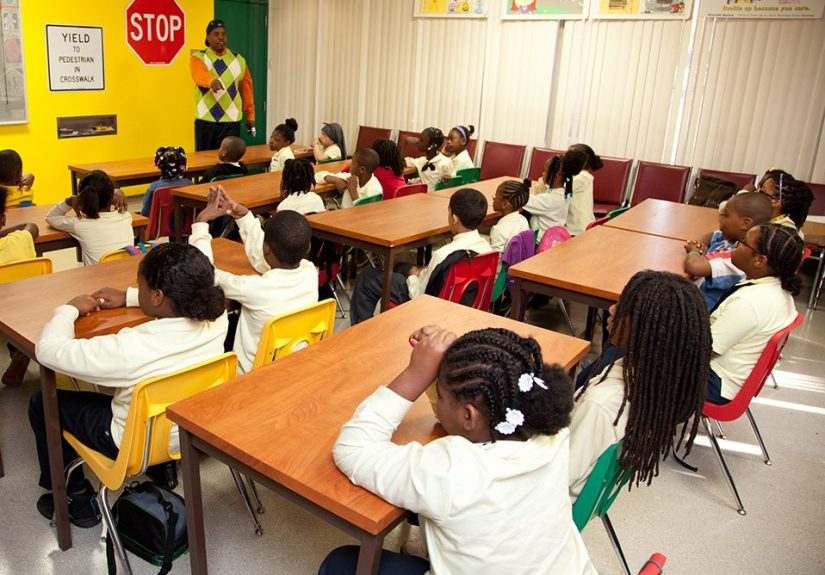
In classrooms where these signals really work, the difference is noticeable almost immediately. The room feels less like a quiz show and more like a thinking community. A second grade teacher might ask students to compare two strategies for solving a subtraction problem. Instead of a few students blurting answers while others drift into pencil-based archaeology, several children flash the “me, too” signal, two students use the “I have something to add” signal, and one quietly shows “I have a point of interest.” Suddenly the teacher can see not only who has an answer, but how the class is processing the thinking behind it.
In an upper elementary reading lesson, a student explains that a character seems brave on the outside but anxious on the inside. Another student signals, “I can paraphrase,” and restates the idea more clearly. A third student uses the build-on signal and adds textual evidence. Nobody had to fight for airtime. Nobody had to say, “I was going to say that,” which is student language for “Please give me partial credit for this thought hovering near my head.” The conversation grows naturally because the signals help students listen with intention.
Middle school teachers often notice another benefit: the signals reduce low-level social risk. Speaking up in front of peers can feel enormous at that age. A hand signal gives students a bridge into participation. A student who is not yet ready to offer a full explanation can still show agreement, confusion, or curiosity. After a few weeks, those same students often begin speaking more because the signals helped them feel visible before they felt verbal.
In high school classes, the signals can support more sophisticated academic moves. During a history discussion, one student offers a claim about the causes of a revolution. A classmate signals a point of interest, waits, then asks for clarification about economic evidence. Another signals a conjecture and suggests that political messaging may have mattered more than taxation alone. The teacher does less rescuing because students are doing more of the intellectual heavy lifting themselves.
Teachers also report that the signals help them teach on their feet. When several students show confusion, the teacher can pause and reteach before misconceptions harden into concrete. When many students signal agreement and a few show uncertainty, the teacher can strategically invite a paraphrase or ask for a second example. The lesson becomes more responsive because the teacher is no longer guessing what the room understands.
Perhaps the most powerful classroom experience is this: students begin using the signals with one another, not just for the teacher. That is the moment the strategy truly clicks. The signals stop being management tools and become part of the class culture. Students start treating one another as real thinkers worth hearing, challenging, and building upon. And when that happens, learning does not just look alive. It is alive.
Conclusion
The best classroom hand signals are not gimmicks, and they are definitely not substitutes for strong teaching. They are supports for strong teaching. They help students participate more equitably, listen more deeply, think more visibly, and discuss ideas more respectfully. Whether you teach six-year-olds learning to explain their thinking or teenagers learning to challenge arguments with evidence, these six signals can create a classroom where more students have a way in.
So yes, keep the raised hand. It has earned a modest retirement plan. But let it share the stage. When students can say “me, too,” “I have a point of interest,” “I have something to add,” “I can paraphrase,” “complete the thought,” and “I have a conjecture,” learning becomes less passive, more social, and much more memorable. That is not a small shift. That is classroom magic with better structure.