Table of Contents >> Show >> Hide
- Why nuts work so well for low-carb living
- Net carbs vs. total carbs (and why labels can feel like a math test)
- Quick low-carb nut cheat sheet
- 1) Pecans
- 2) Brazil nuts
- 3) Macadamia nuts
- 4) Walnuts
- 5) Hazelnuts
- 6) Pine nuts
- 7) Almonds
- 8) Peanuts
- 9) Pistachios
- How to choose the best nuts for your low-carb plan
- Common low-carb nut mistakes (and how to avoid them)
- A neat conclusion
- Real-world experiences: what “9 nuts on low carb” looks like day to day (extra ~)
- Final takeaway
If you’re eating low carb, you’ve probably discovered two truths: (1) bread is everywhere, and
(2) hunger is a persuasive liar. Nuts are one of the easiest ways to stay satisfied without
accidentally turning “a little snack” into “why am I asleep at 3 p.m.?”
They’re crunchy, portable, and packed with fat, fiber, and proteinaka the trio that helps you feel
full while keeping carbs reasonable. But not all nuts are created equal in carb-land. Some are
basically low-carb royalty. Others… are delicious, yes, but a little too carb-happy for strict plans.
Why nuts work so well for low-carb living
A low-carb diet usually means you’re cutting back on starches and sugars and leaning harder on
protein, healthy fats, and non-starchy veggies. Nuts fit that job description beautifully because they
deliver:
- Healthy fats to keep you satisfied (and make salads less sad).
- Fiber to slow digestion and soften blood-sugar roller coasters.
- Protein to help curb cravings and support muscle maintenance.
- Micronutrients like magnesium, vitamin E, and potassium (varies by nut).
Translation: nuts can help you stay full between meals, keep your snack choices simple, and add variety
to low-carb meals without requiring a culinary degree or a suitcase of ingredients.
Net carbs vs. total carbs (and why labels can feel like a math test)
You’ll often hear low-carb folks talk about net carbs. The idea is simple:
net carbs = total carbs − fiber. Since fiber isn’t digested the same way as sugar and
starch, some people subtract it to estimate “digestible” carbs.
Two important caveats (because nutrition always comes with fine print):
- Not every low-carb approach uses net carbs. Some people track total carbs only.
-
Nuts are whole foods. Even if you track net carbs, nuts tend to be a cleaner
“net-carb situation” than processed products that add fibers and sweeteners.
Bottom line: whether you track total carbs or net carbs, nuts can workjust pick wisely and watch
portions (because a “handful” is an emotional measurement, not a scientific one).
Quick low-carb nut cheat sheet
Carbs vary a bit by brand, roast method, and serving size, but here’s a practical snapshot for
about 1 ounce (a small handful) of nuts.
| Nut | Low-carb vibe | Approx. net carbs (per 1 oz) | Best “use case” |
|---|---|---|---|
| Pecans | Elite | ~1g | Snacking, salad topper, “keto granola” |
| Brazil nuts | Elite (but potent) | ~1g | Quick snack, creamy crunch |
| Macadamias | Elite | ~2g | Snack, fat-boost for low-carb meals |
| Walnuts | Excellent | ~2g | Salads, yogurt bowls, “taco crumble” |
| Hazelnuts | Excellent | ~2g | Snacking, baking, DIY “choco-hazelnut” spreads |
| Pine nuts | Good | ~3g | Pesto, roasted veg, fancy salad energy |
| Almonds | Good (super versatile) | ~3g | Snacking, almond flour, almond butter |
| Peanuts | Moderate | ~4g | Budget-friendly snack, peanut butter |
| Pistachios | Moderate (portion matters) | ~5g | Snack with built-in portion control (shells!) |
Notice what’s not on the list? Nuts like cashews tend to run higher in carbs, so they’re
usually a “sometimes” food on stricter low-carb plans. (They’re not badjust more of a carb
spender than a carb saver.)
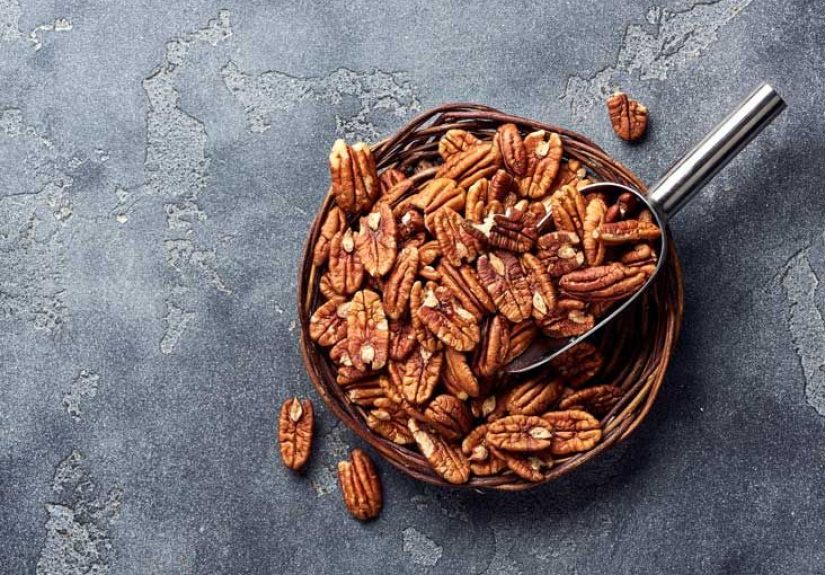
1) Pecans
Pecans are the classic low-carb overachiever: rich, buttery, and impressively low in net carbs.
They’re also a great source of fiber, so they feel more satisfying than their “tiny nut” size suggests.
How to eat them
- Snack upgrade: Toast pecans with cinnamon and a pinch of salt (no sugar needed).
- Salad magic: Add chopped pecans to greens with goat cheese and grilled chicken.
- Fake granola: Mix pecans with coconut flakes and a few cacao nibs.
Watch-outs
Candied pecans are basically dessert disguised as health food. Check labels for added sugar and
sweet coatings.
2) Brazil nuts
Brazil nuts are low in carbs and famously rich in seleniumso rich, in fact, that you don’t need many.
Think “powerhouse,” not “bottomless bowl.”
How to eat them
- Simple snack: 1–3 nuts can feel surprisingly filling.
- Low-carb dessert trick: Chop and sprinkle over unsweetened Greek yogurt with cinnamon.
Watch-outs
Because they’re selenium-dense, going wild every day isn’t the goal. For most people, a small amount
goes a long way.
3) Macadamia nuts
If pecans are the quiet genius, macadamias are the luxurious friend who shows up in linen pants and
somehow makes it look effortless. They’re low in carbs, high in fat, and naturally rich and satisfying.
How to eat them
- Snack-worthy: Eat them plain; they don’t need much help.
- Crunch factor: Chop and use as a crust for baked fish or chicken.
- Salad flex: Toss a few into a spinach salad with avocado.
Watch-outs
Macadamias are calorie-dense. That’s not a moral failing. It just means “portion awareness”
is your best friend.
4) Walnuts
Walnuts are a low-carb favorite with a slightly bitter edge that pairs beautifully with savory foods.
They’re also known for their healthy fat profile, making them a strong “daily nut” option for many people.
How to eat them
- Taco crumble: Chop walnuts with spices and sprinkle over taco salads.
- Breakfast support: Add to plain yogurt with berries (portion-controlled).
- Veggie booster: Toss onto roasted Brussels sprouts or green beans.
Watch-outs
Pre-chopped walnuts can taste stale faster. If you can, buy whole and chop as needed.
5) Hazelnuts
Hazelnuts are low in net carbs and bring a warm, toasty flavor that screams “dessert energy,” but you can
keep it low carb with the right pairing.
How to eat them
- Roast for flavor: A quick toast in the oven makes them extra aromatic.
- DIY spread: Blend hazelnuts with cocoa powder, vanilla, and a low-carb sweetener if desired.
- Salad and cheese: Hazelnuts + arugula + a salty cheese = chef’s-kiss combination.
Watch-outs
Many hazelnut “chocolate spreads” are sugar-first products. If you buy a spread, read the ingredient list
like you’re auditioning for a detective show.
6) Pine nuts
Pine nuts aren’t the lowest-carb nut on the planet, but they’re still very workable on a low-carb diet
because you usually eat them as an accent, not a meal replacement. Their rich flavor means a little can go far.
How to eat them
- Pesto power: Traditional pesto is a low-carb heroespecially over zucchini noodles.
- Salad topper: Toast lightly and sprinkle for instant “restaurant salad” vibes.
- Veggie finishing touch: Add to sautéed spinach or roasted cauliflower.
Watch-outs
Pine nuts can be pricey. Consider them your “special-occasion nut” if you’re watching the budget.
7) Almonds
Almonds sit in the middle of the low-carb nut spectrum: not the absolute lowest in net carbs, but wildly
versatile. They’re also the gateway to almond flour, which is basically the MVP of low-carb baking.
How to eat them
- Grab-and-go: Plain or dry-roasted almonds are an easy travel snack.
- Low-carb baking: Almond flour for pancakes, muffins, and bread-like things that aren’t bread.
- Almond butter: Pair with celery, or stir into chia pudding for extra creaminess.
Watch-outs
Almonds can be easy to overeat because they’re small and snackable. Pre-portion them if you tend to “free-pour”
from the bag (we’ve all done it).
8) Peanuts
Peanuts are technically legumes, but in the kitchen and the snack aisle, they behave like nutsso they make the list.
They’re affordable, satisfying, and protein-friendly. Carb-wise, they’re not as low as pecans or macadamias, but
they can still fit well with portion control.
How to eat them
- Classic snack: A measured handful of roasted peanuts can steady afternoon hunger.
- Peanut butter: Choose versions with peanuts (and maybe salt) as the main ingredientsskip added sugars.
- Low-carb “trail mix”: Peanuts + pumpkin seeds + a few unsweetened coconut chips.
Watch-outs
Honey-roasted peanuts are basically candy wearing a mustache. Also, peanut butter can be a “portion creep” trapmeasure
it at first until your eyeballs learn what a tablespoon looks like.
9) Pistachios
Pistachios are slightly higher in net carbs than the lowest-carb nuts, but they come with built-in portion control:
shells. That tiny inconvenience can be a feature, not a bug, because it slows you down long enough for your brain to
realize you’ve eaten food.
How to eat them
- Mindful snacking: Choose in-shell pistachios and put the shells in a separate bowl.
- Salad crunch: Pistachios pair well with greens, cucumbers, and a lemony dressing.
- Protein pairing: Combine with a cheese stick or a hard-boiled egg for a more filling snack.
Watch-outs
Flavored pistachios can sneak in added sugars and extra sodium. Check labelsespecially for “sweet chili,” “honey,”
or anything that sounds like a barbecue party.
How to choose the best nuts for your low-carb plan
Nuts are simpleuntil they aren’t. Use these rules to keep your snack life low-carb and drama-free:
1) Pick “boring” ingredients on purpose
The best low-carb nuts are usually raw or dry-roasted with minimal ingredients.
Avoid sugar coatings and sweet glazes (they add carbs fast).
2) Watch the portion before you watch the carbs
Even low-carb nuts can become “not-so-low-carb” if your serving size quietly triples. A smart strategy:
pre-portion nuts into small containers or snack bags so your day doesn’t become an accidental nut festival.
3) Pair nuts with something that adds volume
Nuts alone are great, but pairing them can improve satisfaction without piling on carbs. Examples:
- Walnuts + cucumber slices + a little salt
- Almonds + plain Greek yogurt
- Pecans + a few berries
- Pistachios + a protein (egg, cheese, turkey slices)
4) If you do nut butter, keep it “clean”
Nut butters can be a low-carb winif they’re mostly nuts. Look for short ingredient lists and skip
versions with added sugar, syrups, or candy-like mix-ins.
Common low-carb nut mistakes (and how to avoid them)
-
Mistake: “I’m low carb, so I can eat unlimited nuts.”
Fix: Nuts are nutrient-dense and calorie-dense. Enjoy themjust portion them. -
Mistake: Buying flavored nuts without checking the label.
Fix: Choose unsweetened, lightly salted (or unsalted) options most of the time. -
Mistake: Using nut butter like frosting (we respect the ambition).
Fix: Measure a serving, then pair it with something high-volume like celery or yogurt. -
Mistake: Ignoring individual needs (allergies, digestion, sodium sensitivity).
Fix: Choose what works for your body and consult a clinician if you have medical conditions.
A neat conclusion
Nuts can be one of the easiest “yes” foods on a low-carb diet: satisfying, portable, and flexible enough to work
as a snack, salad topper, or recipe ingredient. If you want the simplest path, start with the lowest-net-carb
crowdpecans, Brazil nuts, macadamias, walnuts, and hazelnutsthen add almonds, pine nuts, peanuts, and pistachios
in sensible portions depending on your carb target.
Keep it simple: choose unsweetened options, pre-portion when needed, and let nuts support your low-carb plannot
quietly take it over.
Real-world experiences: what “9 nuts on low carb” looks like day to day (extra ~)
Many people start low carb with the purest intentions: chicken, veggies, water, discipline. Then real life shows up
with meetings, errands, and that mysterious 4 p.m. hunger that makes you consider eating the office stapler. This is
where nuts become the practical heronot because they’re magical, but because they’re available, satisfying,
and require zero cooking.
A common experience is the “snack substitution moment.” Someone swaps chips, cookies, or granola bars for a measured
serving of pecans or walnuts and suddenly realizes they can go from lunch to dinner without feeling like a raccoon
rummaging through the pantry. The fat and fiber combo tends to slow things down, and that steadier energy can be the
difference between staying on plan and ordering something carb-heavy out of pure desperation.
Then comes the next very human phase: portion creep. Nuts are small. Bags are large. Hands are optimistic. People often
discover that almonds and peanuts are especially easy to “just keep eating” while scrolling, driving, or watching TV.
One simple trick many low-carb eaters use is creating a “snack boundary”: they pour one serving into a bowl, put the bag
away, and only then start eating. Pistachios are also popular here because shells slow you down and make the total
consumption feel more obvious (a bowl of shells is the snack equivalent of seeing your unread emails in bold).
Another frequent real-life lesson: flavored nuts can be sneaky. Sweet chili, honey roasted, maple-glazedthese sound like
fun, but they can shift a nut snack from “low-carb friendly” to “why is this basically candy?” People who stick with
unsweetened, lightly salted, or dry-roasted options tend to find nuts work better as a consistent routine food. The same
goes for nut butters: the “natural” versions (mostly nuts, maybe salt) are usually easier to fit into low carb than the
dessert-like jars with added sugar and oils.
Finally, there’s the “nut rotation” discovery. Many low-carb eaters eventually realize they don’t have to choose one
forever nut. They rotate: macadamias when cravings hit and they want something rich, walnuts for salads, almonds when
they need baking power, and peanuts when they want something budget-friendly. Brazil nuts often become the “small but
mighty” optionjust a couple can feel substantialwhile pine nuts show up when someone wants to make a meal feel special
(hello pesto night).
The overall experience tends to be the same: nuts aren’t the whole plan, but they make the plan easier to live with. And
when a way of eating feels livable, it’s much more likely to stick.
Final takeaway
Choose mostly unsweetened nuts, lean toward the lower-net-carb options most days, and treat portion control as a tool
(not a punishment). Low carb works best when it’s sustainableand nuts make “sustainable” a lot crunchier.