Table of Contents >> Show >> Hide
It is 12:47 a.m. Your phone buzzes. You look down and see a message that is less “How was your day?” and more “Are you up?” followed by enough winky faces to power a small casino sign. Congratulations: you have received a booty text.
A booty text is a late-night or sexually suggestive message from someone hoping for a casual hookup, flirtation, or intimate encounter. Sometimes it comes from an ex who suddenly remembers your existence after two margaritas. Sometimes it is from a dating app match who skipped “hello” and went straight to “my place?” Sometimes it is from someone you like, but not in that way, not tonight, or not ever.
The good news is simple: you do not owe anyone access to your body, your time, your attention, or your emotional Wi-Fi password. Rejecting a booty text does not have to be dramatic, cruel, or awkward. It can be clear, kind, funny, firm, or very short. The goal is not to win a debate. The goal is to communicate your boundary and protect your peace.
This guide breaks down 9 ways to reject a booty text with practical examples, smart wording, and a little humor for the moments when your phone acts like it is auditioning for a reality show called Bad Decisions After Midnight.
Why Rejecting a Booty Text Can Feel So Awkward
Even confident people can freeze when a sexual or suggestive message pops up unexpectedly. You may worry about sounding rude. You may not want to hurt the other person’s feelings. You may feel pressured because you flirted before, dated before, or once replied with a “lol” that is now being treated like a signed contract.
Here is the truth: previous flirting does not equal current consent. A past hookup does not create a lifetime subscription. Being polite does not mean being available. Consent and comfort can change at any time, and a respectful person will accept that without turning your phone into a courtroom.
Rejecting a booty text is really about boundary-setting. You are deciding what communication feels comfortable, what kind of relationship you want, and how much access someone gets to you. That is not rude. That is adulthood with a lock screen.
9 Ways to Reject a Booty Text
1. Keep It Short and Direct
Sometimes the best response is the simplest one. You do not need a paragraph, an apology tour, or a PowerPoint presentation titled “Why I Will Not Be Coming Over Tonight.” A direct answer works because it leaves little room for confusion.
Try messages like:
- “No, I’m not interested.”
- “I’m going to pass.”
- “Not tonight.”
- “That’s not what I’m looking for.”
This approach is especially useful when you do not want to encourage more flirting. A short response is not cold; it is clear. Think of it as closing the tab before the pop-up ads multiply.
2. Use a Kind but Firm Tone
If you like the person as a friend, coworker, classmate, or human being who occasionally behaves like one, you may want to reject the message without sounding harsh. Kindness can be helpful, but firmness matters more. A soft no should still be a no, not a maybe wearing a cardigan.
Examples:
- “I’m flattered, but I’m not interested in hooking up.”
- “I appreciate you asking, but that’s not something I want.”
- “You seem great, but I’m not looking for anything casual.”
Notice that these replies do not attack the sender. They focus on your preference. This keeps the message mature while still shutting the door.
3. Blame Your Boundaries, Not Your Schedule
It can be tempting to say, “I’m busy,” even when the real answer is, “I would rather alphabetize my spice cabinet.” The problem with blaming your schedule is that it can invite follow-up questions: “What about tomorrow?” “What about this weekend?” “What about after your dentist appointment?” Suddenly, you are managing a calendar for a hookup you never wanted.
Instead, name the boundary:
- “I’m not interested in a late-night hookup.”
- “I don’t do casual meetups like that.”
- “I’m not comfortable with this kind of texting.”
Specific boundaries reduce confusion. They also make it harder for someone to negotiate around your answer. You are not unavailable because of timing. You are unavailable because you said no.
4. Add Humor When It Fits
Humor can make rejection feel less tense, especially if the text came from someone you already have a friendly dynamic with. A playful response can say “no” without turning the conversation into a dramatic thunderstorm.
Try:
- “My pajamas and I are in a committed relationship tonight.”
- “Tempting, but my bed is accepting only one applicant: me.”
- “I’m not taking late-night appointments, but thank you for contacting customer service.”
Use humor only if it feels safe and natural. If the person has ignored your boundaries before, skip the jokes. A repeated boundary-crosser does not need comedy; they need clarity.
5. Redirect the Conversation
Maybe you like the person, but you do not want a hookup. Maybe you would prefer an actual date, a normal conversation, or proof that they can text before 10 p.m. In that case, redirect the energy.
Examples:
- “I’m not interested in coming over tonight, but I’d be open to coffee this weekend.”
- “I’m not looking for a hookup, but I’d like to get to know you better.”
- “That’s not my vibe, but we can talk tomorrow if you want.”
Redirecting is useful when the person’s approach is wrong, but your interest is not zero. It gives them a chance to meet you in a more respectful lane. If they refuse that lane, congratulations: you just received helpful information.
6. Say No Without Over-Explaining
Over-explaining can happen when you feel guilty. You start with “no,” then add five reasons, three disclaimers, two apologies, and one emotional coupon code. But the more you explain, the more material the other person has to debate.
Instead of this:
“I’m sorry, I would, but I’m tired and I have work and I’m trying to be healthier and I don’t want you to think I dislike you and maybe another time but I don’t know…”
Try this:
“No, I’m not interested. Hope you have a good night.”
That is enough. A respectful person will not require a 900-word essay with footnotes. Your comfort is reason enough.
7. Set a Digital Boundary
If the message itself made you uncomfortable, say so. Digital boundaries are just as real as in-person boundaries. You can decide what kind of messages you want to receive, when people can contact you, and whether sexual comments are welcome.
Examples:
- “Please don’t send me messages like that.”
- “I’m not comfortable with sexual texts.”
- “Don’t text me late at night asking to hook up.”
- “I want our conversations to stay respectful.”
This is especially important if someone sends explicit photos, pressures you for pictures, or keeps pushing after you say no. That is not flirting. That is a boundary problem wearing cologne.
8. Use the Broken-Record Method
Some people treat “no” like the first round of negotiations. They ask again. They say “come on.” They promise “just for a little while.” They act wounded, confused, or personally betrayed by your right to sleep peacefully. This is when the broken-record method helps.
You calmly repeat your boundary without adding new arguments:
- “No, I’m not interested.”
- “Like I said, I’m not interested.”
- “My answer hasn’t changed.”
- “I’m ending this conversation now.”
Repeating yourself may feel awkward, but it is powerful. You are not being mean; you are refusing to let someone drag your boundary into a debate tournament.
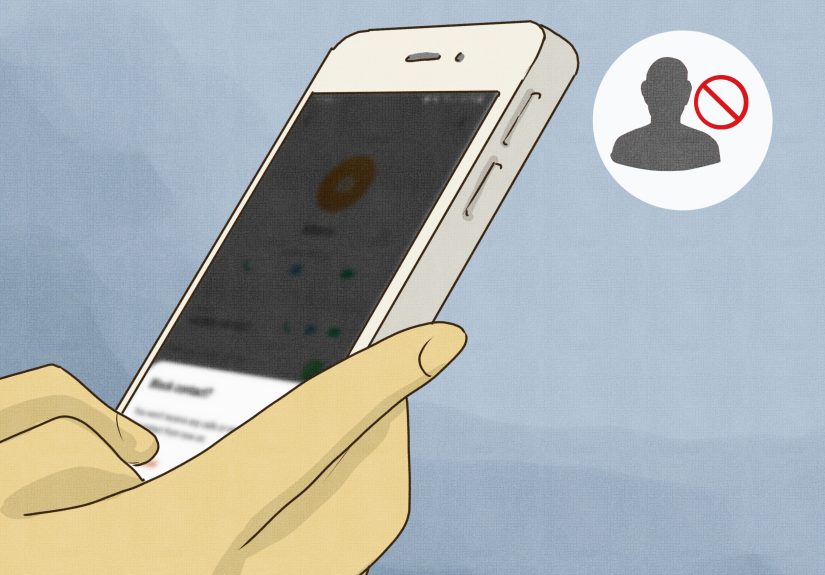
9. Stop Responding, Block, or Get Support
You do not have to keep texting someone who disrespects your answer. If they pressure you, insult you, send unwanted explicit content, threaten you, or keep contacting you after you ask them to stop, it is okay to stop responding. It is okay to block. It is okay to save screenshots. It is okay to ask a trusted friend for help.
Use a final message if you want:
- “I said no. Do not contact me like this again.”
- “You’re making me uncomfortable. I’m blocking this number.”
- “I’m not continuing this conversation.”
If you feel unsafe, prioritize safety over politeness. You do not owe honesty, warmth, or continued access to someone who is ignoring your boundaries. Your phone has a block button for a reason. It is not decoration.
Ready-to-Copy Texts for Different Situations
If It Is an Ex
“I’m not interested in revisiting that part of our relationship. Please respect that.”
Exes can be tricky because history adds emotional seasoning. Keep your reply focused on the present. What happened before does not decide what happens tonight.
If It Is a Dating App Match
“I’m not looking for a hookup. If you want to plan an actual date, I’m open to that.”
This gives the person a clear choice: respect your dating style or exit the chat. Either result saves you time.
If It Is a Friend
“I value our friendship, but I’m not interested in hooking up. I hope we can keep things normal.”
A good friend may feel embarrassed, but they will respect the boundary. If they punish you for saying no, the friendship may need a serious software update.
If It Is Someone Who Keeps Trying
“I’ve already answered. Stop asking.”
At this stage, you do not need extra softness. Repetition after a clear no is pressure, not romance.
What Not to Do When Rejecting a Booty Text
First, do not say “maybe later” unless you truly mean maybe later. A false maybe can keep the conversation alive and create more messages you do not want. Second, do not apologize for having boundaries. You can be polite without acting guilty. Third, do not insult yourself to soften the rejection. “I’m just boring” or “I’m probably not worth it” may feel easier, but you do not need to shrink yourself to say no.
Also, avoid sending a long emotional explanation to someone who has already shown they are not listening. Long messages can become fuel for argument. Clear, calm, and brief usually works better.
How to Know If the Text Is a Red Flag
A single late-night message is not always a crisis. Some people are clumsy, impulsive, or socially powered by questionable judgment. But patterns matter. Watch how the person responds after you say no.
Green flag: they say, “No worries, sorry if I made you uncomfortable.” Yellow flag: they make a joke but back off. Red flag: they argue, guilt-trip, insult you, send explicit content, pressure you, or keep texting after you ask them to stop.
The response to your boundary tells you more than the original message. A respectful person can handle rejection. An unsafe or immature person may reveal themselves when access is denied.
Experience Section: Real-Life Lessons from Rejecting Booty Texts
One of the most common experiences people have with booty texts is the “I froze” moment. The message appears, and suddenly your brain acts like it has been replaced by a loading icon. You know you do not want to say yes, but you also do not want to sound harsh. That pause is normal. Boundary-setting is not always automatic, especially if you were raised to be polite, agreeable, or responsible for everyone’s feelings.
A useful experience-based lesson is this: prepare a few replies before you need them. Just like you keep an umbrella around for suspicious weather, keep a few boundary texts saved in your notes app. “No, I’m not interested,” “Please don’t send me messages like that,” and “My answer hasn’t changed” may not be poetry, but they work. When you already have the words, you are less likely to get pulled into guilt, flirting, or over-explaining.
Another lesson is that tone depends on the relationship. If a long-time friend sends a poorly timed flirty message, a kind boundary may preserve the friendship. If a random match sends a graphic message before learning your last name, a short rejection or block may be the healthier choice. Not every message deserves the same level of emotional labor. Your response can match the respect level of the sender.
Many people also learn that silence can be a valid response. You are not required to answer every message, especially one that feels invasive or disrespectful. Some people worry that ignoring a text is rude, but replying can sometimes encourage more contact. If the sender is pushy, silence plus blocking may be the cleanest option. Your peace is not a group project.
There is also the experience of feeling guilty afterward. Even when you reject someone politely, you may replay the conversation in your head. Did I sound mean? Did I hurt their feelings? Should I have added a smiley face? Here is the thing: discomfort does not mean you did something wrong. Saying no can feel uncomfortable because it interrupts someone else’s expectation, not because your boundary is unfair.
Finally, people often discover that a clear rejection can be freeing. Once you stop trying to craft the perfect response, you realize the perfect response is the one that protects your comfort. You can be warm. You can be funny. You can be blunt. But you do not have to be available. A booty text may arrive late at night, but your self-respect does not keep office hours.
Conclusion
Rejecting a booty text does not require drama, guilt, or a committee meeting. You can keep it short, use humor, set a digital boundary, redirect the conversation, or block the sender if they ignore your no. The best response is the one that matches your comfort level and protects your peace.
Remember: consent is current, specific, and voluntary. A respectful person will accept your answer without pressure. If someone turns your rejection into an argument, that is not chemistry; that is a warning sign with notifications enabled.
Your phone may buzz at midnight, but you still get the final say. Reply, ignore, block, laugh, or go back to sleep. The power is yours, and frankly, your pajamas are probably already doing a great job.