Table of Contents >> Show >> Hide
- What LED face masks actually do (and what they definitely don’t)
- Do LED masks work for acne?
- Do LED masks work for wrinkles, fine lines, and “tired-looking” skin?
- Safety: are LED face masks risky?
- How to tell if a mask is “good” (without getting a PhD in Light Stuff)
- Are LED face masks worth the cost?
- How to use an LED mask like a sane person
- The bottom line
- Experiences with LED face masks (what people commonly notice over time)
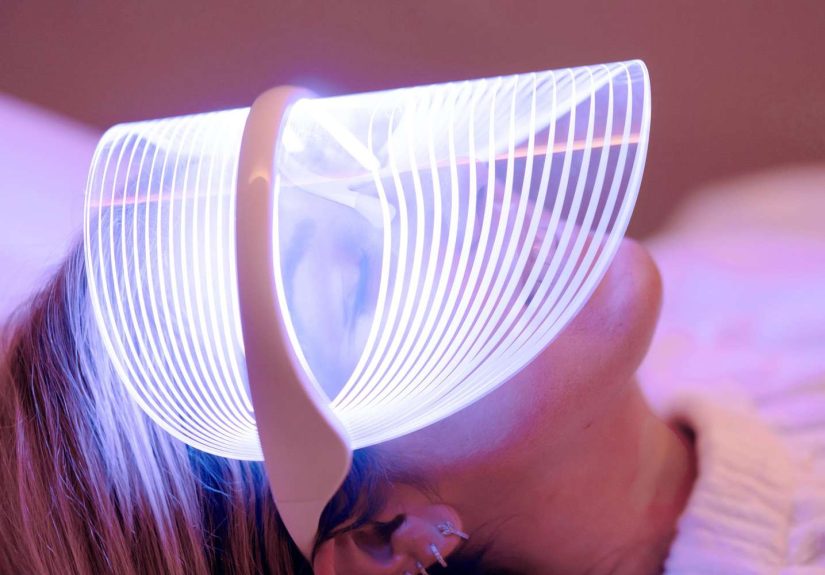
LED face masks are the skincare world’s version of a sci-fi helmet: you put it on, glow like a human traffic signal,
and hope you emerge with fewer breakouts and fewer “why is my forehead doing that?” lines.
The marketing is loud, the price tags can be louder, and the results? Well… they’re real-ish, but not magical.
Here’s the honest take: LED face masks can work for certain goals (especially mild acne and some redness),
and they might help with early signs of aging (fine lines, texture) if you’re consistent.
But the payoff depends on the device, the wavelength, the power, your skin concern, and your willingness to commit to a routine.
If you’re looking for a “one-and-done” miracle, your best bet is still… sleeping eight hours and wearing sunscreen.
What LED face masks actually do (and what they definitely don’t)
Most at-home LED masks use specific colors of lightmainly red, near-infrared, and blue
to trigger biological effects in the skin. This is often called photobiomodulation or “low-level light therapy.”
No, it’s not the same thing as UV light. LED masks aren’t tanning beds, and they’re not supposed to “burn off” problems.
They’re more like gentle nudges: calming inflammation, supporting healing, and (in some cases) influencing collagen activity.
The catch is that “LED mask” is a category, not a guarantee. Two masks can look identical and behave totally differently.
One might deliver helpful wavelengths at a meaningful intensity; another might be a fancy nightlight with straps.
(If your mask feels like it’s mainly improving your mood lighting for Zoom meetings, that’s… data.)
Red light vs. blue light vs. near-infrared: the quick cheat sheet
- Blue light is commonly used for acne because it can reduce acne-causing bacteria activity near the surface.
- Red light is associated with reducing inflammation and supporting skin repair; it’s often marketed for anti-aging and redness.
- Near-infrared (NIR) penetrates deeper than visible red and is often included for “healing” and skin rejuvenation claims.
You’ll also see other colors (green, amber, purple, cyan). Some may have legitimate uses in professional settings,
but the best-supported at-home mask conversation still revolves around red, blue, and near-infrared.
Do LED masks work for acne?
For acneespecially mild to moderate inflammatory breakoutsLED has the strongest case. Blue light is commonly used to target acne-related bacteria,
while red light can help calm inflammation. Many studies and clinical protocols use a combination of blue + red for better results than either alone.
That said, “work” doesn’t always mean “erase acne like it never happened.” Think of LED masks as a supportive tool:
they may reduce the frequency or intensity of breakouts, help angry pimples settle faster, and improve overall skin calmness.
They’re most helpful when acne is mild or when you’re using them alongside a smart routine (gentle cleanser, non-comedogenic moisturizer,
sunscreen, and evidence-based acne treatments when needed).
Who’s most likely to benefit for acne?
- People with mild to moderate inflammatory acne (papules/pustules) who can use the mask consistently.
- People who can’t tolerate stronger topicals daily (or want a gentler add-on).
- “Stress breakouts” skin that flares with redness and inflammation.
Who might be disappointed?
- Severe cystic acne (usually needs prescription care; LED alone is rarely enough).
- Hormonal acne that cycles hard every month (LED may help inflammation, but doesn’t fix the hormone driver).
- Anyone expecting overnight results (your skin did not sign up for same-day shipping).
If acne is significantly affecting your confidence or causing scarring, consider LED a “nice assistant,” not the team captain.
A dermatologist can tailor a plan where LED supports proven treatments rather than trying to replace them.
Do LED masks work for wrinkles, fine lines, and “tired-looking” skin?
Here’s where the hype gets louder than the evidence. Red and near-infrared light are often marketed as collagen boosters,
and there is research suggesting improvements in skin texture and fine lines over time. But results tend to be
modest, and the strength of at-home devices is typically lower than in-office light treatments.
Translation: an LED mask might help your skin look a bit smoother, a bit calmer, and a bit more “rested,” especially with consistent use.
But if you’re hoping it will replace sunscreen, retinoids, and time… I regret to inform you that physics and biology are still enforcing the rules.
What “success” usually looks like
- Subtle softening of early fine lines (think “less noticeable,” not “gone”).
- Improved glow and more even-looking texture.
- Reduced redness or irritation for some skin types.
If your main concern is deeper wrinkles, significant laxity, or etched-in lines, you’ll usually get more noticeable results
from a dermatologist-led plan: prescription retinoids, in-office procedures, and diligent UV protection.
LED can still play a supporting role, but it’s rarely the headline act.
Safety: are LED face masks risky?
In general, red light therapy is considered low risk in the short term when used as directed.
Side effects tend to be mildtemporary irritation, redness, or discomfort. That’s the good news.
The more nuanced news: “low risk” doesn’t mean “risk-free for everyone,” and not every mask is built equally.
Situations where you should be cautious (or skip it)
- Photosensitive conditions (certain autoimmune disorders or light-triggered rashes).
- Medications that increase light sensitivity (ask your clinician or pharmacist).
- History of seizures triggered by light (rare, but worth discussing with a clinician).
- Eye concerns: some devices are bright; follow directions about eye protection.
Also important: marketing loves the phrase “FDA approved,” but many at-home devices are actually labeled
FDA-cleared. That typically means the device went through a pathway showing it’s substantially equivalent to another device
and is considered low to moderate risk for its intended usenot that it’s the ultimate wrinkle eraser blessed by a panel of skincare angels.
How to tell if a mask is “good” (without getting a PhD in Light Stuff)
You don’t need to become a biomedical engineer, but you do need to shop smarter than “this one looks cute in unboxing videos.”
Here’s a practical checklist that protects your face and your wallet.
1) Look for the right wavelengths (the useful kind of nerdy)
- Acne-focused masks: look for blue light commonly around the low-400 nm range, often paired with red.
- Anti-aging/redness: look for red light commonly in the 630–660 nm neighborhood, sometimes plus near-infrared.
If a brand won’t tell you the wavelengths, that’s like buying “mystery sunscreen SPF ???.” Hard pass.
2) Check for FDA-cleared language and intended use
FDA-cleared for acne or wrinkles doesn’t guarantee your results, but it does suggest the device fits into a regulated category
and has an indicated purpose. It’s one of the few signals in a market full of vibes.
3) Pay attention to fit and coverage
A mask that doesn’t sit close to your skinor leaves half your jawline out of the partymay deliver uneven exposure.
Comfort matters because consistency matters. If it pinches, slides, or gives you “mask rage,” you won’t use it long enough to see benefits.
4) Time commitment: the hidden price tag
Some devices run short sessions (a few minutes); others recommend longer or more frequent use.
Either way, results typically depend on repeated sessions over weeks.
If you’re not willing to commit, the most expensive mask is the one that becomes a drawer souvenir.
5) Hygiene and materials
You’re strapping something to your face. Make sure it’s easy to clean and made from skin-friendly materials.
If it traps sweat, makeup, or bacteria, it can sabotage the very acne you’re trying to calm.
Are LED face masks worth the cost?
Let’s talk dollars. At-home LED masks commonly range from roughly $150 on the low end to $500+ in the midrange,
and luxury devices can climb well past that. For that kind of money, you’re allowed to ask tough questionspolitely, but firmly.
They’re more likely worth it if…
- You have mild acne or chronic redness/inflammation and want a gentle add-on.
- You can commit to consistent use for weeks (and ideally months).
- You’ve already nailed the basics: cleanser, moisturizer, sunscreen, and acne/anti-aging staples as appropriate.
- You’d otherwise pay repeatedly for in-office light sessions and prefer a home option.
They’re probably not worth it if…
- You haven’t invested in sunscreen (LED can’t outwork UV damage).
- You want it to replace proven treatments (retinoids, benzoyl peroxide, prescription options).
- You’re chasing dramatic, fast “before-and-after” changes.
- Your acne is severe or scarring (professional guidance is a better ROI).
Here’s a useful way to think about it: an LED mask can be a good habit amplifier.
If you already take care of your skin, it may help you get a little more out of your routine.
If your routine is chaos (we’ve all been there), LED won’t rescue you from the consequences of sleeping in makeup and fighting your cleanser.
How to use an LED mask like a sane person
Step-by-step best practices
- Start with clean, dry skin. Remove makeup and sunscreen.
- Follow the device schedule. More is not always better; consistency beats intensity.
- Protect your eyes if recommended. Some devices include shields or suggest closing your eyes.
- Apply skincare afterward (unless your device instructions say otherwise). Many people use LED before serums/moisturizer.
- Track results realistically. Take a weekly photo in similar lighting for 6–8 weeks.
And please: don’t use an LED mask as an excuse to skip sunscreen the next morning. That’s like installing a fancy security system
and leaving your front door open because you “believe in the technology.”
The bottom line
Sodo LED face masks work? Sometimes, yes, especially for mild acne and calming inflammation, with the best results tied to consistent use.
For anti-aging, results are usually subtle and take time. Are they worth the cost?
That depends on your skin goals, your budget, and whether you’ll actually use it long enough to matter.
If you’re tempted, shop for a device with transparent specs, realistic claims, and a routine you can stick to.
And if you’re dealing with severe acne, significant pigmentation issues, or a medical skin condition, talk to a dermatologist first
because your face deserves better than guessing.
Experiences with LED face masks (what people commonly notice over time)
Since LED masks have become a mainstream beauty gadget, a pretty consistent pattern shows up in user reportsacross different skin types and budgets.
Not universal, not guaranteed, but common enough that it’s worth knowing what “real-life results” often look like.
Consider this the part where expectations get gently escorted back to Earth… with snacks.
Week 1–2: The “Is this doing anything?” phase. Many people describe the first couple of weeks as emotionally confusing.
They enjoy the ritual (it feels spa-ish), but visible changes are minimal. Some notice temporary redness right after sessions,
especially if they’re prone to irritation, and then everything looks normal again. This is where most masks either become a habitor a drawer decoration.
Week 3–5: The “My skin looks calmer” phase. Users who stick with it often report that their skin looks less reactive:
fewer random flare-ups, less blotchiness, and breakouts that feel less “angry.” Acne-prone users sometimes notice that pimples come to a head faster
or don’t linger as long. This is also when people start saying things like, “Okay, I didn’t change anything else, but my face is… less dramatic.”
(Relatable.)
Week 6–8: The “Subtle improvement you can’t unsee” phase. By this point, consistent users often report small but meaningful wins:
a slightly smoother texture, a little more glow, makeup applying more evenly, and fine lines looking softer in certain lighting.
The keyword is softernot erased. People who hoped to delete deep wrinkles sometimes feel underwhelmed,
while people aiming for “healthier-looking skin” are more satisfied.
The biggest difference-maker: consistency. The most common “bad experience” isn’t burning or dramatic side effectsit’s spending a lot,
using it five times, and concluding it was a scam. LED masks tend to reward routine people. If you’re already the kind of person
who flosses without being chased, you’re the target audience.
Where users feel it’s not worth it: People with severe cystic acne, deep pigmentation issues, or highly sensitive skin
often report that LED alone doesn’t move the needle enough to justify the price.
Others decide the time commitment is the real costten minutes a session doesn’t sound like much until it competes with dinner,
laundry, and your one precious episode of television.
Where users feel it’s worth it: People with mild acne, post-breakout redness, or general inflammation often report the best satisfaction.
They like that it’s noninvasive, feels gentle, and layers into a routine without adding new chemicals that might irritate their skin.
Many describe it as a “maintenance tool”like going to the gym for your face. You don’t do it once and expect abs; you do it repeatedly and expect… progress.