Table of Contents >> Show >> Hide
- Why Custom Pet Portraits Hit Different Than Regular Photos
- My Process: From Snapshot to “Who Gave You Permission to Be This Cute?”
- The Best Part: 11 Pets Meeting Their Painted Selves
- Pic 1: The Proud Pup Sit
- Pic 2: The Cat Side-Eye Approval Committee
- Pic 3: The “Wait… That’s Me?” Head Tilt
- Pic 4: The Serious Guardian Stare
- Pic 5: The Tiny Dog, Huge Presence
- Pic 6: The Floofy White Cloud (With Eyeballs)
- Pic 7: The Black Cat Contrast Victory
- Pic 8: The Tongue-Out Comedy Icon
- Pic 9: The Pair Portrait (Double the Chaos)
- Pic 10: The Senior Sweetheart Moment
- Pic 11: The “I’m Not Posing, I’m Supervising” Look
- How to Commission a Custom Pet Portrait Without Stressing Everyone Out
- How to Get That “Pet + Painting” Photo Everyone Loves
- Artist Diary: of Real-Life Pet Portrait Experiences
- Final Thoughts
- SEO Tags
There are plenty of things in life that feel “too pure for this world”: fresh laundry, perfectly ripe mango,
and the moment a pet realizes the giant face on the canvas is… them. Not their twin. Not their long-lost cousin.
Them. In full, dramatic, museum-worthy glory.
I paint custom pet portraits for people who adore their furry (or feathered, or scalyno judgment) roommates.
And while the painting part is obviously the job, the best part is the after: when clients send photos of their pets
sitting next to the finished portrait like they’re approving an album cover. Some look proud. Some look confused.
A few look like they’re wondering who authorized this level of attention. All of them are perfect.
Why Custom Pet Portraits Hit Different Than Regular Photos
A great pet photo captures a split secondtongue out, paws mid-zoom, eyes saying “I definitely didn’t eat the couch.”
A great pet portrait captures something longer: personality. The goofy grin. The dignified stare. The “I run this house”
posture that only a cat can deliver without lifting a single paw.
From an artist’s perspective, pet portraits work because they’re both personal and timeless. They can celebrate a pet’s
current chaos (puppy era), honor a companion after they’re gone (pet memorial portraits), or mark a milestone like adoption,
a “gotcha day,” or moving into a new home. And as a gift? A commissioned pet painting is basically saying, “I see your love,
and I brought it a frame.”
My Process: From Snapshot to “Who Gave You Permission to Be This Cute?”
Step 1: The reference photo (aka the make-or-break moment)
The best custom pet portraits usually start with a few strong photos. I look for clear lighting, sharp details around the eyes,
and a natural pose that feels like the petnot a stiff “sit for the camera” situation (unless that’s their signature move).
Eye-level photos are gold because they feel intimate and true-to-life, and natural light helps preserve coat color and texture.
Step 2: Design choices that actually matter
Before I paint, I plan the vibe: background color, crop (head-and-shoulders vs. full body), and whether we’re going realistic,
slightly stylized, or “tiny royal monarch in velvet.” Clients often choose colors that match their decor, but I also recommend
choosing colors that flatter the pet’s coatbecause yes, your black cat deserves contrast and drama, not a background that makes
them look like a floating pair of eyes.
Step 3: Painting fur without losing my sanity
Fur is basically nature’s way of saying, “Heretry painting a thousand tiny lines, but make it soft.” The trick is to build
layers: broad shapes first, then mid-tones, then highlights and whiskers. The eyes come early because they set the emotion.
If the eyes are right, everything else can be negotiated. If the eyes are wrong, the portrait becomes a stranger who lives in your house.
Step 4: Finishing and protection
Once the painting is fully dry, I seal it so it can handle real lifedust, light, the occasional curious nose boop.
For acrylic work, artists often use an isolation coat and varnish to help protect the surface and even out the finish.
(Translation: it stays looking fresh and doesn’t age like a sad banana.)
The Best Part: 11 Pets Meeting Their Painted Selves
Below are 11 “pics” worth recreating for your own custom pet portrait reveal. If you’re publishing this post, swap the placeholder
image filenames with your real images. I included detailed alt text to help with SEO and accessibility.
Pic 1: The Proud Pup Sit

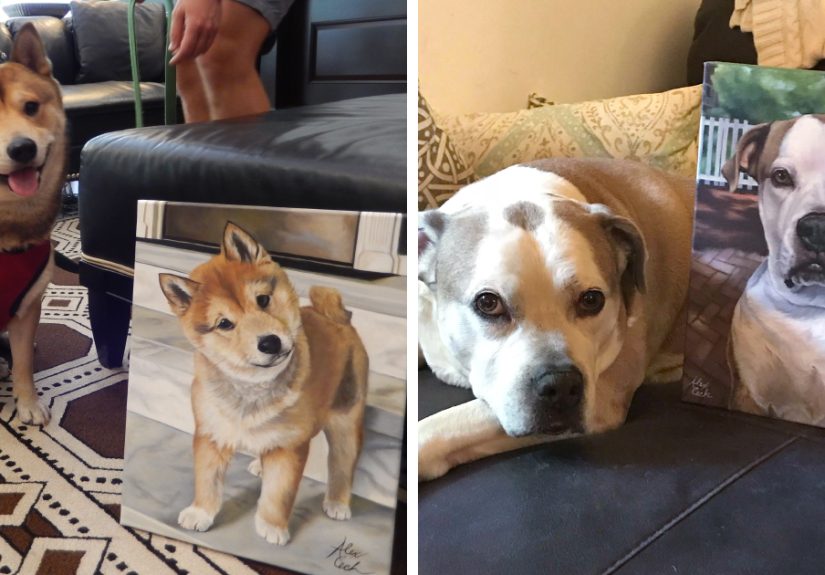
This is the “yes, I know I’m the main character” pose. The secret sauce is matching anglesturn the pet slightly toward the portrait
so it feels like a side-by-side comparison rather than “random canvas, random dog.”
Pic 2: The Cat Side-Eye Approval Committee

A cat’s expression can turn a portrait reveal into comedy in half a second. Keep treats off-camera, keep your camera ready,
and accept that the cat is the art director now.
Pic 3: The “Wait… That’s Me?” Head Tilt

Head tilts are the closest thing to a pet saying, “Interesting concept. Bold choices.” If your pet does this naturally,
photograph at eye level and let the moment happen.
Pic 4: The Serious Guardian Stare

Dramatic backgrounds and strong lighting make confident dogs look heroic. The portrait reveal photo works best when you keep the
environment unclutteredlet the gaze do the talking.
Pic 5: The Tiny Dog, Huge Presence

Scale can be hilarious in the best way. A smaller pet beside a bold, oversized painting is instant visual storytelling:
“This creature is 8 pounds of attitude.”
Pic 6: The Floofy White Cloud (With Eyeballs)

White coats aren’t “just white.” They’re blues, creams, grays, and sparkle. In the photo, place the portrait where it catches
soft light so the textures read clearly.
Pic 7: The Black Cat Contrast Victory

A dark-coated pet pops against a saturated background. In the reveal photo, avoid harsh flashnatural window light helps keep
the coat from looking like a flat shadow blob.
Pic 8: The Tongue-Out Comedy Icon

If your pet’s signature is “tongue out, no thoughts,” lean in. The best commissions don’t force dignityunless dignity is the joke.
Matching the portrait expression makes this photo feel extra satisfying.
Pic 9: The Pair Portrait (Double the Chaos)

Multi-pet portraits are part art, part diplomacy. In the reveal photo, stage them on the same plane (same depth from the camera)
so both faces are equally readable.
Pic 10: The Senior Sweetheart Moment

Senior pets photograph beautifully when you keep it calm. A cozy blanket, quiet room, and slow pace can capture the tenderness
that clients often want preserved forever.
Pic 11: The “I’m Not Posing, I’m Supervising” Look

Some pets refuse to “perform,” and that’s the charm. Let them lounge. Let them judge you. The portrait reveal photo becomes more
authentic when it feels like the pet is simply being themselves.
How to Commission a Custom Pet Portrait Without Stressing Everyone Out
Pick photos that show personality and detail
Choose images with clear eyes, visible markings, and natural lighting. If you can, take a few options: one close-up, one full-body,
and one that captures a signature expression. Avoid heavy filtersthey can distort coat color and shadows.
Share the story (not a noveljust the good parts)
Tell your artist the pet’s name, quirks, and what matters most: “Please capture her freckles,” “His ears are always doing their own thing,”
“That little snaggletooth is the star.” Those details guide choices like emphasis, background mood, and pose.
Plan display and care
Canvas paintings (acrylic or oil) are typically displayed without glass, while works on paper usually benefit from glass and a mat.
If your piece isn’t under glass, keep it out of direct sunlight and away from high-humidity areas. The goal is simple: protect the surface
so the portrait stays vibrant.
Shipping reality check
Shipping artwork is mostly about preventing movement and protecting corners. Rigid packaging, padding, and a snug fit are your best friends.
If you’re the artist, package it like it’s going into a wrestling match with gravity and conveyor belts (because it is).
How to Get That “Pet + Painting” Photo Everyone Loves
Want the perfect reveal shot? Keep it simple:
place the portrait at the pet’s height, use soft natural light, and make the session fun with a favorite toy or treat.
Don’t over-direct. The best photos often happen in the in-between momentswhen the dog glances over, when the cat flops dramatically,
when someone looks proud for reasons only they understand.
Artist Diary: of Real-Life Pet Portrait Experiences
The funniest thing about painting custom pet portraits is that I spend hours trying to be incredibly serious about a subject who once
ran full-speed into a sliding glass door and then acted like I embarrassed them. That’s the energy I’m tasked with preserving
in paint: dignity, chaos, tenderness, and whatever that “I just heard the treat bag” face is.
The process usually starts with clients sending photosand I can tell immediately who has a camera roll full of masterpieces and who has
900 blurry action shots of a tail disappearing out of frame. I gently guide them toward better reference images: eye-level, natural light,
a moment where the pet looks like themselves instead of a cryptid sighting. Sometimes clients apologize for “not having anything good,”
and then they send one photo that’s pure magicsoft lighting, bright eyes, and that familiar expression that makes you go, “Oh, yes.
This is the one.”
Painting days are a mix of deep focus and tiny celebrations. I’ll spend an unreasonable amount of time getting the exact curve of a whisker
right, then feel like I’ve won an Oscar when it finally lands. The eyes are always the turning point. Once the eyes are done, the portrait
suddenly feels alive, and I start talking to it like it can hear me. (“Okay, buddy, we’re going to nail your forehead stripe next.”)
Is it weird? Sure. Does it work? Also sure.
Then comes the client reveal. Some people cry. Some people laugh. Some people send a voice note that’s basically, “OH MY GOSH OH MY GOSH,”
and I understand it perfectly. But the absolute best messages include photos of the pet with the paintingbecause pets do not fake it.
Dogs often look thrilled just to be included. Cats often look like they’re auditing the brushwork. One client sent a photo of their senior dog
resting beside the portrait, head leaning gently against the frame, and I had to take a moment because it felt like the dog was saying,
“Yes. That’s me. Thank you for noticing.”
The “pet with portrait” photos are also hilariously unpredictable. I’ve seen dogs try to lick their painted noses. I’ve seen cats immediately
sit in front of the portrait like they’re blocking competitors. I’ve seen a parrot scream at its painted twin (fair). And every time,
I’m reminded why this work matters: it’s not just decoration. It’s a small, tangible way to honor a bondand to laugh at the fact that your pet
is, in fact, the most photogenic member of your household.
Final Thoughts
Custom pet portraits aren’t just about making something “pretty.” They’re about translating a relationship into color, texture, and expression
and then getting the cherry-on-top moment when a pet sits next to their own painting like they’re starring in a gallery exhibit.
If you’ve ever wanted a piece of art that makes people smile instantly, this is it.